Open to Work: Did Jensen Huang really have to go?
After 33 years, Jensen Huang has stepped down as head of Nvidia. An analysis of affairs and espionage suspicions, of power without a counterweight and of the question of who in such stories is the perpetrator, the victim and the beneficiary. It tests the convenient claims of both camps against studies and cases, including those about women, men and the appeal of status.
On Thursday, Nov. 12, 2026, Nvidia issued a statement that stood out mainly for what it left out. According to the statement, Jensen Huang, a co-founder and the company’s only chief executive since 1993, had resigned as president, chief executive officer and member of the board, effective immediately. Chief Financial Officer Colette Kress would lead the company on an interim basis. Harvey C. Jones, a director since 1993, would become the first chairman of the board in the company’s history. The regulatory filing with the Securities and Exchange Commission states tersely that the board had accepted the resignation the previous day. The company gave no reason. Nor did the statement contain a word from Huang himself.
The man who turned Nvidia from a maker of graphics cards for computer games into, at times, the world’s most valuable company is leaving. Understanding why requires reconstructing the three weeks that came before. It begins with a New York Times report about a suspected Chinese agent in the CEO’s circle. Then come a confession of guilt sent by email to employees, a second revelation about a relationship with a manager who reported directly to him and a board that, within three days, went from a vote of confidence to accepting his resignation. The scandal has not shrunk since. Reuters reported on another relationship with an employee. Both chambers of Congress want to question Huang. A petition backed by prominent supporters demands his return. On Nov. 17, 2026, Nvidia reported record results under its interim CEO; the board ruled out the founder’s return to the top job.
This analysis asks questions that get short shrift in the heated debate. Are outstanding professional achievement and a person’s so-called baser instincts really at odds? Why should a man who was unfaithful in his private life but achieved extraordinary things in his professional life have to give up his post? And what role do the women who appear in such affairs play: Are they victims, players, beneficiaries or, in the case of a suspected agent, even perpetrators? There are two convenient answers to these questions. One sees the powerful man as the perpetrator and the woman as the victim. The other sees the brilliant entrepreneur as the victim of moral hysteria and the woman as a seductress who was after money or influence. This analysis measures both narratives against studies, data and documented cases. Neither survives the test unscathed.
The case at a glance
| Item | Status as of Nov. 18, 2026 |
|---|---|
| Resignation | Accepted by the board on Nov. 11, 2026, announced on Nov. 12, 2026, effective immediately; Huang is also leaving the board. Chairman Harvey Jones ruled out a return as CEO on Nov. 17, 2026 |
| Interim leadership | Colette Kress (59), CFO since 2013, keeps her current role; the board, working with the executive search firm Heidrick & Struggles, is searching internally and externally for a permanent solution |
| New at the head of the board | Harvey C. Jones (73), a director since 1993, former CEO of Synopsys; Nvidia previously had no board chairman |
| Triggers | Report on a suspected agent at a major customer (NYT, Oct. 29, 2026); admission of infidelity (Nov. 8, 2026); report on a relationship with a manager who reported directly to him (NYT, Nov. 11, 2026) |
| Since the resignation | Report on an intimate relationship with another employee (Reuters, Nov. 12, 2026, unconfirmed); petition for Huang’s return with about 180,000 signatures (CNBC, Nov. 16, 2026); new export rules for data centers in Southeast Asia and Brazil (Nov. 16, 2026) |
| Open questions | Whether Alice Huang spied for Beijing and whether Megaspeed illegally supplied chips to China; there are no indictments. Whether the manager received professional favors is not known. Nvidia has not said whether Huang will receive severance |
| Quarterly results | Revenue of $115.8 billion in the third quarter of fiscal 2027, up 103% from a year earlier; forecast of $130 billion for the fourth quarter, plus or minus 3% |
| Stock market | Record close of $239.24 on Oct. 6, 2026; close of $166.19 on Nov. 12, 2026; market value of about $3.8 trillion on Nov. 17, 2026, roughly $2 trillion less than at the peak in early October (Reuters); up about 4% in after-hours trading after the quarterly results |
| Ongoing inquiries | Internal investigation assisted by the law firm Wachtell Lipton, which according to The Information is continuing; Justice Department investigation into Megaspeed; according to The Wall Street Journal, an investigation by the Securities and Exchange Commission; FBI inquiries according to President Trump; shareholder lawsuit in San Jose |
| Upcoming dates | Transcribed interview with three House committees, requested for Dec. 1, 2026; hearing before the Senate Banking Committee, requested for Dec. 3, 2026; testimony by Commerce Secretary Howard Lutnick on Dec. 10, 2026 |
Timeline: Three weeks that shook Nvidia
The events of the last week of October and the first half of November have a backstory that goes back more than a year. It is a story of export controls, of a conspicuously fast-growing customer in Singapore and of a CEO who was more at home in Washington than almost any other business leader of his generation.
| Date | Event |
|---|---|
| Oct. 9, 2025 | The NYT reports on Megaspeed (a rapidly growing Nvidia customer from Singapore) and on inquiries by the U.S. Commerce Department into possible circumvention of export controls. |
| March 16, 2026 | Huang opens the GTC developer conference at the SAP Center in San Jose. According to the NYT, a video showing him with a manager is said to have been made in a hotel during this conference. |
| June 8, 2026 | Huang cancels an appearance before the Senate Banking Committee, to which Sen. Elizabeth Warren had invited him for June 11, 2026. |
| Oct. 6, 2026 | The stock closes at a record $239.24. The company’s market value stands at about $5.8 trillion. |
| Oct. 29, 2026 | The NYT reports that U.S. intelligence agencies have concluded that Megaspeed executive Alice Huang passed information to Beijing. President Trump was briefed about a year earlier and did not act, the paper reports. Nvidia calls Huang’s meetings with her ordinary customer contacts. |
| Oct. 30, 2026 | Singapore’s police and Ministry of Home Affairs say Alice Huang has not been investigated and that the investigation into Megaspeed is ongoing. China’s Foreign Ministry calls the allegations baseless. |
| Nov. 3, 2026 | U.S. midterm elections. The newly elected Congress convenes in January. |
| Nov. 4, 2026 | Republican committee Chairmen Brian Mast, John Moolenaar and Rick Crawford ask Huang for a confidential briefing on Nov. 18, 2026. |
| Nov. 5, 2026 | Tech stocks sell off after the election. Nvidia loses 9.26%. |
| Nov. 8, 2026 | In an email to employees, Huang admits he was unfaithful to his wife. The board announces an independent investigation and expresses its confidence in him. |
| Nov. 9, 2026 | The stock falls 4.3%. Trump says the FBI is looking into the case; Huang assured him, he says, that he knew nothing about any espionage activity. In the afternoon, the first shareholder lawsuit is filed. |
| Nov. 10, 2026 | The board retains the law firm Wachtell, Lipton, Rosen & Katz and Joon H. Kim, the former acting U.S. attorney in Manhattan. Sen. Kevin Cramer and former Trump adviser Larry Kudlow call for Huang’s resignation. The stock loses 5.47%. |
| Nov. 11, 2026 | The NYT reports on a relationship between Huang and a manager who reported directly to him. The Wall Street Journal reports that the board is preparing to oust him. The same day, the board accepts his resignation. |
| Nov. 12, 2026 | Nvidia announces the change. The stock falls roughly 14% at one point during the day and closes down 4.34% at $166.19. Trump suggests former Apple CEO Tim Cook as Huang’s successor. Reuters reports on an intimate relationship between Huang and another employee. Instead of the briefing, the three committee chairmen ask for a transcribed interview on Dec. 1, 2026. Sen. Tim Scott invites Huang for Dec. 3, 2026, and Commerce Secretary Howard Lutnick for Dec. 10, 2026, to appear before the Banking Committee. |
| Nov. 13, 2026 | Elon Musk backs a petition for Huang’s return. Treasury Secretary Scott Bessent says several departments had wanted to put Megaspeed on the export blacklist for months and that responsibility lay with the Commerce Department. |
| Nov. 15, 2026 | Megaspeed says Alice Huang left the company on Aug. 30, 2025. The company announces an internal investigation. According to committee Chairman John Moolenaar, Huang and Nvidia representatives have agreed to a voluntary interview; no date has been set. |
| Nov. 16, 2026 | The Commerce Department now requires licenses for certain AI chips bound for Singapore, Malaysia, Thailand, Indonesia and Brazil, as well as for data centers abroad that rent computing power to Chinese companies. Trump says he would not mind Huang returning; according to CNBC, the board is not considering it. |
| Nov. 17, 2026 | Nvidia reports revenue of $115.8 billion for the third quarter of fiscal 2027 and projects $130 billion for the fourth. Board Chairman Harvey Jones rules out Huang’s return as CEO. |
| Dec. 1, 2026 | Requested date for the transcribed interview with three House committees. |
| Dec. 3, 2026 | Requested date for Huang’s hearing before the Senate Banking Committee. |
Putting the stock figures in context requires a caveat that gets lost in many headlines. Not all of the loss in value is due to the scandal. The biggest one-day loss of the period came on Nov. 5, 2026, when investors, after the midterm elections, feared stricter conditions for building data centers and dumped the entire semiconductor sector. Even before that, doubts about the sustainability of the wave of investment in artificial intelligence had weighed on the share price. The scandal hit a stock that was already under pressure. It intensified that pressure but did not cause it alone.

From dishwasher to the head of a trillion-dollar company
Huang’s biography has been told often. It is the reason his departure moves so many people. Born in Taiwan in 1963, he came to the United States at age 9. As a teenager, he washed dishes, bused tables and waited on customers at a Denny’s restaurant in Oregon. He studied electrical engineering at Oregon State University, where he met his future wife, Lori. The two married in 1985. After stints as a chip designer in Silicon Valley and a master’s degree from Stanford, he founded a graphics processor company in 1993 with Chris Malachowsky and Curtis Priem. The three discussed the idea at a Denny’s in East San Jose. The restaurant on Berryessa Road is now part of Silicon Valley’s founding lore.

The rest is industrial history. With its CUDA programming platform, Nvidia began opening its graphics chips to scientific computing in 2006. What was then considered an expensive bet became the foundation of today’s artificial intelligence, because neural networks can be trained on these chips orders of magnitude faster. In 2023, the company’s market value topped $1 trillion for the first time. In July 2025, Nvidia became the first company in the world to reach $4 trillion, and in October 2025 the first to reach $5 trillion. In fiscal 2026, the company had revenue of $215.9 billion (65 percent more than the previous year) and net income of $120.1 billion.
During this period, Huang became a figure whose appeal extended far beyond the industry. His black leather jacket became his trademark. His keynotes at the company’s own GTC conference filled arenas. On his travels, he drew crowds of admirers; in Taiwan, the media spoke of “Jensanity.” President Trump, who by his own account had not even heard of Nvidia at first, appointed Huang to his council of advisers on science and technology and praised him publicly at every opportunity.
Another part of this story is less glamorous. Huang built Nvidia around himself as a deliberately flat organization. By his own account, he had about 60 direct reports at times. He never groomed a successor. He said he hoped the next CEO was already working at the company. He never named anyone. In its annual report from February 2026, Nvidia states that it depends heavily on its long-serving leadership team. Stacy Rasgon, an analyst at Bernstein, summed it up for Reuters after the scandal broke with a phrase that had long been taken as a compliment in Santa Clara: “Jensen is not an ordinary CEO; he is Nvidia.”
The board bore the same imprint. Three members had served on it since 1993: Huang himself, Tench Coxe and Harvey Jones. According to an analysis by Semafor, the average tenure was about 15 years. The so-called lead director, Stephen Neal, is chairman emeritus of the law firm Cooley, which has advised Nvidia for years. Law professor Jill Fisch of the University of Pennsylvania described this setup as typical of a CEO who effectively controls the board. Huang also owned about 3.6 percent of the shares, making him one of the largest individual shareholders. Nvidia never had dual-class voting rights, however, such as those that secure Mark Zuckerberg’s control at Meta. The board can remove the CEO at any time. The bylaws also allow shareholders to remove directors with or without cause. Formally, then, the founder could always be removed. In practice, no one dared to do so until there was no alternative.

Megaspeed, Alice Huang and the suspicion from Washington
The case did not begin in the bedroom but with export controls. Since 2022, the United States has gradually restricted sales of the most powerful AI chips to China. Since then, the authorities have been grappling with the question of how Nvidia processors still find their way into the People’s Republic by roundabout routes. In October 2025, the NYT reported on Megaspeed, a data center company based in Singapore that had quickly risen to become one of Nvidia’s largest customers in Southeast Asia. According to later reporting by the paper, a Malaysian sister company of Megaspeed bought at least $4.8 billion worth of AI equipment containing Nvidia chips between June 2024 and February 2026. The Commerce Department examined whether goods had been diverted to China via third countries. Megaspeed denied the allegation of illegal exports.
That first report from October 2025 already described the closeness between customer and supplier. It recounted a night in June 2024 at a bar in Taipei. Shortly after midnight, a Megaspeed executive named Alice Huang told a group of tech executives she could get Jensen to come, the report said. The Nvidia CEO did in fact show up, according to the paper. In the paper’s later reporting, her line is given as: “I bet you guys I can get Jensen here.” The tech company Netthunder posted a photo of the evening on LinkedIn showing the two side by side. With the October 2025 report, if not before, it became public knowledge that they knew each other, a year before the espionage suspicions became known.
At the end of October 2026, the story took on a new dimension. The NYT reported on Oct. 29, 2026, that U.S. intelligence agencies had concluded that Alice Huang, Huang Le in Chinese, had passed information to Beijing. She is not related to Jensen Huang. According to The Associated Press, she previously worked as a television reporter in China. According to the reports, the surveillance had begun over suspected chip smuggling; only through it did the close relationship with the Nvidia CEO come to light. According to the NYT, Alice Huang is still under surveillance. President Trump was briefed about a year before the publication and did nothing, the paper reported. At the time, officials did not believe that Jensen Huang knew about the alleged espionage. According to the NYT, some senior government officials now doubt that he was unaware. He himself did not receive a so-called defensive briefing, that is, a precautionary warning from the authorities, according to the paper. The Financial Times later reported that an intelligence memo described a romantic relationship and recruitment by China’s Ministry of State Security. According to the NYT, Secretary of State Marco Rubio oversaw the drafting of a top-secret memo that went to senior government officials in the spring of 2026, before Trump’s trip to China.

Nvidia’s first reaction was to play it down. A spokesperson said the CEO meets thousands of customer representatives every year and that the meetings with Alice Huang were neither unusual nor unexpected. At the end of October, Huang himself told Bloomberg that his contacts with Megaspeed were in line with the usual business relationships with Chinese customers. Ten days later, he had to qualify that account. In his email on Sunday, Nov. 8, 2026, he wrote to employees: “I was unfaithful to my wife.” He apologized to his family, colleagues, the board, partners and shareholders, took full responsibility and asked that his family be left alone. He did not name the woman. According to the NYT, he had acknowledged to the board that it concerned Alice Huang.
The board announced an independent investigation the same day, led by a committee of independent directors with outside support. It had no reason to believe that national security or trade secrets had been compromised, the statement said. At the same time, the board expressed its confidence in Huang and his leadership team. A spokesperson added: “Today’s news will not slow Nvidia.” Three days later, Huang was gone.
So far, it has not been proven that Alice Huang worked for an intelligence service, nor that she or Megaspeed illegally passed Nvidia chips on to China. The reports are based on anonymous sources and on an intelligence assessment that is not public. There is no indictment. Singapore’s police and Ministry of Home Affairs stated on Oct. 30, 2026, that Alice Huang had not been investigated, but that the investigation into Megaspeed was continuing. The Chinese Embassy in Washington and the Foreign Ministry in Beijing rejected the allegations as baseless and slanderous. The U.S. Justice Department has since taken over the investigation into Megaspeed. According to the news site Semafor, several proceedings that could affect Nvidia are underway there: one each into Megaspeed and the server maker Supermicro, both with links to Alice Huang, as well as an antitrust investigation into Nvidia itself. There are currently no indications of criminal charges against Nvidia or Jensen Huang, the report said. Megaspeed said on Nov. 15, 2026, that Alice Huang officially left the company on Aug. 30, 2025, and no longer holds any position there. The company said it runs a legitimate and lawful business and is having the allegations examined by outside lawyers. Malaysia’s Trade Ministry said on Nov. 10, 2026, that no investigation had been opened so far into Speedmatrix, a company close to Megaspeed. It would, however, follow up on credible leads. The tech news site The Information wrote that Alice Huang’s connections had enabled deliveries worth at least $7.5 billion through a network of Chinese companies since 2023. This, too, is an allegation, not a judicial finding.
The political dimension is just as unresolved. According to the NYT, officials complained that the closeness between Huang and Trump had slowed inquiries at the Commerce Department. After the confession, Trump pointedly stood behind the entrepreneur. Huang was an honorable man who probably had an excuse for it, he said. He had also done amazing things for the country. Asked whether he wished the government had responded earlier to the intelligence warnings, the president said no, according to NBC. Then, of all people, the Republicans in Congress took a harder line. The chairman of the House Foreign Affairs Committee, Brian Mast, answered “absolutely” when asked whether he would subpoena Huang if necessary. Republican Sen. Kevin Cramer, a member of the Banking Committee, told Politico: “I just think he’s got to go.” He pointed to the risk of blackmail. Democratic Sen. Elizabeth Warren had demanded as early as June that Huang answer Congress’ questions in public. Since the resignation, officials within the administration have also been arguing over who is responsible. Treasury Secretary Scott Bessent said on Nov. 13, 2026, that several departments had wanted to put Megaspeed on the export blacklist for months, “but Commerce has the pen.” Commerce Secretary Howard Lutnick has agreed to testify before the Senate Banking Committee on Dec. 10, 2026. On Nov. 16, 2026, his department tightened the rules: A license is now required for certain AI chips bound for Singapore, Malaysia, Thailand, Indonesia and Brazil, as well as for data centers abroad that rent computing power to Chinese companies. Trump himself had recommended former Apple CEO Tim Cook as Huang’s successor on the day of the resignation. On Nov. 16, 2026, he said no one had proven that Alice Huang was a spy. He would not object to Huang’s return.
Who is responsible for what
Many headlines speak of a “spy,” a “honey trap,” a seductress in the service of Beijing. A second, equally convenient simplification has emerged in opposition to this image: the woman as a mere pawn of powerful men and states, to be protected. Both images miss what is known. Anyone who wants to apportion responsibility properly has to look at those involved one by one.
First, Alice Huang. Regardless of the espionage suspicions, she is not a passive figure. Someone who brags in a bar about her access to Jensen Huang and then actually brings him over knows the value of that closeness and uses it deliberately. If the U.S. intelligence assessment is accurate, she is not a victim but an actor who deliberately courted one of the world’s most important entrepreneurs to obtain information. From a counterintelligence perspective, a source for an intelligence service would be a perpetrator, not an injured party. If the assessment is wrong, a businesswoman is being labeled an agent worldwide without any charges. Singapore states explicitly that it has not investigated her. Both possibilities must remain open as long as no evidence is public. The only thing that is not acceptable is to tacitly presuppose one of them.
Then Jensen Huang. If his confession, as the NYT reports, referred to Alice Huang, then he himself made the decision to enter into an intimate relationship with an executive of a major customer. From October 2025 on, anyone could read in the NYT that the Commerce Department was investigating Megaspeed and that one of its executives was associating with the Nvidia CEO. Those who are rich and powerful are courted: by business partners, by fortune hunters and, as this case shows, presumably also by intelligence services. That is not an excuse but the reason more caution is demanded of such people than of others. Precisely because power and wealth attract, the head of a strategically central company is a target.
Did Huang have to inform the board? Nvidia’s code of conduct requires all employees to avoid situations in which their actions create a conflict of interest, explicitly including through personal relationships. Anyone who finds themselves in a conflict must immediately withdraw from any decision on the matter in question, the 2017 version already states. The company’s anti-corruption policy requires actual and potential conflicts of interest to be reported to the compliance department and approved by it. A secret romantic relationship with the representative of a customer that spends billions is a textbook case of such a conflict. Whether the code explicitly obliged the CEO to disclose a private relationship to the board cannot be conclusively determined from the outside. The purpose of the rules is clear.
Finally, the government. According to the NYT, Huang did not receive a defensive briefing, even though the government had known of the suspicions for about a year. The paper cites a common reason for such restraint: A warning could have revealed to Alice Huang that she was under surveillance. Whether this consideration was decisive is unclear, however, the paper says. According to the NYT, Trump also did not act, in part because he did not want to disrupt trade relations with China and Nvidia’s business. A precedent shows that a warning can work. In April 2015, the FBI warned California Rep. Eric Swalwell about Christine Fang, a suspected Chinese agent with whom he had been in contact. Swalwell subsequently cut off contact, as FBI files since declassified show. Nvidia said it would have expected the government to inform the company in the event of a real threat. The government thus bears some responsibility for the risk persisting for so long. The dispute described above between the Treasury and Commerce departments over the delayed blacklisting of Megaspeed shows how contested this role is in Washington itself. But the government did not relieve Huang of his own duty. To recognize that a secret affair with an executive of a customer creates a conflict and a risk of blackmail, a CEO does not need a warning from the FBI.
That leaves the objection that people with ordinary incomes do not have such problems. That is only half true. People are unfaithful in all walks of life, as will be shown below. What ordinary people do not experience are the consequences: No foreign intelligence service is interested in an accountant’s affair. No tabloid pays for his text messages. Information security experts also point to an uncomfortable fact: Whether any damage occurred in the Huang case, and what kind, cannot be assessed publicly at all. A damage assessment of the kind intelligence services conduct remains closed to the public.
What the actual offense is
The debate mixes up four things that have to be kept apart if one wants to seriously answer the question of whether the resignation was justified.
The first level is marital infidelity. It is a moral failing toward one’s partner and family, but not a crime and, at most companies, not grounds for dismissal either. Anyone who makes it the yardstick for fitness to run a company would logically have to monitor the marriages of all executives. Nobody in a free society wants that. In Switzerland, it would also be legally problematic. Under Article 328b of the Swiss Code of Obligations (CO), an employer may process data about employees only to the extent that the data relate to their suitability for the employment relationship or are necessary for the performance of the employment contract. Private life is protected in principle.
The second level is the relationship with a manager who reported directly to him, which the NYT reported on Nov. 11, 2026, citing five people who work or have worked at the company. Two of them said there was a video showing the two in an affectionate pose at a hotel in San Jose during the conference in March. The paper has not seen the video. Three people familiar with the incident said Huang’s security staff took the person holding the cellphone aside. That person was then presented with a nondisclosure agreement to sign, they said; the report does not say by whom. Neither Nvidia nor Huang nor the manager has confirmed the information. According to the NYT and the news site Axios, both are married to other people. If the report is accurate, the responsibility for the relationship would therefore not rest with one person alone. Nothing is known, however, about the circumstances of the two marriages. The manager is not a newcomer but a longtime executive who has held her current position for years. When the relationship began is not known. No allegation of coercion has been made. Whether she received professional favors is likewise not known. A day later, Reuters reported, citing two people familiar with the matter, that Huang had also had an intimate relationship with another Nvidia employee. The report does not say what position she holds or whether she reported to him. Reuters does not name her; Nvidia did not comment. This report has not been confirmed either. It appeared only after the resignation was announced; whether the board knew about it beforehand is not known.
Where the problem with the power imbalance lies
Critics of the power-imbalance argument object that the hierarchy exists anyway and that a relationship does not change it. That is true. But it misses the heart of the matter. The problem is not that love creates an imbalance but that it ties the imbalance to a private interest. Anyone who decides on another person’s pay, bonus, promotion, projects and evaluation is biased as soon as he or she has a relationship with that person. A judge does not rule on his sister; an auditor does not audit his brother’s company. At Nvidia, this setup was particularly pronounced. Huang said on the All-In podcast in the summer of 2025 that at the end of every pay cycle he personally goes through the compensation proposals for all of the roughly 42,000 employees. By his own account, then, he was not only the manager’s supervisor but ultimately had a say in her pay.
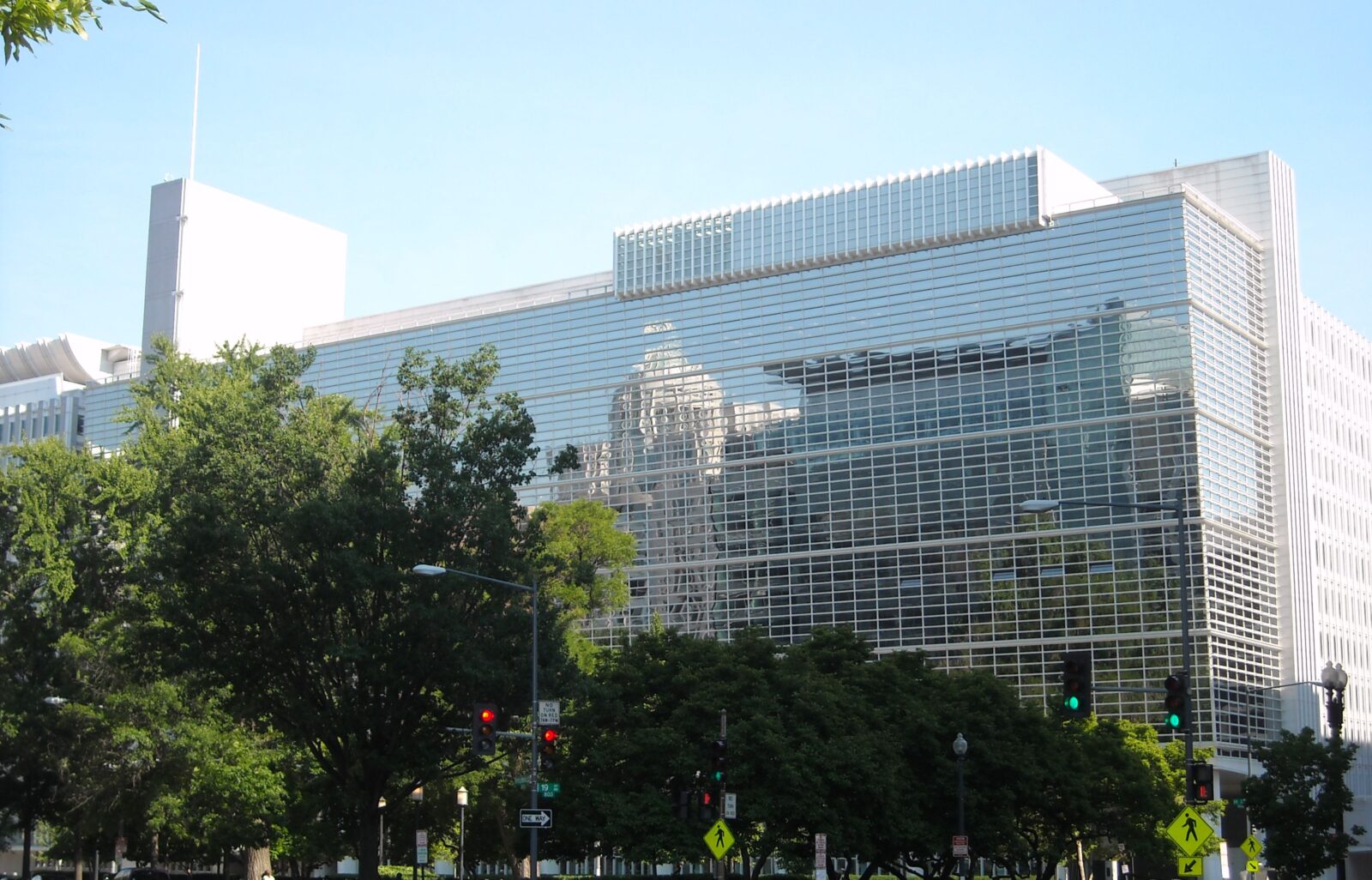
Can a direct supervisor even promote a subordinate without vacating his own post? He can. Promotion does not just mean taking over the boss’s chair. It includes raises, bonuses, stock grants, titles, larger teams and recommendations for positions in other departments. This has been documented or alleged in several cases. At McDonald’s, according to the company’s 2020 lawsuit, CEO Steve Easterbrook approved an extraordinary grant of stock worth hundreds of thousands of dollars for an employee, shortly after their first sexual encounter and close in time to the second. At the World Bank, President Paul Wolfowitz had his partner Shaha Riza, a bank employee, transferred to the U.S. State Department in 2005 because the rules prohibited one partner from supervising the other. Her salary, which the bank continued to pay, rose in two steps from about $133,000 to $193,590, tax-free; she thus earned more than Secretary of State Condoleezza Rice. She had also been promised a promotion for the period after her return. A bank panel found a breach of the rules; Wolfowitz resigned in 2007. At the Royal Bank of Canada, the bank fired its CFO, Nadine Ahn, in 2024, saying she had maintained an undisclosed close relationship with an employee who had been promoted and received higher pay. Ahn and the employee deny a romantic relationship and have sued the bank. Ahn acknowledged supporting pay increases for him but said they were based on performance. In this case, the higher-ranking person was a woman and the beneficiary, according to the bank, a man.
Was a woman ever explicitly promised a better position in exchange for a relationship? Such arrangements are rarely documented because they are rarely put in writing. What is documented is preferential treatment after the fact, as the examples show. Were the women coerced? In most of the corporate cases this analysis compares, the relationships were described as consensual. The exceptions are the harassment allegation by a former contractor against Mark Hurd at HP, which the investigation did not substantiate, and the allegations of abuse of power against Julian Reichelt at Bild, which he denied. And what motivates those involved? In a survey by the U.S. human resources association SHRM, 57 percent of those with an office romance cited love as their main motive in 2023; 1 percent cited professional reasons. A year later, an online survey by the same association painted a different picture: Those currently in relationships cited love (33 percent), professional reasons such as advancement (32 percent) and other reasons (32 percent) in roughly equal thirds. The published data do not break the answers down by gender. Self-reports therefore vary widely. They do not refute the image of people who want to get ahead through a relationship, but they do not confirm it as the rule either. Accordingly, companies’ rules are aimed less at coercion, which is covered by sexual harassment law, than at conflicts of interest, fairness toward colleagues and liability risks when a relationship breaks up.
How do you change a reporting line without firing anyone? In practice, one of the two people switches teams or gets a different supervisor, as in the World Bank case. At the top of a company, that is not possible, because ultimately everyone reports to the CEO. All that remains there is disclosure to the board and recusal from all decisions affecting the person concerned. Of all companies, BP shows that such a relationship can work. Murray Auchincloss, the successor to the ousted Bernard Looney, was himself in a relationship with someone at the company. He had disclosed it in good time and became CEO nonetheless. In such cases, it is not love that costs someone the job but concealment.
If company resources were also used to silence witnesses to a private affair, as the report about the nondisclosure agreement suggests, that would be a misuse of corporate resources for personal purposes.
The third level is the relationship with the executive of a major customer whom U.S. intelligence agencies, according to the NYT, classify as a source for Beijing. This is a matter neither of morality nor of employment law but of conflicts of interest in customer relations and possible vulnerability to blackmail. Nvidia sells products whose export the government treats as a matter of national security. A CEO who is vulnerable in such a situation becomes a risk to the company, even if not a single secret has leaked.
The fourth level is truthfulness toward the board, investors and the public. At the end of October, the company portrayed the contacts as normal customer relations. On Nov. 8, 2026, Huang admitted the affair. The class action filed on Nov. 9, 2026, in federal district court in San Jose targets precisely this fault line. It accuses Nvidia of misleading investors about risks. The allegations are unproven. Experience from earlier cases shows: Often it is not the affair that costs someone the job but how they handle the truth.
If Nvidia were a Swiss stock corporation, the legal situation would be clear. Under Article 726 CO, the board of directors may dismiss the managers it has appointed at any time, without prejudice to claims for compensation. Under Article 717 CO, members of the board of directors and of management must perform their duties with all due diligence and safeguard the interests of the company in good faith. Under Article 328 CO, employers must protect the personal rights of employees, explicitly including protection from sexual harassment. A power imbalance between a boss and a subordinate is therefore never merely a private matter. Nvidia has not yet said whether Huang will receive severance or lose any entitlements.
Achievement and desire: A contradiction?
That brings us to the real question. The notion that extraordinary achievement and unbridled desire are mutually exclusive hardly holds up historically. The literature on rulers, military commanders and entrepreneurs is full of counterexamples. Conversely, the opposite thesis is also popular: that drive, appetite for risk and sexual restlessness are part of the profile of those who shape history, as the price of genius, so to speak. Both narratives have their anecdotes. Empirical research paints a more sober picture.
A much-cited study by social psychologist Joris Lammers and colleagues, published in 2011 in the journal Psychological Science, surveyed 1,561 working people in the Netherlands. The higher their position in the hierarchy, the more often respondents said they had been unfaithful or were considering it. The link was mediated by the self-confidence that power confers. It applied to women as well as men. In this study, it was not gender that explained the infidelity of the powerful but power itself. Tilburg University lists the paper as unaffected by the investigations into co-author Diederik Stapel, who was later exposed as a fraud.
A second line of research asks whether private infidelity says anything about professional behavior. For a paper published in 2019 in the Proceedings of the National Academy of Sciences, John Griffin, Samuel Kruger and Gonzalo Maturana analyzed the hacked user data of the infidelity website Ashley Madison and linked it to the professional records of 11,235 people from four fields: police officers, financial advisers, defendants in Securities and Exchange Commission proceedings and senior executives. Users of the site were more than twice as likely to have engaged in professional misconduct as others. That is a correlation, not destiny. But it suggests that the strict separation between private and professional character holds up less well than defenders of privacy would like.
A study by Brandon Cline, Ralph Walkling and Adam Yore deals most directly with executives. Published in 2018 in the Journal of Financial Economics, the paper examines 325 cases of personal misconduct by American executives, ranging from substance abuse to violence and sexual affairs to dishonesty. Immediately after the revelation, the companies concerned lost an average of 1.6 percent of their value, 4.1 percent in the case of CEOs. Shrinking margins and the loss of business partners followed. The authors tested three explanations. First: Only a manager’s ability counts; his private life is irrelevant. Second: Scandals distract management. Third: Misconduct reveals a character that also poses risks in business. The authors interpret their findings primarily in terms of the third explanation. Misconduct was also more common at companies with weak corporate governance, where disciplinary consequences were rarer.
This yields an answer to the initial question that is likely to disappoint both camps. There is no contradiction between achievement and desire. Desire in itself disqualifies no one. But top performance does not ennoble it either. What matters is where it is acted out. As long as an affair remains private, it is a problem for those involved and their families. Jeff Bezos, for example, announced his separation from his wife in 2019, shortly before the tabloid National Enquirer reported on his extramarital relationship. It had no consequences for his position at Amazon. The line is crossed when the affair reaches into the company hierarchy, when it is covered up with company resources, when it touches business relationships or endangers security. In the Huang case, several of these conditions apply, based on what is known today. His departure is therefore not a verdict on his sexual morals but on the mixing of power, dependence and business.
That leaves the objection that a man of such importance to the company deserved an exception. It must be taken seriously, because the damage of a forced change at the top is real for shareholders and employees. But the argument is normative, not empirical. And it proves too much. If performance exempts someone from rules, rules apply only to those who are replaceable. That is precisely the definition of a privilege. A board that cannot sanction its most important executive has abandoned its function. That Nvidia has only now appointed a board chairman is a belated admission of this shortcoming.
Power, money, desire: What research knows about both sexes
Behind the outrage over Huang lie questions older than any corporation. Do women and men have the same drives? Does power, when combined with money and prestige in one person, attract women in particular? Are powerful and wealthy women as attractive to men as powerful men are to women? These are empirical questions. The research on them is extensive. Its answers are less ideological than either camp might like.
First, the drive. A comprehensive meta-analysis published in 2022 by Julius Frankenbach and colleagues in the journal Psychological Bulletin evaluated 211 studies with 621,463 people. On average, men have a stronger sex drive than women. They think about sex more often, experience desire more often and masturbate more often. The difference is medium to large; if biased response behavior is factored out, it becomes smaller but does not disappear. It showed up across countries, age groups and sexual orientations. At the same time, the distributions overlap considerably. Mathematically, with effect sizes of this magnitude, roughly a quarter to just under a third of women are above the male average (our own calculation, assuming normally distributed values). The picture is similar for cheating. According to General Social Survey data analyzed by the Institute for Family Studies, 20 percent of married men and 13 percent of married women in the U.S. said they had had sex with someone other than their spouse. Among those under 30, women, at 11 percent, were even slightly ahead of men, at 10 percent. And the Joris Lammers study mentioned above found that power increases the propensity for infidelity equally in women and men. The drives are thus the same; their average strength is not quite. And power, at least in that study, worked the same way for both sexes.
In choosing a partner, the differences are clearer. In the 1980s, evolutionary psychologist David Buss surveyed more than 10,000 people in 37 cultures. Women rated a partner’s good financial prospects more highly than men did in 36 of the 37 cultures; men rated good looks more highly than women did in 34 of the 37 cultures. Both sexes, however, named kindness and intelligence as the most important traits. A replication with 14,399 people from 45 countries confirmed the pattern in 2020: Men more strongly prefer attractive and younger partners, women older partners with good financial prospects. Behavioral data also point in this direction. Economists Günter Hitsch, Ali Hortaçsu and Dan Ariely analyzed contact attempts on an online dating platform. Women weighted income relative to physical characteristics more heavily than men did. In a speed-dating experiment at Columbia University, women placed more weight on a partner’s intelligence and ethnicity and preferred men who had grown up in affluent neighborhoods. Men responded more strongly to attractiveness. Sociologist Rosemary Hopcroft showed in 2021, using U.S. Census Bureau data, that men in the highest income group are about 57 percentage points more likely to marry than those in the lowest. For women, income is not related to the likelihood of marriage, but it is positively related to the likelihood of divorce.
The thesis that status and money attract women in particular thus finds support in these data. But it has limits. Psychologists Paul Eastwick and Eli Finkel had students first state their ideal preferences and then take part in speed dating; afterward, they tracked the contacts for a month. The stated preferences showed the classic differences. In actual interest in real people, however, attractiveness and earning prospects mattered without any notable difference between the sexes. A replication confirmed this in 2015. In the Columbia experiment, too, attractiveness ranked higher for women in practice than they themselves had stated. What people say they want is not the same as what attracts them at the moment of the encounter.
Are powerful and wealthy women just as attractive to men? The data tend to suggest otherwise. In the Columbia experiment, men no longer valued a woman’s intelligence and ambition once these exceeded their own. In Hopcroft’s data, a high income makes men more marriageable, but not women. Economists Marianne Bertrand, Emir Kamenica and Jessica Pan found in 2015 that marriage rates fall when women in a marriage market are more likely to earn more than men. Couples in which the woman earns more are, according to their data, less satisfied and more likely to divorce. They interpreted this as the effect of a norm that the man should earn more. This interpretation is disputed, however. Ariel Binder and David Lam showed in 2022 that the income distribution of American married couples can be explained even without such a norm if like marries like. Regardless of motive, the finding remains that men, on average, give less weight to a female partner’s income and status than women give to a male partner’s. Explaining these data does not require the thesis that men are simply afraid of successful women.
Does this mean that a woman will, with near certainty, find the highest-ranking man in the company the most attractive? No. All the differences mentioned are averages with considerable overlap. Most office romances develop between peers. In the annual surveys by the job site CareerBuilder in the U.S., the majority of relationships developed between people at comparable levels. Among workers who, according to SHRM, were in a workplace relationship in 2024, 67 percent were involved with a peer, 23 percent with a superior and 10 percent with a subordinate. It is true, however, that women date people in higher positions more often than men do. In the CareerBuilder surveys, depending on the year, 26 to 38 percent of women with an office romance said they had dated someone in a higher position, compared with 20 to 23 percent of men. Conversely, this also means that about one in five men with an office romance has dated someone in a higher position. Since these are likely to be mostly relationships between men and women, women do date men in subordinate positions, just less often.
Part of the asymmetry is simple arithmetic. In the U.S., where the surveys cited come from, about 42 percent of people employed in management occupations in 2024 were women, according to the Bureau of Labor Statistics. In Switzerland, women held 28.4 percent of registered management positions at the beginning of 2025, according to an analysis of the commercial register; in Germany, 29.1 percent of managers in 2024 were women, according to the Federal Statistical Office. As long as more men than women are supervisors, relationships between men and women across hierarchical levels will more often take the form of male boss and female employee, even without any preference. How much of the asymmetry is due to this arithmetic and how much to preferences cannot be determined from the surveys. Caution is also warranted with all of the surveys: CareerBuilder commissioned online surveys, and SHRM in 2024 also used an online panel; the 2023 SHRM survey covered only 632 people. They are all self-reports.
That leaves the workplace as a dating market. It is important, but not the most important. According to a study by Stanford sociologist Michael Rosenfeld, 39 percent of heterosexual couples who got together in 2017 met online, up from 22 percent in 2009. From the end of World War II until 2013, meeting through friends was the most common route, not meeting at work. The share of couples who met through or as co-workers fell from 19 percent in 1995 to 11 percent in 2017. The notion that people spend 80 percent of their time at work is also exaggerated. Full-time workers in the U.S. worked an average of 8.4 hours on the weekdays they worked in 2024, roughly half of their waking hours (our own calculation). Office romances are nevertheless common: According to the 2023 SHRM survey, 27 percent of American workers had had one.
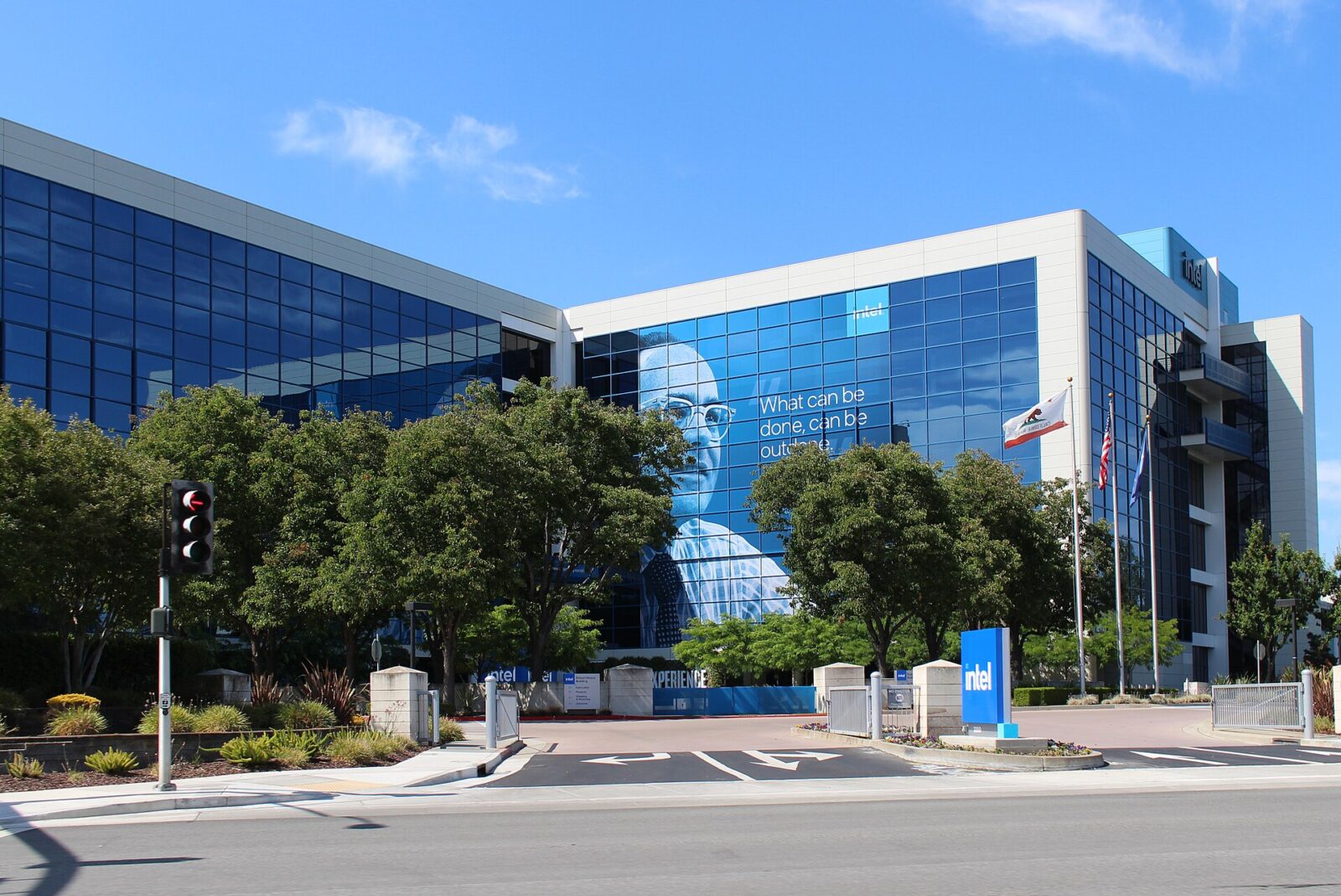
Many workers know of no clear rules on the subject. Only 31 percent of those surveyed by SHRM in 2024 said their employer required disclosure; 44 percent said it did not; the rest did not know. Asked about bans, 64 percent were opposed. In the cases compared here, companies’ rules were aimed at relationships between supervisors and employees and at concealment. No one systematically counts how many men have lost their jobs over consensual relationships with women who did not report directly to them. But there are prominent examples. Harry Stonecipher had to leave Boeing in 2005 over a relationship with a manager who did not report directly to him. Brian Krzanich lost his job at Intel in 2018 over a past relationship with an employee, which violated a rule that applied to all managers. The rationale given was that the CEO had to live up to the standards he demanded of others. In the cases of Looney and Easterbrook, what weighed most heavily in the end was deceiving the board; it cost Looney tens of millions, Easterbrook hundreds of millions.
And people with ordinary incomes? Infidelity is not a privilege of the rich. In the General Social Survey, it is not significantly related to educational attainment overall; in a separate analysis for men, however, higher education goes hand in hand with more frequent infidelity. Three things set the powerful apart: the opportunities that power opens up; the attention it attracts; the consequences of a misstep. A CEO is courted by admirers as well as by people with ulterior motives. His affair can affect shareholders, customers and, in Nvidia’s case, national security. That does not make him a victim, but it does make him a target.
How other companies decided
The Huang case is unusual in its scale but not in its structure. A look at comparable cases from the past two decades reveals a pattern: Consensual relationships with employees now often lead to an exit, especially when they were concealed. Untruths told to the board additionally cost money and reputation. The rules do not hit only men. Who loses how much varies enormously.
| Person | Company | Year | Allegation | Outcome |
|---|---|---|---|---|
| Harry Stonecipher | Boeing | 2005 | Consensual relationship with a manager who did not report directly to him | Resigned at the board’s request; the board said the CEO had to set the standard |
| Paul Wolfowitz | World Bank | 2007 | Transfer and pay raise for his partner, a bank employee | Resigned after a bank panel found a breach of the rules |
| Mark Hurd | HP | 2010 | Harassment allegation not substantiated, but inaccurate expense reports | Resigned; a month later co-president of Oracle |
| Brian Krzanich | Intel | 2018 | Past consensual relationship with an employee; violation of a rule for all managers | Resigned; the same year CEO of CDK Global |
| Steve Easterbrook | McDonald’s | 2019 | Consensual relationship with an employee | Dismissed without cause, with severance; after a lawsuit, repaid more than $105 million (2021); SEC fine (2023) |
| Bill Gates | Microsoft | 2020 | Board investigation into a past relationship with an employee | Left the board before the investigation concluded; his spokesperson denied a connection |
| Julian Reichelt | Axel Springer (Bild) | 2021 | Relationships with female employees; untruths told to the executive board | Removed on Oct. 18, 2021, after a second chance in the spring |
| Jeff Zucker | CNN | 2022 | Undisclosed relationship with a manager who reported to him | Resigned; the manager resigned two weeks later after an investigation accused her of violating company policies |
| Bernard Looney | BP | 2023 | Relationships with colleagues not fully disclosed | Resigned on Sept. 12, 2023; later dismissed for misleading the board; £32.4 million forfeited or clawed back |
| Nadine Ahn | Royal Bank of Canada | 2024 | According to the bank, the CFO’s undisclosed close relationship with an employee who allegedly received favorable treatment | Both fired; both deny a romantic relationship and have sued |
| Ashley Buchanan | Kohl’s | 2025 | Business dealings with a supplier with whom he had a personal relationship | Fired; forfeited stock, repaid a bonus |
| Andy Byron | Astronomer | 2025 | Concert video with the head of HR on the big screen | Resigned on July 19, 2025; the head of HR also resigned |
| Laurent Freixe | Nestlé | 2025 | Undisclosed relationship with a direct subordinate | Dismissed on Sept. 1, 2025, without severance |
| Jensen Huang | Nvidia | 2026 | Infidelity; closeness to a suspected agent; according to the NYT, a relationship with a direct subordinate, according to Reuters, another with an employee | Resigned on Nov. 11, 2026, announced on Nov. 12, 2026; the board rules out a return |




The development over time is remarkable. When Boeing asked Harry Stonecipher to resign in March 2005, the move was still considered exceptionally strict. Stonecipher had been brought back in 2003 precisely to clean up after ethics scandals. The board argued that the CEO had to set the standard he demanded of others. Five years later, Mark Hurd had to leave HP, even though the internal investigation did not substantiate the sexual harassment allegation. Oracle founder Larry Ellison publicly called the decision the worst personnel decision since Apple fired Steve Jobs and shortly afterward made Hurd co-president of his company.
Since then, boards have tightened their rules. The data confirm the trend. The consultancy PwC Strategy& studied CEO turnover at the world’s 2,500 largest listed companies for about two decades. In its study for 2018, ethical lapses were for the first time the most common reason for forced departures, ahead of weak financial results.
The stricter practice has a downside, however. The clearer the rules, the more important the question of whether someone is telling the truth. Steve Easterbrook was initially dismissed by McDonald’s without cause in 2019 and received severance. Only when the company discovered that he had concealed relationships with other employees did it sue. At the end of 2021, Easterbrook returned money and stock worth more than $105 million. The SEC fined him $400,000 in 2023 for misleading investors about the circumstances of his departure. At BP, Bernard Looney resigned in September 2023 after admitting that he had not fully disclosed past relationships with colleagues. In December, the board found that he had knowingly misled it. Compensation of £32.4 million was forfeited or clawed back.
From a Swiss perspective, the closest case is Nestlé. Laurent Freixe was dismissed on Sept. 1, 2025, after only a year at the helm of the food group. An investigation led by Chairman Paul Bulcke and independent lead director Pablo Isla, with the support of outside lawyers, had confirmed an undisclosed romantic relationship with an employee who reported directly to him. Bulcke called it a “necessary decision.” Freixe did not receive any severance. The parallel with Nvidia is striking. The difference lies in the pace and the starting point. Nestlé has long been a company with separate roles at the top. At Nvidia, the board had to establish this separation of powers only at the moment of crisis.
How soft is the cushion? A balance sheet for everyone involved
It is often said that a soft cushion awaits men who fall from the top. That is too sweeping. Anyone who soberly tallies what those involved in such affairs lost and gained finds that the softness of the cushion depends heavily on wealth, market value and bargaining power. Because in the known cases these mostly lie with men, the influence of gender can hardly be separated from them.
The men at the top lose more than the cliché of the golden parachute suggests. Steve Easterbrook repaid more than $105 million and paid an SEC fine. For Bernard Looney, £32.4 million was forfeited or clawed back. Laurent Freixe left without severance; Ashley Buchanan forfeited stock and repaid a bonus. Add to that the damage to their reputation and, not infrequently, the loss of their marriage. At the same time, it is true that sought-after executives quickly land new jobs. Mark Hurd became co-president of Oracle a month after leaving HP, Brian Krzanich CEO of CDK Global the same year. Looney became chairman of the data center developer Prometheus Hyperscale at the end of 2024 and has been its CEO since the end of March 2026. David Petraeus found a role at the investment firm KKR in 2013, half a year after resigning as CIA director. Headhunters and competitors are indeed waiting, then, but not for everyone.
For the partners, the picture is just as mixed. Some benefited materially, according to their employers: Shaha Riza through a salary jump that Wolfowitz had arranged, a McDonald’s employee through a stock grant, according to the company’s lawsuit. At Kohl’s, the company described its dealings with entrepreneur Chandra Holt’s firm as highly unusual and favorable to the supplier. Holt said her company, Incredibrew, received no money from Kohl’s; she lost her consulting contract with Boston Consulting Group. Christine Keeler sold her story exclusively to the newspaper News of the World in 1963; Time magazine estimated the fee at $85,000 at the time. Monica Lewinsky received $800,000 from her book advance, according to Time. For an interview with the British broadcaster Channel 4, she was reportedly paid about $600,000 to $720,000, plus, according to CBS, a share of resale proceeds. Her legal costs, however, were estimated at about $2 million. Others lost without any discernible gain: Kristin Cabot her job, Paula Broadwell her promotion, banking executive Nadine Ahn her post. Her colleague Ken Mason had previously been promoted, according to the bank, but then also lost his job; both deny the allegations. Keeler also spent six months in prison for perjury in a separate case.
The largest sums in such cases can flow to spouses, not as a gift but under marital property law. In her 2019 divorce from Jeff Bezos, MacKenzie Scott kept a quarter of the couple’s Amazon shares, about 4 percent of the company and worth about $36 billion at the time. She left him three-quarters, the voting rights and the stakes in The Washington Post and Blue Origin. In the early days, she had helped build Amazon. The accusation that the betrayed wife becomes rich without having worked for it falls short legally. In California, what is acquired during the marriage is considered community property, which is split in half in a divorce unless a prenuptial agreement provides otherwise. In Switzerland, when the marital property regime is dissolved, each spouse under the default regime of participation in acquired property is entitled under Article 215 of the Swiss Civil Code to half of the other’s surplus, that is, of what was earned during the marriage. The rule rests on the idea of marriage as an economic partnership in which unpaid work in the household and family also contributes to earnings. One may consider it disproportionate in the case of exceptional founder fortunes. But it is a deliberate choice by the legislature, not a reward for a wrong suffered. Couples can change it with a prenuptial agreement. Lori Huang and Jensen Huang married in 1985, eight years before Nvidia was founded. According to the 2026 proxy statement, the report to shareholders ahead of the annual meeting, she is a co-trustee of family trusts that hold more than 528 million Nvidia shares. Whether a prenuptial agreement exists is not known. Neither has announced a separation so far.
Third parties often profit reliably from such affairs. According to The Wall Street Journal, the publisher of the National Enquirer paid Michael Sánchez, the brother of Bezos’ then-girlfriend and now wife, Lauren Sánchez, $200,000 for intimate messages. Monica Lewinsky received no fee from the broadcaster ABC for her interview; industry observers estimated the network’s additional revenue from the broadcast at $45 million.
| Person | Role | Loss | Gain |
|---|---|---|---|
| Jensen Huang | Founder and CEO of Nvidia | CEO post, board seat, reputation; outcome of marriage uncertain | Keeps his stake as things stand; Forbes estimated his net worth at $155 billion on Nov. 9, 2026; the stock has fallen further since |
| Steve Easterbrook | CEO of McDonald’s | More than $105 million repaid, SEC fine | Not known |
| Bernard Looney | CEO of BP | £32.4 million forfeited or clawed back | CEO of Prometheus Hyperscale since the end of March 2026 |
| Mark Hurd | CEO of HP | Job | A month later co-president of Oracle |
| Laurent Freixe | CEO of Nestlé | Job, no severance | Not known |
| Shaha Riza | Partner of Paul Wolfowitz | Not known | Salary raised from about $133,000 to $193,590, tax-free |
| McDonald’s employee | Partner of Easterbrook | Not known | Stock worth hundreds of thousands of dollars (according to the lawsuit) |
| Chandra Holt | According to the WSJ, partner of Ashley Buchanan | Publicly named; lost consulting contract with BCG | According to Kohl’s, dealings on unusually favorable terms; Holt says Incredibrew received no money from Kohl’s |
| Christine Keeler | Lover of Britain’s secretary of state for war | Six months in prison for perjury in a separate case, lifelong stigma | Fee from News of the World, estimated at $85,000 according to Time |
| Monica Lewinsky | Intern, later White House employee | Legal costs of about $2 million, years of stigmatization | $800,000 from her book advance, reportedly $600,000 to $720,000 for an interview with Channel 4 |
| Kristin Cabot | Head of HR at Astronomer | Job, threats, still looking for work months later | Not known |
| Paula Broadwell | Biographer of David Petraeus | Promotion, security clearance suspended | Not known |
| Nadine Ahn and Ken Mason | CFO and employee of RBC | Both fired | According to the bank, promotion and pay raises for Mason; both deny this |
| MacKenzie Scott | Jeff Bezos’ wife at the time | Marriage | About 4% of Amazon, then worth about $36 billion |
| Michael Sánchez | Brother of Bezos’ then-girlfriend | Not known | $200,000 from the publisher of the National Enquirer (according to the WSJ) |
So for whom is the cushion softest? For those who already had a lot before the scandal: founders with large stock holdings, sought-after executives, spouses under a marital property regime of equal division. The hardest hit are those without wealth or market value whose names become synonymous with the affair. In between are partners who actually benefited. Money and power explain a large part of this gradation. Because in these cases they almost always lay with the men, it remains open how much of it is due to gender.
Victims, players, perpetrators: The women in these stories
So are the women in such affairs always the victims? The cases of the past six decades give a clear answer: no. But neither are they invariably calculating social climbers. They are people who made their own decisions, some of them very young. They paid very different prices for them.
In the summer of 1963, British Secretary of State for War John Profumo resigned. He had had an affair with Christine Keeler, then 19, and had lied to the House of Commons about it. Keeler was in contact with a Soviet naval attaché at the same time. She was not uninvolved in the revelation: After a former lover fired shots at the apartment where she was staying in December 1962, she offered her story to newspapers herself. In June 1963, she sold her “confessions” exclusively to the News of the World. In December 1963, she was sentenced in a separate case to nine months in prison for perjury, of which she served six. Profumo then devoted himself for decades to social work at the London institution Toynbee Hall and was honored by the queen in 1975. Keeler never shook off her reputation as a woman of scandal. Both were punished. The man was able to rehabilitate himself; the woman was not.

Half a century later, the pattern repeated itself in Washington. CIA Director David Petraeus resigned in November 2012 over an affair with his biographer, Paula Broadwell. As early as 2013, he found a new role at the investment firm KKR as chairman of the KKR Global Institute. In 2015, he pleaded guilty to a misdemeanor in the handling of classified material and received two years of probation and a $100,000 fine. In 2016, the Pentagon decided not to demote him retroactively. Broadwell, a reserve officer, lost her already approved promotion to lieutenant colonel; her security clearance was suspended.
Monica Lewinsky was 22 when the relationship with her then-boss, Bill Clinton, began. What she wanted from him cannot be said with certainty. It is documented that she actively pursued her professional future. Independent counsel Kenneth Starr’s report describes how, after her transfer from the White House to the Pentagon in April 1996, she pressed to return. In July 1997, she suggested in a letter to the president that she might have to explain to her parents why she was not getting a job. When the return did not materialize, she asked for help finding a job in New York. The idea of bringing in Clinton confidant Vernon Jordan came from her, according to the report. On Jan. 13, 1998, she accepted a job offer from the cosmetics company Revlon; the offer was withdrawn after the scandal broke. Whether one calls that a lust for power or ambition is a value judgment. Lewinsky herself has changed her view. In 2014, she wrote in Vanity Fair that the relationship had been consensual and that the abuse came only afterward, when she was made a scapegoat. In 2018, she wrote that given the enormous power imbalance between a president and an intern, the very idea of consent might be rendered moot, without disputing her own responsibility. In her 2015 TED talk “The price of shame,” she described how public shaming had become a commodity.
Rep. Katie Hill resigned from the U.S. House of Representatives in the fall of 2019. She had admitted that, before her election, she had been in a relationship with a female member of her campaign staff. She herself described this relationship as inappropriate. As the candidate, she was above the staffer in the hierarchy. She denied a relationship with a male member of her congressional staff, which would have violated House rules. The Ethics Committee had opened an inquiry; intimate photos of her had been published without her consent. In her farewell speech, she said: “I am leaving now because of a double standard.” She pointed to men who, she said, had been credibly accused of sexual violence and nevertheless sat on corporate boards, on the Supreme Court, in Congress and in the White House; she did not name names. The charge of a double standard can be neither simply confirmed nor simply dismissed. In the two years before her election, several men had left Congress over allegations of sexual misconduct, including Sen. Al Franken and Reps. John Conyers, Trent Franks, Blake Farenthold and Patrick Meehan. In Hill’s case, moreover, the woman was the superior. Her lawsuit against the Daily Mail and others over the photos was dismissed because the court classified them as a matter of public interest. She was ordered to pay about $220,000 in legal fees and filed for personal bankruptcy in 2022.
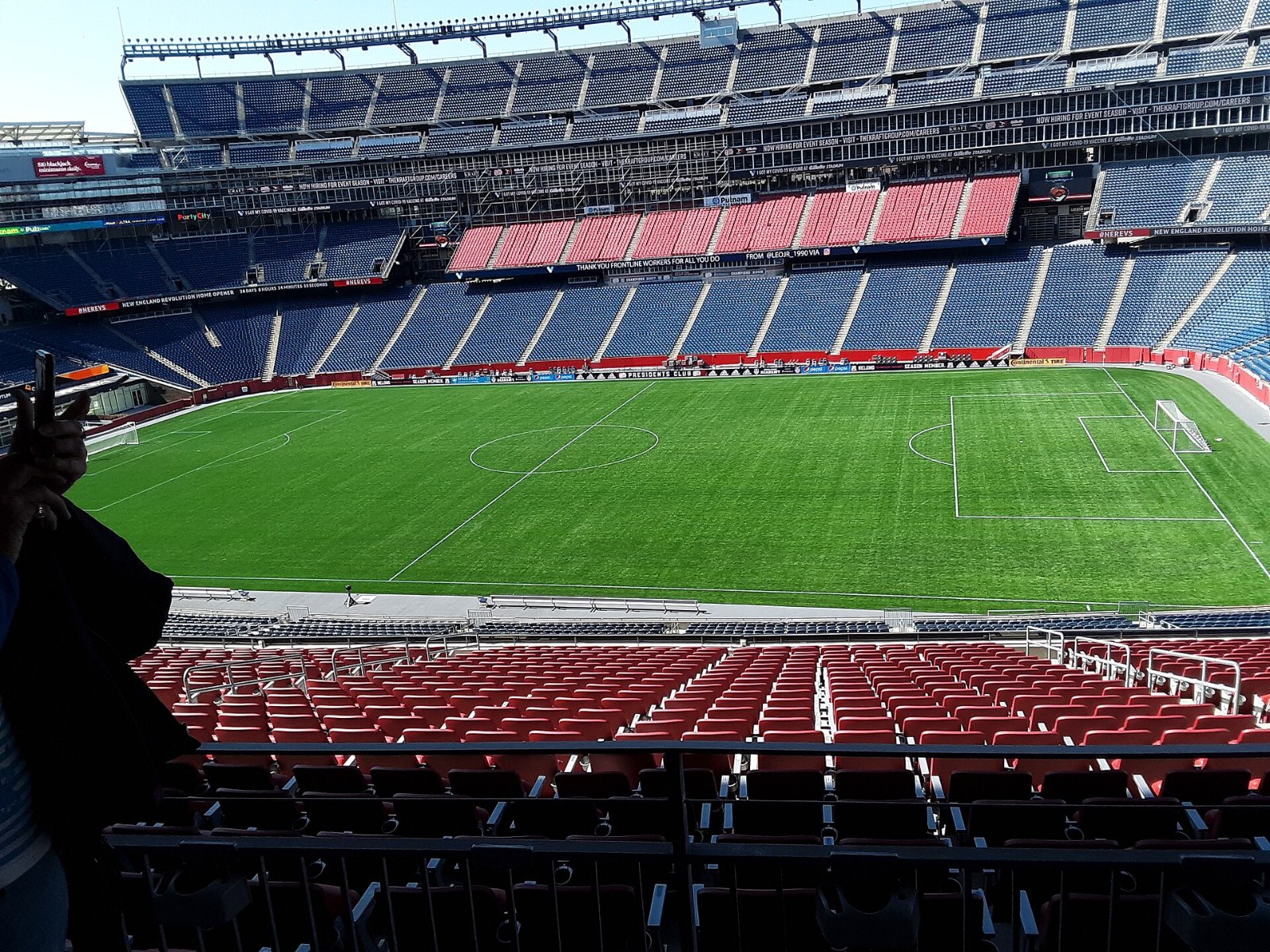
The most recent example is the Astronomer case. In July 2025, the camera at a Coldplay concert at Gillette Stadium near Boston captured the software company’s CEO, Andy Byron, in a close embrace with its head of HR, Kristin Cabot. The video went around the world; both resigned. Byron said little publicly and also declined an interview with the NYT. Cabot went public after five months, first in the NYT and then, in March 2026, in a conversation with Oprah Winfrey. Her account: She had been doxxed, meaning her personal information had been spread online. A local radio station had broadcast her address, she said, and her phone number had been accessible to anyone. For weeks, she received 500 to 600 calls a day, she said. She said she had received not 900 death threats, as People magazine had reported, but 50 to 60. She called her behavior that evening a bad decision for which she takes responsibility. The reports do not say whether the NYT checked her statements in detail; this is her account. That she herself corrected a circulating figure downward, however, tends to argue against a staged martyrdom. It should also be noted that a head of HR is precisely the person who is supposed to enforce the rules on workplace relationships. Cabot was an experienced executive, not a newcomer.
Are women punished more harshly than men for misconduct? A study by economists Mark Egan, Gregor Matvos and Amit Seru, published in 2022 in the Journal of Political Economy, is often cited on this point. It concerns not affairs, however, but professional misconduct in the American financial advisory industry, as recorded in the BrokerCheck registry of the regulator FINRA. Men were three times as likely as women to have such a record, about one in 11 compared with one in 33. They were twice as likely to reoffend. Their misconduct was on average 20 percent more costly. Nevertheless, 55 percent of women left their firm after an incident, but only 46 percent of men; the authors interpret this as job loss. Of those affected, 33 percent of women found a new job in the industry within a year, compared with 47 percent of men. At firms with equal numbers of women and men in management, the gap largely disappeared. The study says nothing about how women in affairs at the top of companies are treated.
A cross-check shows that unequal standards do not cut only one way. Legal scholar Sonja Starr found in 2012, using data from U.S. federal courts, that men with comparable circumstances receive sentences that are on average more than 60 percent longer than women’s and that convicted women are twice as likely to avoid prison. For the top of the corporate world, a study led by management researcher Vishal Gupta reached the opposite conclusion in 2020: Female CEOs of large U.S. companies were about 45 percent more likely to be dismissed than male CEOs between 2000 and 2014. Good results protected them less. This study, too, concerns dismissals in general, not affairs. For affairs at the top of companies, there are simply no systematic data, only cases.
Psychologists Michelle Ryan and Alex Haslam coined the term “glass cliff” in 2005: Women are disproportionately often given leadership posts in times of crisis. Later meta-analyses show that this effect depends heavily on context. With Colette Kress, a woman is now leading Nvidia for the first time, in the middle of the worst crisis in its recent history. In fairness, it should be noted that in such situations boards often make the CFO the interim solution, regardless of gender: Bob Swan at Intel in 2018, Murray Auchincloss at BP in 2023, Cathie Lesjak at HP in 2010. The test comes later: Will Kress be seriously considered as permanent CEO? The tech news site The Information wrote even before the resignation that she was not seen as a long-term solution.
And then there are the women who appear in the coverage of Huang. What needs to be said about Alice Huang has been said above: If the suspicion is true, she is a perpetrator; if it is not, she is the victim of prejudgment. The manager with whom Huang had a relationship, according to the NYT, is an experienced executive and, according to the NYT and Axios, married herself. She has not commented on the reports. American media identified her by name, age and position. Expertistan does not. She is not a public figure in the narrower sense. Her name contributes nothing to clarifying the governance question. The Swiss Press Council, in its Guideline 7.2, calls for careful consideration before people are identified. Expertistan would exercise the same restraint toward a man in the same role. Nothing more is known about the employee Reuters reported on; Reuters does not name her either.
Reversed roles: Does it happen the other way around?
Are there cases in which a man accused a famous woman of an affair or of a relationship marked by a power imbalance? There are. In South Carolina’s 2010 gubernatorial campaign, two men claimed to have had affairs with candidate Nikki Haley. One was the blogger Will Folks, who had previously worked for her as a communications consultant. The other was the lobbyist Larry Marchant, who was working for one of her rivals. Marchant admitted that he had no evidence. Both later gave sworn statements. Haley denied everything and won the election; the allegations barely hurt her popularity.
In Northern Ireland, lawmaker Iris Robinson, wife of the then-first minister, had an affair in 2008, at age 59, with 19-year-old Kirk McCambley. She obtained £50,000 for him from two property developers to open a cafe; according to a report by the regional parliament, he paid her £5,000. Robinson resigned in January 2010; there were no charges. Here, the woman held the power and the young man was the material beneficiary. At the Royal Bank of Canada in 2024, it was the CFO whom the bank accused of having favored an employee because of a close personal relationship. At New York University, an investigation concluded in 2018 that literature scholar Avital Ronell had sexually harassed her former doctoral student Nimrod Reitman; she was suspended for a year without pay. Ronell denies the allegations. It is not a mirror image of the classic case, because she identifies as queer and he identifies as gay. But it shows that women in positions of power are also accused of such abuse and sanctioned for it.


The roles of informants and accusers are not fixed either. In the Bezos case, according to The Wall Street Journal, it was a man, the girlfriend’s brother, who sold the intimate messages. In the Haley case, two men made the allegations. In the Borer case, discussed below, a woman was, by her own account, pressured by a journalist and, according to the publisher, received money for her statements. That reversed cases are rarer fits two research findings: Women hold fewer positions of power; moreover, men on average place less weight on a partner’s status. With every woman who rises to the top, there are likely to be more such cases. The Royal Bank of Canada case suggests that the same rules will then apply. Ahn, however, accuses the bank of basing its decision on gender stereotypes about friendships between women and men.
The Swiss perspective
Switzerland knows the mechanics of such affairs firsthand. It also knows their dark side. On Easter Sunday, March 31, 2002, SonntagsBlick published photos that were supposed to show a Berlin makeup artist leaving the Swiss Embassy at night. Its sister paper, Blick, quoted the woman describing an affair with Ambassador Thomas Borer. The diplomat denied everything, was recalled to Bern by Federal Council member Joseph Deiss and lost his post. In July 2002, Djamile Rowe recanted her story in a sworn statement. She said she had been pressured by a journalist. The editor in chief of SonntagsBlick resigned; publisher Michael Ringier apologized to Borer and his wife and reached a settlement. Ringier said he learned only afterward that Rowe had received 15,000 francs for her false statements. The paper had also printed nude photos of the woman from 1992, which, according to the magazine Super Illu, the journalist had obtained from its archive under a pretext. Ringier paid the magazine damages.

In many respects, the Borer case is the counterpart to the Huang case. It shows how quickly an unsubstantiated claim can destroy a man’s career; here, the man was the victim. The woman, however, was not merely a tool. According to Ringier, Rowe received 15,000 francs for statements she later recanted. By her own account, it was a journalist who had pressured her. The main responsibility lay with the newsroom and the publisher, which printed an unsubstantiated story. But part of the responsibility also lay with Rowe, who accepted payment for false statements. Both are a warning to those who now judge Alice Huang as if her case were already settled, in one direction or the other.
In corporate governance, Switzerland offers a clear contrast to Nvidia. The Swiss Code of Best Practice for Corporate Governance published by economiesuisse recommends in principle that the chairmanship of the board and operational management be separated. Where both are in one person’s hands, an experienced independent member should act as a counterweight. For more than three decades, Nvidia had no board chairman at all, but rather a founder who ran the company and sat on the board. That Harvey Jones now serves as its first chairman may sound like a formality. By the logic of Swiss governance, it is the real lesson of the crisis.

The claims, fact-checked
The most common claims of both camps, measured against the evidence in this analysis:
| Claim | Finding |
|---|---|
| “In such affairs, the women are always the victims.” | Not tenable. In most of the corporate cases compared, no coercion was alleged. Some partners benefited materially, according to their employers (World Bank, McDonald’s, Kohl’s); a suspected agent would be a perpetrator. Others paid a high price (Keeler, Lewinsky, Cabot). |
| “The men are always the perpetrators.” | Not tenable. In consensual relationships, there is no perpetrator in the criminal sense. The men are usually accused of conflicts of interest or of untruths told to the board, not of assault. |
| “People with ordinary incomes don’t have affairs because there’s nothing to be gained from them.” | Not tenable. In the U.S., 20% of married men and 13% of women said they had cheated; education plays no significant role overall. Power increases the propensity in both sexes. For the powerful, it is mainly the consequences that are greater. |
| “Women almost always find the highest-ranking man the most attractive.” | Supported as a tendency, exaggerated as a rule. Women on average give more weight to status and income (Buss, Walter, Hitsch). These are averages with considerable overlap; most office romances develop between peers. |
| “Powerful, wealthy women are just as attractive to men.” | Mostly not, with caveats. In surveys and marriage data, men on average give less weight to a partner’s income and status (Fisman, Hopcroft). In real encounters, Eastwick and Finkel found no difference. The reasons are disputed. |
| “Women are punished more harshly for misconduct.” | Partly. In the U.S. financial advisory industry, yes (Egan, Matvos, Seru); in U.S. criminal justice, the reverse is true (Starr). Systematic data on affairs at the top of companies are lacking. |
| “No woman has ever been punished.” | Not tenable. Cabot, Ahn and the CNN manager lost their jobs, Broadwell her promotion; Keeler went to prison for perjury in a separate case. Hill and Iris Robinson resigned; Hill also filed for personal bankruptcy. |
| “The men are removed without due process.” | Not tenable. There were almost always internal investigations, often involving outside law firms, even if several CEOs left before they concluded. As a rule, there were no court proceedings. Huang, too, left before the investigation concluded; according to The Information, it is continuing. |
| “A boss cannot promote a direct subordinate at all.” | Not tenable. Raises, stock grants, titles and transfers with pay jumps are documented or alleged (World Bank, McDonald’s, RBC). At Nvidia, Huang by his own account reviewed all salaries himself. |
| “The blame lies with the U.S. government.” | Partly. According to the NYT, it did not warn Huang, even though it had known of the suspicions for about a year. But his closeness to the Megaspeed executive had been public since October 2025. Treasury Secretary Bessent now holds the Commerce Department responsible for Megaspeed not being blacklisted sooner. |
| “Alice Huang sold Nvidia chips to China.” | Unproven. There are media reports and Justice Department investigations into Megaspeed, but no indictment; Megaspeed denies illegal exports and says Alice Huang left the company in August 2025. |
| “Ousted top executives land softly.” | Partly. Hurd, Krzanich and Looney found new top jobs. Easterbrook lost hundreds of millions, Looney tens of millions; Freixe left without severance. |
| “The betrayed wife gets rich without contributing anything.” | Oversimplified. In California, what is acquired during the marriage belongs to both spouses equally; in Switzerland, under participation in acquired property, each spouse is entitled to half of the other’s surplus when the regime is dissolved, unless a prenuptial agreement provides otherwise. MacKenzie Scott kept a quarter of the couple’s Amazon shares. |
Arena: Should Huang have stayed?
The question divides investors, lawyers and the public. Since the resignation, it has also been framed as a question of whether he should return. The main arguments on both sides:
Yes, Huang should have stayed
- His achievements are undisputed. Since 2023 alone, the company’s market value has risen from about $1 trillion to a peak of about $5.8 trillion. Revenue in fiscal 2026 was $215.9 billion.
- Infidelity is not a crime and, at most companies, not grounds for dismissal. The Bezos case shows that a private affair with no connection to the hierarchy need not have consequences.
- By its own account, the board had no reason to believe that secrets had leaked. There is no indictment against Alice Huang.
- According to the NYT, the U.S. government had known of the suspicions for about a year and did not warn Huang, even though such a warning had worked in the Swalwell case. If Alice Huang was a recruited source, Huang was also the target of an operation from which his own government did not protect him.
- So far, there is no public evidence of favoritism toward the manager. Consensual relationships between adults are common. In the U.S., according to SHRM, 64 percent of workers oppose bans.
- A resignation under pressure from headlines and politicians sets a precedent: CEOs become hostages to political moods.
- Huang left before the investigation produced a result. A petition that, according to CNBC, about 180,000 people have signed calls for his reinstatement until the facts are clarified. The signatories include Elon Musk and thousands of people who identify themselves as Nvidia employees. Amazon founder Jeff Bezos advised, according to Reuters, against putting an outsider at the top without Huang. President Trump would not object to a return.
- For shareholders, losing a key person is costly. The market reacted on Nov. 12, 2026, with an intraday drop of about 14 percent.
No, the resignation was right
- Rules apply to everyone. Krzanich, Easterbrook, Looney and Freixe had to leave over consensual relationships; the Royal Bank of Canada fired its CFO. An exception for the most powerful CEO in the industry would devalue every code of conduct.
- A relationship with a direct subordinate is a conflict of interest, especially since Huang, in his own words, personally reviewed the pay of all employees. If a witness really was silenced with a nondisclosure agreement, that weighs more heavily than the affair itself.
- Closeness to an executive of a major customer whom U.S. intelligence agencies, according to the NYT, classify as a source for Beijing makes the CEO of a strategically central company vulnerable to blackmail, regardless of what actually happened. The warning signs had been public since October 2025.
- Credibility was damaged. At the end of October, Nvidia spoke of ordinary customer contacts; 10 days later came the confession. A class action and the congressional inquiries take this as their starting point.
- The allegations have not diminished since the resignation. Reuters reports on another relationship with an employee; according to The Wall Street Journal, the SEC is investigating the company. The board rules out a return. The interim leadership delivered record results and a higher forecast; according to Kress, partners and suppliers are standing by the company.
- A board that cannot hold its founder accountable is not an oversight body. The appointment of a first chairman is the overdue correction.
- The internal signal matters. Employees, women and men alike, must be able to rely on no one receiving preferential treatment in pay and promotion because he or she is close to the boss.
What Nvidia faces now
The first test went well for the interim leadership, at least on the stock market. On Tuesday, Nov. 17, 2026, Nvidia reported revenue of $115.8 billion for the third quarter of fiscal 2027, up 103 percent from a year earlier and well above the $108 billion it had forecast. The adjusted gross margin rose to 74.9 percent, according to Reuters. For the fourth quarter, the company expects $130 billion, plus or minus 3 percent; analysts had expected about $125 billion. The forecast assumes no sales of data center chips to China; the quarter also has an extra week. The adjusted gross margin is expected to fall to between 71 and 72 percent in the fourth quarter. Revenue in fiscal 2028 is expected to grow by about 75 percent instead of the 70 percent previously announced. The stock rose about 4 percent in after-hours trading; as of Tuesday’s close, it had lost about 17 percent since the start of the year. It should be noted that the quarter ended on Oct. 25, 2026, and was thus still entirely under Huang’s leadership. “Our momentum is real,” Kress said. Joining her on the conference call were board Chairman Harvey Jones and CUDA pioneer Ian Buck. Huang’s return as CEO is out of the question, Jones said, according to Reuters; he added that the company would not answer questions about his departure. The board has hired the executive search firm Heidrick & Struggles for the search. It said it wants to decide quickly, but not at the cost of making the wrong choice. The board also created a committee on national security and export controls. Nvidia plans to file its quarterly report with the SEC only in the coming weeks, rather than on the day of the results as usual.
| Issue | Status | Risk |
|---|---|---|
| Internal investigation | Committee of independent directors with Wachtell Lipton and Joon H. Kim; continuing despite the resignation, according to The Information; no date for findings | Disclosure of further violations; questions about severance and clawbacks |
| Justice and regulators | Justice Department investigating Megaspeed and, according to Semafor, also Supermicro and Nvidia on antitrust grounds; SEC investigation, according to The Wall Street Journal; FBI reviewing the case, according to Trump | Criminal consequences for third parties; fines; conditions on exports |
| Congress | House: transcribed interview requested for Dec. 1, 2026, agreed to according to Moolenaar; Senate: Huang hearing requested for Dec. 3, 2026, Commerce Secretary Lutnick on Dec. 10, 2026; newly elected Congress from January | Public hearings; subpoenas; stricter export laws |
| Export rules | Since Nov. 16, 2026, license requirement for certain AI chips to Singapore, Malaysia, Thailand, Indonesia and Brazil, and for data centers abroad that rent computing power to Chinese companies | Lower sales in Southeast Asia; more customer vetting |
| Shareholder lawsuit | Class action in federal district court in San Jose since Nov. 9, 2026 | Damages; disclosure of internal documents |
| Succession | Search with Heidrick & Struggles, internal and external; names mentioned include CUDA pioneer Ian Buck and research chief Bill Dally; board rules out Huang’s return | Talent drain; change in strategy; pressure from Huang supporters |
| Culture | Flat organization, tailored to one person | Decision gridlock without the founder |
On succession, the board has no ready-made plan because the founder never wanted one. Besides internal candidates, The Information also named AMD CEO Lisa Su and Arm CEO Rene Haas as possible targets for headhunters. Su, however, runs a direct competitor and is a distant relative of Huang. President Trump publicly recommended former Apple CEO Tim Cook. Huang’s children, Madison and Spencer, do work at Nvidia. But whether either of them could take on the role is considered doubtful. More likely is a longer transition period in which Kress is responsible for the numbers and the technologists for the products. The question is whether a company that for decades was geared to the intuition of one individual can keep up the same speed without him. Analysts are divided. Morgan Stanley and Bank of America kept their buy ratings but removed Nvidia from their top-pick lists. Baird downgraded the stock to neutral even before the resignation. After the quarterly results, analysts saw the greater risk in execution without the founder and less in demand for AI chips, according to Reuters.
Politically, Huang’s departure is not the end of the matter. Instead of the briefing on Nov. 18, 2026, the three House committee chairmen asked Huang for a transcribed interview behind closed doors on Dec. 1, 2026. Otherwise, they warned, he could face a subpoena. According to John Moolenaar, Huang and Nvidia representatives have agreed, but the date is still open. The Senate Banking Committee has asked Huang to appear at a public hearing on Dec. 3, 2026, and Commerce Secretary Lutnick on Dec. 10, 2026. Whether Huang will appear before the Senate is unclear. But the lawmakers’ questions are just as much directed at the company: How does Nvidia vet its customers? How does the company protect its know-how? Who controls where the chips go after they are sold? These questions will stay with the company even after the newly elected Congress convenes in January. For a company whose business depends on Washington’s goodwill and on access to global markets, that is a greater danger than any headline about its founder’s private life.
Commentary: The affair is not the scandal
Jensen Huang did not leave because he cheated on his wife. He left because power without a counterweight, a reported relationship with a subordinate, business ties to a suspected agent and a hesitant relationship with the truth all came together in him. He might have survived any one of these elements on its own. Together, they turned a private failing into a question of corporate governance and national security.
Those who now lament that a brilliant entrepreneur has fallen victim to moral hysteria miss the point. No one would have needed to reproach Huang for his infidelity as long as it remained a private matter. It became a problem where it reached into the hierarchy of his company and into business dealings with a customer that the authorities had long had in their sights. The idea that top performance, of all things, should exempt someone from such rules is the logic of feudalism, not that of a corporation. The campaign for Huang’s return is right on one point: The board owes shareholders and the public the findings of its investigation. A resignation is no substitute for establishing the facts.
Besides Huang, the greatest responsibility lies with a board that for three decades allowed a global company to be built around a single person, with no chairman, no succession plan and a body that followed the founder rather than overseeing him. The appointment of Harvey Jones as its first chairman is right, but it comes late. Part of the responsibility also lies with a government that knew of the suspicions against the Megaspeed executive for about a year but did not warn the person concerned. Whether it considered the ongoing surveillance more important is an open question; according to the NYT, concern for trade relations with China also played a role. That the departments are now shifting the blame onto one another does not make it any better.
And then there remains a finding that is likely to make both camps in this debate uncomfortable. The simple stereotypes do not hold up. The women in such affairs are adults with minds of their own. Some were exploited, some benefited, some deceived. Many paid a price out of all proportion to their part. If Alice Huang really did work for Beijing, she was not a victim but a perpetrator. In this part of the story, Huang, if he was unaware, would himself be one of the deceived, though one who could and should have seen the warning signs. Responsibility follows not gender but role. Those who had the power and the duty bear the largest share; at Nvidia, that was the founder and his board. Anyone who writes about the double standards of the powerful should not invent new ones, either at the expense of men or at the expense of women.
Editor’s note
As far as is known, no charges have been filed against Jensen Huang or Alice Huang. Neither Nvidia nor Huang nor the manager has confirmed the NYT’s reports about the relationship with a manager who reported directly to him. The same applies to the Reuters report about a relationship with another employee. Expertistan does not name the two employees in order to protect their privacy. Figures from surveys and self-reports are identified as such in the text. The lead image is an illustration by the editors. This article is current as of Wednesday, Nov. 18, 2026. The quarterly results of Nov. 17, 2026, are included. Sources are cited in their original language.
Sources
- Nvidia / SEC: Form 8-K on Jensen Huang’s resignation, Nov. 12, 2026, sec.gov
- Nvidia: “NVIDIA Announces CEO Transition,” Nov. 12, 2026, sec.gov
- Nvidia: “Statement from NVIDIA Board of Directors,” Nov. 8, 2026, investor.nvidia.com
- Jensen Huang: “A Message to Our Company,” Nov. 8, 2026, nvidianews.nvidia.com
- Nvidia: Code of Conduct, nvidia.com
- Associated Press: Nvidia investigates whether Huang was the target of an espionage operation, Nov. 8, 2026, and Nov. 10, 2026, valleynewslive.com, newstribune.com
- The New York Times: Report on how U.S. agencies classify Alice Huang, Oct. 29, 2026, summarized by GV Wire and The Hill
- The New York Times: Report on the relationship with a manager who reported directly to him, Nov. 11, 2026, summarized by Axios
- Anadolu: Huang apologizes; NYT report on the memo under Marco Rubio, Nov. 8, 2026, aa.com.tr
- Singapore Police Force: Clarification on The Wall Street Journal’s article, Oct. 30, 2026, police.gov.sg
- Euronews: China rejects espionage allegations, Oct. 30, 2026, euronews.com
- The Edge Malaysia: Malaysia’s Trade Ministry on Speedmatrix, Nov. 10, 2026, theedgemalaysia.com
- Fox Business: Suspected Chinese source had access to Huang, October 2026, foxbusiness.com
- Reuters: Bernstein analyst Stacy Rasgon on Huang’s role, November 2026, via Devdiscourse
- AI Weekly / NBC: Trump calls Huang “honorable,” Nov. 8, 2026, aiweekly.co
- CNN: Nvidia stock falls after investigation is opened, Nov. 9, 2026, keyt.com
- Fortune: Nvidia’s power structure around Huang, Nov. 9, 2026, fortune.com
- The Next Web: The board’s investigation, Wachtell Lipton and Joon H. Kim, November 2026, thenextweb.com
- TechCrunch: First shareholder lawsuits against Nvidia, Nov. 9, 2026, techcrunch.com
- ABC News: Republicans consider subpoenaing Huang, Nov. 10, 2026, abc30.com
- Business Insider / Politico: Sen. Kevin Cramer calls for resignation, Nov. 11, 2026, via DNYUZ
- Gizmodo: Subpoena threat and report by The Information, Nov. 11, 2026, gizmodo.com
- The Standard (Hong Kong): Search for a successor, according to The Information, November 2026, thestandard.com.hk
- FourWeekMBA: Share price data, 2026 annual report and reaction to the WSJ report, Nov. 11, 2026, fourweekmba.com, 2026 share price performance
- MarketPulse: Preview of the quarterly results, Nov. 11, 2026, marketpulse.com
- Fox Business: Downgrades and top-pick lists, November 2026, foxbusiness.com
- GovInfoSecurity: “Nobody Knows What Happened at Nvidia,” November 2026, govinfosecurity.com
- U.S. Senate, Banking Committee (minority): Statement by Elizabeth Warren, June 8, 2026, banking.senate.gov
- Egan, Matvos, Seru: “When Harry Fired Sally: The Double Standard in Punishing Misconduct,” Journal of Political Economy, 2022, NBER Working Paper 23242
- Cline, Walkling, Yore: “The consequences of managerial indiscretions: Sex, lies, and firm value,” Journal of Financial Economics, 2018, RePEc, Drexel University
- Griffin, Kruger, Maturana: “Personal infidelity and professional conduct in 4 settings,” PNAS, 2019, doi.org
- Lammers, Stoker, Jordan, Pollmann, Stapel: “Power increases infidelity among men and women,” Psychological Science, 2011, Tilburg University
- Gupta, Mortal, Silveri, Sun, Turban: “You’re Fired! Gender Disparities in CEO Dismissal,” Journal of Management, 2020, Clemson University
- Ryan, Haslam: “The Glass Cliff,” British Journal of Management, 2005
- PwC Strategy&: CEO Success Study 2018, published May 15, 2019, CNBC
- Swiss Code of Obligations (CO), Articles 328, 328b, 717 and 726, fedlex.admin.ch
- economiesuisse: Swiss Code of Best Practice for Corporate Governance, 2023, economiesuisse.ch
- Swiss Press Council: Guidelines to the Declaration of the Duties and Rights of a Journalist, Guideline 7.2, presserat.ch
- Swissinfo: The Borer affair, the editor in chief’s resignation and Michael Ringier’s apology, 2002, swissinfo.ch, swissinfo.ch
- Boeing: Resignation of Harry Stonecipher, March 7, 2005, boeing.mediaroom.com
- CNBC: SEC fines Steve Easterbrook, Jan. 9, 2023, cnbc.com
- Irish Times: Bernard Looney forfeits £32.4 million, Dec. 13, 2023, irishtimes.com
- Anadolu: Axel Springer relieves Julian Reichelt of his duties, Oct. 18, 2021, aa.com.tr; allegations of abuse of power, horizont.net; denial by Reichelt, Reuters via Dawn
- Al Jazeera: Nestlé fires Laurent Freixe, Sept. 2, 2025, aljazeera.com
- Fortune: Kohl’s fires Ashley Buchanan, May 2025, fortune.com
- Deseret News: Kristin Cabot with Oprah Winfrey, March 17, 2026, deseret.com
- CBS News: Katie Hill’s farewell speech, Oct. 31, 2019, cbsnews.com; text according to AP, via GV Wire
- Entrepreneur: Huang personally reviews the pay of all 42,000 employees (All-In podcast), Aug. 11, 2025, entrepreneur.com
- Gigazine: Summary of the NYT’s October 2025 report on Megaspeed and Alice Huang, Oct. 12, 2025, gigazine.net
- The New York Times: Profile of Alice Huang, November 2026, syndicated by The Nightly
- AI Weekly: The NYT’s account of the scene in Taipei in June 2024, October 2026, aiweekly.co
- Implicator: Surveillance over suspected chip smuggling, October 2026, implicator.ai
- Let’s Data Science: Officials’ assessment of what Huang knew, October 2026, letsdatascience.com
- Tom’s Guide: The missing defensive briefing, October 2026, tomsguide.com
- The San Francisco Standard: Trump’s restraint and Nvidia’s expectations of the government, Nov. 9, 2026, sfstandard.com
- Fox 10 Phoenix: Declassified FBI files on the defensive briefing for Eric Swalwell, Aug. 18, 2026, fox10phoenix.com
- The New York Times: Report on the relationship with the manager and the Nvidia code, Nov. 11, 2026, syndicated by The Nightly
- Nvidia: Code of Conduct, 2017 version, nvidia.cn
- Nvidia: Anti-Corruption Policy, nvidia.com
- Bloomberg Law: McDonald’s sues Steve Easterbrook, Aug. 10, 2020, bloomberglaw.com; text of the complaint according to Fenwick
- The Washington Times (AP): Investigation into Shaha Riza’s pay and promotion, May 2, 2007, washingtontimes.com
- The New York Sun: Shaha Riza’s transfer and promised promotion, 2007, nysun.com
- Fox News: World Bank panel finds a rules violation, 2007, foxnews.com
- CBC: The Royal Bank of Canada and Nadine Ahn, August 2024, cbc.ca
- American Banker: Lawsuits by Nadine Ahn and Ken Mason, August 2024, americanbanker.com
- Advisor.ca: Ahn acknowledges supporting pay raises, advisor.ca
- AOL (AP): Kohl’s fires Ashley Buchanan, Chandra Holt’s role, May 2025, aol.com; Chandra Holt’s statement to the WSJ, via Retailwire; BCG’s termination of her consulting contract, aol.com
- Next TV: Resignations of Jeff Zucker and Allison Gollust at CNN, Feb. 15, 2022, nexttv.com
- CNBC: BP names Murray Auchincloss, disclosed relationship, via oilandgas360.com
- Fortune: Bernard Looney becomes CEO of Prometheus Hyperscale, March 31, 2026, fortune.com
- SHRM: Workplace Romance 2023, Feb. 7, 2023, shrm.org
- SHRM: Workplace Romance 2024, Feb. 14, 2024, shrm.org, press release
- HCAMag: Handling reporting lines in office romances, hcamag.com
- 2011 CareerBuilder survey (conducted from Nov. 9 to Dec. 5, 2011), via Plansponsor and HR Reporter
- 2012 CareerBuilder survey (conducted in November 2012), via CBIA and Workology
- 2015 CareerBuilder survey (conducted from Nov. 4 to Dec. 1, 2015), via HR Online
- Frankenbach, Weber, Loschelder, Kilger, Friese: “Sex drive: Theoretical conceptualization and meta-analytic review of gender differences,” Psychological Bulletin, 2022, doi.org, Leuphana
- Institute for Family Studies (Wendy Wang): “Who Cheats More? The Demographics of Infidelity in America,” 2018, ifstudies.org
- Buss: “Sex differences in human mate preferences: Evolutionary hypotheses tested in 37 cultures,” Behavioral and Brain Sciences, 1989, cambridge.org
- Walter et al.: “Sex Differences in Mate Preferences Across 45 Countries: A Large-Scale Replication,” Psychological Science, 2020, doi.org
- Hitsch, Hortaçsu, Ariely: “What makes you click? Mate preferences in online dating,” Quantitative Marketing and Economics, 2010, Duke University
- Fisman, Iyengar, Kamenica, Simonson: “Gender Differences in Mate Selection: Evidence From a Speed Dating Experiment,” Quarterly Journal of Economics, 2006, doi.org, Columbia Business School, Stanford GSB
- Hopcroft: “High income men have high value as long-term mates in the U.S.,” Evolution and Human Behavior, 2021, doi.org, IFS
- Eastwick, Finkel: “Sex differences in mate preferences revisited,” Journal of Personality and Social Psychology, 2008, PubMed; replication by Selterman et al., SAGE Open, 2015, DOAJ
- Bertrand, Kamenica, Pan: “Gender Identity and Relative Income within Households,” Quarterly Journal of Economics, 2015, NBER
- Binder, Lam: “Is There a Male-Breadwinner Norm? The Hazards of Inferring Preferences from Marriage Market Outcomes,” Journal of Human Resources, 2022, RePEc
- Rosenfeld, Thomas, Hausen: “Disintermediating your friends,” PNAS, 2019, PMC
- U.S. Bureau of Labor Statistics: American Time Use Survey 2024, bls.gov
- Keystone-SDA: Women in leadership positions in Switzerland in 2025, via swissinfo.ch
- U.S. Bureau of Labor Statistics: “Women in the labor force: a databook,” 2024 edition, Table 3, bls.gov
- Federal Statistical Office of Germany (Destatis): Women in leadership positions in 2024, via ihre-vorsorge.de
- CBS News: The Starr report on Lewinsky’s job search, 1998, cbsnews.com; timeline of the Starr report, constitution.org, australianpolitics.com
- Time: Figures on Monica Lewinsky’s book advance and legal fees, March 1999, time.com; Channel 4 interview according to CBS News and AFP, via The Daily Star; ABC’s revenue according to Maclean’s
- Monica Lewinsky in Vanity Fair, 2014 and 2018, summarized by Ebony, The Week and Spiked
- Fox LA: Katie Hill’s lawsuit against the Daily Mail dismissed, April 2021, foxla.com; personal bankruptcy, July 2022, signalscv.com; ethics investigation, mediaite.com
- Roll Call: Departures from the 115th Congress, 2019, rollcall.com
- The New York Times: Interview with Kristin Cabot, Dec. 18, 2025, summarized by Raw Story, KTLA and ABC7; conversation with Oprah Winfrey, foxnews.com
- Egan, Matvos, Seru: The authors’ articles on “When Harry Fired Sally,” PRI, ProMarket, RePEc
- Starr: “Estimating Gender Disparities in Federal Criminal Cases,” University of Michigan Law and Economics Research Paper 12-018, 2012, SSRN
- Time: “Great Britain: The Time of the Trollop,” June 21, 1963, on Christine Keeler’s fee, time.com; imprisonment, Irish Times; offer to the press after December 1962, The Post
- CNBC: The National Enquirer paid Michael Sánchez $200,000, according to the WSJ, March 19, 2019, cnbc.com
- Reuters: Divorce of Jeff and MacKenzie Bezos, April 4, 2019, via SABC; AP, fox10phoenix.com
- Gulf News and IBTimes: Lori Huang, family trusts, no known separation, November 2026, gulfnews.com, ibtimes.co.uk
- California Family Code §§ 2550 et seq., Justia; overview DivorceNet
- Courts of the Canton of Zurich: Participation in acquired property, Article 215 of the Swiss Civil Code, gerichte-zh.ch
- CBS News: Will Folks and Nikki Haley, 2010, cbsnews.com, cbsnews.com; Fox News on Larry Marchant, foxnews.com
- The Scotsman: Regional parliament’s report on Iris Robinson, scotsman.com; RTÉ, rte.ie; no charges, thepinknews.com
- The Chronicle of Higher Education: Avital Ronell and Nimrod Reitman, Aug. 15, 2018, chronicle.com; Artforum
- Reuters: Quarterly results, Harvey Jones’ statements on Huang and on the succession search with Heidrick & Struggles, national security committee, SEC according to The Wall Street Journal, Jeff Bezos, Nov. 17, 2026, via AOL
- TechCrunch: Revenue of $115.8 billion, forecast and statements by Colette Kress, Nov. 17, 2026, techcrunch.com
- Fortune: Kress on the quarter, 10-Q filing in the coming weeks, Nov. 17, 2026, fortune.com
- Livewire Markets: Extra week in the fourth quarter, forecast for fiscal 2028, Nov. 17, 2026, livewiremarkets.com
- Reuters: Relationship with another employee, Nov. 12, 2026, via Korea JoongAng Daily and The Jerusalem Post
- Reuters: Megaspeed on Alice Huang’s departure, Nov. 15, 2026, via The Daily Guardian; internal investigation with outside lawyers according to CNBC, via RootData
- Dallas Express: Letter from the three committee chairmen dated Nov. 12, 2026, setting the Dec. 1, 2026, date, dallasexpress.com
- Türkiye Today (CBS News): Moolenaar on the agreement to an interview with three committees, Nov. 15, 2026, turkiyetoday.com
- Al Jazeera: Senate Banking Committee summons Huang and Lutnick, Nov. 13, 2026, aljazeera.com
- CBS News: Bessent on the Commerce Department, Lutnick’s agreement to appear on Dec. 10, 2026, Nov. 13, 2026, cbsnews.com
- Techlicious: The Commerce Department’s new export rule of Nov. 16, 2026, techlicious.com; The Next Web, thenextweb.com
- Business Day (Reuters): Trump suggests Tim Cook as successor, Nov. 12, 2026, businessday.co.za
- The Next Web (CNBC): Board not considering a return, Trump’s statements, petition, Nov. 16, 2026, thenextweb.com; TNND, cbsaustin.com
- Tesla North: The “Stand with Jensen” petition and Elon Musk, Nov. 15, 2026, teslanorth.com
- Let’s Data Science: Semafor’s report on several Justice Department investigations, November 2026, letsdatascience.com
- The Next Web: The Information on the continuing investigation, November 2026, thenextweb.com



Comments 0