Rebuke or free rein: What’s at stake in the 2026 midterms
On Nov. 3, 2026, the United States will elect a new House of Representatives and a third of the Senate. The Democrats lead in the polls, but new congressional districts and tight races keep the election open.
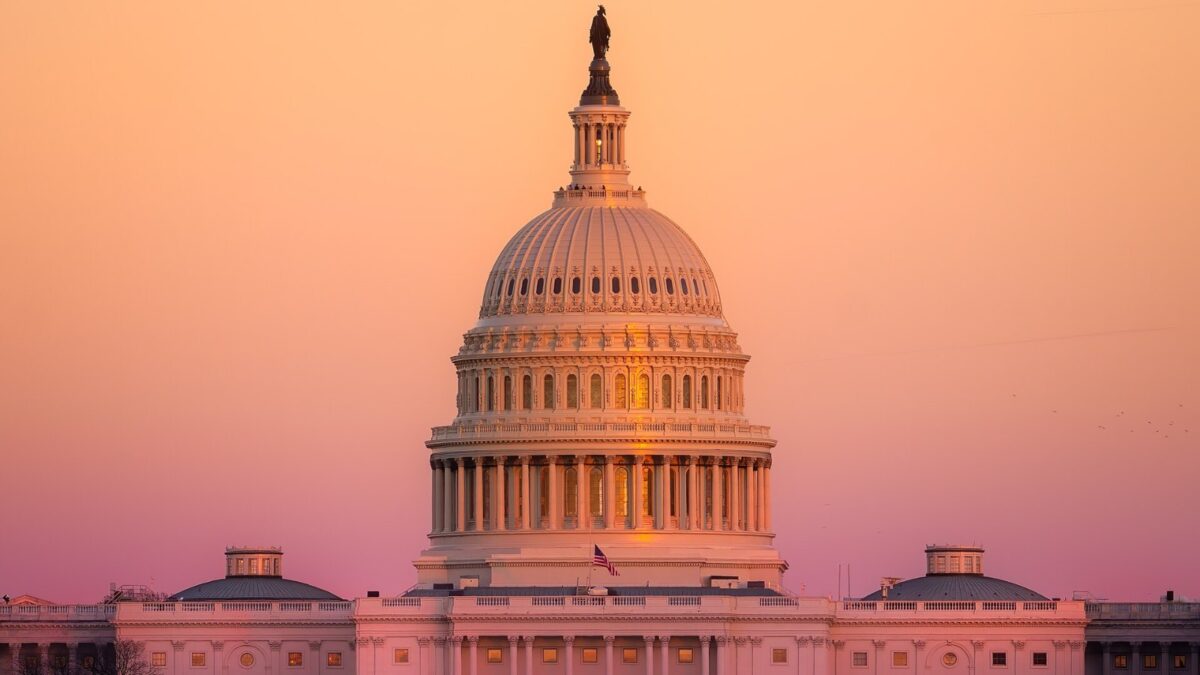
Donald Trump is not on any ballot on Nov. 3, 2026. Yet this election is about him: about how much power he will have left for the second half of his term. Voters will elect all 435 members of the House of Representatives and 35 of the 100 senators, as well as governors in 36 states and three territories. Republicans currently control both chambers, the House by 219 seats to 214 (including an independent who caucuses with them) and the Senate by 53 to 47. If they lose even one of them, Trump will govern for his last two years in office with a Congress that can push back against him.
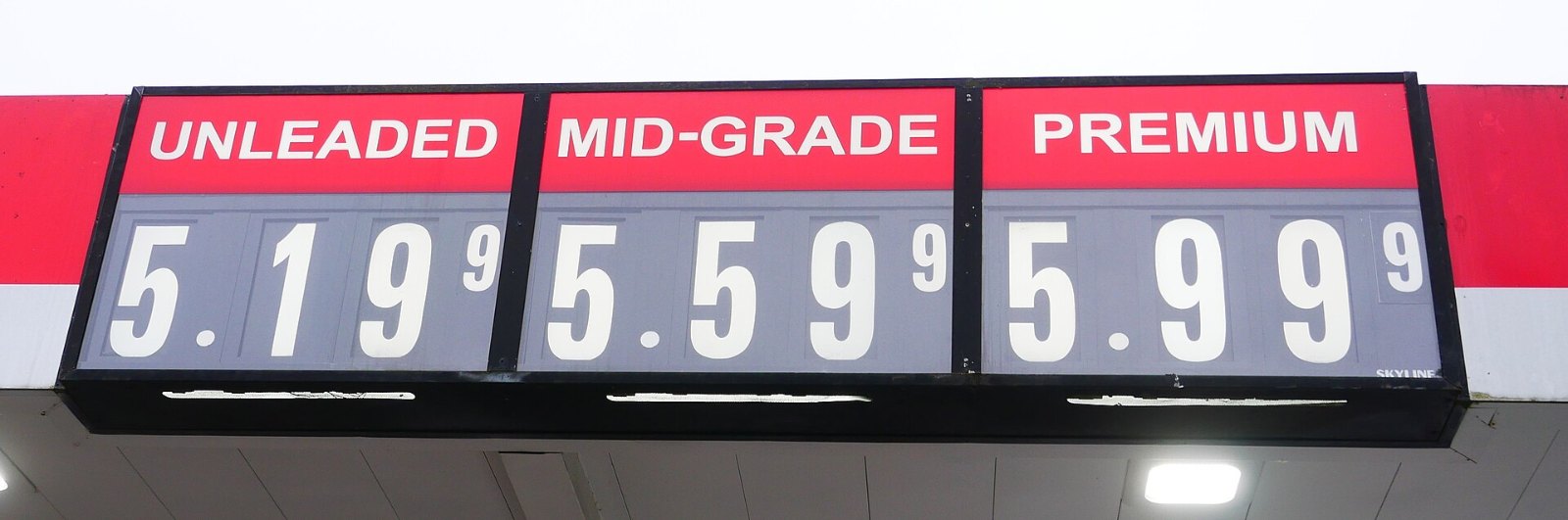
The 2026 midterms are taking place in a climate that is unfavorable for the administration. In a Reuters/Ipsos poll completed on Oct. 19, 2026, Trump’s approval rating stood at 31%, the lowest in this poll series across both of his terms; a week later, it was 32%. On Oct. 29, 2026, gasoline cost a national average of $4.23 a gallon, $1.19 more than a year earlier. Forecast models show the Democrats clearly ahead in the House of Representatives and with a smaller lead in the Senate. But new district maps, tight races in conservative states and the uncertainty inherent in any poll keep the outcome open.
| Source | What is measured | Result |
|---|---|---|
| 270toWin (Oct. 23, 2026) | Balance of power before the election | House: 219 seats for the Republicans (218 Republicans and 1 independent), 214 Democrats, 2 seats vacant; Senate: 53 Republicans, 45 Democrats and 2 independents |
| Reuters/Ipsos (completed Oct. 26, 2026) | Trump approval rating | 32%, 31% a week earlier (lowest in this poll series) |
| Silver Bulletin (Oct. 29, 2026) | Generic ballot, average | Democrats ahead by 8.7 percentage points |
| Silver Bulletin via Newsweek (Oct. 8, 2026) | Model forecast, chance of winning the majority | Democrats: House 93.1%, Senate 74.8% |
| AAA (Oct. 29, 2026) | Gasoline price, national average | $4.23 a gallon, a year earlier $3.04 |
| Washington Examiner (Oct. 28, 2026) | Early voting | about 35.4 million votes, 16.8 million of them by mail |
| SECO (accessed Oct. 25, 2026) | U.S. tariff on Swiss goods | 12.5% including the most-favored-nation tariff since July 24, 2026, pharmaceuticals at most 15%; sector-specific tariffs, for example on steel and aluminum, remain in effect |
What is on the ballot on Nov. 3, 2026
Under the Constitution, members of the House of Representatives are elected every two years and senators for six years. Because Senate seats are divided into three classes, only about a third of the Senate is up for election, as in every election: 33 seats whose terms expire on schedule and two special elections, in Ohio and Florida. Of these 35 seats, Republicans hold 22 and Democrats 13. Elections are also being held for 88 state legislative chambers. In addition, 100 ballot measures are up for a vote in 37 states.
A party needs 218 seats for a majority in the House of Representatives. Republicans currently have 218 members. They are joined by Kevin Kiley of California, who left the party in March 2026 and still caucuses with the Republicans. Democrats hold 214 seats. Two seats have been vacant since resignations in April 2026, a Republican seat in Texas and a Democratic one in Florida. According to an earlier calculation by Decision Desk HQ, which assigns the vacant seats to the party that previously held them, Democrats need a net gain of three seats. How difficult that will be depends on the new districts. According to the Cook Political Report, new maps in 10 states reduced the number of competitive seats from 87 to 77. By that July calculation, Democrats must win at least 57 of them.
In the Senate, 53 Republicans face 45 Democrats and two independents, Angus King and Bernie Sanders, who caucus with the Democrats. Democrats need a net gain of four seats to reach 51. In the event of a 50-50 tie, Vice President JD Vance, a Republican, casts the deciding vote.
A president on the defensive: The 2026 midterms in numbers
Trump’s approval ratings have fallen markedly since he took office. In January 2025, the Reuters/Ipsos poll series put his approval at 47% and his disapproval at 41%; by late October 2026, his approval was down to 32%. In the average compiled by the Silver Bulletin, the service run by statistician Nate Silver, his approval recently fell to 36.3%, the lowest reading in that series; on Oct. 28, 2026, it stood at 37.4%, with disapproval at about 60%. Other measures paint a similar picture: In a Marist poll released on Oct. 27, 2026, the split among registered voters was 38% to 61%.
An AP-NORC poll released on Oct. 15, 2026, shows what is weighing on voters: 85% name the economy as one of the most important issues for their vote, 69% health care, 64% the war against Iran and 45% immigration and crime. About 8 in 10 registered voters disapprove of Trump’s handling of the cost of living. In the Reuters/Ipsos poll of Oct. 19, 2026, 68% disapproved of his handling of the economy; among Republicans, 37% did.
Prices are at the heart of it. Inflation rose to 3.7% in September, from 3.4% in August. According to the Bureau of Labor Statistics (BLS), gasoline was 34.2% more expensive than a year earlier. The fuel price service GasBuddy reports that the national average was above $4 a gallon on 158 days in 2026 through mid-October, more often than in any previous year.
Prices climbed after the start of the war against Iran, which the United States and Israel opened with strikes on Feb. 28, 2026. Kyle Moore, chief economist at the think tank The Century Foundation, says the aimless war in Iran continues to disrupt global supply chains and to drive up prices for food and fuel.
Trump himself is tempering expectations. Asked about the political fallout from high gasoline prices, he said on Sept. 9, 2026, that he believed it would take a little longer than the midterm elections for prices to come down. Eight days later, he called the higher fuel prices a very small price for what the United States had done. Energy Secretary Chris Wright countered on Oct. 18, 2026, that prices had fallen in recent weeks, as had diesel prices, and that they would continue to fall. According to AAA, the price of gasoline dropped from $4.36 on Oct. 8 to $4.23 on Oct. 29, 2026, and stood at $4.20 on Oct. 30; AAA says crude oil prices above $100 a barrel are slowing further declines. Mark Shanahan of Britain’s University of Surrey sums up the situation: In his view, the Democrats can thank Donald J. Trump for their glowing position in the polls.
The lead on the generic ballot
A common measure of the national mood is the generic ballot: the question of which party respondents would vote for in the congressional election, without any candidates being named. In the Silver Bulletin average, the Democrats’ lead recently reached a new high for this election cycle at 9.2 percentage points before edging down to 8.7 points by Oct. 29, 2026. Weighted for likely voters, it is 9.2 points. In early August, the lead had been about 6.5 points.
Other measures point in the same direction, though not by the same margin. The smaller aggregator USPollingData had it at 49.3% to 41.9% on Oct. 29, 2026, a gap of 7.4 points. In the Reuters/Ipsos poll of Oct. 26, 2026, Democrats led among registered voters 47% to 36%, after 47% to 35% a week earlier. Marist found 52% to 44% among likely voters. The differences are probably mainly methodological, since the providers weight their data differently and select different polls.
A case documented by the Silver Bulletin shows how fraught the data can be: It has permanently excluded the pollster Wedgewood Polls after the firm, by the Silver Bulletin’s account, admitted to falsifying polling data.

What models and markets expect
Forecasts are estimates, not results. On Oct. 8, 2026, the Silver Bulletin model put the Democrats’ chance of winning a majority in the House of Representatives at 93.1% and in the Senate at 74.8%. On average, it projected 238.7 to 196.3 seats in the House and 52.2 to 47.8 seats in the Senate. According to The Daily Beast on Oct. 19, 2026, Silver has since upgraded his Senate rating from “Lean D” to “Likely D” and puts the Democrats’ chances at 75%. In late October, Silver spoke on a New York Times podcast of a chance of more than 90% in the House; after the Oct. 29, 2026, update, the Democrats remained clear favorites there, and their chances in the Senate held steady.
As recently as early September, the same model had seen the Senate as a toss-up; on Sept. 7, 2026, the Democrats stood at 50.1%. On the prediction market Kalshi, traders on Oct. 16, 2026, put the odds of a Democratic House at 90% and of a Democratic Senate at 63%.
The overview on the platform 270toWin, which combines the ratings of several forecasters, including the Cook Political Report, Sabato’s Crystal Ball and Inside Elections, is more cautious. Nate Silver noted that until late in the election cycle, experts’ ratings usually assume, implicitly, a neutral political environment. According to the overview of Oct. 23, 2026, 220 House seats lean at least slightly toward the Democrats and 196 toward the Republicans, while 19 are considered toss-ups. In the Senate, the Democrats and their independent allies, including the seats not up for election, come to 49 seats and the Republicans to 46, with five races considered toss-ups. The overview does not label its columns; the assignment is based on our reading.
The races that will decide the Senate
In the Senate, the math leaves the Democrats little room for error. They need a net gain of four seats: If they hold all 13 of their own, they must win four Republican seats, plus one more for every seat of their own they lose. According to the USPollingData polling average of Oct. 29, 2026, they lead clearly in North Carolina, narrowly in Ohio, Texas, Maine and Alaska, and by a razor-thin margin in Kansas. In Iowa, the race is essentially tied. Republicans lead narrowly in Nebraska and South Carolina and clearly in Florida. Democrats are ahead in their own competitive seats. The Silver Bulletin cautioned on Oct. 29, 2026, that the Democrats’ leads in its own average, for example in Texas (2.5 points), Ohio (3.0), Alaska (3.6) and Maine (2.4), are all just one normal-size polling error away from flipping.
| State | Democratic candidate | Republican candidate | Seat currently held by |
|---|---|---|---|
| North Carolina | Roy Cooper, former governor | Michael Whatley, former party chair | Republicans, Thom Tillis not running again |
| Maine | Troy Jackson, former president of the state Senate | Susan Collins, incumbent | Republicans |
| Ohio (special election) | Sherrod Brown, former senator | Jon Husted, appointed in January 2025 | Republicans |
| Texas | James Talarico, state representative | Ken Paxton, Texas attorney general | Republicans, John Cornyn lost in the primary |
| Alaska | Mary Peltola, former U.S. representative | Dan Sullivan, incumbent | Republicans |
| Kansas | Adam Hamilton, pastor | Roger Marshall, incumbent | Republicans |
| Iowa | Josh Turek, state representative | Ashley Hinson, U.S. representative | Republicans, Joni Ernst not running again |
| Nebraska | Dan Osborn, independent, backed by the state’s Democrats | Pete Ricketts, incumbent | Republicans |
| South Carolina | Annie Andrews, pediatrician | Darline Graham, appointed in July 2026 | Republicans |
| Florida (special election) | Angie Nixon | Ashley Moody, appointed in 2025 | Republicans |
| Michigan | Abdul El-Sayed | Mike Rogers, former U.S. representative | Democrats, Gary Peters not running again |
| New Hampshire | Chris Pappas, U.S. representative | John E. Sununu, former senator | Democrats, Jeanne Shaheen not running again |
| Georgia | Jon Ossoff, incumbent | Mike Collins, U.S. representative | Democrats |
| Minnesota | Peggy Flanagan | Michele Tafoya | Democrats, Tina Smith not running again |
In Maine, Susan Collins is defending the only Republican Senate seat up for election this year in a state that Kamala Harris won in 2024. Her challenger, Troy Jackson, was not nominated until July, after primary winner Graham Platner withdrew following allegations by former partners. In the last televised debate, on Oct. 15, 2026, Jackson said that what he knew was this: Donald Trump gets Susan Collins’ vote 100% of the time he asks her for one. Collins had said in an earlier debate that she did not believe Trump would come to Maine, adding that she had heard nothing from his office and was not exactly his favorite senator. Marist had Jackson ahead 51% to 47% in early October, while YouGov for CBS found a tie.
Several races have shifted over the course of the year. In Texas, Attorney General Ken Paxton defeated incumbent Sen. John Cornyn in the runoff, 63.8% to 36.2%. In South Carolina, Sen. Lindsey Graham died on July 11, 2026, and Gov. Henry McMaster appointed his sister, Darline Graham. On Oct. 29, 2026, Fox News moved the race from “Lean R” to “Toss-up.” In Nebraska, the Democratic candidate had her name removed from the ballot. It is unclear which caucus independent Dan Osborn would work with in the Senate. In Alaska, an unrelated candidate listed as “Sullivan, Daniel J. Jr.” appears on the ballot alongside incumbent Dan Sullivan. According to a New York Times report picked up by AP on Oct. 28, 2026, members of Peltola’s campaign staff discussed by text message recruiting namesakes of the senator. Staff of the Democratic Senatorial Campaign Committee (DSCC) were also involved, the report said, and in the end the choice fell on Dan J. Sullivan. The report is based in part on conversations with Peltola’s campaign manager, who was fired in August; according to the newspaper, she tried to retract her statements the previous week. Peltola’s campaign says it has nothing to do with either of the two Sullivan campaigns; the DSCC denies any connection to Dan J. Sullivan. He, for his part, had already denied any contact with Peltola’s team in June. According to AP, Trump said Peltola and the second Sullivan should be criminally prosecuted. On Oct. 22, 2026, the Justice Department had already filed a lawsuit at his direction to block the certification of a possible Peltola victory. Peltola’s campaign and the DSCC moved on Oct. 25, 2026, to have the lawsuit dismissed. Even in North Carolina, where Roy Cooper leads by about 11 points in the average, his campaign manager, Jeff Allen, says that no Democrat has won a statewide federal race there in almost two decades and that North Carolina is a 50-50 state.
New districts: The battle over the maps
What is unusual this time is that several states have redrawn their congressional districts in the middle of the decade. Texas went first. Gov. Greg Abbott signed a new map on Aug. 29, 2025, that is designed to give Republicans five additional seats. On Dec. 4, 2025, the Supreme Court allowed it to be used in 2026. California responded with Proposition 50, which voters approved on Nov. 4, 2025, with 64.42% of the vote and which is designed to give Democrats five seats. North Carolina, Ohio, Florida, Tennessee, Louisiana and Alabama also adopted new maps favoring Republicans; in Utah, a court ordered a map favoring Democrats.
The parties did not prevail everywhere. In Missouri, courts blocked the new map in September 2026. In Virginia, the state’s highest court on May 8, 2026, declared unconstitutional a voter-approved measure for a redrawing in favor of Democrats. In Indiana, the state Senate rejected a new map, and in New York, the U.S. Supreme Court halted a court-ordered redrawing. On April 29, 2026, the Supreme Court also partially curtailed Section 2 of the Voting Rights Act in Louisiana v. Callais.
Counting only the maps that remain valid, the designed effect comes to 15 seats for the Republicans and six for the Democrats, or a net of about nine seats in the Republicans’ favor. The new maps in Florida and Louisiana have been challenged in court (as of June and September 2026, respectively). Before the map in Missouri was blocked, the Associated Press put the net effect at about 10 seats. Kyle Kondik of Sabato’s Crystal Ball noted in July that the Republicans’ gain would very likely not be enough on its own to decide the majority in the House.
Congress as a counterweight
The dispute over tariffs and sanctions shows what a new majority could achieve. On Feb. 20, 2026, the Supreme Court ruled 6 to 3 in Learning Resources v. Trump that the International Emergency Economic Powers Act (IEEPA) does not allow the president to impose tariffs. In the opinion, Chief Justice John Roberts wrote that when Congress has delegated its tariff power, it has always done so explicitly and within strict limits. Refunds to more than 330,000 companies are estimated at $166 billion. The administration switched to other trade laws: first to a temporary tariff under Section 122 and, since July 24, 2026, to Section 301. On top of that come sector-specific tariffs under Section 232, which since July 31, 2026, have also covered pharmaceutical products.
How narrow the majorities are became clear as early as February. On Feb. 10, 2026, an attempt in the House of Representatives to extend a rule that blocked votes on repealing Trump’s tariffs failed. A day later, six Republicans joined the Democrats in voting to end the tariffs on Canada. Trump announced he would veto the measure.
The conflict over Russia was even starker. The Senate had passed, 86 to 11, a sanctions bill named after Lindsey Graham that provides for tariffs of up to 500% on Russian goods. Trump signed it in September. On Oct. 16, 2026, two days before it was due to take effect, he suspended the Russia provisions, citing the national interest. A week earlier, he had announced a diesel deal with Vladimir Putin, totaling 4.8 million metric tons according to the administration.
The objections also came from his own party. Republican Thom Tillis called the move more than irresponsible and asked what part of enforcing a law passed by the Senate 86 to 11 the president and his advisers did not understand. Susan Collins, a co-sponsor of the legislation, had already called on Oct. 11, 2026, together with Republicans Lisa Murkowski, John Curtis and Tillis and Democrats Jeanne Shaheen, Richard Blumenthal and Ron Wyden, for the diesel deal to be reversed, arguing that the United States should not throw Putin a financial lifeline while Russia continues to kill Ukrainian civilians.
The administration is defending its course. Enforcing the sanctions at this time would hamper U.S. efforts to negotiate a lasting and comprehensive peace agreement, White House spokeswoman Taylor Rogers said. The president, she added, could use the powers at any time. Talks on such an agreement took place in Oslo on Oct. 20, 2026, and the following day U.S. special envoy Steve Witkoff met Putin in St. Petersburg. Republican Rep. Thomas Massie, by his own account one of only seven House Republicans who had voted against the law, welcomed the fact that Trump had used the executive powers granted to him by Congress. Ukrainian President Volodymyr Zelenskyy, by contrast, wrote on X that this certainly does not stop the war.
Reuters writes that losing one chamber could complicate Trump’s agenda in the last two years of his term.
What a new majority can and cannot do
What the election means for Switzerland
For Switzerland, trade above all is at stake. After the EU, the United States is the country’s second-largest export market. In 2024, goods worth 65.3 billion Swiss francs went there, between just under 17% and 18.6% of all exports, depending on the source. According to the State Secretariat for Economic Affairs (SECO), Swiss companies have announced plans to invest at least $200 billion in the United States over the next five years.
According to Rahul Sahgal, head of the Swiss-American Chamber of Commerce, the United States had complied with the 15% cap from the declaration of intent through July. The Federal Department of Economic Affairs, Education and Research (EAER) expects the United States to continue to respect this limit. Other risks remain unresolved. A second Section 301 investigation into industrial overcapacity, targeting 16 partners including Switzerland, has not been concluded. Since July 24, 2026, the EU has been paying less than Switzerland, at 10%. Sahgal attributes the difference to the EU’s legislation against forced labor, which Switzerland lacks.
The business community has had to get used to the unpredictability. “I hear something different every day,” Sahgal said in July. Jürg Grossen, president of the Green Liberals (GLP), concluded: “Under Trump, there is no reliability.” Yves Bugmann, president of the Federation of the Swiss Watch Industry, took a more sober view: “At 12.5% for watches, the tariff rate is the lowest since April 2025.”
Whether the midterms will change much is an open question. The additional tariffs in force today are based on existing trade laws. The analyses we reviewed leave unanswered how a new Congress could influence them. We did not find any Swiss voice that commented explicitly on the midterm elections. SECO notes soberly that negotiations with the United States on a trade agreement are continuing. According to a summary by the portal law.ch, the Federal Council, Switzerland’s government, is seeking an outcome that would govern relations over the long term, regardless of legal and political developments in the United States.
After Election Day: Counting, runoffs, swearing-in
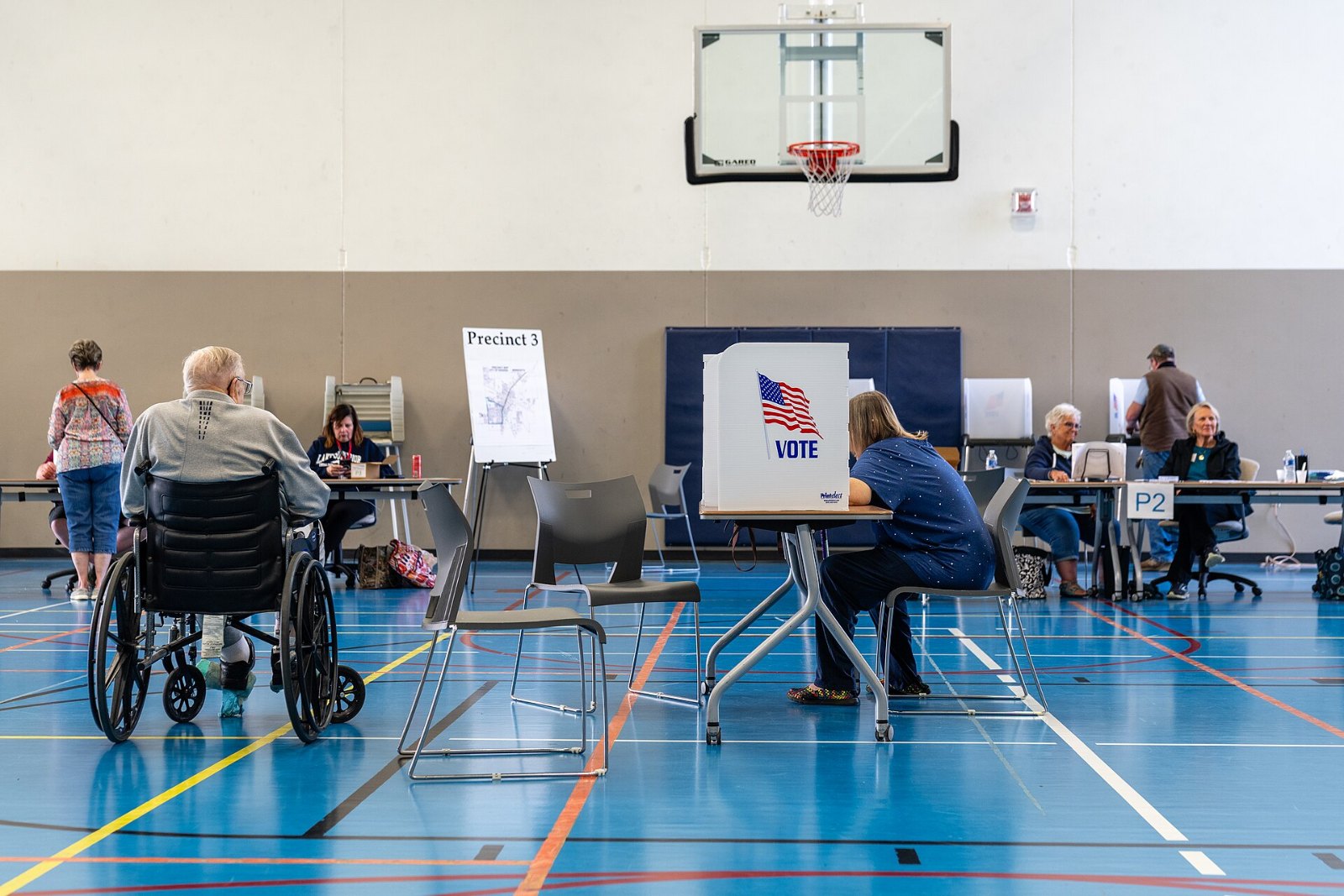
Many votes have already been cast: Six days before Election Day, about 35.4 million had been recorded, according to the Washington Examiner, 16.8 million of them by mail. According to NBC News, 47% of the votes recorded so far came from registered Democrats and 35% from Republicans. Texas accounted for the most votes: 5.2 million, compared with 3.4 million at the same point in 2022. That says little about the outcome, because party registration does not reveal how someone votes.
Whether the majorities will be settled on election night is uncertain. In Georgia, a runoff will follow on Dec. 1, 2026, if no candidate wins more than half of the vote. In Louisiana, Nov. 3, 2026, is only the primary for the House of Representatives; the general election will be held on Dec. 12, 2026. Alaska uses ranked-choice voting. Under the 20th Amendment, the newly elected representatives and senators take office on Jan. 3, 2027, at noon local time (6 p.m. Swiss time). This election does not decide the presidency.
Arena: Does Trump deserve a rebuke in the midterms?
For: Yes, America needs a check on power
- Trump suspended Russia sanctions passed by the Senate 86 to 11; Republicans protested as well (AP, ABC News).
- The Supreme Court ruled the emergency tariffs unlawful; the power over tariffs lies with Congress (Learning Resources v. Trump).
- Inflation rose to 3.7% in September, and gasoline costs $1.19 a gallon more than a year ago (BLS, AAA).
- About 8 in 10 registered voters disapprove of Trump’s handling of the cost of living (AP-NORC).
- Trump’s approval in the Reuters/Ipsos poll fell to 31% in October, the lowest in that poll series across both of his terms; a week later, it stood at 32% (Reuters).
- The war against Iran has been going on since Feb. 28, 2026; 64% name it as one of the most important issues in the election (AP-NORC).
Against: No, Trump should govern unimpeded
- Trump won the 2024 election; losing a majority could complicate his agenda in his last two years in office (Reuters).
- According to the White House, the sanctions would have hampered negotiations on a lasting peace agreement (ABC News).
- Trump is using powers that Congress itself granted him, says Republican Thomas Massie (ABC News).
- Gasoline got cheaper between Oct. 8 and Oct. 30, 2026, according to AAA, and Energy Secretary Chris Wright expects further declines (AAA, The Hill).
- According to Republican Darline Graham, the sanctions law gives the president tools he can use when he sees fit; the White House stresses that he can deploy them at any time (AP, ABC News).
- For Switzerland, the 15% tariff cap has held so far, and according to the Swiss-American Chamber of Commerce, the United States has abided by it; watches face 12.5%, the lowest rate since April 2025 (Die Botschaft, Der Rheintaler).
Commentary: A Congress that can say no again
A rebuke is deserved. Not because of the poor poll numbers, but because Washington has forgotten a basic rule: The U.S. Constitution places power over tariffs and foreign trade in the hands of Congress, not the president. It took the Supreme Court to remind everyone that emergency law is not tariff law.
The case of the Russia sanctions shows where this leads. The Senate passes a bill 86 to 11. The president signs it. Two days before it takes effect, he suspends the sanctions, a week after announcing a diesel deal with Putin. That is not a predictable foreign policy. That Republicans such as Thom Tillis and Susan Collins protested at least shows that the separation of powers is not dead.
A Democratic majority in one chamber would therefore be not a punishment but a return to normal. It would not paralyze Trump, but it would force him to negotiate. Anyone who decries that as obstruction is confusing governing with governing unimpeded. America is strong when its institutions are strong, not when one man decides alone.
For Switzerland, the lesson is a different one. It should not pin its hopes on congressional districts in Texas or on a Senate race in Maine. Even a new Congress would be unlikely to abolish the Section 301 tariffs overnight. What matters is an agreement that holds regardless of the political weather in Washington. The Federal Council has set out this goal. It should stick to it, even if the polls in America look favorable at the moment. America yes, Trump no: That stance remains right, but it is no substitute for pursuing Switzerland’s own interests.
All figures as of Oct. 30, 2026, unless otherwise noted. Polls and model forecasts are estimates subject to uncertainty, not results; figures from different providers are based on different methods. The Silver Bulletin’s current model figures are not freely accessible. It was not possible to recheck the balance of power and the House overview from 270toWin (as of Oct. 23, 2026), Kalshi (Oct. 16, 2026), the lawsuits against district maps and the tariffs on Switzerland (as of Oct. 25, 2026). Some information comes from secondary sources because the Cook Political Report and Sabato’s Crystal Ball could not be accessed directly. Quotes originally given in another language were translated by the editors. Sources are cited in their original language.
Related coverage: America yes, Trump no: Why we love the United States and don’t need its president (in German) · Tariff deal with Trump: Switzerland pays, says thank you and is punished anyway (in German) · The V8 is back: Why Detroit is unwinding its electric bet and what that means for Switzerland (in German)
Sources
- 270toWin: 2026 Senate Election Interactive Map (as of Oct. 23, 2026)
- 270toWin: 2026 House Election Interactive Map (as of Oct. 23, 2026)
- 270toWin: 2026 Senate Election, Consensus Forecast (as of Oct. 23, 2026, accessed Oct. 30, 2026)
- Wikipedia: 2026 United States elections (accessed Oct. 25, 2026)
- Wikipedia: 2026 United States Senate elections (accessed Oct. 25, 2026)
- Wikipedia: United States Senate (accessed Oct. 25, 2026)
- ABC7: California Rep. Kevin Kiley says he’s leaving Republican Party (March 10, 2026)
- Wikipedia: United States House of Representatives (accessed Oct. 25, 2026)
- Decision Desk HQ: The Key House Seats in 2026 (spring 2026)
- Washington Examiner: Democrats must win 57 out of 77 competitive House seats, Cook Political Report (July 29, 2026)
- U.S. Constitution, Article I (text edition from the UT Dallas Libraries)
- Wikipedia: Twentieth Amendment to the United States Constitution (accessed Oct. 25, 2026)
- Reuters via GV Wire: Trump Approval Falls to Record Low of 31% as Midterms Near (Oct. 19, 2026)
- Reuters via ARY News: Trump approval falls to record low of 31% (Oct. 19, 2026)
- Reuters via GV Wire: Trump Approval Rises From Record Low to 32% Ahead of Midterm Election (Oct. 26, 2026)
- Silver Bulletin: How popular is Donald Trump? (Oct. 29, 2026)
- Silver Bulletin: Who’s ahead on the generic congressional ballot? (Oct. 29, 2026)
- Silver Bulletin: FLIPR Midterms Model Methodology (Aug. 11, 2026)
- Silver Bulletin: FLIPR 2026 midterm election forecast (updated Oct. 29, 2026)
- Marist Poll: U.S. Midterm Elections, October 2026 (Oct. 27, 2026)
- Al Jazeera: Trump approval hits record-low 31 percent, polls show Republican struggles (Oct. 19, 2026)
- Wikipedia: Opinion polling on the second Trump presidency (accessed Oct. 25, 2026)
- Al Jazeera with AP: Ahead of US midterms, voters are frustrated with Trump, want change (Oct. 15, 2026)
- Al Jazeera: US inflation rises before midterm elections (Oct. 14, 2026)
- The Hill: Energy Secretary Wright defends gas prices (Oct. 18, 2026)
- AAA: Gas Prices Dip Before Halloween (Oct. 29, 2026)
- AAA: October 2026 updates with daily national average (Oct. 30, 2026)
- Scripps News: Trump rules out attacking Iran before the midterm elections (Oct. 8, 2026)
- CNN via KEYT: Trump says Iran war will end after the midterms and gas prices will fall (Sept. 9, 2026)
- CNN via Alaska’s News Source: Trump says higher fuel prices are a small price to pay (Sept. 17, 2026)
- Wikipedia: 2026 Iran war (accessed Oct. 25, 2026)
- Wikipedia: 2026 Iran war fuel crisis (accessed Oct. 25, 2026)
- Newsweek: Democrat chances winning House, Senate hit new high, Nate Silver forecast (Oct. 9, 2026)
- Newsweek: Nate Silver’s forecast changes, seats most likely to flip (Oct. 8, 2026)
- The Daily Beast: Nate Silver Makes Bold Call on Democrats’ Senate Chances (Oct. 19, 2026)
- The New York Times via DNYUZ: Nate Silver Predicts a ‘Momentous’ Midterm (Oct. 27, 2026)
- Kalshi: 2026 midterm predictions (Oct. 16, 2026)
- USPollingData: 2026 Senate, Governor and 2028 Primary Polls by Race (updated Oct. 29, 2026)
- Wikipedia: 2026 United States Senate election in Maine (accessed Oct. 25, 2026)
- Newsweek: Jackson tells Collins “shut up” as protester disrupts Maine debate (Oct. 15, 2026)
- Ballotpedia News: Collins and Jackson to face off (July 29, 2026)
- Wikipedia: 2026 United States Senate election in North Carolina (accessed Oct. 25, 2026)
- Wikipedia: 2026 United States Senate election in Texas (accessed Oct. 25, 2026)
- Wikipedia: 2026 United States Senate election in South Carolina (accessed Oct. 25, 2026)
- Wikipedia: 2026 United States Senate election in Nebraska (accessed Oct. 25, 2026)
- Wikipedia: 2026 United States Senate election in Alaska (accessed Oct. 25, 2026)
- AP via WDIV: Report: Peltola’s campaign involved in effort to recruit second Dan Sullivan for Alaska Senate race (Oct. 28, 2026)
- Washington Examiner: 2026 midterm elections live updates (Oct. 29, 2026)
- Washington Examiner: Over 35 million mail-in and early votes cast before midterm elections (live blog, updated Oct. 29, 2026)
- Fox News: Fox News Power Rankings shift Ohio and South Carolina Senate races (Oct. 29, 2026)
- AP via WOWT: Trump says he ordered the Justice Department lawsuit over Alaska’s US Senate race (Oct. 23, 2026)
- Fox 32: Alaska Senate candidate moves to dismiss Trump election lawsuit (Oct. 27, 2026)
- Wikipedia: 2026 United States Senate election in Georgia (accessed Oct. 25, 2026)
- Wikipedia: 2025-2026 United States redistricting (as of about Sept. 10, 2026)
- AP via WPXI: Republicans won the redistricting battle, now voters will decide (June 2026)
- Wikipedia: Learning Resources, Inc. v. Trump (accessed Oct. 25, 2026)
- Wikipedia: Tariffs in the second Trump administration (accessed Oct. 25, 2026)
- AP via ITV: Trump puts new Russia sanctions he recently signed on hold (Oct. 17, 2026)
- ABC News: Trump signs order waiving Graham Act sanctions on Russia (Oct. 17, 2026)
- Newsweek: Susan Collins opposes Trump’s Russian diesel deal (Oct. 12, 2026)
- Reuters via Geo News: Witkoff to meet Putin after Ukraine, US hold talks in Norway (Oct. 21, 2026)
- Reuters via bdnews24: US envoy Witkoff to meet Putin, Trump presses Kyiv to settle (Oct. 21, 2026)
- LIGA.net: Meeting between Witkoff and Putin in St. Petersburg (Oct. 21, 2026)
- SECO: Handelsbeziehung Schweiz und USA (accessed Oct. 25, 2026)
- S-GE: Section 301, new US additional duties (accessed Oct. 25, 2026)
- Swissinfo: USA, Zölle von bis zu 12,5 Prozent für 60 Länder, darunter die Schweiz (July 24, 2026)
- Die Botschaft: Neue Forderungen im Zollstreit denkbar (July 22, 2026)
- Der Rheintaler: Schweiz wird erneut mit US-Zöllen konfrontiert (July 25, 2026)
- SRF News: Die aktuellen Zölle laufen aus, was droht der Schweiz? (July 23, 2026)
- law.ch: Die Schweiz verhandelt mit den USA unter Berücksichtigung neuer Zölle weiter (June 8, 2026)
- Cash (AWP): UBS bestätigt Schweizer BIP-Prognosen trotz neuer US-Zölle (July 24, 2026)
- Economiesuisse: News-Ticker Handelspolitik Trump 2.0 (as of Aug. 29, 2025)
- blue News: 15 Prozent Zölle gelten rückwirkend (Dec. 10, 2025)
- Joyn Newstime: Trump schockt Schweiz mit Zöllen (Aug. 1, 2025)
- Ratopati: U.S. agrees to cut tariffs on Switzerland to 15 pct, White House fact sheet (Nov. 15, 2025)
- Swissinfo: Wie die Schweiz Handel treibt und zum globalen Player wurde (Oct. 20, 2026)



Comments 0