Social media ban for children: Europe draws the line, Switzerland hesitates
On the same day that Berlin announced a ban on social networks for children under 13, the Federal Council opted for more protection for minors, but no minimum age. The EU wants personal accounts only from age 15, Austria from 14, and Australia has barred everyone under 16 since December 2025. Four in five Swiss want limits. An analysis of studies, loopholes and the question of whether a ban really protects children.

Wednesday, Oct. 14, 2026: two capitals, two answers. In Berlin, the German government adopted key points for a social media ban: Children under 13 are “in principle” no longer to be allowed to use social networks such as TikTok, Snapchat or Instagram. In Bern, the Federal Council, Switzerland’s executive, expanded its planned platform law to include obligations to protect minors. The law contains no minimum age. Media Minister Albert Rösti sees no majority for one at present.
The public sees it differently. In several polls, around four in five respondents support phone bans in schools or a minimum age for social networks, across party lines. Elsewhere, governments are acting: Australia has barred everyone under 16 since Dec. 10, 2025. In September, the European Commission put forward a “Kids Act,” and Austria wants to enforce a minimum age of 14 from 2027. France passed a ban for under-15s, only to see the Constitutional Council strike it down in August.
Switzerland risks becoming a blank spot on the European map. Whether that amounts to a failure to act or wise restraint is the real question. After all, the research is divided and enforcement unresolved. And in Australia, according to a survey of parents, most children still have the accounts they had before.
| At a glance | Social media and age limits, as of October 2026 |
|---|---|
| Switzerland | No statutory minimum age. Platform law with protections for minors in the works; Federal Council dispatch due by the end of June 2027 |
| Germany | Key points of Oct. 14, 2026: no access under 13 in principle, graduated rules up to 18 |
| EU | “Kids Act” proposal of Sept. 17, 2026: no social networks under 13, personal account only from 15 |
| Austria | Minimum age of 14; draft law since the end of July 2026; entry into force targeted for early 2027 |
| France | Ban under 15 passed by Parliament; core article struck down by the Constitutional Council on Aug. 14, 2026 |
| Australia | Ban under 16 since Dec. 10, 2025 |
| Platforms | Usually a minimum age of 13 under their own rules |
What the Federal Council decided
The Federal Act on Communication Platforms and Search Engines, known by its German abbreviation KomPG, is to apply to very large services that reach more than a tenth of the population each month, currently around 900,000 users. These include Facebook, Instagram, YouTube, Google, TikTok and X, but also AI search engines such as ChatGPT. Under the new provisions, these platforms must analyze and reduce the risks to minors. Advertising based on the profile of a child or adolescent will be banned. Users are to be able to report illegal content; violations could draw fines of up to 6% of global annual revenue and, as a last resort, blocking of access.
The first draft, from October 2025, had contained no rules on protecting minors. The consultation produced a hail of criticism. The child-protection organization Kinderschutz Schweiz and the youth foundation Pro Juventute headlined a press release “Federal Councillor Rösti has forgotten children and young people.” Support came from The Centre, the Social Democrats (SP), the Greens, the Green Liberals (GLP), the Evangelical People’s Party (EVP) and 22 cantons; opposition came from the Swiss People’s Party (SVP), FDP.The Liberals, the Federal Democratic Union (EDU) and the cantons of Schwyz and Thurgau, which see freedom of expression at risk. Rösti rejects the accusation: “No, the Federal Council does not want censorship, but rather to protect the free formation and expression of opinion.”
The Federal Council intends to decide on a minimum age only once the report on two postulates is available. These requests for a government report were filed by Maya Graf, a Green member of the Council of States, and Céline Vara, at the time also a Green member of the Council of States. The Council of States adopted them without opposition in March 2025; the report is expected in 2027. The Federal Council dispatch on the KomPG is due by the end of June 2027, and according to Rösti, Parliament is to decide in the course of 2028. If a referendum is called, a popular vote would be possible in 2029. A child who is 10 today would then be 13.
That it is taking so long also has to do with Washington. In May 2025, the Swiss news agency SDA reported, citing unnamed sources, that the departments of economic affairs and foreign affairs had slowed down platform regulation during the tariff dispute so as not to antagonize Donald Trump. On Oct. 14, 2026, Rösti stressed that the Swiss approach was more liberal than the EU’s Digital Services Act. Pro Juventute had warned as early as February: “The protection of children and young people must not be subordinated to economic or foreign-policy interests.”
The public wants it, the parties hesitate
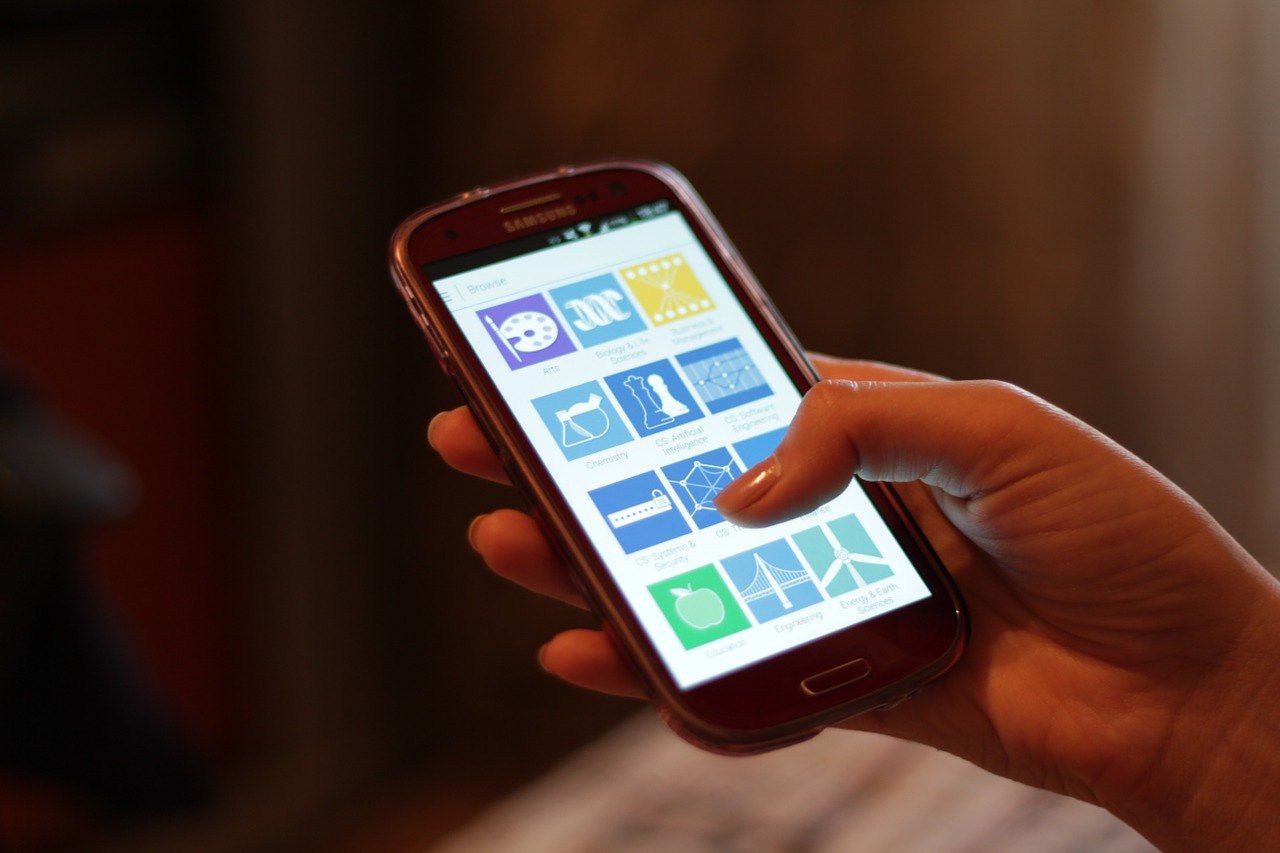
Few issues show such a wide gap between the public and politicians. In a fall 2024 poll by the research firm Sotomo, 82% supported a phone ban in schools, with 75% to 85% among supporters of the SVP, the SP, the Greens and the GLP. In a November 2024 poll by the media group Tamedia, 78% favored a statutory minimum age of 16 for platforms such as TikTok or Instagram. In spring 2025, a Sotomo poll commissioned by the insurer Axa found 80% in favor of a social media ban for under-16s. “Because this is about children, the pressure is very strong, and politicians will act,” the study’s author, Michael Hermann of Sotomo, said at the time.
The parties are more reticent. The SVP is the most clearly opposed to a ban, arguing that raising children is up to parents. Barbara Steinemann, one of the party’s National Council members from Zurich, argues from the children’s own perspective: “Children have rights too, and we can’t simply deny them part of the digital world in their free time.” Yet the most concrete proposal so far comes, of all places, from the SVP’s own parliamentary group. Nina Fehr Düsel, also an SVP member of the National Council from Zurich, is calling for an age limit of 14 for platforms such as TikTok or Snapchat in a motion co-signed by lawmakers from all parties. “Children need protection and boundaries,” she says.
In 2025, the Greens considered a ban unenforceable and therefore unsuitable, even though both postulates came from their ranks. Florence Brenzikofer, a National Council member from Basel-Landschaft, considers 14 “an appropriate age.” The FDP and The Centre are betting on phone bans in schools; the FDP is also counting on parents. In June, Andrea Gmür-Schönenberger, a Centre member of the Council of States from Lucerne, got a motion through the Council of States that would oblige platforms and AI providers to protect minors, without a ban. “Time is pressing, and the need for action has long existed,” she said. Within the Federal Council, Home Affairs Minister Elisabeth Baume-Schneider is more open than her colleague Rösti. “I am open to a social media ban. We need to protect our children better,” she told the Sunday paper SonntagsBlick in December 2025.
How Swiss teenagers use the internet
Almost all young people in Switzerland own a smartphone: 99%, according to the JAMES study by the Zurich University of Applied Sciences (ZHAW). In 2024, 12- to 19-year-olds estimated their time online at just over three hours on a weekday and four and a half hours on a weekend day; in 2016, the figures had been two and a half hours and just over three and a half hours. Because the questions were revised in 2024, the comparison is possible only to a limited extent. Already, 82% of 12- and 13-year-olds use social networks daily or several times a day. They would fall below most of the age limits currently under discussion.
The risks are documented. According to JAMES 2024, almost a quarter of young people had been insulted or verbally abused online several times. Around a third had been approached by strangers with unwanted sexual intentions. But the study also shows what young people use the networks for: 57% for entertainment, 46% for information and only 4% for self-presentation. “The results contradict the common assumption,” says ZHAW researcher Svenja Deda-Bröchin.
Berlin: A ban that isn’t one yet
The German key points come from the ministry of Family Minister Karin Prien (CDU). Under the plan, children under 13 are to be “prohibited in principle” from using social networks, with exceptions for services that are demonstrably suitable for children. For 13- to 18-year-olds, “graduated restrictions” are planned; the details are still open. The German government wants to push for an EU rule but intends to create a national transitional arrangement until then. “We are rigorously holding platform operators accountable and backing parents,” Prien said. Justice Minister Stefanie Hubig (SPD) was blunter: “Social media, as it works today, is not good for children and young people.”
It is not yet a law. According to the German news agency dpa, it is for now a declaration of intent. Only the EU can make age checks mandatory for the big platforms, dpa reports. And the tool for proving age is missing: According to the eGovernment Monitor 2026, the online function of the German ID card is ready for use for only 44% of cardholders. Moreover, it can be used only from age 16.
How the decision was reached is contentious. In June 2026, an expert commission led by the education researcher Olaf Köller had confirmed considerable risks but had not agreed on a statutory ban. It presented two options: a minimum age of 13 or risk-based restrictions on individual features. The government chose the stricter one. “Thinking only about age restrictions falls short,” Köller says. The digital industry association Bitkom believes the government is “overshooting the mark.” An alliance under the slogan “Protection yes, ban no” also includes Germany’s national student council, the Bundesschülerkonferenz, and the federal parents’ council, the Bundeselternrat.
Europe: Brussels, Vienna and Paris
The EU is planning the biggest step. Commission President Ursula von der Leyen presented the Kids Act on Sept. 17, 2026. In her State of the Union address the day before, she had announced that there would be no social networks under the age of 13 and no personal user accounts under 15. For 13- to 14-year-olds, the plan provides for mini accounts with limited features, set up by parents. For everyone under 18, addictive features and profile-based feeds are to disappear, and profiles are to be private by default. Von der Leyen said the platforms must prove that they are safe. Age verification is to be provided by an app that confirms a user’s age without passing on personal data. The Council of the EU and the European Parliament still have to approve the law.
Austria is not waiting that long. Its government of the People’s Party (ÖVP), the Social Democrats (SPÖ) and Neos has decided on a minimum age of 14. The draft has been out for consultation since the end of July 2026, and the law is to take effect in early 2027. It covers TikTok, Instagram, YouTube and Snapchat, but not WhatsApp. Existing accounts must also be checked. The tech news site futurezone sees this as a de facto ID requirement for everyone. “We don’t want to punish children; we want to protect them,” says Vice Chancellor Andreas Babler (SPÖ). Education Minister Christoph Wiederkehr (Neos) warns: “A ban alone is not enough.”
France shows how quickly a ban can run up against limits. In January 2026, President Emmanuel Macron announced: “Starting Sept. 1, our children and teenagers will finally be protected. I will see to it.” On July 21, 2026, the French Parliament passed a ban for under-15s. On Aug. 14, 2026, the Constitutional Council declared the core article unconstitutional. It held that the infringement of freedom of expression and communication was disproportionate and that the ban could also affect services whose risks to minors had not been established. In addition, it found, the law required age verification for all users without setting out its conditions and limits. Macron instructed Prime Minister Sébastien Lecornu to draw up a legally robust new version.
Australia: The real-world test
So far, Australia is the only place where the effects of a ban can be observed in practice. Since Dec. 10, 2025, children under 16 have no longer been allowed to have an account on platforms such as Facebook, Instagram, Snapchat, TikTok, X or YouTube. The platforms face fines of up to 49.5 million Australian dollars. By mid-January 2026, more than 4.7 million accounts belonging to under-16s had been deactivated, removed or restricted, according to the government.
The first assessment by the regulator eSafety, from the end of March 2026, is sobering. According to a survey of parents in the report, on Instagram, Snapchat and TikTok around seven in 10 children who had an account there before the ban still had it. On Facebook, the figure was just under two-thirds; on YouTube, around half. Young people get around the ban with fake accounts, photos of adults or made-up faces, which make them look older to age-estimation software. The government accuses the platforms of deliberately circumventing the law. Prime Minister Anthony Albanese calls the ban a first step. At the same time, many parents feel empowered, according to an analysis by Germany’s Konrad-Adenauer-Stiftung. Some young people report less bullying, while young people in rural areas complain about the loss of social contacts.
What science knows and what it doesn’t
Since 2024, the tone of the debate has been set by the American social psychologist Jonathan Haidt. His book “The Anxious Generation” blames smartphones and social media for the rise in mental health problems among adolescents and calls, among other things, for no social media before 16. Critics, such as the psychologist Candice Odgers in the journal Nature, accuse him of presenting correlations as causes.
The research offers material to both sides. A meta-analysis of 26 studies found a roughly 13% higher risk of depression for each additional hour spent on social media, with a stronger effect among girls. A study of more than 10,000 participants published in the journal Pediatrics linked owning a smartphone at age 12 to a higher risk of depression and insufficient sleep. A long-term Australian study of 3,205 adolescents, by contrast, found little evidence of a link between changes in use and psychological distress. A British study found no evidence that phone bans in schools reduce use or improve well-being. These findings are summarized in a June 2026 report by the Belgian health insurer Mutualités Libres.
“A blanket ban gives the impression that something is finally being done,” says Hannes-Vincent Krause of the Weizenbaum Institute in Berlin. Josephine B. Schmitt of the Center for Advanced Internet Studies in Bochum warns: “Bans do not solve many problems but rather shift them into less visible spaces.” The Lucerne ethicist Peter G. Kirchschläger counters that social media should be treated like addictive substances: “That is why we should treat them the same way as other addictive products.” In 2025, the Federal Council, too, described the effects on mental health as contested.
The Achilles’ heel: Who verifies age?
Every ban stands or falls with age verification. Today, a false date of birth is enough on most platforms. Effective checks require proof. And that touches on everyone’s privacy, not just children’s. In Germany, a majority rejects age checks using an ID or a face scan, according to a YouGov survey commissioned by the internet industry association eco. Nina Fehr Düsel proposes a face scan that is deleted immediately after the check.
Switzerland would have a tool of its own. On Sept. 28, 2025, voters narrowly approved the law on the state-issued electronic ID, or e-ID, with 50.4% in favor. The federal government originally planned to introduce it on Dec. 1, 2026. On June 30, 2026, it postponed the launch for security reasons; no new date has been set yet. Gerhard Andrey, a Green member of the National Council and president of the “Pro e-ID” alliance, sees it as a good basis for anonymous age verification. Whether and how the e-ID would work with the EU’s age verification is an open question.
Arena: Is a social media ban needed?
For: Yes to an age limit
- Addictive feeds, cyberbullying and sexual harassment hit children particularly hard.
- A statutory limit strengthens parents, who today stand alone against billion-dollar corporations.
- The platforms do not enforce their own minimum age of 13.
- Around four in five respondents in Switzerland want rules.
- Neighboring countries and the EU are acting; Switzerland must not fall behind.
- The e-ID would make data-minimizing age verification possible.
Against: No to a ban
- Research shows correlations but no clear proof of causation.
- Bans get circumvented, as Australia shows.
- Children move to less visible channels and chats.
- Effective age verification means checks for everyone, adults included.
- Children have a right to digital participation.
- It would be more effective to regulate addictive design and algorithms than to lock children out.
The timeline in Switzerland
Commentary: Don’t lock children out, rebuild the platforms
A social media ban for children is politically tempting. It is easy to explain, and the public wants it. It also conveys resolve. But Australia shows what is left of it: millions of deactivated accounts and, according to parents, around seven in 10 children who kept their existing Instagram, Snapchat or TikTok accounts anyway. France shows how quickly a badly drafted ban fails in court. Anyone who wants to protect children should not rely on symbolism.
This is not a plea for Swiss hesitancy. That a 10-year-old will turn 13 before any law is in place is no sign of thoroughness, especially since, according to SDA, the delay also had to do with deference to Washington. The Federal Council needed the pressure of the consultation to write protections for minors into the law at all.
The better path lies in between. The EU is mapping it out: The platforms must prove that they are safe for children, rather than parents having to prove the opposite. Addictive feeds, endless scrolling and profile-based advertising have no place where minors are concerned. An age limit can complement this overhaul if data-minimizing verification via the e-ID works and the limit is coordinated with Europe. Switzerland does not have to lead the way. But it must not be the last.
All figures as of Oct. 19, 2026. Polls are based on different questions and are only partly comparable. Study findings are based on the June 2026 report by Mutualités Libres. Statements originally made in English are paraphrased. Quotes originally given in another language were translated by the editors. Sources are cited in their original language.
Related coverage: The stars who don’t exist: How AI singers are hijacking the charts · TikTok as an educational platform: Hype or reality? (in German)
Sources
- Federal Council: Mehr Jugendschutz im Plattformgesetz (Oct. 14, 2026)
- Plattform J: News conference by Albert Rösti (Oct. 14, 2026)
- SRF: Bundesrat will bei Social Media mehr Jugendschutz (Oct. 14, 2026)
- cash.ch/AWP: Jugendschutz wird ausgebaut (Oct. 14, 2026)
- Parliament/SDA: Plattformregulierung verzögert (May 6, 2025)
- Kinderschutz Schweiz and Pro Juventute: Press release (Feb. 5, 2026)
- cash.ch/AWP: Kritik am Plattformgesetz (Feb. 17, 2026)
- cash.ch/SDA: Ständerat will Jugendschutz verstärken (June 3, 2026)
- Blick: Interview with Elisabeth Baume-Schneider (Dec. 20, 2025)
- nau.ch: SVP fordert Social-Media-Verbot bis 14 (Dec. 17, 2025)
- SRF: Soll die Schweiz Social Media für Kinder verbieten? (April 17, 2026)
- Beobachter: The parties’ positions (Feb. 28, 2025)
- Sotomo and Berner Generationenhaus: Handyverbot an Schulen (Dec. 5, 2024)
- blue News: Tamedia poll on a minimum age (Nov. 28, 2024)
- SRF: Sotomo poll commissioned by Axa (May 11, 2025)
- ZHAW: JAMES-Studie 2024
- ZHAW: JAMESfocus Soziale Netzwerke (July 2, 2025)
- news4teachers: Bundesregierung beschliesst Altersgrenze (Oct. 15, 2026)
- ZDFheute: The German government’s key points (Oct. 14, 2026)
- Volksstimme/dpa: Social Media unter 13 tabu (Oct. 14, 2026)
- news.at: Von der Leyen präsentiert den Kids Act (Sept. 17, 2026)
- news.at: Altersgrenze von 13 Jahren (Sept. 16, 2026)
- futurezone: Austria’s draft law (July 28, 2026)
- Austrian Federal Chancellery: Mindestalter für Social Media (March 27, 2026)
- LCP: Why the Constitutional Council struck down the ban (Aug. 14, 2026)
- SRF: Erstes Ja in Frankreich (Jan. 27, 2026)
- Konrad-Adenauer-Stiftung: Taking stock in Australia (June 4, 2026)
- netzpolitik.org: Criticism from researchers (May 19, 2026)
- Mutualités Libres: Overview of studies (June 2026)
- SRF: Bund führt die E-ID per 01.12.2026 ein (Feb. 25, 2026)
- blue News: E-ID knapp angenommen (Sept. 29, 2025)
- Federal Council: Neuer Zeitplan für die Einführung der E-ID (June 30, 2026)
- SRF: Kritik an der Verschiebung der E-ID (July 10, 2026)
- eSafety: Social Media Minimum Age, Compliance Update (March 2026)
- Prime Minister of Australia: 4.7 million accounts (Jan. 16, 2026)
- Columbia Journalism Review: Haidt and his critics
- Jonathan Haidt: The Anxious Generation, Four Norms


Comments 0