War Materiel Act: How much neutrality can the arms industry take?
Switzerland exported war materiel worth 948 million Swiss francs in 2025, almost as much as in the record year of 2022. Even so, the War Materiel Act is to be relaxed: Partner states are to be supplied even in wartime, and the Federal Council is to receive an exemption clause. Swiss voters will decide on Nov. 29, 2026, and the polls show a neck-and-neck race. An analysis of neutrality, supply chains and the question of what Ukraine gets out of it.
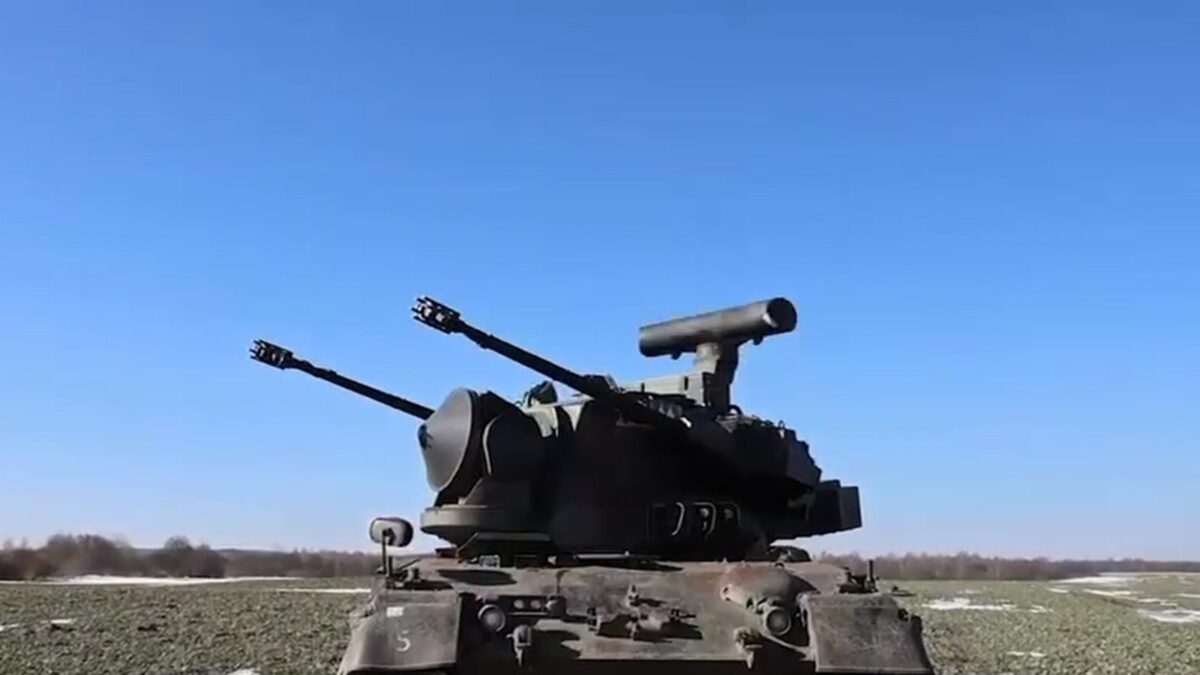
In 2025, Swiss companies exported war materiel worth 948.2 million Swiss francs to 64 countries. That is 43% more than in the previous year and almost as much as in the record year of 2022. Germany alone received materiel worth 386.4 million francs, mainly ammunition and armored vehicles. Even so, the industry speaks of a “deceptive picture”: Orders have collapsed since 2022, it says, and several European countries no longer want to buy arms in Switzerland because of the Swiss rules.
On Sunday, Nov. 29, 2026, Swiss voters will decide on parliament’s response: a relaxation of the War Materiel Act. In the future, partner states are to receive Swiss arms even when they are involved in an armed conflict. The Federal Council, Switzerland’s government, is to be allowed to deviate from the authorization criteria in extraordinary situations. In addition, the non-re-export declaration will become the exception. Under this declaration, buyer countries currently undertake not to pass on Swiss materiel without Bern’s consent.
An alliance of the Social Democrats (SP), the Greens, the Evangelical People’s Party (EVP) and nongovernmental organizations, around 20 organizations in all, has forced a referendum on the amendment. The polls show an open race: In the first poll for SRG SSR (Swiss Broadcasting Corporation), the yes side leads by 49% to 41%, while in the Leewas poll for Tamedia and 20 Minuten, the no side was narrowly ahead, 47% to 44%. Of the four proposals on the ballot on Nov. 29, 2026, the War Materiel Act is the most contested.
| At a glance | Dec. 19, 2025, amendment to the War Materiel Act |
|---|---|
| Vote | Sunday, Nov. 29, 2026; optional referendum, only the popular majority counts |
| Key points | Partner states exempted from the ban on exports to countries in conflict, power for the Federal Council to deviate from the authorization criteria, non-re-export declaration only in individual cases |
| Partner states | 36 countries in Annex 2 to the War Materiel Ordinance: all 27 EU member states, Norway and Iceland as well as Britain, the U.S., Canada, Japan, Australia, New Zealand and Argentina (since July 1, 2026; previously 25) |
| Referendum | Alliance of around 20 organizations, including the SP, the Greens, the EVP and the Group for a Switzerland Without an Army (GSoA); 58,767 valid signatures |
| Parliament | National Council: 122 votes to 68 with 6 abstentions; Council of States: 31 to 11 with 1 abstention |
| Recommendation | Federal Council and parliament: yes |
What the new War Materiel Act would change
Current law imposes an absolute ban on exports to countries in conflict. An export is not authorized if the country of destination is involved in an internal or international armed conflict. This applies to all countries, even Germany or the U.S. Under the amendment, partner states would be exempt. According to the new law, their applications are to be approved unless there are extraordinary circumstances and Switzerland’s foreign policy, neutrality policy or security policy interests require a refusal.
Second, the Federal Council gets a catch-all clause. In extraordinary circumstances, it can deviate from the authorization criteria under Article 22a if safeguarding foreign policy or security policy interests requires it. In doing so, it must comply with international obligations, including the law of neutrality. If it decides an individual case, it must inform the parliamentary Security Policy Committees within 24 hours. If it acts by ordinance, the ordinance is limited to four years at most and can be extended once. Six months after the extension, the ordinance lapses unless the Federal Council has by then submitted to parliament a draft amending the statutory authorization criteria. Parliamentary approval of the deviation itself is not provided for.
Third, the non-re-export declaration becomes the exception. In the future, requiring it from the government end user will be at the Federal Council’s discretion, if foreign policy, neutrality policy or security policy reasons make it necessary. In principle, it will be waived for supplies into international value chains. Existing declarations for materiel delivered in the past remain valid.
| Today | With the amendment | |
|---|---|---|
| Countries at war | No authorization for countries involved in an internal or international armed conflict | Partner states are supplied even during a conflict, except in extraordinary circumstances |
| Federal Council | No deviation from the criteria possible | Deviation from the authorization criteria in extraordinary circumstances, with the committees informed |
| Re-exports | Non-re-export declaration is the rule | Declaration only when needed, as a rule not for component supplies |
| Authorization requirement | Every transaction requires authorization | Unchanged |
| Ukraine | Direct exports prohibited | Direct exports still prohibited |
Every transaction will still require authorization. The law of neutrality and international obligations such as the Arms Trade Treaty continue to apply. Countries that systematically and seriously violate human rights remain excluded. The SP points out, however, that the new catch-all clause allows the Federal Council to deviate from all the criteria, including this one.
Which countries count as partners is not set out in the law. The list in Annex 2 to the War Materiel Ordinance is determined by the Federal Council. In parliament, the figure cited was always 25 countries. On May 27, 2026, after the debate in parliament and before the popular vote, the Federal Council added Iceland and 10 EU member states to the list: Bulgaria, Estonia, Croatia, Latvia, Lithuania, Malta, Romania, Slovakia, Slovenia and Cyprus. Since July 1, 2026, it has comprised 36 countries, including all EU member states as well as Norway and Iceland. The Federal Council spoke of all EU and EFTA states, but Liechtenstein, a member of EFTA, is not on the list.
From “Lex Ukraine” to “Lex Arms Industry”
The current law is recent. In 2021, parliament tightened the rules as a counter-proposal to the popular initiative known as the Correction Initiative, which sought to ban exports to countries in civil war. Since May 1, 2022, the exclusion criteria have been set out in the law itself, no longer in the ordinance. Parliament struck out a power to deviate from the criteria, which the Federal Council had already sought back then. For the initiative’s sponsors, that was decisive. “Dropping Article 22b was an absolute condition for the withdrawal,” the SP wrote in 2024.
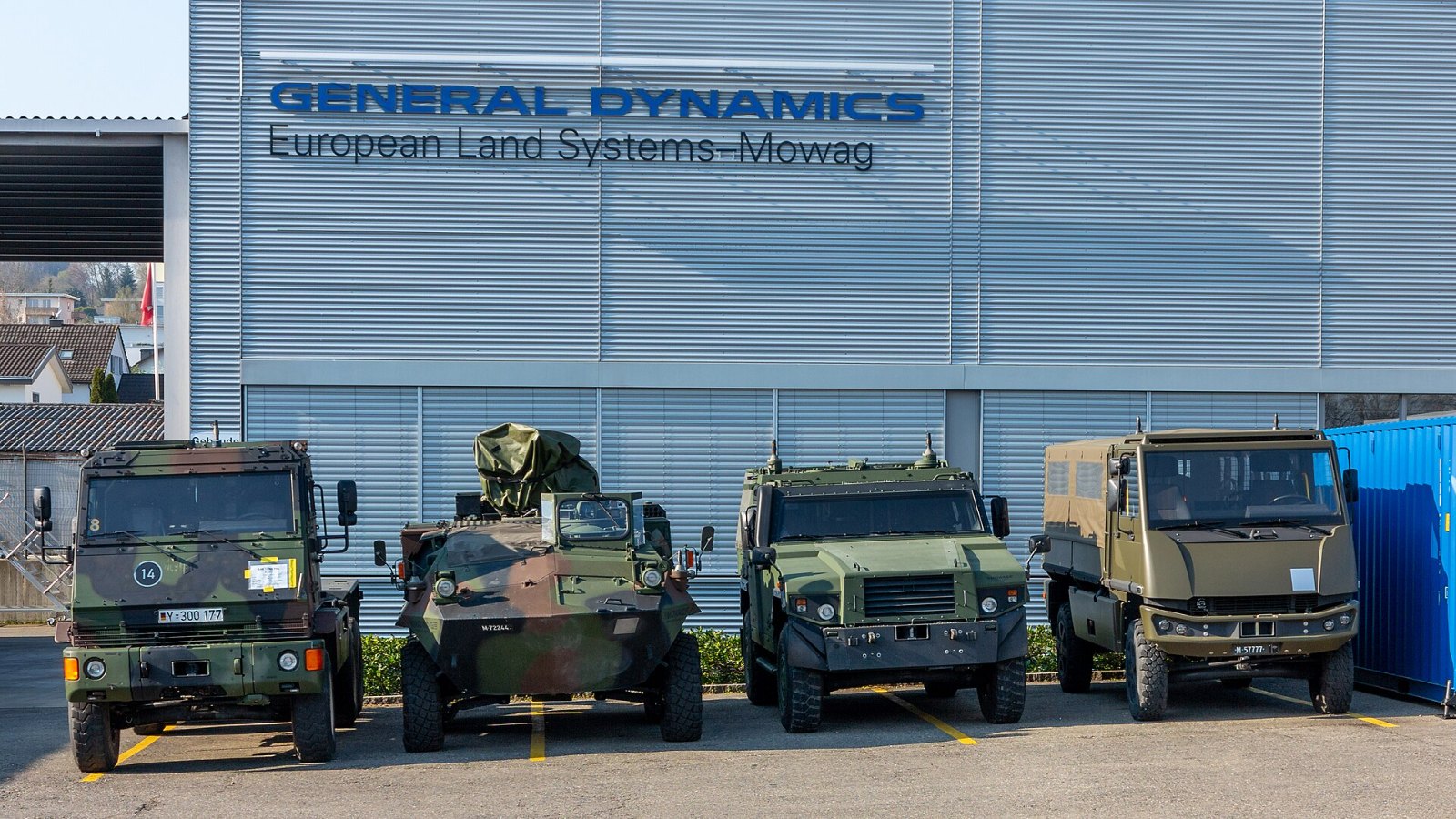
Just over two months before the law took effect, Russia’s attack on Ukraine began. Germany, Denmark and Spain asked Switzerland for permission to pass on Swiss-made materiel to Ukraine. Germany wanted to supply ammunition for the Gepard self-propelled anti-aircraft gun, and Denmark wanted to supply Piranha wheeled armored personnel carriers made by Mowag, a manufacturer based in the canton of Thurgau. Bern rejected all the requests, citing the War Materiel Act and the law of neutrality. This met with incomprehension in Berlin. Robert Habeck, Germany’s vice chancellor at the time, criticized Switzerland as an unreliable arms partner in times of war.
In parliament, several attempts followed to pass a “Lex Ukraine” that would have allowed re-exports to Ukraine. None succeeded. In November 2025, the Security Policy Committee of the National Council, the lower house of parliament, withdrew its last proposal and moved the issue into the Federal Council’s bill. The Federal Council had proposed only a power to deviate. Parliament added the conflict exemption for partner states and the far-reaching waiver of the non-re-export declaration. What began as aid for Ukraine became a general relaxation. “This is about a ‘Lex Arms Industry’ that does not help Ukraine,” Balthasar Glättli, a Green from Zurich, said in the National Council.
Record or crisis?
Both camps can make use of the export figures. After the record of 955 million francs in 2022, exports plunged 27% in 2023 and fell again in 2024. In 2025, they recovered to 948.2 million francs. Around 91% went to partner states and 86% to Europe. Ammunition accounted for 43%, armored vehicles and components for just under 24%.
Opponents see this as proof that the industry does not need any relaxation of the rules. The 2025 figures “refute the alleged ‘demise of the arms industry,'” wrote the Group for a Switzerland Without an Army. The industry counters that orders have collapsed since 2022 and that some companies are under heavy pressure. CDDS, a startup specializing in drone defense, is considering locations in the EU rather than in Switzerland for building up its production, and the drone manufacturer Destinus has already moved its headquarters abroad, Matthias C. Zoller, secretary general of SWISS ASD, wrote on the website of the industry association Swissmem on March 13, 2026.
In economic terms, the industry is small. In 2025, war materiel accounted for around 0.2% of Swiss goods exports. According to a study cited in the Federal Council’s dispatch to parliament, the arms industry in the narrower sense generates around 2.3 billion francs in value added and around 14,300 jobs; including the manufacturers of dual-use goods, the figures are around 35 billion francs and 137,000 jobs. For Simon Plüss, head of export controls and sanctions at the State Secretariat for Economic Affairs (SECO), the global arms market is currently an “absolute growth market.” According to SECO, around 60% of authorized exports are individual parts and assemblies. That makes Swiss companies suppliers, Plüss concluded.
The case of the U.S. shows how the new law would work. Since the escalation in the Middle East on Feb. 28, 2026, Switzerland has not approved any applications for permanent exports to the U.S., even though the U.S. was the second-largest buyer in 2025. With the amendment, parts that are not militarily relevant to the conflict could be approved again, such as components that a U.S. company installs in a weapons system ordered by European countries.
The Ukraine question
Ukraine was where the debate began, yet it does not appear in the law. SECO’s answer is a clear no: Direct exports of war materiel to Ukraine would remain prohibited even with the amendment. Ukraine is not one of the partner states. The conflict ban therefore continues to apply to it, as does the requirement of equal treatment under the law of neutrality. According to SECO, Switzerland could not consent to a re-export.
Even so, a re-export is not ruled out. If a buyer country credibly demonstrates that it needs the materiel itself, SECO will no longer require a non-re-export declaration. Should the buyer country nevertheless decide years later to hand the materiel over to Ukraine, re-exports to that country would in fact be possible, SECO writes. The referendum committee, by contrast, stresses that the bill rules out deliveries to Ukraine. Marianne Binder-Keller of the Centre party, who represents Aargau in the Council of States, the upper house, and voted for the bill, summed up the dilemma in the chamber: “Of all countries, it is Ukraine, which really needs our help, that we are leaving out in the cold.”
Neutrality as a battle cry
Both camps invoke neutrality. The law of neutrality is based on the Hague Conventions of 1907. It prohibits a neutral state from supplying warring parties with materiel from government stocks. For private exports, it requires equal treatment of the warring parties. The Federal Council gives assurances that all exports would remain compatible with it. Indeed, the new law explicitly cites neutrality policy interests as grounds for a refusal. The SP, on the other hand, considers supplying partner states in an international conflict incompatible with the Hague Convention.
“That is why this revision is not a departure from neutrality. It strengthens it,” says Michael Götte, a National Council member for the Swiss People’s Party (SVP) from St. Gallen. Fabian Molina, an SP National Council member from Zurich, counters: “This has nothing to do with neutrality. This is cynicism in the service of the arms industry.” Thierry Burkart of FDP.The Liberals, a member of the Council of States from Aargau, openly acknowledged the contradiction in the chamber: “We have to live with this dilemma, or else we sacrifice the principle of armed neutrality.”
Only a few weeks ago, Switzerland showed where it stands on neutrality. On Sept. 27, 2026, voters rejected the neutrality initiative, with 70.2% voting no and not a single canton in favor. The initiative would have enshrined strict neutrality in the constitution; it did not explicitly regulate arms exports. Whether the clear no says anything about November remains to be seen.
The camps
The Federal Council and the majority in parliament are campaigning for the bill, joined by politicians from the SVP, the FDP, the Centre and the Green Liberals (GLP) in the cross-party Allianz Sicherheit Schweiz, as well as by the Swiss Employers’ Association, the business federation economiesuisse and Swissmem. Guy Parmelin, President of the Swiss Confederation, launched the Federal Council’s campaign on Sept. 29, 2026. The Centre adopted its yes recommendation at its delegates’ assembly without a single vote against. The GLP parliamentary group in the National Council, however, was divided. “Sticking flowers on your helmet might help at Woodstock,” Reto Nause, the alliance’s president and a Centre member of the National Council, said at the yes camp’s news conference. Heinz Theiler, an FDP National Council member from Schwyz, points to the army: “We are investing billions in our army over the next few years.” It would be “negligent to let the industry that keeps these systems alive collapse at the same time.” Monika Rühl, director of economiesuisse, warns: “If companies move away, the related tech apprenticeships and highly qualified jobs will be lost as well.”
Fighting the bill are the SP, the Greens and the EVP, the Group for a Switzerland Without an Army, as well as Amnesty Switzerland, Caritas and the Justitia et Pax commission of the Swiss Bishops’ Conference. “This revision is nothing but a Lex Arms Industry,” Priska Seiler Graf, an SP National Council member from Zurich, said when the referendum was submitted. Molina sees Switzerland’s reputation as a mediator at risk: “We do not profit from the wars that we want to end at the negotiating table.” Marc Jost, an EVP National Council member from Bern, warns that Switzerland cannot appear “as a mediator in the morning” and supply ammunition for the same conflicts in the afternoon.
Arena: Should the rules on arms exports be relaxed?
For: Yes to the amendment
- Armed neutrality requires an arms industry of its own that can deliver in an emergency.
- The industry cannot survive on the home market alone; it needs customers and supply chains in Europe.
- European partners should be able to rely on Switzerland again.
- Otherwise, companies, startups and apprenticeships will move abroad.
- Every transaction still requires authorization; the law of neutrality and human rights continue to apply.
- Swiss law is currently stricter than the rules of EU member states.
Against: No to the amendment
- Partner states could be supplied even while at war, the U.S. for example.
- Without a non-re-export declaration, Switzerland loses control over where its materiel ends up.
- The catch-all clause is a blank check: The Federal Council can deviate from the authorization criteria, and parliament is merely informed in individual cases.
- Neutrality and good offices lose credibility.
- The bill does not help Ukraine.
- The industry is already booming; in 2025, exports were almost at a record level.
The polls: neck and neck
The three polls contradict one another. In the first trend survey by gfs.bern for SRG SSR, conducted from Oct. 5 to Oct. 18, 2026, 49% support the amendment and 41% oppose it, while 10% are undecided. The pollster speaks of a “stalemate with a lead for the yes side”; since only 55% have firmly made up their minds, there is “still considerable scope for campaign effects,” it says. YouGov found 38% in favor and 33% against from Oct. 7 to Oct. 19, 2026; at 29%, the share of undecided voters is higher here than for any other proposal. In the earlier Leewas survey for Tamedia and 20 Minuten, conducted on Oct. 7 and 8, 2026, opponents were ahead by 47% to 44%. The divides run along gender lines and language regions: In the SRG SSR poll, 57% of men say yes, while women say no by 46% to 41%. German-speaking Switzerland is in favor with 53%, while French-speaking Switzerland is against by 48% to 37%. Support is strongest among FDP sympathizers, at 73%, followed by those of the Centre and the GLP. Opposition is clearest among supporters of the Greens, at 63%, and of the SP, at 62%. The SVP stands out: Its parliamentary group in the National Council voted yes with the exception of one vote, while its base was split 45% to 47% in the Leewas poll and is in favor by 57% in the SRG SSR poll. Because this is a referendum, the popular majority alone decides.
| Poll | Survey | Yes | No | Undecided |
|---|---|---|---|---|
| gfs.bern for SRG SSR | Oct. 5 to Oct. 18, 2026; 14,874 respondents | 49 | 41 | 10 |
| YouGov Schweiz | Oct. 7 to Oct. 19, 2026; 2,949 respondents | 38 | 33 | 29 |
| Leewas for Tamedia and 20 Minuten | Oct. 7 and 8, 2026; 11,239 respondents | 44 | 47 | 9 |
What a yes and a no would mean
| If voters say yes | If voters say no | |
|---|---|---|
| Partner states | 36 countries can be supplied even during a conflict, except in extraordinary circumstances | The list of 36 countries remains, but the conflict ban applies to them as well |
| Federal Council | Can deviate from the authorization criteria in extraordinary situations | No power to deviate |
| Re-exports | Non-re-export declaration only in individual cases | Declaration remains the rule |
| U.S. | Parts for weapons systems of European customers possible again | Freeze on authorizations likely to continue as long as the conflict lasts |
| Ukraine | Direct exports prohibited; later re-exports possible in practice, according to SECO | Direct exports and re-exports prohibited |
| Entry into force | Set by the Federal Council | Law in force since May 1, 2022, continues to apply |
Timeline
Commentary: A yes, but with eyes open
The 2021 law was made for a world that has not existed since Feb. 24, 2022. In an emergency, it would treat Germany, which is rearming against a threat from the east, the same as any other country in a conflict. Anyone who wants armed neutrality needs an industry that can deliver in an emergency. That industry cannot survive on the home market alone. The partner states in question are the EU member states, Norway and Iceland as well as Britain, the U.S., Canada, Japan, Australia, New Zealand and Argentina. Switzerland closely coordinates its export controls with them. Refusing to stand by them because they might need to defend themselves is not neutrality but self-inflicted weakness.
But the bill has two weaknesses that should not be played down. The catch-all clause gives the Federal Council broad authority, and parliament is merely informed when it is used in individual cases. And the Federal Council expanded the list of partner states from 25 to 36 even before the vote, without parliament having any say in the matter. Anyone who votes yes must trust the Federal Council. After a yes, parliament should keep a close watch on this authority.
The opponents’ most honest objection concerns Ukraine. It was where this debate began. Yet of all countries, it is Ukraine that the bill hardly helps. That is a failure on the part of parliament, which for years could not agree on a “Lex Ukraine.” It is not a reason to weaken the country’s own ability to defend itself.
All figures as of Oct. 30, 2026. Export figures are nominal, according to SECO. The second SRG SSR poll will be published in November, and this article will be updated afterward. Quotes originally given in another language were translated by the editors. Sources are cited in their original language.
Related coverage: Neutrality initiative: Who owns Swiss neutrality? (in German) · 13th AHV pension payment: The people ordered it, now they are asked to pay · Fairness initiative: The Centre challenges the yes to individual taxation
Sources
- Federal Council: Voting page on the War Materiel Act, with the explanatory brochure (as of Oct. 12, 2026)
- Swissvotes: Text put to the vote, amendment of Dec. 19, 2025
- SECO: Dossier on the vote, with questions and answers
- Federal Council: Bundesrat empfiehlt ein Ja (Sept. 29, 2026)
- SECO: Expansion of the list of partner states (decision of May 27, 2026)
- Federal Council: Botschaft zur Änderung des Kriegsmaterialgesetzes (Feb. 12, 2025)
- Federal Council/SECO: Ausfuhr von Kriegsmaterial im Jahr 2025 (March 10, 2026)
- SECO: Ausfuhren nach Endempfängerstaaten 2025
- SECO: Ausfuhr von Kriegsmaterial im Jahr 2024 (March 11, 2025)
- SECO: Ausfuhr von Kriegsmaterial im Jahr 2023 (March 5, 2024)
- National Council: Final vote (Dec. 19, 2025)
- Council of States: Final vote (Dec. 19, 2025)
- Federal Chancellery: Confirmation that the referendum has qualified (April 29, 2026)
- Parliament/SDA: Debate in the Council of States (June 11, 2025)
- Parliament/SDA: Debate in the National Council (Dec. 2, 2025)
- SRF: Räte lockern Regeln für Waffenexporte (Dec. 4, 2025)
- SP Schweiz: Fact sheet on the revision (Nov. 19, 2025)
- Consultation responses on the power to deviate (2024)
- SPC-N: Press release (Aug. 12, 2025)
- cash.ch/AWP: Submission of the referendum (April 17, 2026)
- cash.ch/AWP: Ausfuhren erreichen fast Rekordwert (March 10, 2026)
- cash.ch/Reuters: Neutralität bremst (March 5, 2024)
- Blick: Schweizer Waffenexporte brechen ein (March 5, 2024)
- Blick: Ständerat will Regeln aufweichen (June 11, 2025)
- Plattform J: Launch of the no campaign (Oct. 13, 2026)
- Plattform J: Launch of the yes campaign (Oct. 15, 2026)
- cash.ch/SDA: Delegates’ assembly of the Centre (Sept. 6, 2026)
- Swissmem: Voting recommendations for the federal votes (Sept. 8, 2026)
- cash.ch/AWP: First Tamedia poll on the Nov. 29, 2026, vote (Oct. 14, 2026)
- YouGov Schweiz: Opinion barometer on the Nov. 29, 2026, votes (Oct. 20, 2026)
- gfs.bern: SRG SSR trend survey, first wave, on the Nov. 29, 2026, vote (Oct. 23, 2026)
- SRF: First SRG SSR poll on the War Materiel Act (Oct. 23, 2026)
- news.at/APA: Schweizer gegen striktere Neutralität (Sept. 27, 2026)
- SRF: Absage an Wiederausfuhr im Ständerat (March 6, 2023)
- cash.ch/SDA: Neutralitätsinitiative scheitert deutlich (Sept. 27, 2026)
- Parliament/SDA: Guy Parmelin zum Bundespräsidenten gewählt (Dec. 10, 2025)
- SRF: Wird das Kriegsmaterialgesetz gelockert? (May 11, 2023)
- swissinfo.ch: Keine Weitergabe von Piranha-Panzern durch Dänemark (June 1, 2022)
- nau.ch: Schweiz lehnt spanisches Gesuch ab (Feb. 10, 2023)
- Moneycab: Mowag in Kreuzlingen
- Federal Council: Exportkontrollerleichterungen neu für alle EU- und EFTA-Staaten (May 27, 2026)
- Swissmem/SWISS ASD: Eine trügerische Momentaufnahme (March 13, 2026)
- SPC-N: Press release on the conclusion of its deliberations (Nov. 11, 2025)


Comments 0