The stars who don’t exist: How AI singers are hijacking the charts
An AI cover of a Stromae song stormed the Swiss charts, and a fictional soul singer captured No. 1 on iTunes. On peak days, every other new song on Deezer now comes from a machine, and Kelly Clarkson is calling for separate charts for AI. An analysis of deception, fraud and the music industry's double game.

The singer who shook up the Swiss Hitparade, the country’s official charts, in January 2026 does not exist. His soul version of Stromae’s “Papaoutai” climbed into the top 10, and by mid-June it had racked up 155 million streams on Spotify. The instruments are mostly the work of humans; the voice comes from artificial intelligence (AI). The radio stations of SRF, Switzerland’s German-language public broadcaster, did not add the track to their daytime programming. It still counted on the Hitparade, though, because to this day the charts have no rule against AI music.
What looked like a curiosity in Switzerland has become a pattern internationally. In April 2026, a fictional soul singer named IngaRose reached No. 1 on the U.S. iTunes charts. In June 2026, for the first time, AI generated more than half of all newly uploaded songs on Deezer on peak days. And at the end of September, Kelly Clarkson, the first winner of “American Idol,” likened the situation to an Olympics in which robots compete against humans. The music industry is fighting back with lawsuits, labeling and new chart rules. At the same time, it is making money from the technology it is fighting. Hollywood, meanwhile, is drawing its first lines against synthetic actors. Taking stock: who is behind the phantoms, who profits from them and who pays the price.
Robots at the Olympics
The remark came on a podcast, not on a stage. In the episode of “Las Culturistas” from Wednesday, Sept. 30, 2026, Kelly Clarkson talked about artificial intelligence with the comedians Bowen Yang and Matt Rogers. The singer said she loved AI and had fun with it, just like everyone else. But she had a problem, she added, when AI artists competed against humans on a chart. There had to be a separate chart for them. Clarkson said it was basically like holding the Olympics with robots competing against humans. The human element, she said, must not be lost.
The reaction was fierce, though not primarily because of the separate charts. Many fans took issue with Clarkson’s enthusiasm for AI as such. Earlier in the episode, she had raved about how ChatGPT was helping her renovate her house. In the comments, she was taken to task over the environmental impact of AI and the threat it poses to jobs in the creative industries.
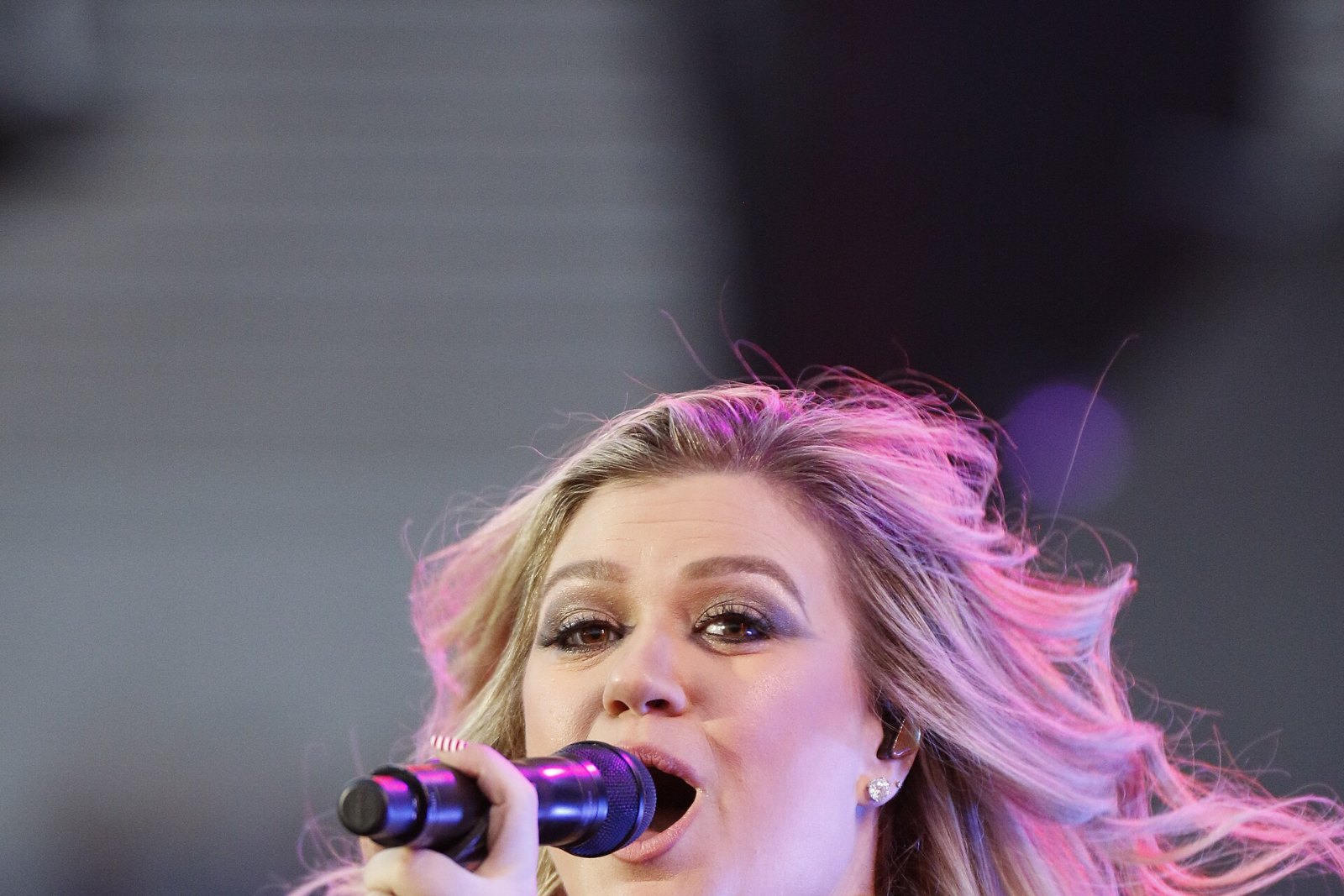
Clarkson’s proposal sounds like common sense. But it assumes that what comes from humans and what comes from machines can be neatly separated. That is precisely what is getting harder. Behind almost every AI star is a human who writes lyrics, crafts prompts, edits videos and sends out invoices. And many songs are hybrid creations. SRF digital expert Guido Berger cites the example of a track in which the beat and the vocals come from humans and only a synthesizer in the background was generated by AI. “The question of when an ‘AI-generated’ label is fair here is simply harder to answer.”
A hit parade of phantoms: AI music on the charts
Within a year, the list of AI acts on the charts has grown long. The most important cases reveal four patterns: deception, industrialization, manipulation and false alarm.
Deception: The Velvet Sundown
It began in the summer of 2025 with a band that did not exist. The Velvet Sundown released several albums of 1970s-style retro rock in quick succession and, within a month, had more than 1.2 million monthly listeners on Spotify. There were no concerts. A supposed spokesman, from whom the band later distanced itself, gave interviews. On X, the suspicion that the band was AI was initially denied. On July 5, 2025, it admitted that it was a synthetic music project under human direction.
Industrialization: Xania Monet
Xania Monet is the opposite model: an AI act operating in the open. Behind the R&B singer is the poet Telisha “Nikki” Jones from Mississippi. She writes the lyrics herself and generates the music and the vocals with the AI service Suno. In September 2025, she signed a record deal with Hallwood Media that media reports valued at $3 million. At the same time, her song “How Was I Supposed to Know?” stood at No. 1 on Billboard’s R&B sales chart. A few weeks later, she became the first known AI artist to break into a Billboard radio airplay chart.
Manipulation: Breaking Rust, Eddie Dalton and IngaRose
In November 2025, the country act Breaking Rust showed how little it takes to reach the top. Its song “Walk My Walk” hit No. 1 on Billboard’s country downloads chart and racked up more than 3 million Spotify streams in less than a month. That sounds like a triumph, but it is a niche: Because hardly anyone buys songs anymore, a few thousand purchases are enough to top this chart, according to Time magazine. The song did not show up in the daily country streaming charts.
In the spring of 2026, the action shifted to the iTunes charts. In early April, according to the industry site Showbiz411, the AI blues singer Eddie Dalton held 11 spots in the U.S. iTunes top 100, and his album “The Years Between” reached No. 3. Behind him is the producer Dallas Little with his company, Crunchy Records. Every video on social media is labeled as AI, Little says. He also says he wrote all the songs himself. According to Newsweek, however, his YouTube channel carried no such notice.
Shortly afterward came IngaRose, a soul singer made on a computer. Her song “Celebrate Me,” released on March 31, 2026, hit No. 1 on the iTunes charts in the U.S. and worldwide in mid-April, as well as in Britain, France, Canada and New Zealand. On TikTok, it was featured in more than 300,000 videos. According to her Instagram profile, the lyrics are written by humans, and the arrangement and audio tracks are refined with Suno. Officially, it is not known who is behind her. Showbiz411 suspects Dallas Little here as well; he has not confirmed this. IngaRose played hardly any role in the streaming charts. Critics see this as an indication of bulk purchases or bots, but that has not been proven.
On Friday, Aug. 21, 2026, Bette Midler weighed in. On Instagram, she denounced “Celebrate Me” as cultural genocide, under the hashtag #culturalgenocide. The singer and actor Tyrese Gibson countered that AI was here to stay.
False alarm: Maphra and Sienna Rose
The reverse case shows how difficult it is to tell the difference. In late March 2026, the anonymous metal singer Maphra reached No. 1 on Billboard’s hard rock chart with a cover of “Doomed” by the British band Bring Me the Horizon. Online, many took her for an AI product. In May, she performed live, at the Welcome to Rockville festival with Ice Nine Kills and a week later with Bring Me the Horizon itself. By contrast, in the case of the singer Sienna Rose, who had three songs on Spotify’s U.S. “Viral 50” in January 2026, the suspicion has to this day been neither confirmed nor dispelled. Deezer classifies many of her tracks as AI. Selena Gomez had used one of her songs in a post, from which it has since disappeared.
| Act | Who is behind it | Peak | AI status |
|---|---|---|---|
| The Velvet Sundown (retro rock) | anonymous | more than 1.2 million monthly Spotify listeners, July 2025 | admitted after denial |
| Xania Monet (R&B) | Telisha “Nikki” Jones | No. 1 on Billboard’s R&B sales chart, first AI act on a Billboard radio airplay chart, 2025 | openly disclosed |
| Breaking Rust (country) | attributed to a songwriter, according to Billboard | No. 1 on Billboard’s country downloads chart, November 2025 | listed by Billboard as an AI act |
| Eddie Dalton (blues) | Dallas Little, Crunchy Records | 11 tracks in the U.S. iTunes top 100, April 2026 | disclosed, but not everywhere |
| IngaRose (soul) | officially unknown | No. 1 on iTunes in the U.S. and worldwide, April 2026 | disclosed, made with Suno |
| “Papaoutai (Afro Soul)” | Mikael Daghighi, alias mikeeysmind, and two producers | top 10 of the Swiss Hitparade, January 2026 | AI vocals, instruments mostly human |
| “Like a Prayer” (dance) | DJ Josh Fawaz, Brisbane | more than 48 million Spotify streams, No. 1 on the Australian dance charts | admitted only after criticism |
| Maphra (metal) | anonymous singer | No. 1 on Billboard’s Hot Hard Rock Songs, March 2026 | suspected, performs live |
| Sienna Rose (soul) | unknown | three tracks on Spotify’s U.S. “Viral 50,” January 2026 | suspected, not confirmed |
The Swiss case: “Papaoutai” and a chart without rules
Switzerland has its own precedent. “Papaoutai (Afro Soul)” is a new version of Stromae’s 2013 hit, a song about an absent father. It was released on Spotify on Dec. 20, 2025, and went viral in January. Many listeners believed the vocals were real, so the surprise was all the greater when the track’s AI origins became known.
Behind the track is a 25-year-old producer from Gothenburg, Mikael Daghighi, who performs as mikeeysmind. In June, he told the Swedish broadcaster TV4 that the instruments had been created largely without AI and that he had used it only for the vocals. That made the result much stronger, he said, because AI can hit notes that humans cannot. At the same time, he cautioned that a song had to be at least a little bit human-made, or else it would turn into AI junk, AI slop in internet parlance. By mid-June, according to TV4, the track had been used in more than 1.7 million TikTok clips. By the broadcaster’s rough estimate, it is likely to have earned 5 million to 8 million Swedish kronor from Spotify alone.
On the Swiss Hitparade, the track climbed into the top 10. The French collecting society Sacem saw no fraud, since the melody and the lyrics remained unchanged. Stromae’s co-composer Aron Ottignon said he recognized the AI immediately and described it as merely a new instrument. Stromae himself has not commented so far.
SRF’s radio stations kept the track out of their daytime programming, citing its unclear origins and the broadcaster’s own guidelines on AI content. The Hitparade counted it nonetheless, because it has no AI ban. That is set to change. IFPI Schweiz, the association of record labels on whose behalf the official Hitparade is compiled, is considering a rule against tracks that are entirely or almost entirely AI-generated, according to SRF. Such tracks could be identified through the AI labels of the streaming services. Anyone wrongly excluded should be able to challenge the decision. “We want music by people for people,” says managing director Lorenz Haas.
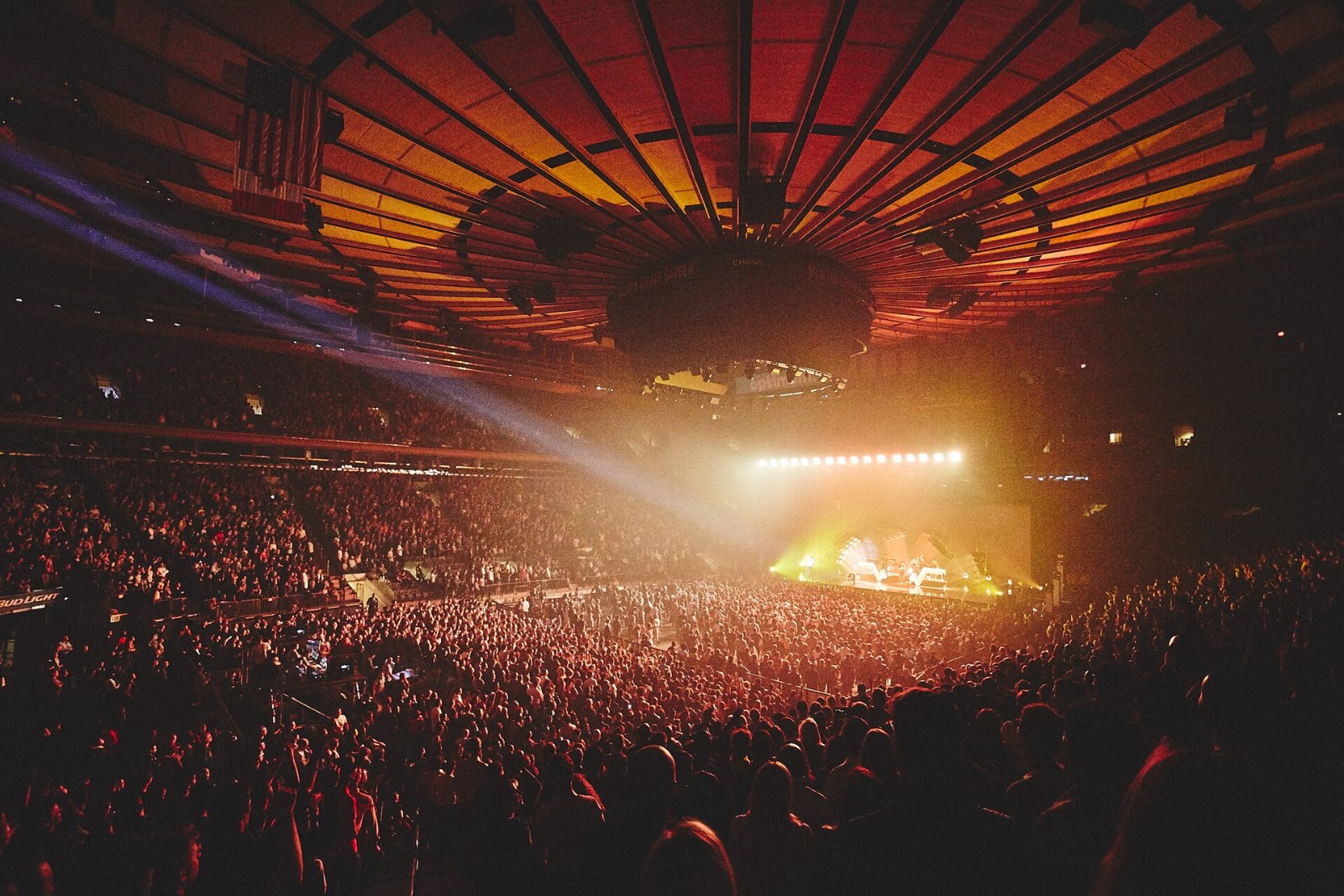
At the same time, Haas plays down the issue. Today, he says, hardly any tracks suspected of being AI-generated can be seen near the top of the chart. AI music, he adds, goes “practically unheard.” That is true of the bulk of uploads. It is not true of outliers like “Papaoutai.” Yet it is precisely such tracks that shape perceptions. And every spot they take on the Hitparade is one that a human does not get.
The template for a Swiss rule comes from the industry’s global federation. On July 30, 2026, IFPI published principles under which AI recordings can be excluded from official charts: if they are not substantially made by humans, if the AI services used are not licensed, if manipulation is suspected or if the use of AI is not disclosed to the public. Official charts capture more than sales; they honor human artistry and human creativity, says IFPI chief executive Victoria Oakley. Through its national groups, IFPI plans to extend the principles to more than 20 other charts.
Australia has already gone further. Since the end of August 2026, the official ARIA Charts no longer count fully AI-generated tracks; AI in a supporting role remains permitted. The trigger was a version of Madonna’s “Like a Prayer” by the Brisbane DJ Josh Fawaz with AI vocals and AI drums, streamed more than 48 million times on Spotify. Fawaz had admitted to using AI only when fans and producers asked about it. He called the new rules a great step.
The flood: On peak days, every other new song is AI
Deezer’s figures show how big the phenomenon is. Since January 2025, the French streaming service has used its own tool to detect fully AI-generated music, and since June 2025 it has labeled such music. At first, it counted around 10,000 such tracks a day, about a tenth of all new uploads. In April 2026, the figure was nearly 75,000 tracks, or 44%. In June 2026, the share exceeded half on peak days for the first time, at nearly 90,000 tracks a day. In 2025 alone, Deezer flagged more than 13.4 million AI tracks.
The number is spectacular; the impact is less so. AI tracks account for only 1% to 3% of all streams. According to Deezer, up to 85% of those streams in 2025 were fraudulent, meaning they were generated artificially to skim off royalties. Deezer pays nothing for such plays. The service excludes AI tracks from its algorithmic recommendations and editorial playlists. In the future, it will also delete tracks that have been used for fraud or have not been listened to for six months. With half of all daily uploads now AI tracks, Deezer was taking further measures, chief executive Alexis Lanternier said in July.
A sentencing in New York shows how the business of fake streams works. On Tuesday, Oct. 6, 2026, Michael Smith, an American, was sentenced to 18 months in prison. From 2017 to 2024, he had uploaded hundreds of thousands of AI-generated songs to Spotify, Apple Music, Amazon Music and YouTube Music and had them played by thousands of bot accounts, at times by 10,000 at once. According to the indictment, Smith calculated in his own estimate that his bot accounts would generate around 661,440 streams a day. More than $8 million in royalties flowed into his accounts this way. The court ordered the forfeiture of $8.09 million. The prosecution was regarded as the first criminal case over artificially inflated music streams in the U.S.
Smith is not an isolated case. In 2025, according to its music chief, Oliver Schusser, Apple identified around 2 billion fraudulent streams and withheld royalties of about $17 million. Spotify says it removed more than 75 million spam tracks within 12 months.

The flood is hitting a system that already prized faceless music. In Harper’s Magazine and in her book “Mood Machine,” the journalist Liz Pelly described a Spotify program called “Perfect Fit Content”: cheaply acquired mood music that ends up under invented names in playlists for concentration or relaxation. Spotify denies operating so-called fake artists. With AI, this model can be scaled up at will.
The public is divided, but not naive. In a survey by Deezer and Ipsos of 9,000 adults in eight countries, including Germany and France, 97% could not tell AI music from human-made music in a blind test. Eighty percent want clear labeling of fully AI-generated music, 70% see musicians’ livelihoods under threat, and 52% think such songs do not belong in the main charts; only 11% want them treated the same as human music. Switzerland was not part of the survey.
The record labels’ double game
In this conflict, the music industry likes to present itself as the artists’ advocate. Its role is more complicated. In June 2024, Universal, Sony and Warner sued the two biggest AI music services, Suno and Udio, for mass copyright infringement. Just over a year later, two of the three companies were sitting at the negotiating table with the defendants. On Oct. 29, 2025, Universal settled with Udio and announced a joint licensed service for 2026. In November, Warner reached settlements with Udio and Suno. Suno now also has licensing agreements with BMG and Believe, and it launched its new v6 model together with Warner, BMG and Believe. In November 2025, investors valued Suno at $2.45 billion.
That has not ended the dispute; it has shifted. In July 2026, Sony filed a second lawsuit against Udio, this time over more than 30,000 recordings. According to the industry news service CMU, the statutory damages could add up to more than $4.5 billion. On Sept. 18, 2026, Sony and Universal sued Suno again, this time over the v6 model. Anyone who trains a new model on the output of an infringing model does not eliminate the infringement but launders it, the complaint argues. Suno considers the allegations fundamentally wrong. On top of that, there is a $1 billion lawsuit by the music publisher Round Hill and a class action by the musician Jason Isbell.
The logic behind this is commercial, not moral. IFPI’s new chart rules are not aimed at AI as such: Recordings that are substantially human-made and were created with licensed AI services remain eligible. Properly licensed, AI offers exciting opportunities, says IFPI chief Oakley. In August, Spotify announced that, starting in mid-September, it would remove profiles carrying the new “AI Persona” label from all recommendations and playlists. At the same time, the service is working with Universal and the licensing agency Merlin, which represents independent labels, on plans to offer AI remixes of songs as a paid add-on for Premium subscribers.
For some producers, this is the future. Timbaland, who produced hits for Missy Elliott, Justin Timberlake and Nelly Furtado, launched the AI artist TaTa, created with Suno, through his company Stage Zero in 2025. He said he was no longer producing just tracks, but systems, stories and stars out of nothing.
Hollywood: Tilly Norwood and the line drawn at the Oscars
Where music has led, film is now following. The best-known AI “actress” made her big entrance, of all places, in Zurich. On Sept. 27, 2025, the Dutch actress and producer Eline Van der Velden presented her creation Tilly Norwood at the Zurich Summit, the industry conference of the Zurich Film Festival. Several agencies were interested in representing the character, she said. Hollywood’s response came three days later. The actors’ union SAG-AFTRA declared that Tilly Norwood was not an actor but a character generated by a computer program, trained on the work of performers without their permission or compensation. The agencies Gersh and WME declined to represent Tilly Norwood.
Van der Velden was undeterred. In July 2026, her company Particle6 announced a feature film: “Misaligned,” a coming-of-age story set in a multiverse called the “Tillyverse.” The promotional tour turned into a lesson in the limits of the technology. In an interview with Piers Morgan on Sept. 18, 2026, the character glitched and abruptly began speaking Cantonese. Shortly before, she had called on CNN for separate Oscar categories for AI.
The film academy has already answered the question for itself. Starting with the 99th Academy Awards, which honor films from 2026, only roles demonstrably played by humans with their consent are eligible in the acting categories. Screenplays must be written by humans.
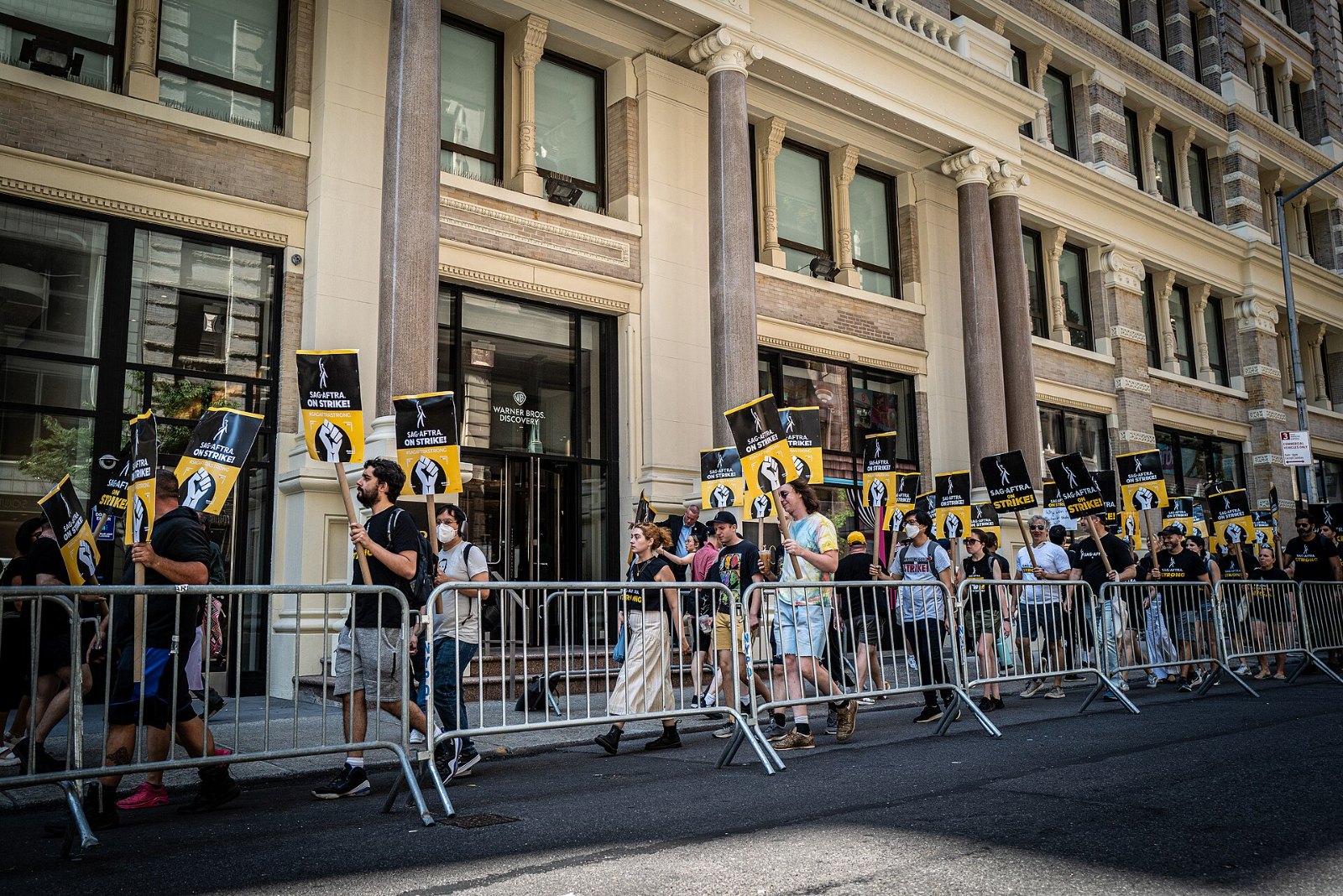
The unions have learned their lessons from the 2023 strike. The contract with which SAG-AFTRA ended the 118-day walkout requires consent and compensation for digital replicas. Anyone who uses a synthetic performer in place of a human must notify the union and bargain with it. Similar rules have applied to voice actors in video games since July 2025, after a strike of nearly a year.
“Critterz” shows how dependent AI films are on individual tools. The animated film is based on a short that OpenAI creative specialist Chad Nelson made in 2023 with DALL-E and early versions of the video generator Sora. With a budget of under $30 million and a production time of about nine months, it was supposed to premiere at Cannes in May 2026. That did not happen. At the film market, only initial clips were shown to buyers. Before that, OpenAI had announced that it would shut down Sora.
Artificial stars are nothing new. What is new is the speed, the sheer volume and the question of who gave consent. The Japanese Vocaloid character Hatsune Miku has been singing since 2007 with a synthetic voice derived from recordings of the voice actress Saki Fujita. As a projected hologram, she fills concert halls. ABBA has been appearing in London as digital avatars since May 2022, created by Industrial Light & Magic using motion capture; more than 4 million people have seen the show. And on Feb. 2, 2025, the Beatles won a Grammy with “Now and Then,” the first AI-assisted song to do so. In that case, AI helped isolate John Lennon’s voice from an old demo. All of these projects were backed by artists who had given their consent, or by their heirs.

The law lags behind
Lawmakers are responding, but more slowly than the technology. In the EU, the transparency obligations of the AI Act have applied since Aug. 2, 2026. Generative systems must mark their output as artificial in a machine-readable format. Anyone who distributes deceptively realistic content resembling real people or events must disclose this. For systems that were already on the market before then, the technical marking requirement applies only from Dec. 2, 2026. Whether a fictional singer who resembles no real person falls under the deepfake rule has not been conclusively settled.
The toughest rulings so far have come from Munich. On Nov. 11, 2025, in the case brought by the German collecting society GEMA against OpenAI, the Munich Regional Court I ruled that a language model that memorizes song lyrics reproduces them; the exception for text and data mining did not apply, the court said. The ruling against Suno followed on July 31, 2026. Six works, including “Atemlos durch die Nacht,” “Rasputin” and “Daddy Cool,” had been contained in the models in reproducible form, the court found. Suno, not its users, was responsible for the output. The court largely found in GEMA’s favor on its claims for an injunction, disclosure and damages. Neither ruling was final when it was handed down.

In the U.S., protection remains tied to human beings. In January 2025, the Copyright Office stated that prompts alone do not establish copyright protection. On March 2, 2026, the Supreme Court declined to review the case Thaler v. Perlmutter; human authorship remains a prerequisite. Whatever a machine creates on its own is therefore not protected by copyright.
Swiss copyright law does not yet contain any AI-specific rules. In the view of the Swiss Federal Institute of Intellectual Property (IPI), only what comes from a human being is protected. Parliament has adopted a watered-down version of a motion by Council of States member Petra Gössi of FDP.The Liberals. The motion originally demanded that AI providers obtain the consent of rights holders for the use of protected works. The National Council struck this consent requirement in September 2025. Protected content is now to be shielded from misuse by AI providers without weakening Switzerland as a location for AI. The preparatory committee favors an opt-out solution under which rights holders can object to the use of their works. The institute is working on a preliminary draft that is due to go out for consultation by the end of 2026. On June 17, 2026, Parliament also sent the revision of the Copyright Act, which was meant to introduce an ancillary copyright for media, back to the Federal Council, which is to examine what artificial intelligence means for the bill. Justice Minister Beat Jans expects a delay of about two years. SUISA, the cooperative of composers, lyricists and music publishers, has prohibited text and data mining of its repertoire without a license since March 2024.
For Switzerland, what is at stake is a market that is growing again thanks to streaming. According to IFPI Schweiz, labels generated revenue of just under 259 million Swiss francs in 2025, 237 million, or 92%, of it from streaming. SUISA took in a record of more than 238 million francs in 2025 and distributed 191 million to composers, lyricists and publishers. A study commissioned by CISAC, the international umbrella organization of collecting societies, warns that by 2028 just under a quarter of music creators’ income could be at risk, up to 4 billion euros worldwide.
Timeline: From hologram to hit parade
Arena: Do AI songs belong in the charts?
For: Yes, a hit is a hit
- Charts measure demand: “Celebrate Me” was featured in more than 300,000 TikTok videos, and “Papaoutai” racked up 155 million Spotify streams. Whoever finds listeners deserves to be counted.
- No clean line: Hybrid productions are the rule. Even the Grammy-winning song “Now and Then” is considered AI-assisted.
- False alarms hit humans: The metal singer Maphra was taken for AI, yet she performs live.
- People behind the acts: Telisha Jones writes her own lyrics, Dallas Little his own songs. A ban would hit them too.
- Label rather than ban: Notices such as “AI Persona” make AI visible, and the audience decides.
Against: No, separate AI charts
- Crowding out: On peak days, more than half of new uploads to Deezer are AI, and 70% of respondents see musicians’ livelihoods under threat.
- Open to manipulation: A few thousand purchases are enough for No. 1, and up to 85% of streams on AI tracks were fraudulent.
- Built on other people’s work: The Munich Regional Court I found protected works in Suno’s models.
- Charts honor people: They are rankings of human achievement, and even IFPI sees it that way.
- Deception: 97% fail to recognize AI music in a blind test, and several acts admitted to using AI only after criticism.
Commentary: The problem is not the machine but the deception
Kelly Clarkson’s Olympics comparison is catchy, but it is misleading. At the Olympics, the human body is put to the test. The charts measure what people want to listen to. Anyone who loves a song does not love it any less because the voice comes from a computer. One may regret that. But a chart that suppresses such successes does not portray reality more honestly, only less accurately.
The real problem lies elsewhere. It is deception: the band that initially denies its origins, the profile that pretends to be a human being, the DJ who admits to using AI only after criticism. And it is fraud: bots that fake streams, purchases that turn a niche into a triumph, models built on other people’s works. The remedy is not separate charts but three rules. First, a label that is visible on every track. Second, the exclusion of tracks whose AI origins are concealed or whose models were trained without a license. Third, a count that rigorously filters out purchased and faked streams.
IFPI Schweiz is on the right track if it follows these principles. But it should resist the temptation to measure humanity in percentages. Detection software makes mistakes. The Maphra case shows how quickly suspicion can fall on the wrong people. And the industry should be honest. Anyone who sues over AI while also licensing it is fighting not only for art but also for a share of the business. That is legitimate. It just should not be sold as saving culture.
All figures as of Oct. 18, 2026. Chart positions vary depending on the source and the chart week. IngaRose’s creator has not been officially confirmed, and an AI origin has not been established for Sienna Rose. The Deezer figures are based on information provided by the company. Statements originally made in English are paraphrased. Quotes originally given in another language were translated by the editors. Sources are cited in their original language.
Related coverage: Brussels regulates, Zurich builds: How Switzerland is winning the AI race by staying out of it (in German) · Hogwarts by subscription: The new Harry Potter series and the billion-dollar business of nostalgia · License to wait: The billion-dollar poker game over the new James Bond
Sources
- Stereogum: Kelly Clarkson on AI artists and separate charts (Oct. 1, 2026)
- BuzzFeed: Criticism of Clarkson’s comments on AI (Oct. 1, 2026)
- SRF: KI-Songs in den Charts, wo steht die Schweiz? (Sept. 1, 2026)
- TV4: The Swede behind the viral AI cover (June 18, 2026)
- Paris Match Belgique: The AI version of “Papaoutai” (Jan. 16, 2026)
- The Conversation, via inkl: The controversy over “Papaoutai”
- Wikipedia: Papaoutai (2025 cover), chart positions and reactions (accessed Oct. 18, 2026)
- IFPI: Principles for AI recordings in official charts (July 30, 2026)
- Al Jazeera: Australia bars AI tracks from its charts (Aug. 25, 2026)
- Straight Arrow News: The Velvet Sundown admits to AI (July 11, 2025)
- The Decoder: Record deal for Xania Monet (Sept. 20, 2025)
- Billboard: AI artists on the Billboard charts (continuously updated)
- ABC News: AI song tops the country downloads chart (Nov. 12, 2025)
- Time: What Breaking Rust’s success means (Nov. 14, 2025)
- Billboard: AI acts on the Billboard charts
- Newsweek: AI singer Eddie Dalton dominates iTunes (April 7, 2026)
- Wikipedia: IngaRose (accessed Oct. 18, 2026)
- TheWrap: Bette Midler takes aim at “Celebrate Me” (Aug. 22, 2026)
- Wikipedia: Maphra (accessed Oct. 18, 2026)
- Stereogum: Sienna Rose on Spotify’s Viral 50 (Jan. 14, 2026)
- Deezer: AI music exceeds 50% of daily uploads (July 21, 2026)
- TechCrunch: 44% of Deezer uploads are AI (April 20, 2026)
- Digital Music News: 18% of Deezer uploads are AI (April 16, 2025)
- Digital Music News: 28% of Deezer uploads are AI (Sept. 11, 2025)
- Deezer: Survey with Ipsos on AI music (Nov. 12, 2025)
- Unite.AI: 18 months in prison for Michael Smith (Oct. 6, 2026)
- Newsweek: Fraudulent streams at Apple and the ruling against Smith (Oct. 8, 2026)
- Spotify: Stronger protections against AI abuse (Sept. 25, 2025)
- NPR, via VPM: Spotify labels AI personas (Aug. 13, 2026)
- Billboard Canada: “AI Persona” and AI remixes at Spotify (Aug. 12, 2026)
- Wikipedia: The debate over fake artists on Spotify, with Liz Pelly’s reporting (accessed Oct. 18, 2026)
- Music Business Worldwide: Universal settles with Udio (Oct. 30, 2025)
- Mixmag: Warner settles with Udio (November 2025)
- Boston Globe: Warner settles with Suno (Nov. 25, 2025)
- MusicTech: Suno raises $250 million (November 2025)
- CMU: Sony sues Udio a second time (July 21, 2026)
- Variety: Sony and Universal sue Suno over v6 (Sept. 19, 2026)
- Pollstar: Timbaland launches AI artist TaTa (June 11, 2025)
- Variety: SAG-AFTRA on Tilly Norwood (Oct. 1, 2025)
- Wikipedia: Tilly Norwood (accessed Oct. 18, 2026)
- NPR, via APR: The film academy’s new rules (May 2, 2026)
- Loeb & Loeb: AI rules in the SAG-AFTRA contract (Nov. 13, 2023)
- The Next Web: “Critterz” misses Cannes (May 22, 2026)
- Wikipedia: Hatsune Miku
- Wikipedia: ABBA Voyage (accessed Oct. 18, 2026)
- Guinness World Records: First AI-assisted song to win a Grammy
- Kingsley Napley: The AI Act’s transparency rules now apply (Aug. 14, 2026)
- LTO: Ruling in GEMA v. OpenAI (Nov. 11, 2025)
- Munich Regional Court I: Ruling in GEMA v. Suno (July 31, 2026)
- Mayer Brown: The Supreme Court in the Thaler case (March 11, 2026)
- IPI: FAQ KI und Urheberrecht (PDF)
- law.ch: The Gössi motion on copyright and AI (Jan. 30, 2026)
- Swiss Parliament: National Council amends the Gössi motion (Sept. 16, 2025)
- Swiss Parliament: Copyright revision sent back to the Federal Council (June 17, 2026)
- SUISA: Opt-out for AI training (March 11, 2024)
- La Télé/ATS: The Swiss music market in 2025 (March 27, 2026)
- SRF: Record year for SUISA (June 11, 2026)



Comments 0