13th AHV pension payment: The people ordered it, now they are asked to pay
In December 2026, the 13th AHV pension payment from Switzerland's state old-age insurance will be paid out for the first time. A few days earlier, the country decides who pays for it: 0.4 percentage points more in value-added tax, with no time limit. The no side leads in the polls, though only narrowly in the SRG SSR poll. An analysis of a financing plan that covers only half, a rift between young and old and the question of what a no vote would set off.
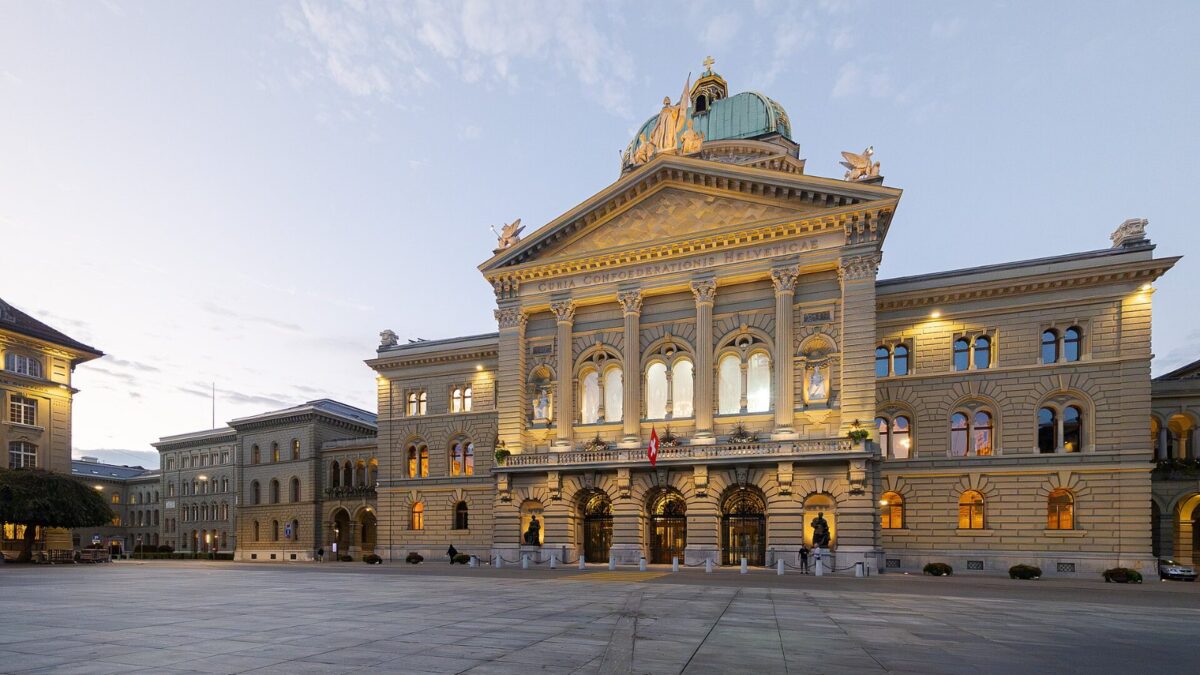
In December 2026, some 2.6 million retirees will for the first time receive a 13th pension payment from the AHV, Switzerland’s state old-age and survivors’ insurance. Single people will receive up to 2,520 Swiss francs more a year, married couples up to 3,780 francs. A few days earlier, on Sunday, Nov. 29, 2026, the people and the cantons will decide how this payment is to be financed: with an increase in value-added tax (VAT) of 0.4 percentage points, open-ended and starting in 2028 at the earliest. The Federal Council and Parliament recommend a yes vote.
The situation is paradoxical. On March 3, 2024, 58.2% of voters approved the 13th AHV pension payment. Now the people are being asked to pay the bill. Whether they are willing to do so is an open question. In the first poll by gfs.bern for SRG SSR, the Swiss Broadcasting Corporation, 46% supported the higher VAT and 49% opposed it. Two other polls show the proposal trailing by a wider margin: Leewas, polling for the media group Tamedia and the newspaper 20 Minuten, found 36% in favor and 60% against, and YouGov found 38% to 51%.
Yet the proposal itself is a compromise that pleases no one. Together with the federal contribution, it covers only about half of the costs, it has no expiration date and it comes two years too late. Anyone who wants to understand why Switzerland is arguing over a tax meant to finance a pension payment approved long ago has to start with the 2024 vote.
| At a glance | Additional financing for the AHV through VAT |
|---|---|
| Vote | Sunday, Nov. 29, 2026; requires a popular majority and a majority of the cantons (constitutional amendment) |
| Standard rate | from 8.1% to 8.5% |
| Accommodation rate | from 3.8% to 4.0% |
| Reduced rate | remains at 2.6% (food, medicines, books, newspapers) |
| Duration | open-ended |
| Entry into force | set by the Federal Council, at the beginning of 2028 at the earliest |
| Revenue | about 1.4 billion francs a year |
| Cost of the 13th payment | 4.2 billion francs (2026), about 4.5 billion (2030), about 5.4 billion (2040) |
| Coverage | about half of the additional cost, together with the federal contribution |
| Parliament | National Council 108 to 85 with 6 abstentions, Council of States 28 to 13 with 3 abstentions |
| Recommendation | Federal Council and Parliament: yes |
A yes without a price tag
The popular initiative by the Swiss Federation of Trade Unions (SGB) for a 13th AHV pension payment was a coup in 2024. It won 58.2% of the vote and a majority of the cantons, against the wishes of the Federal Council, Parliament and the business community. On the same day, voters rejected the Young Liberals’ pension initiative, which sought to raise the retirement age to 66, with 74.7% voting no. The message was clear: a bigger pension, but no extra years of work. “It is also a protest vote,” political scientist Lukas Golder of the research institute gfs.bern said on voting day.
The initiative left only one question open: who would pay. The initiative text did not mention financing. The post-vote survey by gfs.bern showed that it was mainly older voters who had approved it, especially 60- to 69-year-olds, while younger people tended to oppose it. According to the analysis, those who voted no feared above all higher value-added taxes and payroll deductions. That is precisely what Switzerland must now decide.
Two years of wrangling in the Federal Palace
What followed was one of the most grueling financing bills in recent history. In October 2024, the Federal Council proposed raising VAT by 0.7 percentage points. The Council of States wanted a mix of VAT and higher payroll contributions, the National Council a VAT-only solution with a time limit. The two chambers failed to reach agreement in the procedure for resolving differences. In June 2026, a conciliation conference had to mediate: 0.2 percentage points in payroll contributions plus 0.4 VAT percentage points, open-ended.
In the National Council, the compromise broke in two. On June 17, 2026, the higher payroll contributions failed by 96 votes to 98, defeated by the Swiss People’s Party (SVP), FDP.The Liberals and the Green Liberals (GLP). What remained was the VAT increase. The debate showed how deep the divisions run. “Anyone who says no today wants to raise the retirement age,” exclaimed Barbara Gysi, a Social Democratic (SP) member of the National Council from St. Gallen. “VAT is the lesser evil,” said Patrick Hässig, a Green Liberal from Zurich. And Thomas Rechsteiner, a member of the National Council for The Centre from Appenzell Innerrhoden, warned that without the additional financing the AHV fund would dwindle. Closing the gap by raising the retirement age was an illusion, he said.
In the final vote on June 19, 2026, the National Council approved the proposal by 108 votes to 85, with 6 abstentions, and the Council of States by 28 to 13, with 3 abstentions. The FDP parliamentary group voted no unanimously, as did the SVP, with few exceptions. Five yes votes from the SVP group came from members representing French-speaking Switzerland and the canton of Bern. Had these five and the Green Liberals, who voted yes as a bloc, voted no, the proposal would have failed.
A financing plan that covers only half
The proposal has a design flaw that both camps acknowledge: It is not enough. The 13th pension payment costs about 4.2 billion francs in 2026, about 4.5 billion in 2030 and about 5.4 billion in 2040. The higher VAT will bring in about 1.4 billion francs a year from 2029. The federal government contributes just over 900 million francs through its statutory share of 20.2% of AHV expenditure. By Expertistan’s own calculation, that leaves about 2.2 billion francs uncovered in 2030, almost half. According to the Federal Chancellery, it is currently unclear how this gap will be closed.
On top of that come two years without any additional financing. Because the tax will take effect in 2028 at the earliest, the AHV will pay for the 13th pension payment in 2026 and 2027 out of its reserves. SRF, the Swiss public broadcaster, puts the combined cost at close to 9 billion francs. According to federal projections, the AHV compensation fund, which stood at 60.4 billion francs at the end of 2025, will fall below the legally required reserve of one year’s expenditure in 2027 if no new revenue comes in. Because the higher tax takes effect only from 2028, this is likely to happen even if voters say yes.
The financial projections of July 2026 show what the proposal achieves and what it does not. Without additional revenue, the AHV will post a pay-as-you-go deficit of about 2.7 billion francs in 2030 and about 4.9 billion in 2035. With the higher VAT, the deficit shrinks to about 1.2 billion in 2030 and about 3 billion in 2035. In 2035, the fund would stand at just under 70% of one year’s expenditure instead of about 50%. The proposal slows the plunge, but it does not prevent it.
What it costs households
Estimates of the burden on households vary widely. In its explanatory brochure, the Federal Council expects an average of about 180 francs per household per year, roughly 15 francs a month, with lower incomes paying less and higher incomes more. The Greens cite 70 to 110 francs a year for a person on a low or middle income. Anyone who spends 100 francs on clothes, a haircut or a restaurant meal will pay about 40 centimes more in the future. Food and medicines remain at the reduced rate of 2.6%.
The FDP cites a calculation for the economy as a whole. A study by the research institute BAK Economics, on which the party relies, puts the loss in growth over 10 years at almost 3.6 billion francs, with small and medium-sized enterprises, retail and the hospitality industry said to be hit hardest. Moreover, the argument goes, every tax increase encourages cross-border shopping in neighboring countries. With a standard rate of 8.5%, however, Switzerland would remain a low-VAT country: Germany levies 19%, France and Austria 20%, Italy 22%.
The timing is awkward. In parallel, Parliament is planning a further VAT increase, this time for the army. The Federal Council had proposed 0.5 percentage points for this purpose; on Sept. 21, 2026, the Council of States approved a version with 0.2 percentage points and an armaments fund of 24 billion francs. The National Council will take up the bill in the winter session. The FDP speaks of “salami tactics” and warns of a VAT rate that could climb toward 10%.
A question of generations
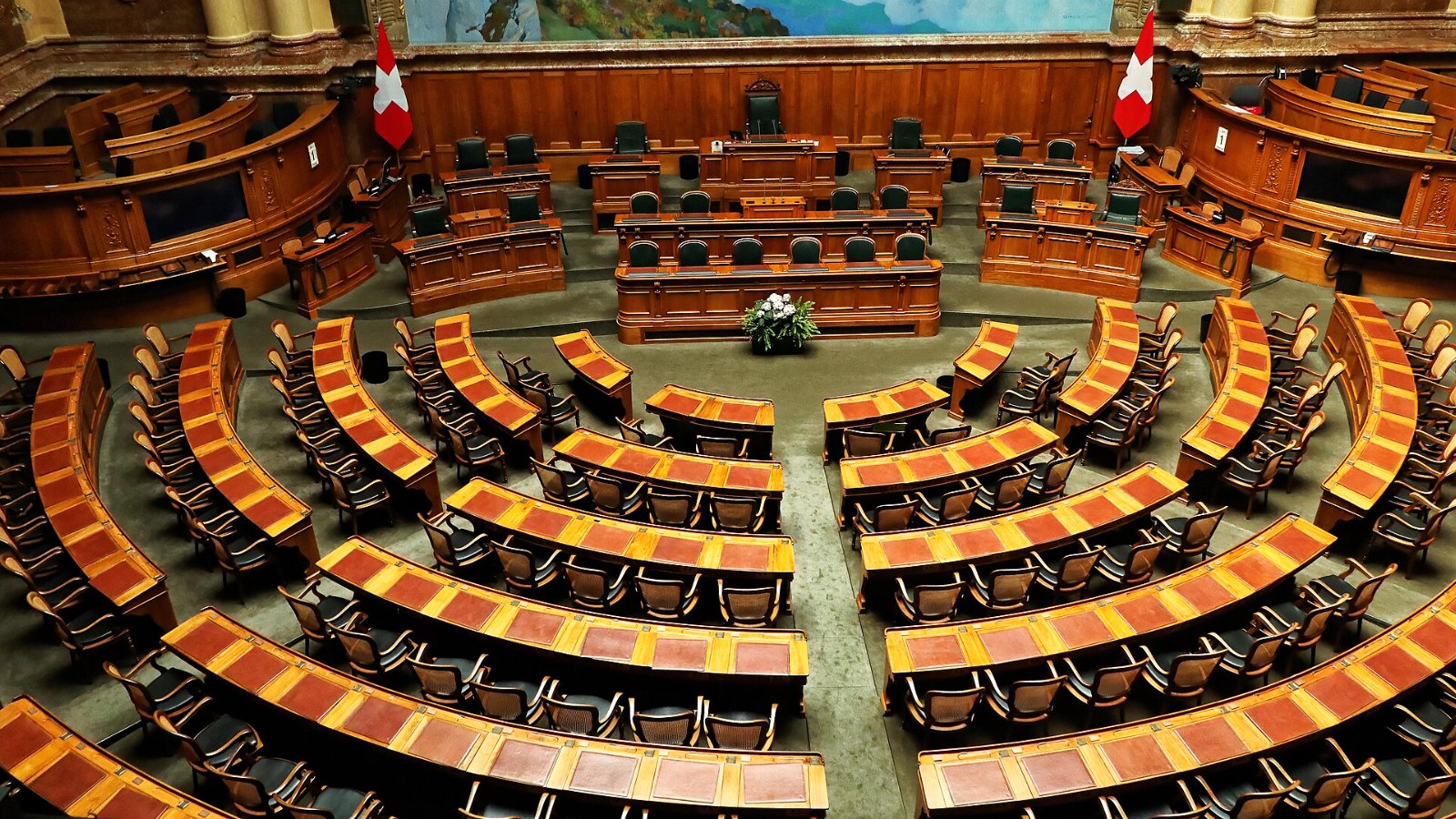
At its core, the vote is a dispute between the generations. The polls show this clearly. In the Leewas survey, support rose with age, from 27% among the youngest to 46% among those over 65. In the SRG SSR poll, 56% of 18- to 39-year-olds reject the proposal, while 55% of those over 65 support it. “It is a clear age divide,” political scientist Lukas Golder of gfs.bern told SRF. For supporters, that is precisely an argument for VAT. Unlike payroll contributions, it is paid by everyone, including retirees and tourists. “But a financing solution does at least have the advantage that the older generations contribute,” Bern Green Liberal Kathrin Bertschy said in the National Council in September 2025.
Opponents, by contrast, see the young as doubly burdened: They pay higher taxes without the pensions being secured in the long term. The industry association Swissmem writes that VAT would be helping to finance the AHV for the third time instead of the system being reformed. Indeed, 1.4 VAT percentage points already go to the AHV today; after a yes, it would be 1.8. According to the consultation draft, the next reform, AHV 2030, does not provide for a higher retirement age. In case the financing of the 13th pension payment fails, it includes scenarios with even higher VAT and payroll contributions.
The camps
On the yes side, alongside the Federal Council and Parliament, are the SP, the Greens, The Centre, the Evangelical People’s Party (EVP) and the Swiss Federation of Trade Unions. The unions are not united, however: According to gfs.bern, the public-sector union VPOD recommends a no vote. The Centre’s delegates voted 164 to 9 on Sept. 5, 2026, to recommend a yes. Interior Minister Elisabeth Baume-Schneider is defending the proposal. “The Federal Council and Parliament do not want the AHV to slide into a deficit spiral,” SRF quoted her as saying on Oct. 9, 2026. The Federal Council calls the solution balanced: With VAT, it argues, all generations would contribute to securing the AHV, the working population as well as the retirees who receive the 13th AHV pension payment.
On the no side are the FDP, the SVP, the employers’ associations and small-business groups. The opponents are fighting not the 13th pension payment but its financing. “This sloppily drafted bill finances less than half,” FDP co-president Susanne Vincenz-Stauffacher said at the campaign launch on Sept. 28, 2026. The party’s message is: “The state must tighten its belt, not the people.” The SVP is calling for savings in the asylum system and in development cooperation instead of new taxes.
Arena: Higher VAT for the 13th AHV pension payment?
For: Yes to the additional financing
- You order it, you pay for it: The people approved the 13th pension payment in 2024, and without financing the AHV’s deficits will grow significantly faster.
- Everyone pays a share: VAT also falls on retirees and tourists, not just on the working population.
- Socially cushioned: Food and medicines remain at the reduced rate.
- Without a yes, the deficit will rise to just under 5 billion francs a year by 2035, and the fund will shrink to about half of one year’s expenditure.
- The longer the wait, the more expensive any later rescue becomes.
Against: No to the tax increase
- A half measure: Together with the federal contribution, the proposal covers only about half of the costs; the gap remains.
- Open-ended: The tax remains in place even after a future reform.
- Less pressure to reform: Structural measures, such as a retirement age linked to life expectancy, are put off.
- Purchasing power: An additional burden on top of rising health insurance premiums and rents.
- Salami tactics: With the planned VAT increase for the army, further increases loom.
What a yes and a no would mean
| If yes | If no | |
|---|---|---|
| 13th payment | paid out from December 2026 | paid out from December 2026 anyway |
| VAT | standard rate of 8.5%, from 2028 at the earliest, open-ended | remains at 8.1% |
| Pay-as-you-go deficit, 2030 | about 1.2 billion francs | about 2.7 billion francs |
| Pay-as-you-go deficit, 2035 | about 3 billion francs | just under 5 billion francs |
| AHV fund, 2035 | just under 70% of one year’s expenditure | about 50% of one year’s expenditure |
| Next step | AHV 2030 reform must close the remaining gap | AHV 2030 reform with scenarios for 0.7 to 0.9 VAT percentage points or a mix with payroll contributions |
A no would have a consequence that many overlook: The 13th pension payment would be paid out anyway. Implementation and financing are two separate pieces of legislation. The bill would not be canceled but deferred, shifted onto the AHV fund and thus onto the next reform. The Federal Council intends to present its dispatch on the AHV 2030 reform in spring 2027. Any further VAT increase would again require a popular vote.
The polls: A narrow no, an open outcome
Three polls are available. In the first trend survey by gfs.bern for SRG SSR, conducted from Oct. 5 to Oct. 18, 2026, among 14,874 eligible voters with a margin of error of 2.8 percentage points, 46% support the proposal and 49% oppose it, while 5% are undecided. The institute speaks of a “stalemate with a slight lead for the no side.” The no was clearer in the two other surveys: Leewas found 36% yes and 60% no for Tamedia and 20 Minuten on Oct. 7 and 8, 2026, and YouGov found 38% yes and 51% no from Oct. 7 to Oct. 19, 2026. According to gfs.bern, there are yes majorities among supporters of the SP, the Greens, The Centre and the GLP, and no majorities among those of the FDP, at 54%, and the SVP, at 68%. The argument that met with the most approval was that the gaps should be closed through structural reforms rather than additional taxes: 67% agree with it. Opinion formation is “still at an early stage,” the institute says, and “considerable shifts remain possible” in the main campaign. Because this is a constitutional amendment, the proposal needs a majority of the cantons in addition to a popular majority. According to YouGov, it currently does not have a majority in any canton.
| Poll | Survey period | Yes | No | Undecided |
|---|---|---|---|---|
| gfs.bern for SRG SSR | Oct. 5 to Oct. 18, 2026, 14,874 respondents | 46 | 49 | 5 |
| YouGov Switzerland | Oct. 7 to Oct. 19, 2026, 2,949 respondents | 38 | 51 | 11 |
| Leewas for Tamedia and 20 Minuten | Oct. 7 and 8, 2026, 11,239 respondents | 36 | 60 | n/a |
For comparison: In the last VAT increase for the AHV, the AHV 21 reform in September 2022, pre-vote polls ranged from 54% to 65% in favor, and the proposal passed with 55.1%. At the time, the SP and the Greens opposed the tax, while the center-right parties supported it. In 2026, the fronts are reversed. It would be unusual for a proposal polling at 36% seven weeks before the vote to still win a majority. But it is not impossible, because opinions can still shift significantly during the campaign.
Timeline
Commentary: You order it, you pay for it, even if the bill is badly written
The proposal is no masterpiece. Together with the federal contribution, it covers only half, it has no expiration date and it postpones the real work, an AHV reform that takes rising life expectancy into account. The opponents’ criticism is justified. Their conclusion is not.
A no vote, after all, does not save a single franc. The 13th pension payment will be paid out whether Switzerland says yes or no on Nov. 29, 2026. Rejecting the financing means paying for the pension out of the AHV fund’s capital, in other words with money that future retirees will lack. Personal responsibility, so readily invoked on other occasions, also means this: If you order something, you pay for it. And you pay now, not the next generation.
A yes is therefore not a blank check. It obliges the Federal Council and Parliament to raise the second half not through taxes again but through reforms that no one has dared to touch so far: the retirement age, linking it to life expectancy, federal spending. Anyone who wants that need not love this proposal. They only have to do the math honestly.
All figures as of Oct. 30, 2026. The figures on costs and revenue come from the federal government and may differ slightly depending on the price basis. The uncovered gap is an Expertistan calculation. The second SRG SSR poll will be published in November, and this article will be updated afterward. Quotes originally given in another language were translated by the editors. Sources are cited in their original language.
Related coverage: Half a percent for the army: Who should pay for Switzerland’s rearmament (in German) · Fairness initiative: The Centre challenges the yes to individual taxation · War Materiel Act: How much neutrality can the arms industry take?
Sources
- Federal Council: voting page on the additional AHV financing, with the explanatory brochure (as of Oct. 12, 2026)
- Federal Council: Bundesrat empfiehlt Ja zur Erhöhung der Mehrwertsteuer (Oct. 5, 2026)
- FSIO: information on the vote (Oct. 5, 2026)
- Federal Council: Neue Finanzperspektiven der Sozialwerke (July 2, 2026)
- FSIO: financial situation and outlook of the AHV
- National Council: final vote (June 19, 2026)
- Parliament/SDA: Für die 13. AHV-Rente wird die Mehrwertsteuer erhöht (June 19, 2026)
- Parliament/SDA: Räte erhöhen lediglich die Mehrwertsteuer (June 17, 2026)
- Blick: live blog of the National Council debate (June 17, 2026)
- SRF: 13. AHV-Rente nur teilfinanziert (June 17, 2026)
- cash.ch/AWP: Fragen und Antworten zur Finanzierung (June 19, 2026)
- Parliament/SDA: Einigungskonferenz beantragt Mischfinanzierung (June 10, 2026)
- SRF: Das Absturzpotenzial bleibt (June 10, 2026)
- Federal Council: dispatch on the financing of the 13th AHV pension payment (Oct. 16, 2024)
- SRF: the vote of March 3, 2024 (March 4, 2024)
- gfs.bern: VOX-Analyse März 2024
- cash.ch/AWP: first Tamedia poll on the Nov. 29, 2026, vote (Oct. 14, 2026)
- YouGov Switzerland: opinion barometer on the Nov. 29, 2026, votes (Oct. 20, 2026)
- YouGov Switzerland: Warum die AHV-Vorlage einen schweren Stand hat (Oct. 23, 2026)
- gfs.bern: SRG SSR trend survey, first wave, on the Nov. 29, 2026, vote (Oct. 23, 2026)
- SRF: Erste SRG-Umfrage zur Finanzierung der 13. AHV-Rente (Oct. 23, 2026)
- Plattform J: Allianz fordert Zusatzfinanzierung (Oct. 13, 2026)
- cash.ch/SDA: delegates’ assembly of The Centre (Sept. 6, 2026)
- cash.ch/AWP: FDP startet Kampagne gegen die Mehrwertsteuer (Sept. 28, 2026)
- SRF: Mehr Mehrwertsteuer, zumutbar oder nicht? (Oct. 9, 2026)
- Swissmem: Nein zur unbefristeten Steuererhöhung
- SGB: delegates’ assembly on the financing (Aug. 20, 2026)
- cash.ch/AWP: Ständerat will Mischfinanzierung für Rüstungsfonds (Sept. 21, 2026)
- SRF: Wer finanziert künftig die 13. AHV-Rente? (June 3, 2026)
- Swissvotes: Reform AHV 21 (vote of Sept. 25, 2022)
- cash.ch/AWP: FDP startet ihre Kampagne, first version (Sept. 28, 2026)



Comments 0