XPeng: The automaker that no longer wants to be an automaker
Twelve years ago, XPeng was little more than the idea of two engineers from Guangzhou and the venture capital of an internet entrepreneur who had just sold his browser to Alibaba. Today the company delivers more than 40,000 cars a month, has vehicles assembled in Graz, sells software and chips to Volkswagen and has promised humanoid robots, driverless taxis and a car that carries an aircraft on its back for 2027. An appraisal spanning engineering prowess, cash burn and a self-image that has long since reached beyond the automobile.
Anyone who wants to understand why Europe’s auto industry is looking nervously eastward cannot ignore XPeng. The company is neither the biggest nor the most profitable of China’s EV makers. BYD sells many times as many cars, and Li Auto was profitable earlier. Yet hardly any other manufacturer embodies so consistently the bet that the car of the future is above all a computer that happens to sit on four wheels. XPeng develops its own driver-assistance system, writes its own operating system and in 2025 began installing its own AI chips in production cars. As of this year, the company no longer calls itself an electric-vehicle maker but a Physical AI company. Whether that is foresight or marketing is the real question behind this report.
Key points
- Founded in August 2014 in Guangzhou by former GAC engineers Xia Heng and He Tao; financed, and led since 2017, by He Xiaopeng, a co-founder of the UCWeb browser.
- Deliveries in 2025: 429,445 vehicles, more than twice as many as the year before. January to September 2026: 284,367, about 9% fewer than in the same period a year earlier.
- Revenue in 2025: 76.72 billion yuan (about $10.97 billion), net loss of 1.14 billion yuan. A first-ever quarterly profit in the fourth quarter of 2025, losses again in 2026.
- Partners: Volkswagen has held just under 5% since 2023 and buys electronic architecture, chips and driving AI. Magna Steyr assembles three models for Europe in Graz, with the G9L to follow as the fourth.
- Switzerland: on the market since Sept. 3, 2025, through Hedin Distribution AG; L03 from 35,600, G6 from 43,600, G9 from 59,600, X9 from 77,600 Swiss francs.
- New ventures: robotaxi (driverless operation planned from 2027), IRON robot (series production announced by the end of 2026), flying car from the subsidiary Aridge (certification under way).
| At a glance | XPeng Inc. (小鹏汽车, Xiaopeng Motors) |
|---|---|
| Headquarters | Guangzhou, Guangdong province |
| Founded | Aug. 15, 2014 |
| Founders | He Xiaopeng (chairman and CEO), Xia Heng, He Tao |
| Stock listings | New York (XPEV) since Aug. 27, 2020; Hong Kong (9868) since July 7, 2021 |
| Employees | 19,884 (Dec. 31, 2025) |
| Deliveries 2025 | 429,445 vehicles (+126%), of which 45,008 overseas |
| Revenue 2025 | 76.72 billion yuan (+87.7%) |
| Gross margin 2025 | 18.9% |
| Net result 2025 | −1.14 billion yuan (Q4 2025: +0.38 billion) |
| Cash and liquid assets | 40.48 billion yuan (June 30, 2026) |
| Plants | Zhaoqing, Guangzhou; assembly in Graz (Magna), Indonesia, Malaysia |
| Presence | about 60 countries at the end of 2025; L03 target: 64 overseas markets |
A browser, a sale and a bet
XPeng’s story begins with an exit. In June 2014, Alibaba took full ownership of the mobile browser UCWeb, for a sum that reports put at about $4.3 billion; at the time, it was the largest acquisition in China’s internet industry. One of UCWeb’s founders, He Xiaopeng, became rich overnight and stayed on at Alibaba as an executive for the time being.
That same summer, two engineers from the state-owned automaker GAC founded a company in Guangzhou to build connected electric cars. Xia Heng, born in 1983 and a graduate of Tsinghua University, had headed an electric-vehicle development group at GAC. He Tao likewise came from the group’s research division. He Xiaopeng came on board as an investor and co-founder. The company’s filing for its Hong Kong listing names all three as founders. In August 2017, He Xiaopeng left Alibaba and took over as chairman; since then, the company has in effect borne his name: in Chinese, it is called Xiaopeng.
This dual nature still shapes XPeng today. The car people brought expertise in chassis engineering, vehicle homologation and suppliers; the internet entrepreneur brought a way of thinking built on software, user numbers and rapid updates. Prominent backers came on board early: Alibaba, Foxconn and the investment firm IDG Capital, and later Xiaomi founder Lei Jun, who had already been among the first supporters. A financing round in early 2018 reportedly brought in about $350 million, and another in November 2019 about $400 million.
The first production car, the compact G3 SUV, was launched in December 2018. According to industry reports, it was initially built under contract by the manufacturer Haima, because XPeng did not yet hold its own production license; later, XPeng’s own plants in Zhaoqing and Guangzhou took over. In 2018, a mere 29 vehicles went to customers. In 2019, the figure was 12,728. The G3 was solid but not spectacular; its main purpose was to build up a supply chain and collect driving data.
The P7 and money from the stock market
The breakthrough came in 2020 with the P7 sedan. It had been unveiled at Auto Shanghai in April 2019, and deliveries began at the end of June 2020, in the middle of the pandemic. The P7 was low-slung, fast and equipped with a driver-assistance system that could overtake on its own and take exits on Chinese highways. It was the first car that led people to see XPeng not as an imitator but as a technology provider. In 2020, deliveries doubled to 27,041.
At the same time, the window to the capital markets opened. In July 2020, XPeng raised about $500 million in a final pre-IPO round from investors including Hillhouse, Coatue and Sequoia China. On Aug. 27, 2020, it went public on the New York Stock Exchange at $15 per share (ADS). According to its filings with the U.S. Securities and Exchange Commission (SEC), net proceeds came to $1.66 billion. A follow-on share offering came in December 2020. On July 7, 2021, XPeng also listed in Hong Kong, the first Chinese EV maker to complete such a “homecoming” listing: 85 million shares at 165 Hong Kong dollars apiece raised gross proceeds of about 14 billion Hong Kong dollars.
The money was needed. Building out plants in Zhaoqing and Guangzhou, a proprietary fast-charging network and software development swallowed billions. In 2021, XPeng delivered 98,155 vehicles and posted revenue of more than 20 billion yuan for the first time. The P5 family sedan came to market in the fall of 2021 as one of the first production cars with lidar sensors. At that point, XPeng was regarded, alongside Nio and Li Auto, as one of the three most promising new automakers in China.
The crash: False start, price war, red ink
Then came the slump. In 2022, sales stagnated while rivals such as BYD and Tesla cut prices. The great hope, the G9 SUV, was launched in September 2022 with a confusing lineup of numerous variants and fell well short of expectations. Of all models, it was the first one XPeng had designed from the outset for Europe as well that became a textbook case of poor product strategy in China.
In the first quarter of 2023, XPeng delivered only 18,230 vehicles, and in January 2023 a mere 5,218. In the second quarter of 2023, the gross margin slid to negative 3.9% and the vehicle margin to negative 8.6%: XPeng lost money on every car it sold, even before paying for wages, development and advertising. The net loss peaked in 2023 at 10.38 billion yuan.
He Xiaopeng responded with a shake-up that the industry followed closely. On Jan. 30, 2023, he brought in Wang Fengying as president. She had worked at Great Wall Motor for more than 30 years, rising from sales to the top as vice chair of the board and general manager. She is regarded as the architect of that manufacturer’s SUV success. Wang radically overhauled the dealer network, shifted sales to smaller cities and streamlined the model lineup. In parallel, XPeng ran a cost-cutting program that it itself described as technology-driven: fewer control units, its own electronic architecture, cheaper batteries. Co-founder Xia Heng had already left the board in November 2022.
Rescue came from Wolfsburg and from Didi
The summer of 2023 marked the real turning point. It came from an unexpected quarter. On July 26, 2023, Volkswagen announced that it would acquire just under 4.99% of XPeng for about $700 million, at a price of $15 per ADS. Together, the two companies were to develop two VW-brand electric cars for the Chinese market. For the industry, it was a watershed: For the first time, a European global group was buying technology from a Chinese newcomer, not the other way around.
The partnership has since been expanded several times. A framework agreement on electronic architecture followed in April 2024, and in July 2024 a contract on the jointly developed “China Electrical Architecture” (CEA). It has a zonal design and, according to the partners, reduces the number of control units by about 30%. It went into series production in the VW ID. UNYX 07 in early 2026; Volkswagen’s three Chinese joint ventures plan to launch five models with this architecture in 2026. In November 2025, Volkswagen also became the first external customer for XPeng’s VLA 2.0 driving AI and its in-house Turing chip. Revenue from these contracts shows up in the accounts as technical development services and gives the gross margin a noticeable boost.
A month after Volkswagen, on Aug. 28, 2023, came the second coup. XPeng took over the electric-vehicle development unit of the ride-hailing company Didi, paying with its own shares worth about $744 million. If the venture succeeds, Didi can end up with a total of about 3.25% of XPeng. The project, code-named “Mona,” gave rise to a mass-market brand for cars priced at around 150,000 yuan.
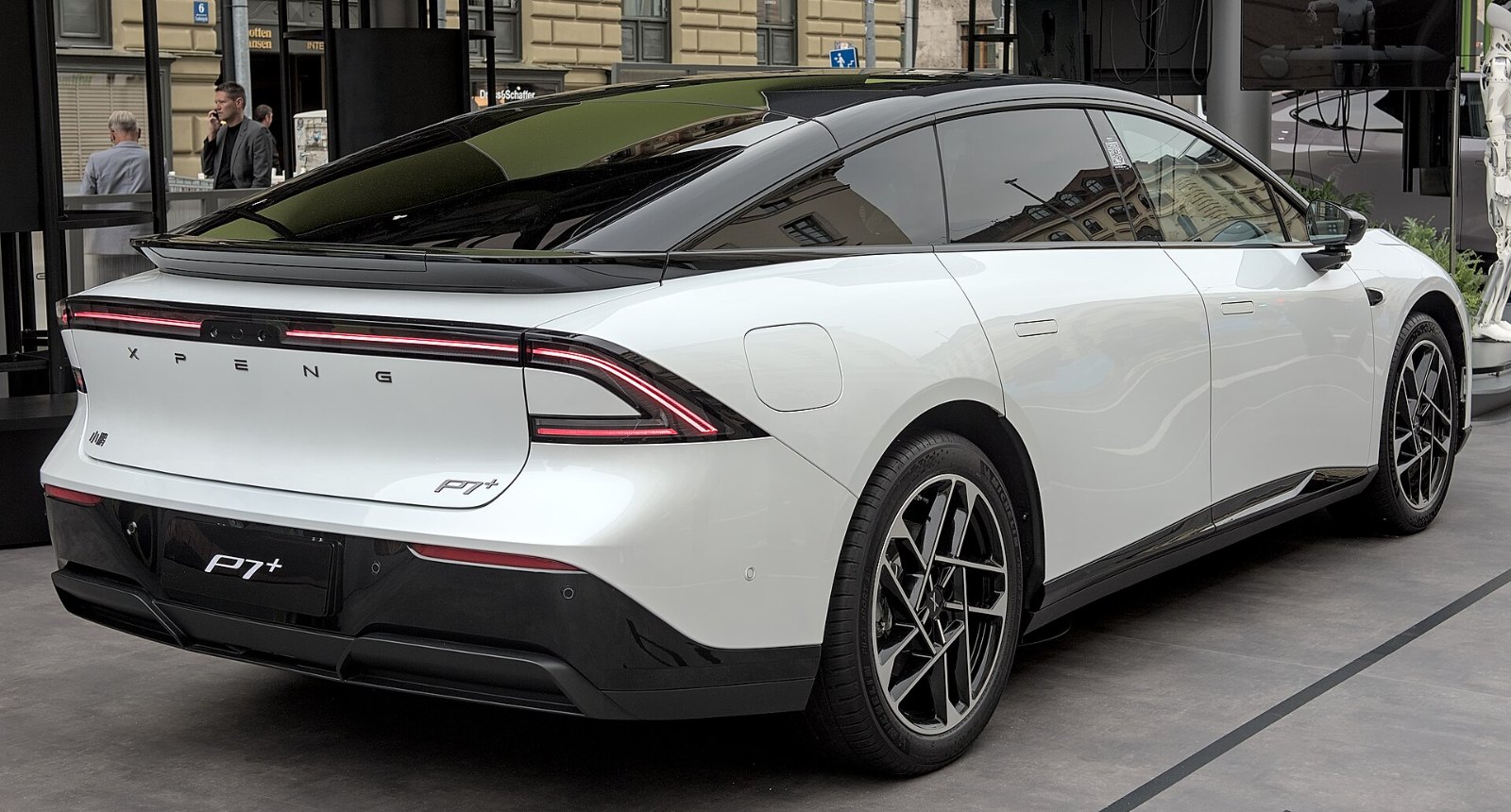
The Mona M03 was launched on Aug. 27, 2024, at prices starting at 119,800 yuan, just under $17,000 at the time, making it roughly half as expensive as a Tesla Model 3 in China. According to the company, more than 10,000 firm orders came in within 52 minutes. In 2025, XPeng delivered 175,689 units, about 41% of all its deliveries; by the end of June 2026, the cumulative total had reached 286,786. In November 2024 came the P7+ sedan, the company’s first car with camera-only sensing and no lidar. In July 2025, the G7 midsize SUV followed, starting at 195,800 yuan.
The results can be read in the numbers. In 2025, XPeng doubled its deliveries to 429,445 and, as the first Chinese manufacturer to do so, reached its annual target as early as November. In October 2025, it set its monthly record to date with 42,013 vehicles, and on Nov. 21, 2025, its one-millionth car rolled off the line. In the fourth quarter of 2025, XPeng posted a quarterly profit for the first time in its history, at 380 million yuan.
The financials: Growth at a high price
XPeng’s financial history is the story of a company that lived off its shareholders for years. Between 2019 and 2025, its reported net losses added up to about 37.7 billion yuan, or roughly 4.2 billion francs at the exchange rate of early September 2026. By the end of June 2026, its accumulated deficit already stood at 45.9 billion yuan.
| Year | Deliveries | Revenue (billion yuan) | Gross margin | Net result (billion yuan) |
|---|---|---|---|---|
| 2019 | 12,728 | 2.32 | −24.0% | −3.69 |
| 2020 | 27,041 | 5.84 | 4.6% | −2.73 |
| 2021 | 98,155 | 20.99 | 12.5% | −4.86 |
| 2022 | 120,757 | 26.86 | 11.5% | −9.14 |
| 2023 | 141,601 | 30.68 | 1.5% | −10.38 |
| 2024 | 190,068 | 40.87 | 14.3% | −5.79 |
| 2025 | 429,445 | 76.72 | 18.9% | −1.14 |
| First half of 2026 | 165,977 | 32.78 | 20.6% | −3.12 |
What stands out is the structure of the margin. In the second quarter of 2026, the pure vehicle margin was 12.1%, while the group’s gross margin was 20.7%. The difference is explained by services, whose margin reached 75.1% in the same quarter, mainly thanks to development contracts from an automaker the company does not name. It is generally understood to be Volkswagen. In other words, XPeng earns remarkably good money selling its know-how to others. For a company that sees itself as a technology group, that is a vindication. For its valuation as an automaker, it is a risk, because this revenue depends on a few contracts.
The coffers are well stocked but shrinking. At the end of 2025, XPeng had cash and liquid assets of 47.66 billion yuan; by the end of June 2026, that was down to 40.48 billion. Over the same first half, short-term bank borrowings rose from 4.3 billion to 10.1 billion yuan, and inventories from 10.4 billion to 13.7 billion.
The products: From the G3 to the G9L
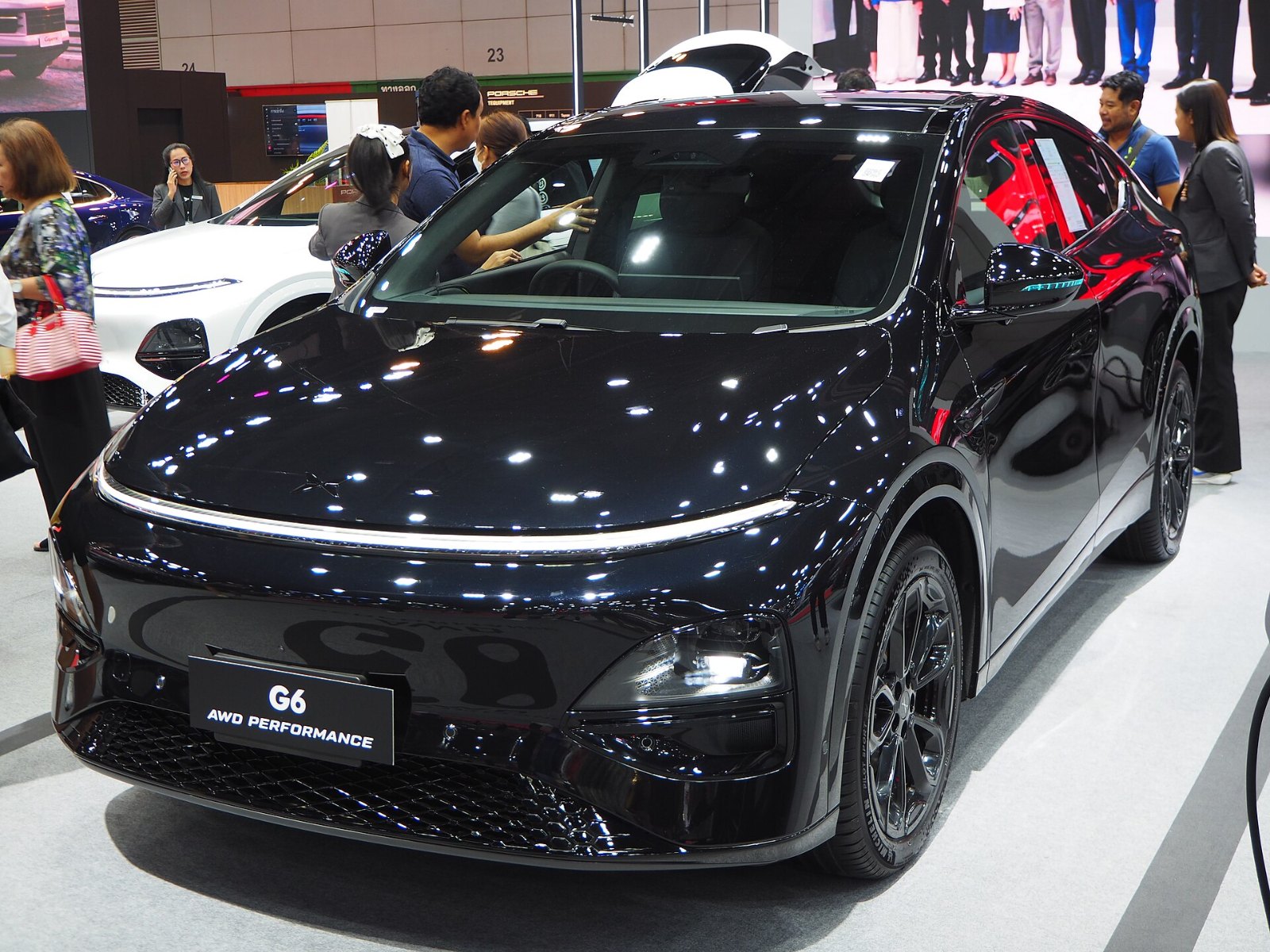
Today XPeng builds cars under two brands. Under its own name, the group sells models in the upper midsize and premium segments; under Mona, it sells affordable cars for young buyers. Almost all models are based on the SEPA 2.0 platform and 800-volt technology, which with the latest batteries allows charging power of more than 400 kilowatts. Since 2025, XPeng has increasingly offered extended-range versions in China as well, that is, electric cars with a gasoline engine that serves as a generator. This marks a break with its earlier dogma of pure battery power and is a response to the success of Li Auto and Huawei’s partners. In Europe, XPeng has so far offered only fully electric versions; for the L03, however, the company has also announced a range extender for Europe.
| Model | Segment | China launch | China price from | In Europe |
|---|---|---|---|---|
| Mona M03 | Compact sedan | August 2024 | 119,800 yuan | Occasional exports |
| Mona L03 | Compact SUV coupe | July 2026 | 123,800 yuan | Yes, Switzerland from 35,600 francs |
| G6 | SUV coupe | June 2023 | 176,800 yuan | Yes, also Switzerland |
| G7 | Midsize SUV | July 2025 | 195,800 yuan | No |
| P7 (2nd gen.) | Sports sedan | August 2025 | 219,800 yuan | Announced |
| P7+ | Sedan | November 2024 | n.v. | Yes, assembled in Graz |
| G9 | Large SUV | September 2022 | 248,800 yuan | Yes, also Switzerland |
| G9L | Large SUV, 5 seats | September 2026 | 231,800 yuan (promotional) | Paris launch, October 2026 |
| GX | Large SUV, 6 seats | May 2026 | 269,800 yuan (promotional) | Exports to the Middle East |
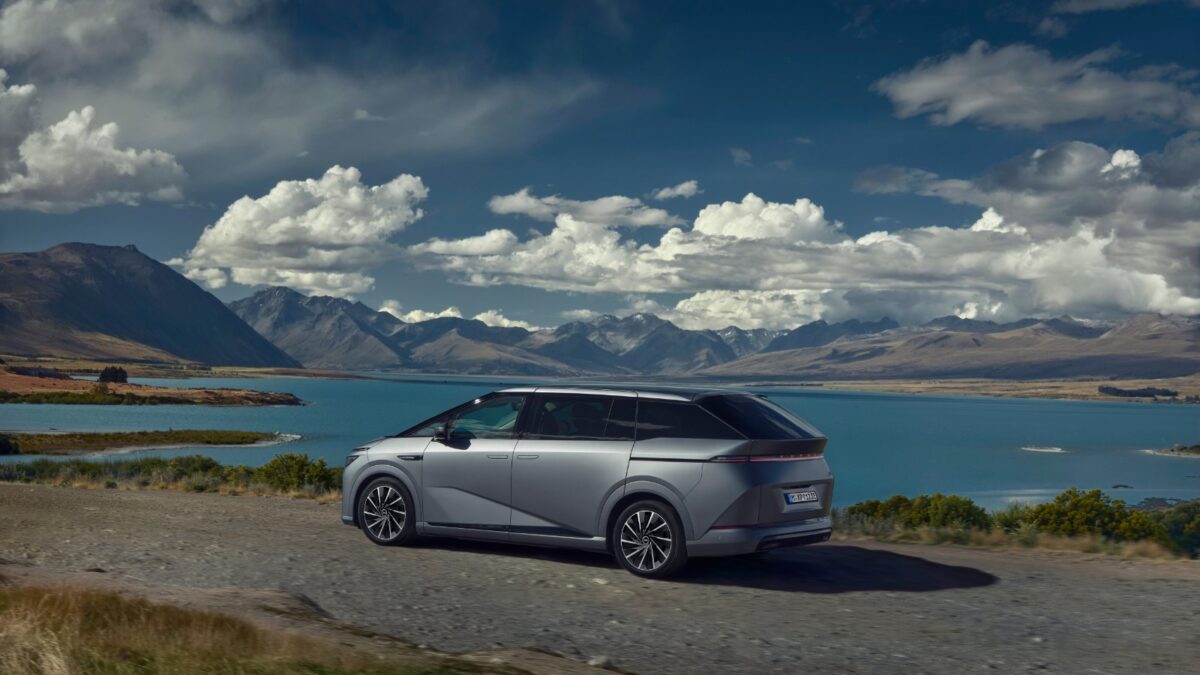
| X9 | Van, 7 seats | January 2024 | 359,800 yuan (at launch) | Yes, also Switzerland |
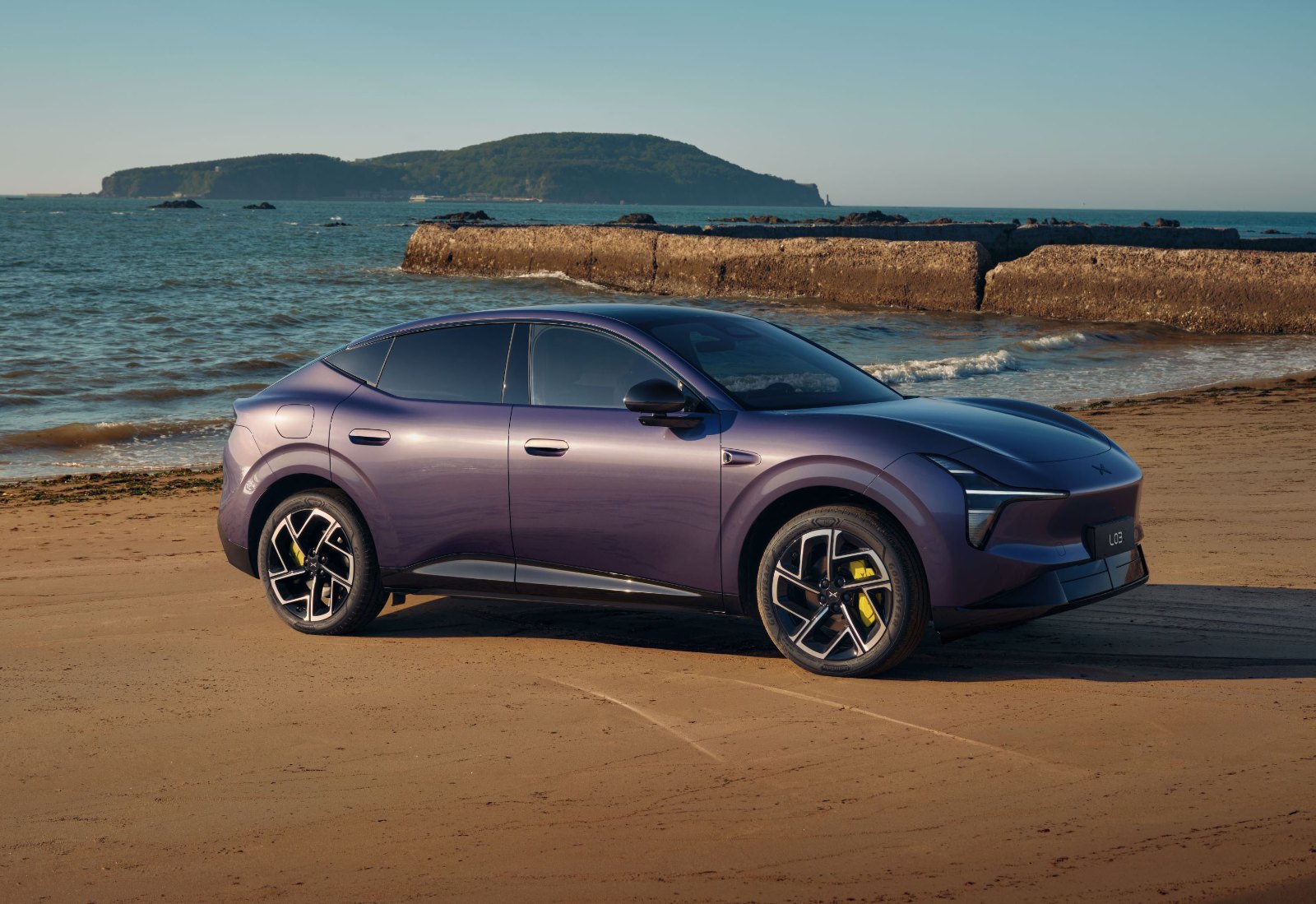
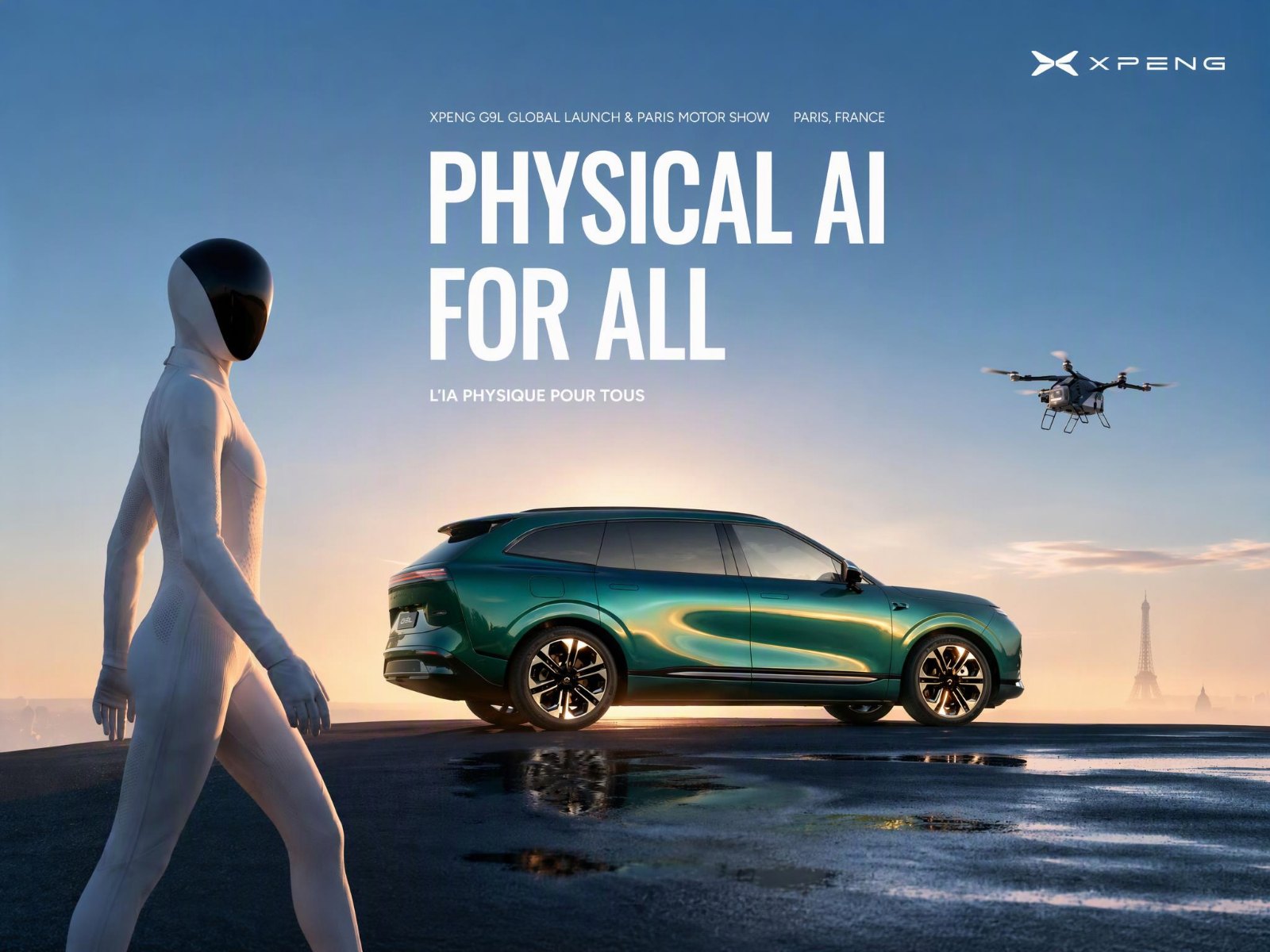
The newest models show where things are heading. The six-seat GX, which went into production in March 2026, is the first production SUV that XPeng designed from the ground up for Level 4 autonomous driving, including a steer-by-wire system from Bosch. It was launched on May 20, 2026, at a promotional starting price of 269,800 yuan, about 130,000 yuan below the presale price; official list prices range from 279,800 to 359,800 yuan. According to the company, 24,863 firm orders came in during the first 12 hours, more than 80% of them for the most expensive trim, “Ultra.” More than 25,000 units were delivered in the first four months; in June, waiting times temporarily reached 35 weeks. The Mona L03, a 4.6-meter-long SUV coupe, was launched in Munich on July 16, 2026, as the first XPeng model to debut in China and Europe simultaneously. According to the company, 20,000 firm orders came in within seven minutes, and more than 10,000 units were delivered in September. Finally, the five-seat G9L, launched in China on Sept. 17, 2026, is the new flagship: rear-wheel steering, an 88-inch head-up display, 33 speakers and 2,250 TOPS of computing power. Official list prices range from 241,800 to 319,800 yuan; as an extended-range model, it achieves a total range of more than 1,600 kilometers under China’s CLTC test cycle. XPeng is set to announce European prices and open the order books at the Paris Motor Show on Oct. 12, 2026.
The technology: Chips, language models and 800 volts
What sets XPeng apart from many competitors is the depth of its in-house development. The company develops not only the software for its driver-assistance system (XNGP) but, for several years now, also the computer it runs on. According to the company, the Turing chip delivers 750 TOPS, or 750 trillion operations per second, combined with a 40-core processor. The “Ultra” versions use three Turing chips with a combined 2,250 TOPS; the robotaxis and the upcoming “Robo” versions use four, with 3,000 TOPS. By comparison, the “Max” versions use one Turing chip or two Nvidia Orin X chips.
Since 2026, these chips have been running the VLA 2.0 model. The abbreviation stands for “Vision-Language-Action”: a large AI model that translates camera images directly into driving commands, without the detour of a chain of rules set by programmers. XPeng says it trained the model on almost 100 million video clips from real-world traffic, equivalent to 65,000 years of human driving experience. The system needs no high-definition maps, and no lidar either. The company claims that passengers in a test could not tell whether a human or the machine was driving. This has not been independently verified.
For its batteries, XPeng relies on lithium iron phosphate cells from CALB and Eve Energy that are designed for 800 volts and can be charged at rates of up to 5C. For the G9 sold in Switzerland, the importer cites charging power of up to 525 kilowatts, and up to 542 kilowatts for the X9, which is said to allow a charge from 10% to 80% in about 12 minutes. Such figures, however, require fast chargers that are few and far between in Europe. In China, XPeng operates its own network of more than 4,000 stations in more than 430 cities, including about 3,510 ultrafast charging stations.
Physical AI: Robotaxi, robot, flying car
Since 2025 at the latest, XPeng has been telling a bigger story than that of an automaker. The term “Physical AI” refers to artificial intelligence that does not merely write text but controls machines in the physical world. XPeng wants to use the same chip, the same AI model and the same data in cars, robotaxis, humanoid robots and aircraft. The logic behind this is compelling and risky at the same time: Every new application generates data that is supposed to improve all the others. But every new application also devours capital before it brings in a single franc.
The robotaxi
In May 2026, production of a robotaxi based on the GX began in Guangzhou. The vehicle carries four Turing chips, no lidar and no HD maps. Guangzhou granted XPeng a permit for Level 4 testing on public roads. By the time of the half-year results call in August 2026, the robotaxi had completed more than 2,000 internal test rides, according to He Xiaopeng; from 2027, it is to carry passengers without a safety driver. The three announced robotaxi models are each supposed to cost less than 200,000 yuan. Measured against Waymo or Baidu’s Apollo Go, which have offered commercial rides for years, XPeng is late to the game. Among China’s automakers, it is one of the first to build its own robotaxi in series production.
The IRON robot
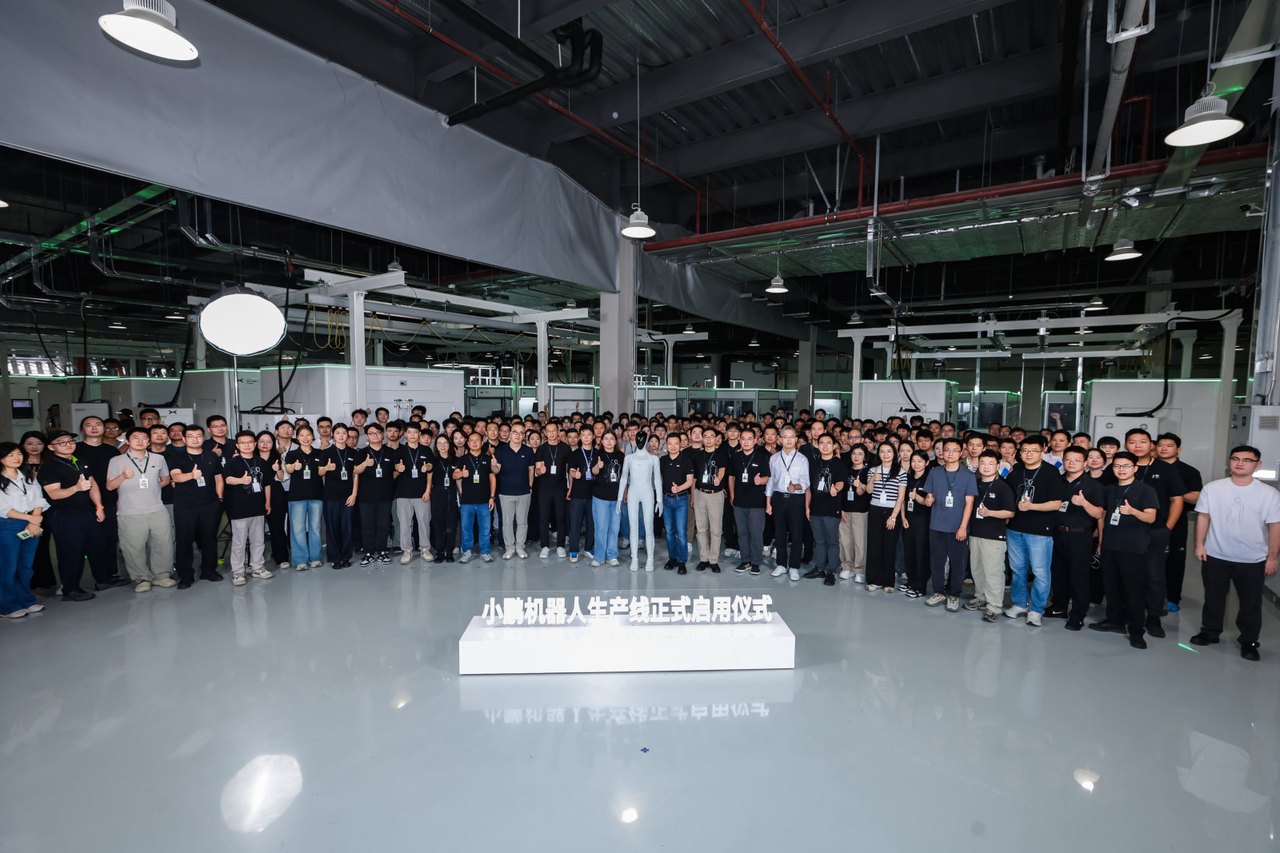
The robotics business is even more ambitious. According to the company, the humanoid robot IRON was developed over five years and six generations. The current version has three Turing chips, a spine, artificial muscles, a flexible skin and, as the first robot in the industry, a solid-state battery. On Aug. 24, 2026, XPeng announced that its robotics subsidiary Dogotix had raised more than $900 million at a valuation of more than $6.3 billion. The round was led by IDG Capital; Tencent and Alibaba came in as strategic investors. According to reports, about $600 million came from outside investors, $200 million from an XPeng subsidiary and $100 million from executives.
IRON is scheduled to enter series production by the end of 2026, initially for use in XPeng’s own showrooms and on company premises. Sales are to begin in 2027, in China and abroad. In early September 2026, XPeng started up a production line that it describes as automated. The American trade site Electrek remarked dryly that a single robot leaving a line does not yet amount to mass production. No paying customer has received an IRON so far.
Aridge’s flying car
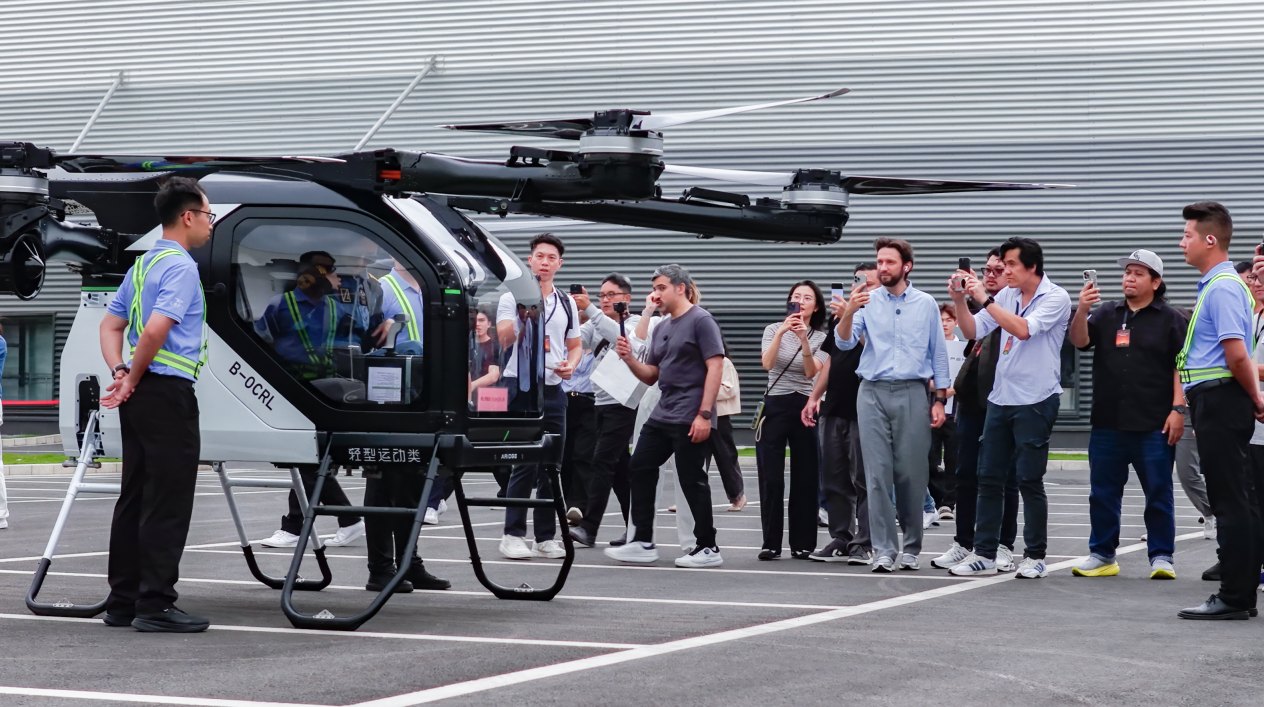
The third bet flies. The subsidiary Aridge, known until October 2025 as XPeng AeroHT, has been developing aircraft for more than 12 years. Its main product is the “Land Aircraft Carrier”: a six-wheeled off-road vehicle with a range extender, with a two-seat electric aircraft with six rotors stowed in its rear. In Guangzhou, there is a factory with capacity for up to 10,000 units a year; the first unit rolled off the line on Nov. 3, 2025. Aridge reports about 7,000 preorders. Reports put the price at about 2 million yuan, or roughly $280,000. In July 2026, China’s aviation regulator put Aridge on a list of four manufacturers whose certification is to be fast-tracked. Full airworthiness certification is still pending, however; first deliveries are planned for the end of 2026, with deliveries on a larger scale in 2027.
Going global
XPeng began exporting the P7 in 2021; the brand opened its first experience store outside China in Sweden. For a long time, the overseas business remained a footnote. That has changed since 2024. By the end of 2025, XPeng was present in 60 countries, according to its own figures, with about 380 sales outlets outside China, 290 of them in 28 European countries. Almost 30 new markets were added in 2025, including the U.K., Italy, Poland and Morocco. At the end of 2025, the group operated more than 1,000 sales outlets worldwide.
In 2025, XPeng delivered 45,008 vehicles outside China, 96% more than in the previous year and about 10% of its total volume. In Europe, the figure was 22,787. In the first half of 2026, overseas deliveries rose 69% to 31,599, and in September they topped 10,000 in a single month for the first time. In total, according to its own figures as of Oct. 1, 2026, XPeng has delivered more than 100,000 vehicles outside China, including more than 60,000 in Europe and over 6,000 in France. President Brian Gu put Europe’s share of overseas volume at about half. By 2030, XPeng wants to sell 1 million vehicles a year outside China; by then, foreign markets are to deliver the bulk of its profit. That is a number worth remembering, so it can be checked in four years.
Graz instead of punitive tariffs
For Europe, the key is Magna Steyr’s plant in Graz. Since October 2024, the EU has imposed countervailing duties on electric cars from China, graduated by manufacturer. For XPeng, the additional duty is 20.7%, on top of the regular 10% tariff. The response: Since Sept. 15, 2025, Magna has been assembling the G6 and the G9 in Graz from semi-knocked-down (SKD) kits shipped from China. The P7+ was added in early 2026. The G9L will follow as the fourth model, slated to roll off the lines in Guangzhou and Graz at the same time; four locally assembled models within a year, as XPeng emphasizes.
On LinkedIn, Brian Gu called local production a central part of the company’s long-term commitment to Europe. That is not an entirely selfless move. With SKD assembly, the value added in Graz is limited; the core components still come from China. For Magna, in turn, the contract is welcome: Production in Graz had fallen to 71,900 vehicles in 2024, from more than 105,000 the year before.
Asia, the Middle East, Latin America
In Southeast Asia, XPeng is taking a similar path. Since July 2025, the X9 has been built locally in Indonesia, and further assembly is under way in Malaysia. Thailand is one of its most important export markets. In the Middle East, XPeng reported more than 3,000 orders for the GX; in the United Arab Emirates, Aridge received the first foreign special permit for manned flights; on Oct. 12, 2025, the aircraft made its first public piloted flight in Dubai, after which Aridge reported 600 orders from the Gulf region. On March 25, 2026, XPeng entered Mexico and announced a three-year strategy for Latin America, with models from 2027 and the ambition of playing a leading role by 2028. A long-term strategy for Australia followed in July 2026.
What is conspicuously missing is the U.S. A Commerce Department rule adopted in January 2025 bans Chinese software in connected cars from the 2027 model year and Chinese hardware from the 2030 model year; manufacturers with ties to China are barred from selling new connected vehicles from 2027, even if they are built in the U.S. XPeng does maintain development offices in Silicon Valley and San Diego, but it sells no cars there.
XPeng in Switzerland
XPeng came to Switzerland comparatively late. On Sept. 3, 2025, the brand presented the G6 and the G9 at the Schiffbau, a former shipbuilding hall in Zurich. The importer is the newly founded Hedin Distribution AG, headed by Ernst Ramic, a subsidiary of Sweden’s Hedin Mobility Group, which also represents the brand in the Czech Republic and Slovakia. The region is overseen by XPeng Central Europe, based in Germany. The Hedin dealership in Dielsdorf, near Zurich, was the first to start; the seven existing Hedin locations were set up as service partners.
Markus Schrick, the managing director for Central Europe, struck a confident note at the launch: “We’re here to stay!” In its first year, XPeng aimed to sell about 1,000 vehicles; by the end of 2026, it was to have about 20 locations. Whether these targets will be met cannot yet be judged from publicly available data; brand-specific registration figures for XPeng in Switzerland were not available for this report.
| Model (Switzerland) | Battery | WLTP range | Price from |
|---|---|---|---|
| L03 RWD Standard Range | 58.3 kWh LFP | 445 km | 35,600 francs |
| L03 RWD Long Range | 71.2 kWh LFP | 520 km | 38,600 francs |
| L03 AWD Performance “Ultra” (285 kW) | 71.2 kWh LFP | 440 km | 46,600 francs |
| G6 RWD Standard Range | LFP | n/a | 43,600 francs |
| G6 RWD Long Range | LFP | n/a | 47,600 francs |
| G6 AWD Performance | LFP | n/a | approx. 53,500 francs |
| G9 RWD Standard Range | LFP | n/a | 59,600 francs |
| X9 FWD Standard Range | 94.8 kWh LFP | 535 km | 77,600 francs |
| X9 FWD Long Range | 110 kWh NMC | 615 km | 81,600 francs |
| X9 AWD Performance (370 kW) | 110 kWh NMC | 580 km | 86,600 francs |
Since the end of August 2026, the X9 van has also been available to order in Switzerland. At 5.32 meters long, with all-wheel steering, air suspension and seven seats, it is aimed at families and chauffeur services and competes with the VW ID. Buzz and the Hyundai Ioniq 9. The P7+ sedan has meanwhile joined the Swiss lineup as well. In addition, the price of the L03 has been set since July 16, 2026: In Switzerland, it starts at 35,600 francs, with the top-of-the-range AWD Performance “Ultra” at 46,600 francs; first deliveries are scheduled for the fourth quarter of 2026. Unlike the larger models, the L03 uses a 400-volt platform but, according to the manufacturer, still charges at more than 230 kilowatts.
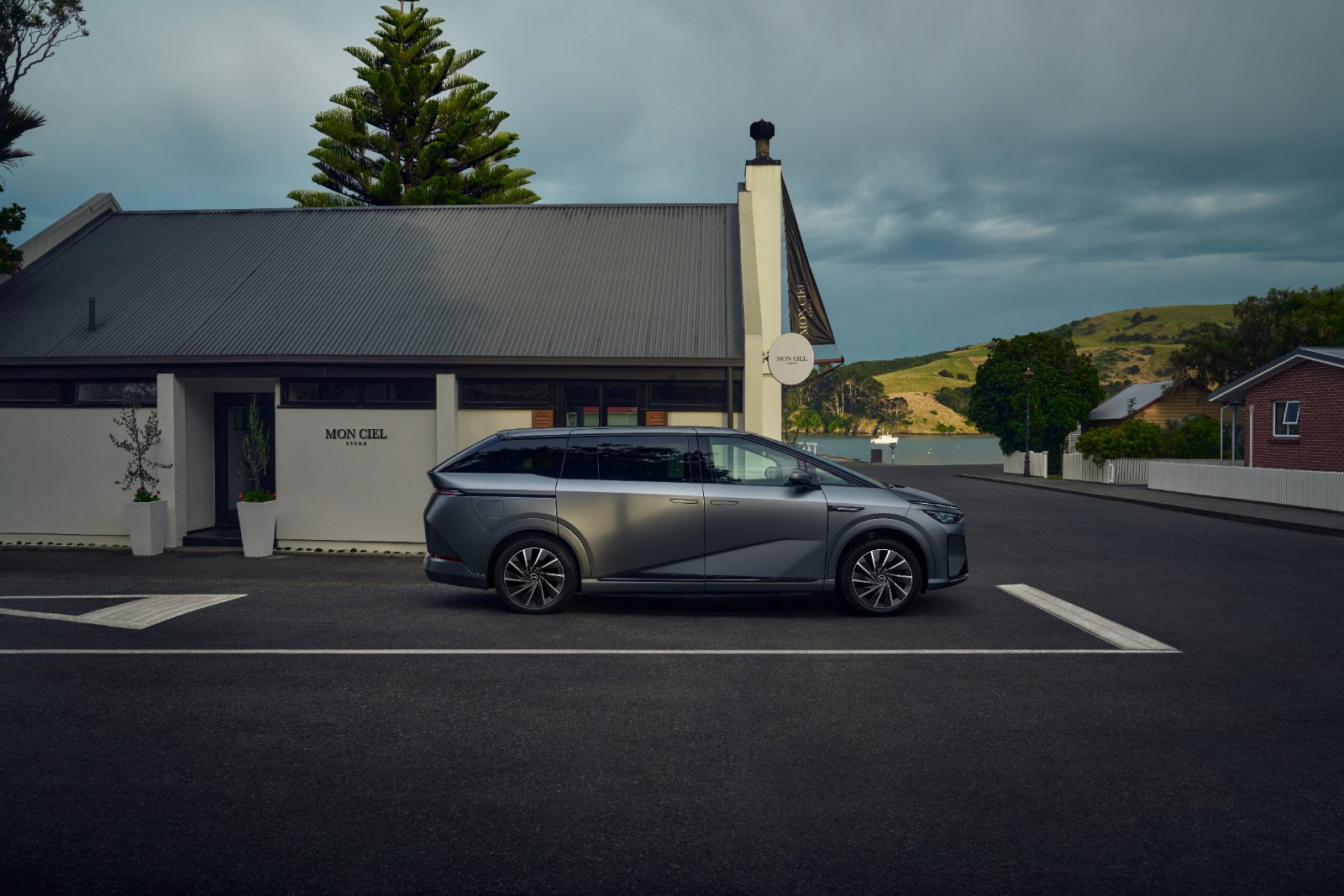
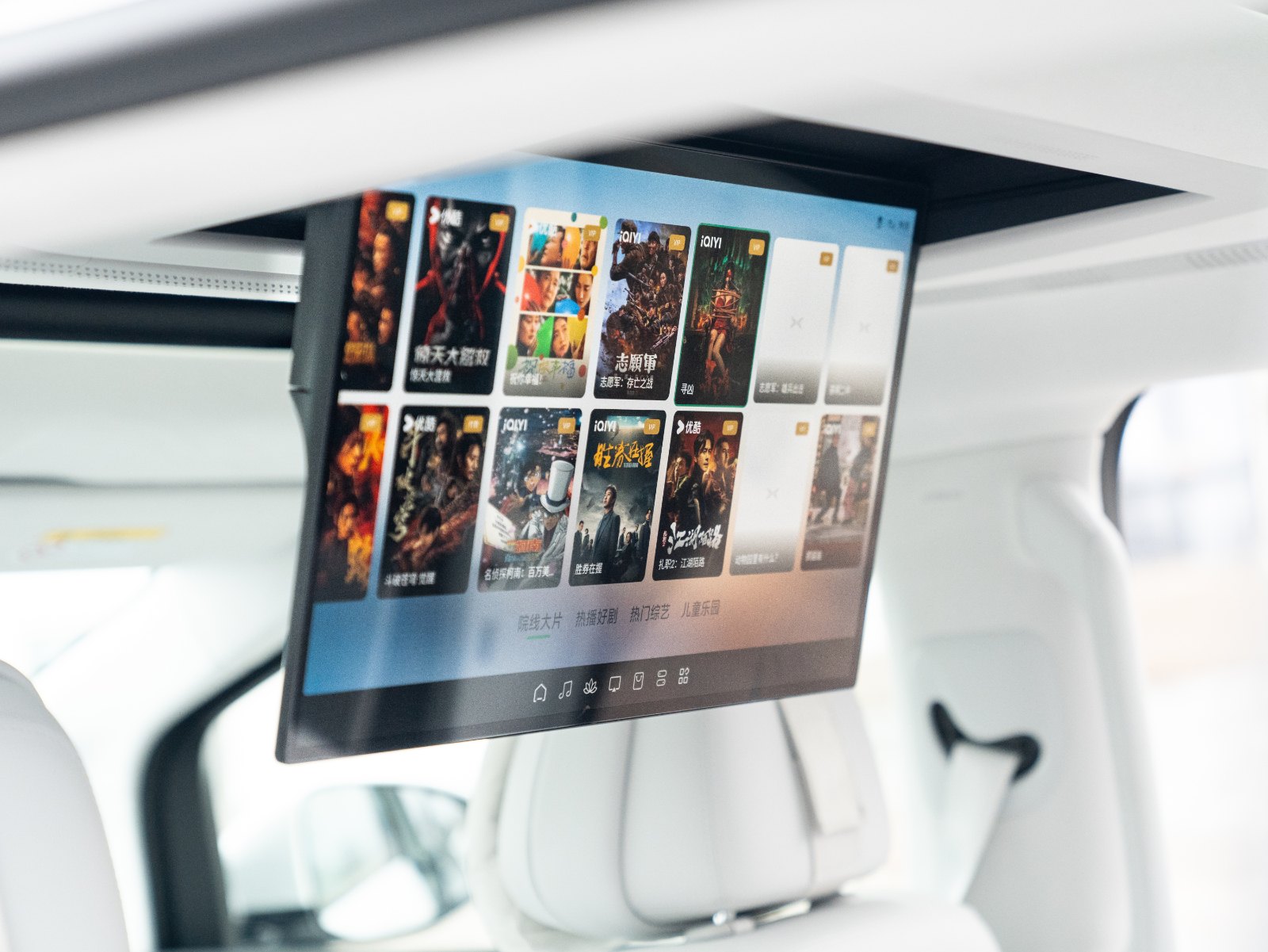
For Swiss buyers, XPeng is an interesting case. Switzerland does not impose punitive tariffs on Chinese electric cars. In addition, its free trade agreement with China has been in force since 2014. As a result, the price advantage over European manufacturers is not eaten up by tariffs. At the same time, the market is small, price-insensitive at the upper end and brand-loyal. Chinese brands such as BYD, MG, Leapmotor and now XPeng are competing for the same customers here; residual values, spare-parts supply and the question of how long software updates will be guaranteed remain open questions for many buyers.
2026: Slump and comeback
For XPeng, 2026 began with a shock. In February, the company delivered only 15,256 vehicles, and in the first quarter 62,682, a third fewer than a year earlier. The main reason lay outside the company: Since Jan. 1, 2026, buyers in China have again been paying a 5% purchase tax on electric cars, after years of exemption. Many brought their purchases forward to December 2025; in January, domestic sales of electric cars fell 19% across the industry. XPeng itself also points to the changeover between model generations. The first quarter produced a net loss of 1.78 billion yuan, the second a loss of 1.34 billion.
Since then, things have been looking up. With the GX, the Mona L03 and the G9L, deliveries rose to 118,390 in the third quarter, a new quarterly record. But the self-imposed annual target of 550,000 to 600,000 vehicles, which according to a report by the news site 36Kr was set internally in January, is now hardly attainable. After nine months, deliveries stand at 284,367. Reaching the lower end would require about 265,600 vehicles in the fourth quarter, or about 88,500 a month. In August, He Xiaopeng himself held out the prospect of more than 60,000 deliveries a month in the fourth quarter. Even if that succeeds, XPeng will end 2026 at about 465,000 vehicles, only slightly above the previous year.
Arena: Challenger or high-risk bet?
For: The case for XPeng
- Technological depth: Its own chip, its own AI model, its own electronic architecture. The fact that Volkswagen buys this technology is the strongest seal of approval a Chinese automaker can currently show.
- Agility: Within two years, XPeng overcame its existential crisis of 2023 and turned its margin around from negative 3.9% to more than 20%.
- Value for money: In Europe, the L03 undercuts a Tesla Model Y in Germany by several thousand euros, with comparable equipment.
- Smart localization: Assembly in Graz lowers the tariff burden and brings in a European partner instead of putting up a factory of its own on a greenfield site.
- Switzerland: No punitive tariffs, a strong affinity for electric cars in cities, an experienced importer.
Against: The case against XPeng
- Persistent losses: In 11 years, there has been exactly one profitable quarter. In 2026, XPeng is back in the red, its cash pile is shrinking and its debt is rising.
- Dependence on Mona: A single, very low-priced model accounted for about 41% of volume in 2025 and is sold almost exclusively in China.
- Overextension: Financing cars, robotaxis, robots and flying cars at the same time overstretches even well-capitalized groups. None of the new divisions has yet been tested in the market.
- Geopolitics: EU tariffs, the de facto U.S. ban on Chinese vehicle software and data-protection questions around connected cars could intensify at any time.
- Uncertain long-term support: How long software updates, spare parts and a service network will be guaranteed in small markets such as Switzerland remains to be seen.
The risks in detail
First, the price war. China’s auto market is the toughest in the world. More than 100 brands are fighting for buyers, and prices have been falling for years. XPeng has shown that it can win volume with aggressive entry prices, as with the G9L at 10% below the presale price. Its vehicle margin of 12% leaves little room for that.
Second, financing. The robotics subsidiary has raised its own capital, which relieves the group’s coffers and at the same time shows that the group can no longer, or will no longer, shoulder its future projects alone. At the current rate of losses, cash and liquid assets of about 40 billion yuan will last for years. Another slump in sales, however, would quickly change the math.
Third, regulation. There are still no established approval procedures for robotaxis, humanoid robots and aircraft, neither in China nor in Europe. Whoever gets there first stands to gain a lot. Whoever comes too early risks accidents, recalls and reputational damage.
Fourth, governance. Through a dual-class share structure, XPeng is effectively controlled by He Xiaopeng. That allows quick decisions, as the turnaround of 2023 showed. But it makes it harder to correct course if the founder heads down the wrong path.
Assessment
XPeng is no ordinary automaker. That is precisely what makes it interesting for Europe. The company understood earlier than many others that in an electric car, it is not the motor but the software that makes the difference. The fact that Volkswagen, once the teacher of China’s auto industry, now buys architecture, chips and driving AI from a newcomer from Guangzhou says more about the shift in power than any sales statistic.
At the same time, skepticism is warranted. Over its history, XPeng has promised a lot and failed to deliver on some of it: Timelines slipped, targets were quietly dropped, and the 2026 annual target will be clearly missed. The new narrative of “Physical AI” is intellectually coherent but, financially, a check drawn on a distant future. Robots and flying cars are fascinating, but today XPeng makes its money with cars costing around $20,000 in an unforgiving home market and with development contracts from a single German customer.
For Swiss buyers, this means that the cars are technically mature and attractively priced, but the brand is young and its dealer network is still being built. Anyone who buys a G6 or an X9 is betting not only on a car but, to some extent, also on the staying power of a company that has yet to prove it can make money on a lasting basis. The bet is more reasonable today than it was three years ago. It is not a sure thing.
Notes on the data
- The 2026 annual target of 550,000 to 600,000 deliveries comes from a media report (36Kr) on an internal meeting, not from an official forecast.
- Figures on computing power, training data, orders and robotics come from the company and have not been independently verified.
- No Swiss registration figures for XPeng were found; the importer’s targets therefore cannot be verified.
- The price of Aridge’s flying car is based on media reports, not on an official price list.
- All key figures on deliveries, revenue, margins and losses were cross-checked on Oct. 3, 2026, against XPeng’s original announcements (SEC, HKEX, investor relations).
- All figures as of Oct. 3, 2026. Statements originally made in English are paraphrased. Quotes originally given in another language were translated by the editors.
Sources
- XPeng Inc.: quarterly and annual reports from 2019 to Q2 2026, delivery announcements (SEC Forms 6-K, HKEX), including announcements of April 1, July 1, Aug. 24 and Oct. 1, 2026
- XPeng Inc.: listing prospectuses (SEC Form F-1 and 424B4, 2020/2021)
- XPeng Pressroom: announcements on IAA 2025, AI Day on Nov. 5, 2025, and the Dogotix financing in August 2026
- Volkswagen/XPeng: announcement of July 26, 2023; TechCrunch, CNBC, CnEVPost on the partnership and the Didi deal
- CnEVPost: delivery breakdowns, model launches (2024 to 2026)
- eletric-vehicles.com: analyses of deliveries, targets and the overseas business (2025/2026)
- electrive.com, Automotive Logistics, CarNewsChina: assembly at Magna Steyr in Graz
- Gasgoo: sales network and overseas expansion; robotaxi tests
- Electrek: Mona M03, L03 prices in Europe, IRON robot production line
- electric WOW, Blick, vybe, nau.ch, AUTO&Wirtschaft: Swiss market entry and prices
- Aridge, CnEVPost, Autocar: the “Land Aircraft Carrier” flying car
- 36Kr: report on the internal 2026 sales target
- U.S. Commerce Department (BIS): connected-vehicle rule of January 2025
- Chinese Ministry of Finance: purchase tax rules for electric cars, 2024 to 2027; industry data for January 2026 (CAAM via GlobalData)
- CnEVPost, Reuters, SCMP: appointment of Wang Fengying (Jan. 30, 2023)
- XPeng press photos: XPENG Newsroom (xpeng-newsroom.pr.co), xpeng.com/pressroom, press kit for the 2026 Paris Motor Show



Comments 0