BYD: How a battery maker from Shenzhen is reshaping the auto industry
Thirty years ago, BYD made batteries for cellphones. Today the company sells more plug-in cars than any other manufacturer and has caught up with Tesla in Europe. Taking the measure of its history, technology, models and expansion.
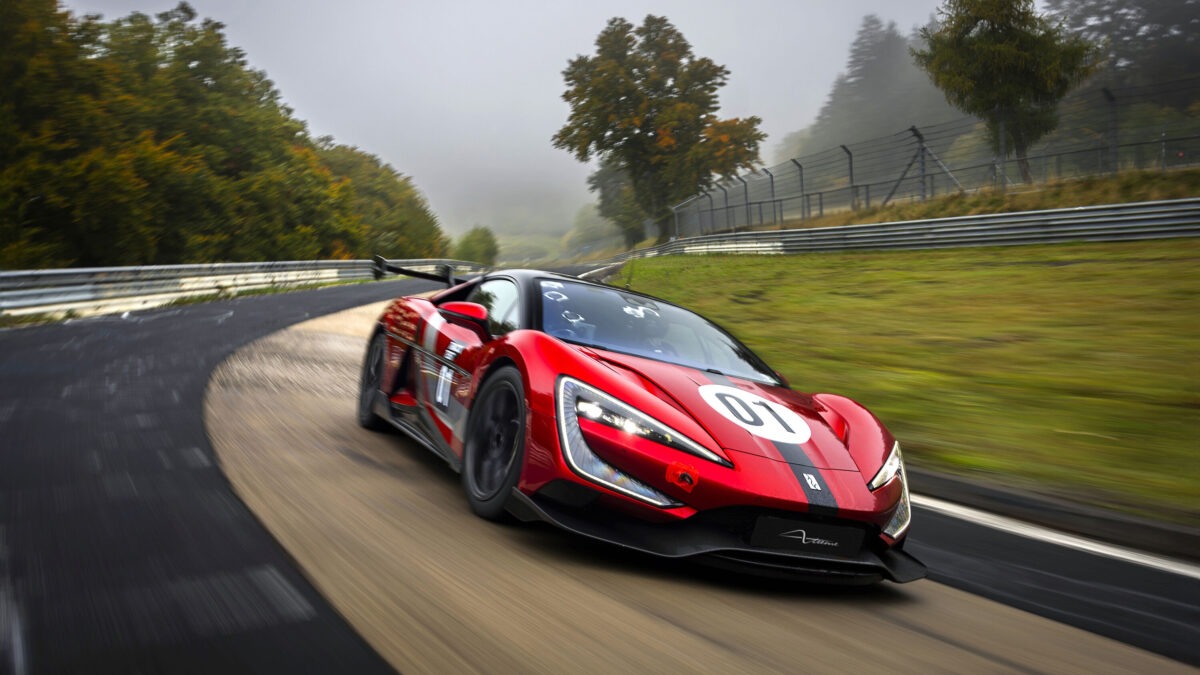
Thirty years ago, a handful of engineers in a factory hall in Shenzhen were soldering batteries for cellphones. Today BYD sells more plug-in cars than any other manufacturer, operates its own oceangoing fleet and has caught up with Tesla in Europe. But in its home market, the business is crumbling. Taking the measure of the company that is rewriting the rules of the auto industry.
Some corporate histories read like textbook chapters. Others rewrite the textbook. BYD belongs in the second category. The company, whose three letters stand for Biyadi in Chinese and were only later reinterpreted as the slogan “Build Your Dreams,” has covered in three decades a distance that took European automakers a century. In 2025, BYD delivered 4,602,436 vehicles, including 2.26 million fully electric cars. Tesla came in at about 1.64 million that same year. That makes BYD no longer the challenger but the benchmark.
At the same time, the 2026 tally shows the flip side of that success. In China, where BYD long set the pace, sales fell by about 30% in the first nine months. Profit dropped 19% in 2025 and a further 20% in the first half of 2026. The growth story is now being written abroad: in Brazil, Thailand, Turkey, Australia and increasingly in Europe. Anyone who wants to understand what lies ahead for the European auto industry and the Swiss car market has to understand this company.
Key figures
| Metric | Value | As of |
|---|---|---|
| Founded | Feb. 10, 1995, Shenzhen | Wang Chuanfu, Lu Xiangyang |
| Vehicles sold | 4,602,436 | Fiscal year 2025 |
| of which fully electric cars | 2,256,714 (Tesla: about 1.64 million) | 2025 |
| Overseas sales | 1,046,083 | 2025 |
| Sales January to September | 3,131,576 (minus 4%) | 2026 |
| Revenue | 804 billion yuan (about $112 billion) | 2025 |
| Net profit | 32.6 billion yuan (minus 19%) | 2025 |
| Research and development | 63.4 billion yuan | 2025 |
| Employees | about 870,000 | End of 2025 |
| Gross margin | 18.85% | First half 2026 |
| Overseas share of revenue | 53% | First half 2026 |
| Own car carriers | 8 in service, 10 more on order (unconfirmed) | September 2026 |
The beginnings: Batteries, not cars
The story begins with a market observation. Wang Chuanfu, a chemist, was working at the Beijing research institute for nonferrous metals in the early 1990s. He noticed that Japanese manufacturers were pulling out of the production of nickel-cadmium batteries to concentrate on the more lucrative nickel-metal hydride and lithium-ion cells. He wanted to fill the gap. With his cousin Lu Xiangyang, he moved to Shenzhen, then China’s testing ground for the market economy. On Feb. 10, 1995, Shenzhen BYD Battery Company was registered with 20 employees and start-up capital of 2.5 million yuan.
The key to the early success was not an invention but a production principle that still defines BYD today. Instead of importing expensive fully automated production lines from Japan, Wang broke the processes down into individual steps and had workers carry them out with simple, self-built jigs. According to the specialist literature, this brought unit costs down to a fraction of those of the Japanese competition. In 1996 Sanyo signed on as a customer, followed shortly afterward by Philips, Panasonic and Motorola. By 2002, BYD had risen to become the world’s largest maker of nickel-cadmium batteries. In July of that year, the company went public in Hong Kong.
The early years were also a time of legal battles. Sanyo sued in 2002 over patent infringement, and Foxconn did so from 2006 over allegations that BYD had obtained trade secrets through employees it had poached. A court in Shenzhen partly ruled in Foxconn’s favor in 2008; in Hong Kong, Foxconn’s appeals failed in 2012. The episode shows how aggressively BYD grew from the start and how contested that path was.
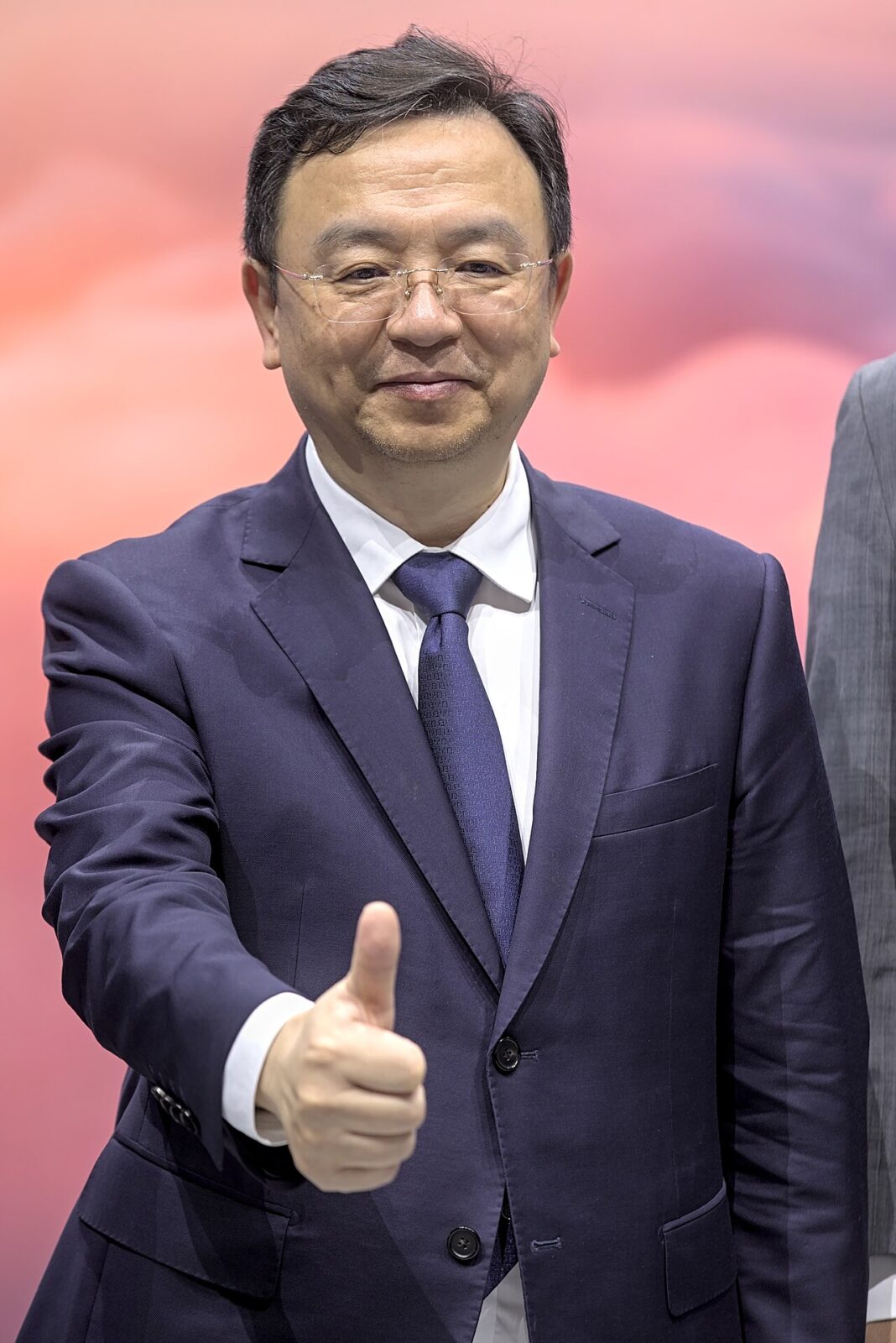
The leap into cars: A bet against its own shareholders
In January 2003, a few months after the IPO, Wang made a decision that many investors saw as a betrayal: BYD bought Xi’an Qinchuan, a small and technologically backward automaker, from the state-owned defense group Norinco. The IPO prospectus had made no mention of it. The value of the purchase lay less in the factories than in the production license, which was hard to obtain in China at the time. From the outset, Wang made no secret of the fact that he wanted to build electric cars in the long run; a battery maker, he reasoned, already owned the most important component. In 2006, BYD set out this ambition as its “three green dreams,” which the company still cites as its guiding vision today.
At first, though, BYD built gasoline cars. Cheap gasoline cars. The F3, produced from 2005, was a sedan strongly reminiscent of Japanese models. It quickly became a sales hit. BYD learned the craft of carmaking the same way it had previously learned the battery business: by taking things apart, copying, simplifying and relying on a depth of in-house production that had long since gone out of fashion in Western industry. Stamping plant, toolmaking, electronics: Whatever it could, BYD made itself.
In 2008 came the F3DM, by BYD’s account the world’s first series-production plug-in hybrid, followed in 2009 by the fully electric e6. In September 2008, MidAmerican Energy, a subsidiary of Warren Buffett’s Berkshire Hathaway, bought 225 million shares at 8 Hong Kong dollars each on the advice of Charlie Munger, for a total of about $230 million and just under 10% of the capital. The investment brought sudden attention to a company that was barely known in the West at the time. Berkshire began reducing its stake in August 2022 and had sold out completely by the end of March 2025 at the latest; according to CNBC, the value of the shares had risen by about 3,890% over those 17 years.
The lost decade and the turnaround
What followed tends to be glossed over in hindsight. From 2009 to 2020, the auto business stagnated. Sales hovered between 400,000 and 500,000 vehicles a year while other Chinese manufacturers grew. The early electric cars were expensive and their range was short; their customers were mainly taxi and bus operators. Between 2017 and 2019, profit fell three years in a row, dropping to 1.6 billion yuan in 2019. Wang Chuanfu later described this phase as the darkest in the company’s history, a time when survival was all that mattered. Even so, BYD says it invested 8.4 billion yuan in research and development that year.
The turnaround came in 2020, with a battery. The so-called Blade Battery relied on lithium iron phosphate (LFP), a cell chemistry that many competitors had already written off because of its lower energy density. BYD’s trick lay in the design: long, flat cells built directly into the battery pack as load-bearing elements. That saved weight and space, offset part of the density disadvantage and made the battery cheaper and safer. In the so-called nail penetration test, in which a metal spike is driven through a cell, the Blade cell produced neither smoke nor flames, according to the manufacturer. The battery debuted in the Han sedan.
Just as important was a powertrain that Western manufacturers underestimated: the DM-i plug-in hybrid, in which an efficient gasoline engine serves mainly as a generator. In a China where charging infrastructure outside the big cities was still patchy, this technology struck a chord. In March 2022, BYD became the first major manufacturer to stop producing purely combustion-engine cars. After that, the numbers exploded: 1.86 million vehicles in 2022, 3.02 million in 2023, 4.27 million in 2024.
The BYD system: Everything in-house
What sets BYD apart from almost every other automaker is vertical integration. The group produces battery cells, electric motors, power electronics, semiconductors, seats, headlights and software through its own subsidiaries. In 2020, the component divisions were spun off as separate companies under the FinDreams brand so that they could also supply third parties. According to company statements and media reports, customers for FinDreams batteries include Tesla, Toyota, Kia, Ford, Suzuki and Xiaomi. By market share, FinDreams was the world’s second-largest maker of car batteries in 2024, at about 17%, behind CATL.
This depth of in-house production comes at a price, which is reflected in the workforce. At the end of 2024, BYD employed just under 969,000 people, making it China’s largest private employer. By the end of 2025, the number had fallen to about 870,000, according to the annual report, a reduction of some 100,000 jobs that BYD attributes to efficiency measures. By comparison, Toyota employs fewer than half as many. In research and development alone, more than 100,000 people were working in 2024. In 2025, BYD spent 63.4 billion yuan on research, almost twice its annual profit; cumulatively, the total since its founding exceeds 270 billion yuan.
This structure explains part of the cost advantage, but not all of it. A study cited by Bloomberg in April 2024 put state support for BYD at the equivalent of 3.4 billion euros; 2.1 billion euros is cited for 2020 alone. The European Commission concluded in its investigation that BYD benefits from subsidies. In October 2024, it imposed a countervailing duty of 17.0% on electric cars produced by BYD in China, on top of the regular 10% import duty. That rate, however, is considerably lower than the 35.3% for SAIC.
The technology: From batteries to megawatt charging
On the technology side, BYD has been stepping up its game in recent years at a pace that has surprised even industry insiders. In March 2025, the company unveiled a 1,000-volt platform with charging power in the megawatt range. On March 5, 2026, the second generation of the Blade Battery followed, combined with BYD’s own fast-charging network. According to the manufacturer, it charges at the new Flash Charging stations from 10% to 70% in five minutes and from 10% to 97% in nine minutes, and at minus 30 degrees Celsius from 20% to 97% in 12 minutes. BYD says energy density rises by 5%, which is expected to push electric range beyond 1,000 kilometers under China’s CLTC cycle; according to the press release, capacity loss over the battery’s service life falls by a further 2.5% compared with the first generation. Analyses by Chinese trade media cite considerably higher density figures for the energy-optimized long-cell variant, which cannot be independently verified. On safety testing, BYD points to a nail penetration test conducted during charging after 500 fast-charging cycles and to a simultaneous short circuit of four cells at more than 700 degrees Celsius, in each case without fire or explosion.
The approach to charging is remarkable. So that the power grid can cope with peak outputs of up to 1,500 kilowatts per charger, the stations are equipped with stationary battery storage that is slowly recharged from the grid. At the launch on March 5, 2026, BYD said, there were 4,239 such stations in China; by the time the half-year report was published at the end of August, the company said there were 10,000 in 332 cities. By year-end, the plan is for 20,000 in China, plus 6,000 stations abroad, starting in Europe. In Germany, BYD says it plans about 300 megawatt chargers by the end of 2026, mainly at dealerships. The company is thus selling not just cars but an ecosystem of vehicle, battery, storage and charger. BYD has also caught up in partially automated driving: Since 2025, its “God’s Eye” driver-assistance system has been rolled out widely across the model range, and in 2026, according to the company, also in versions with lidar.
For context: The figures come from the manufacturer’s presentations and apply to its own chargers under ideal conditions. No independent measurements under European conditions are available yet for the second generation. At standard fast chargers, BYD says, the new battery charges 30% to 50% faster than conventional batteries.
The products: Five brands, one modular system
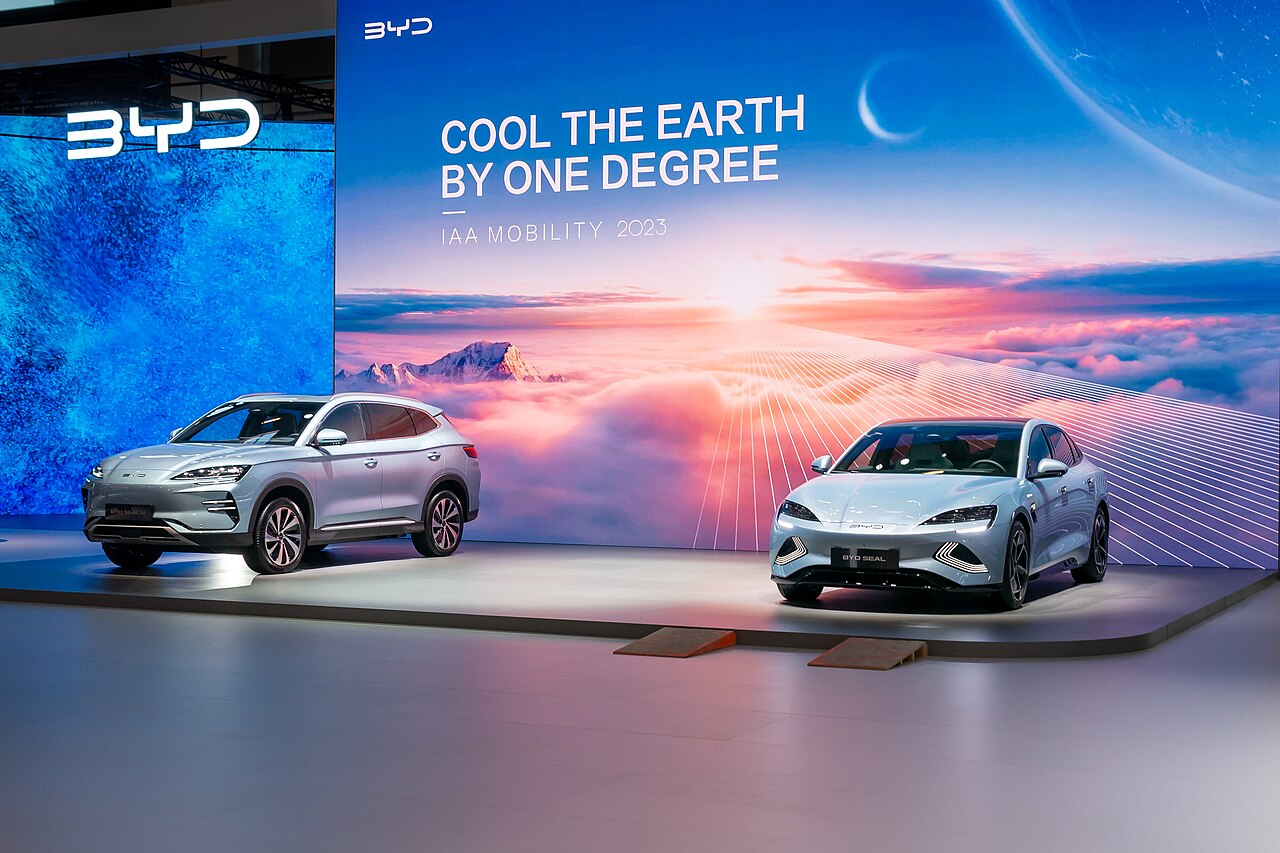
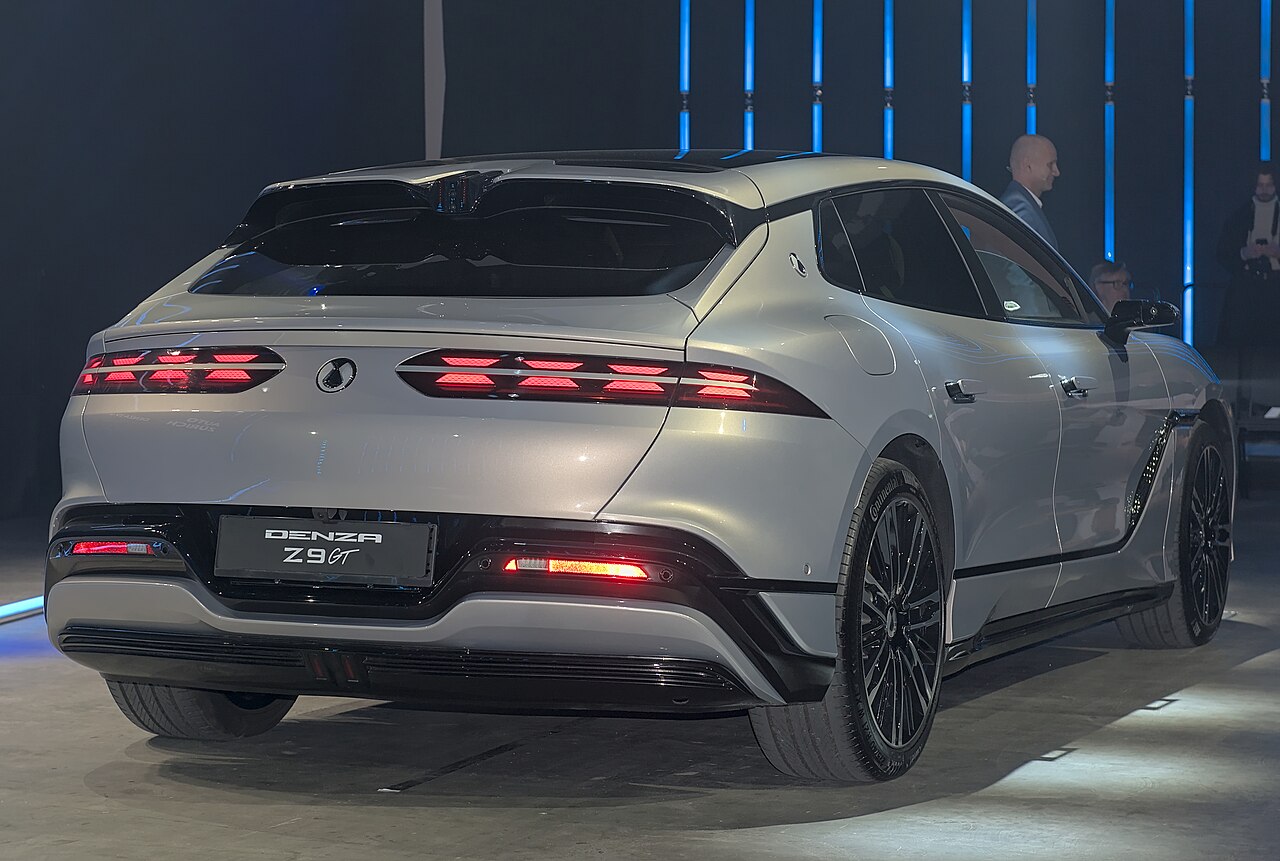
To European eyes, the model range is bewilderingly large. At its core are two volume lines: the “Dynasty” family, whose model names come from Chinese ruling houses, and the “Ocean” series, named after sea creatures and styled under the direction of former Audi and Alfa Romeo designer Wolfgang Egger. Above them, BYD has built up three brands for higher price segments. Their showpiece is the Yangwang U9 supercar: According to BYD, the Xtreme version reached 496.22 km/h on the test track in Papenburg, Germany, in September 2025 and set a lap record for electric hypercars on the Nürburgring Nordschleife with a time of 6:59.157 minutes. In spring 2026 came the Datang, a 5.26-meter-long flagship SUV (Great Tang in English), and the Seal 08 sedan. According to Wikipedia, BYD reported more than 100,000 preorders for the Datang by early May. For the Denza Z9GT, the brand’s spearhead in Europe, BYD announced a European premiere at the Opéra Garnier in Paris on April 8, 2026. The premium brands sold a combined 227,900 vehicles in the first half of 2026, 61% more than a year earlier.
| Brand / series | Positioning | Examples |
|---|---|---|
| BYD Dynasty | Volume, named after Chinese dynasties | Qin, Han, Tang, Song, Yuan |
| BYD Ocean | Volume, more youthful design (Wolfgang Egger) | Seagull/Dolphin Surf, Dolphin, Seal, Sealion, Atto 2/3 |
| Denza | Premium, originally a joint venture with Daimler | D9 (minivan), Z9 GT |
| Fangchengbao | Off-road and lifestyle, since 2023 | Bao 5, Ti 7 |
| Yangwang | Luxury and technology showcase, since 2023 | U8 (off-roader), U9 (supercar), U7 (sedan) |
| Commercial vehicles | Buses, trucks, forklifts | K9 bus, ETT heavy-duty truck (IAA Transportation 2026) |
| Beyond cars | Electronics, energy storage, rail | Contract manufacturing for Apple and others, grid storage, SkyRail monorail |
The powertrain mix has shifted several times since 2021. In 2024, plug-in hybrids clearly dominated with almost 2.5 million units; in 2025, the two drive types converged almost exactly. In Europe, the hybrid plays a special role because the EU countervailing duties apply only to fully electric cars.
Photo gallery: The flagships
Yangwang, Denza and the top of the Dynasty line: With these models, BYD wants to prove that “Made in China” no longer means “cheap.”
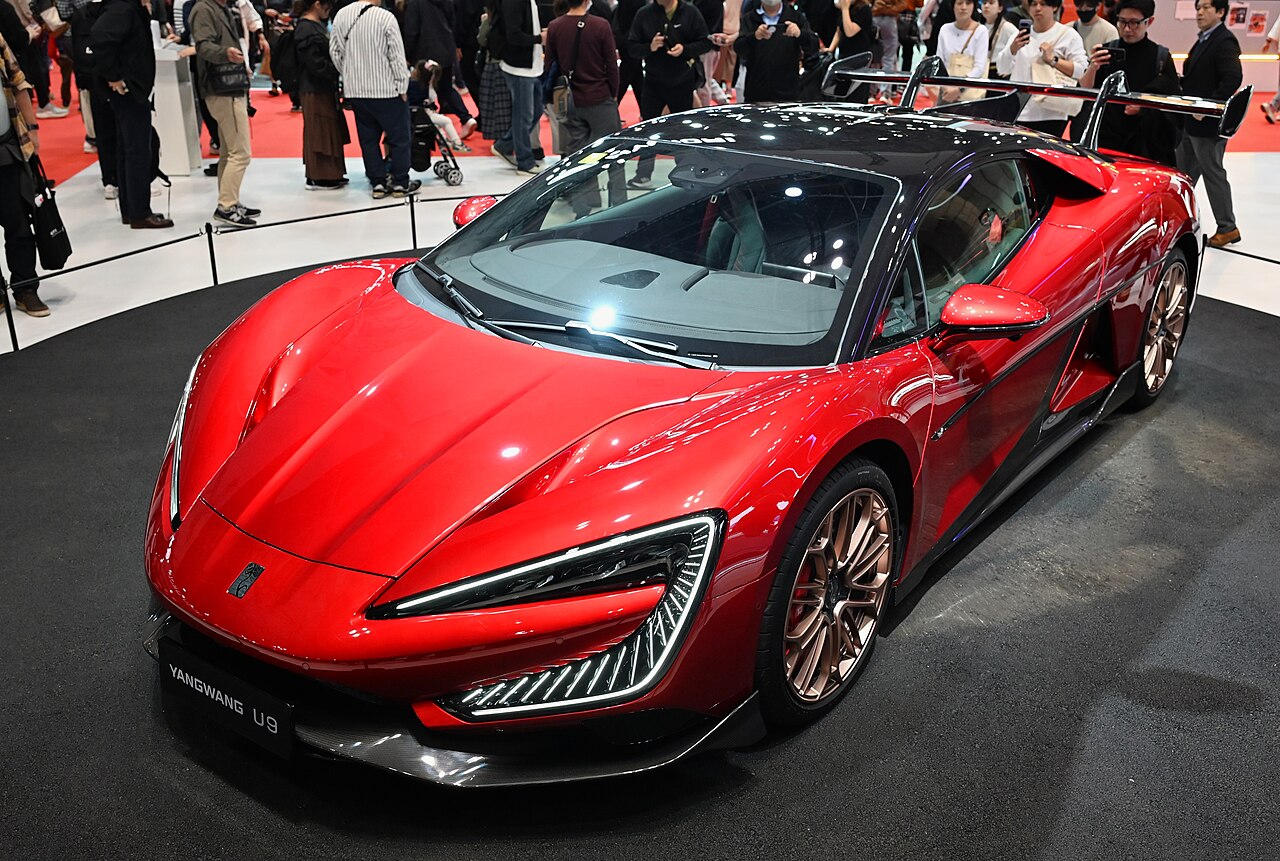
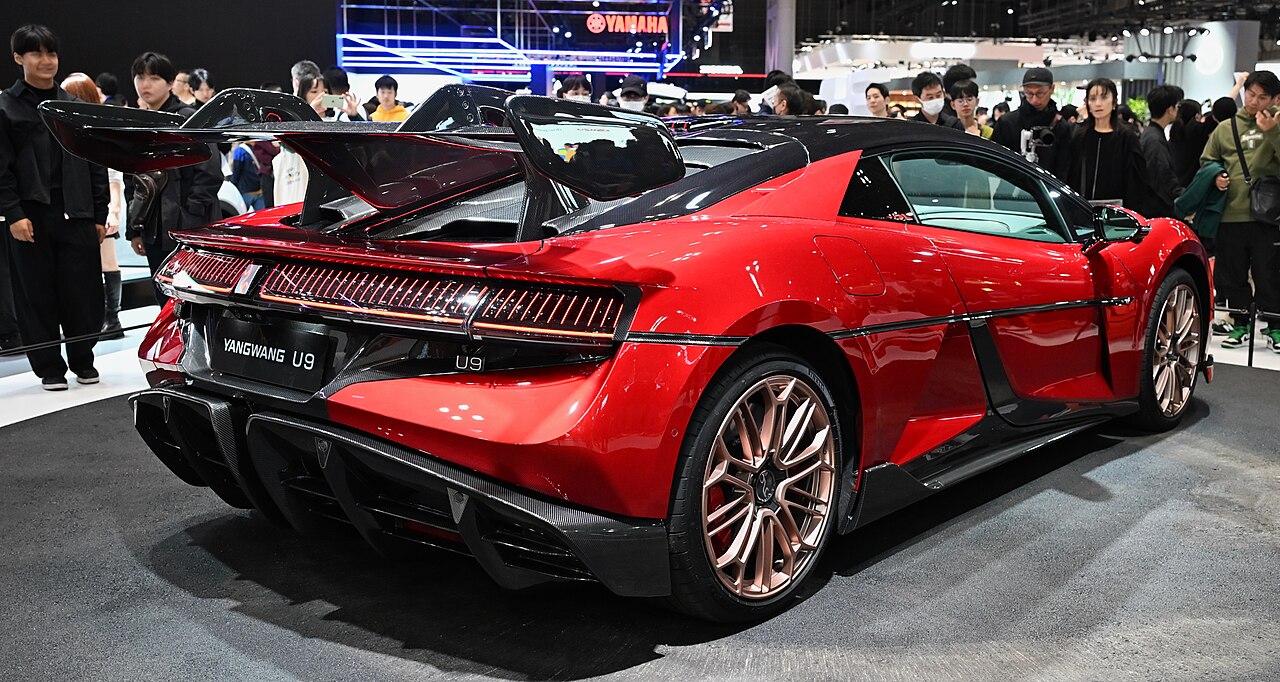
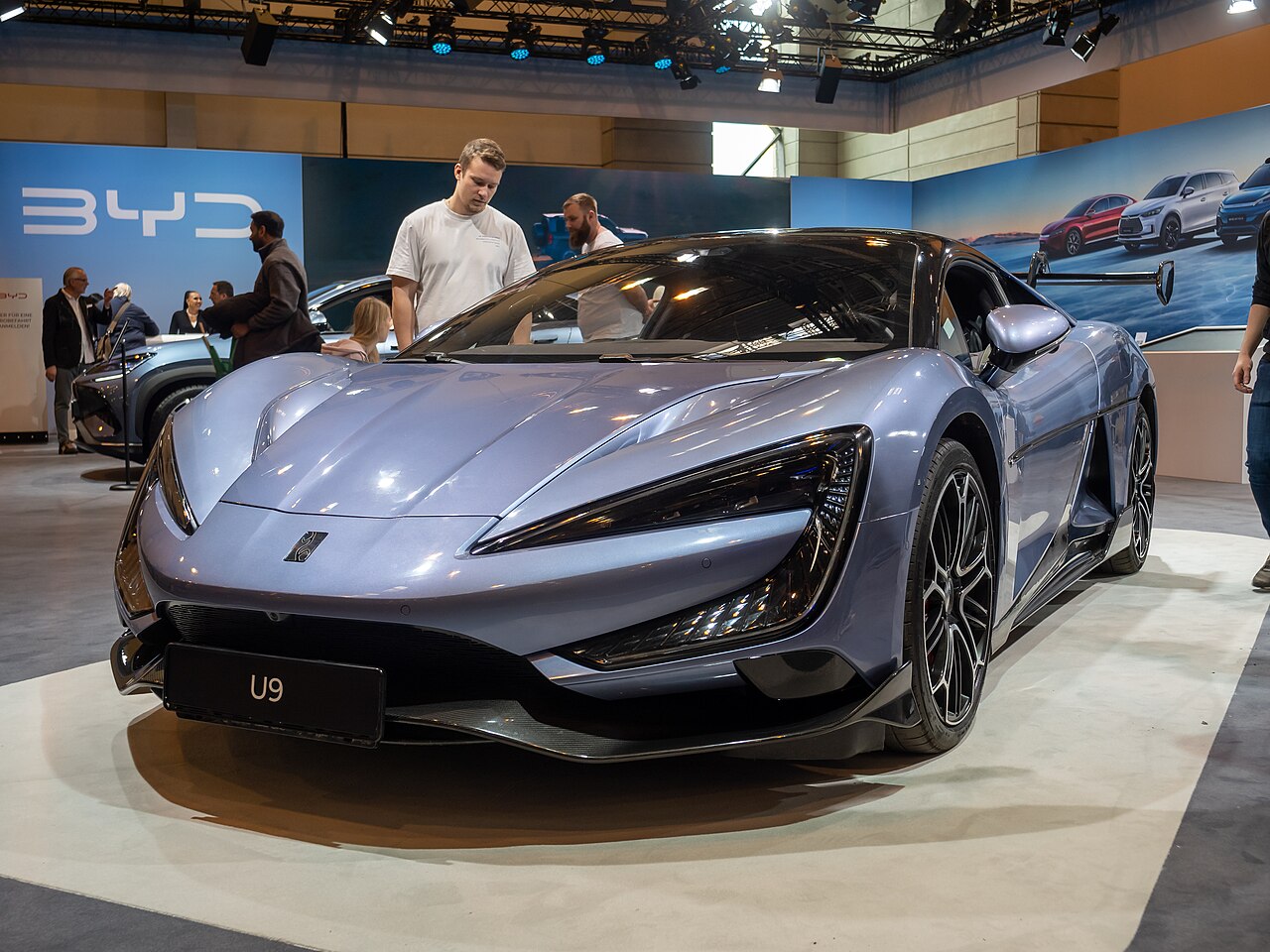
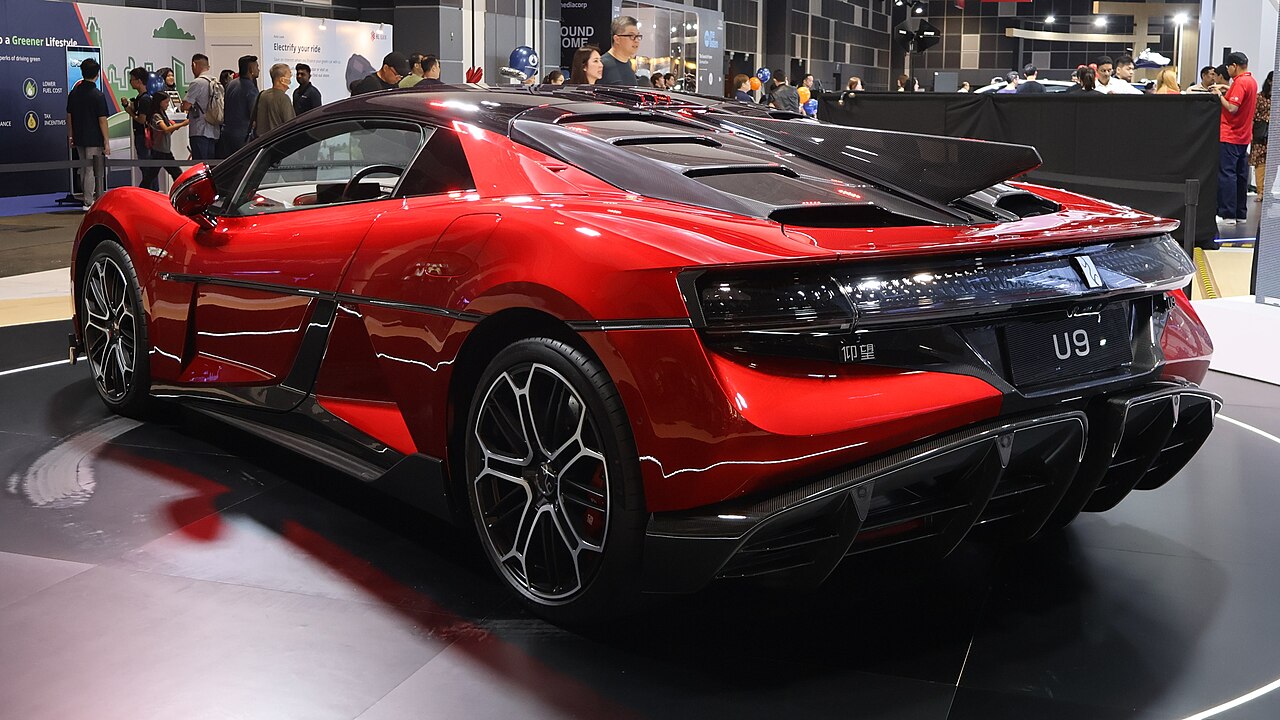
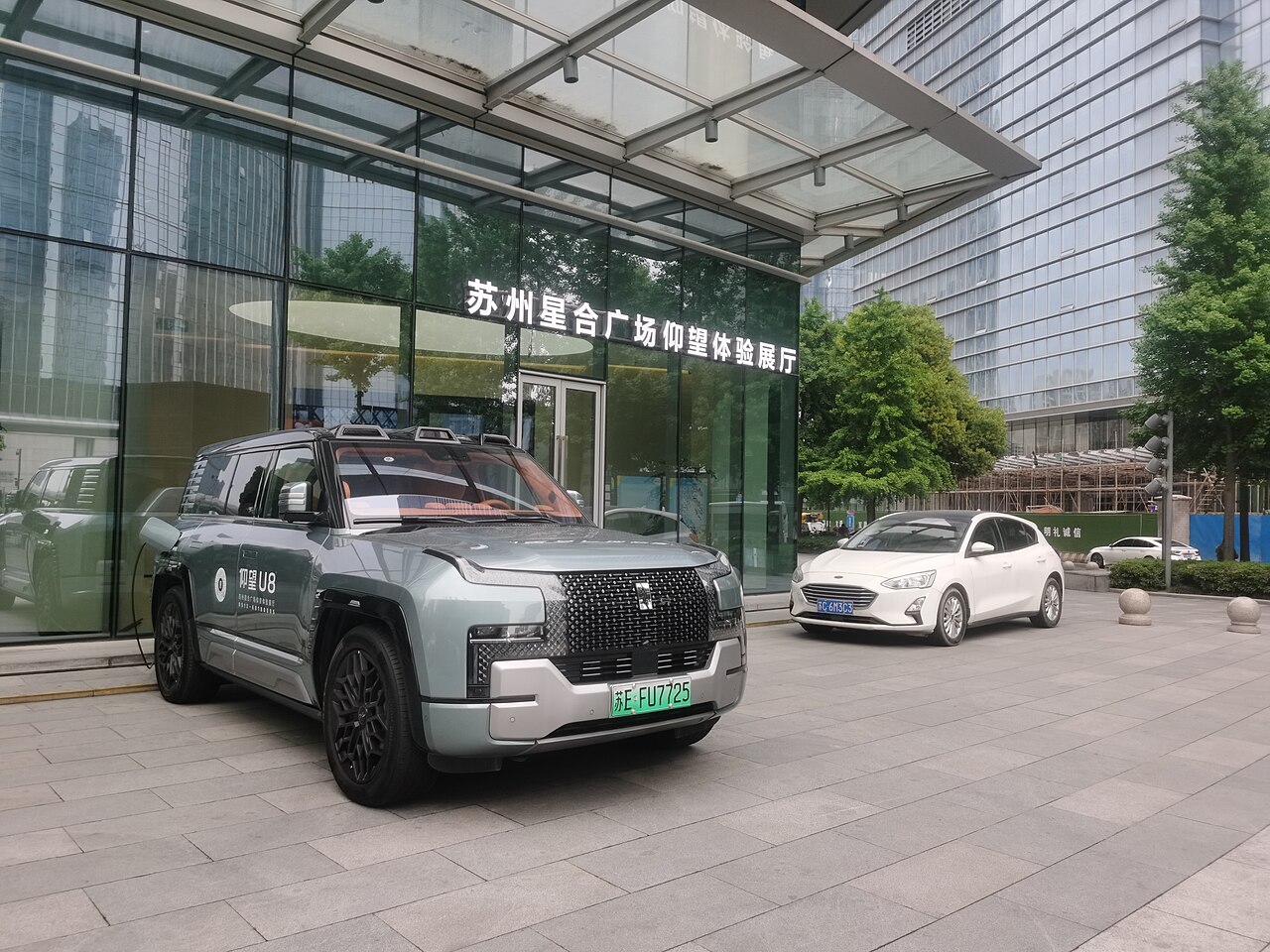
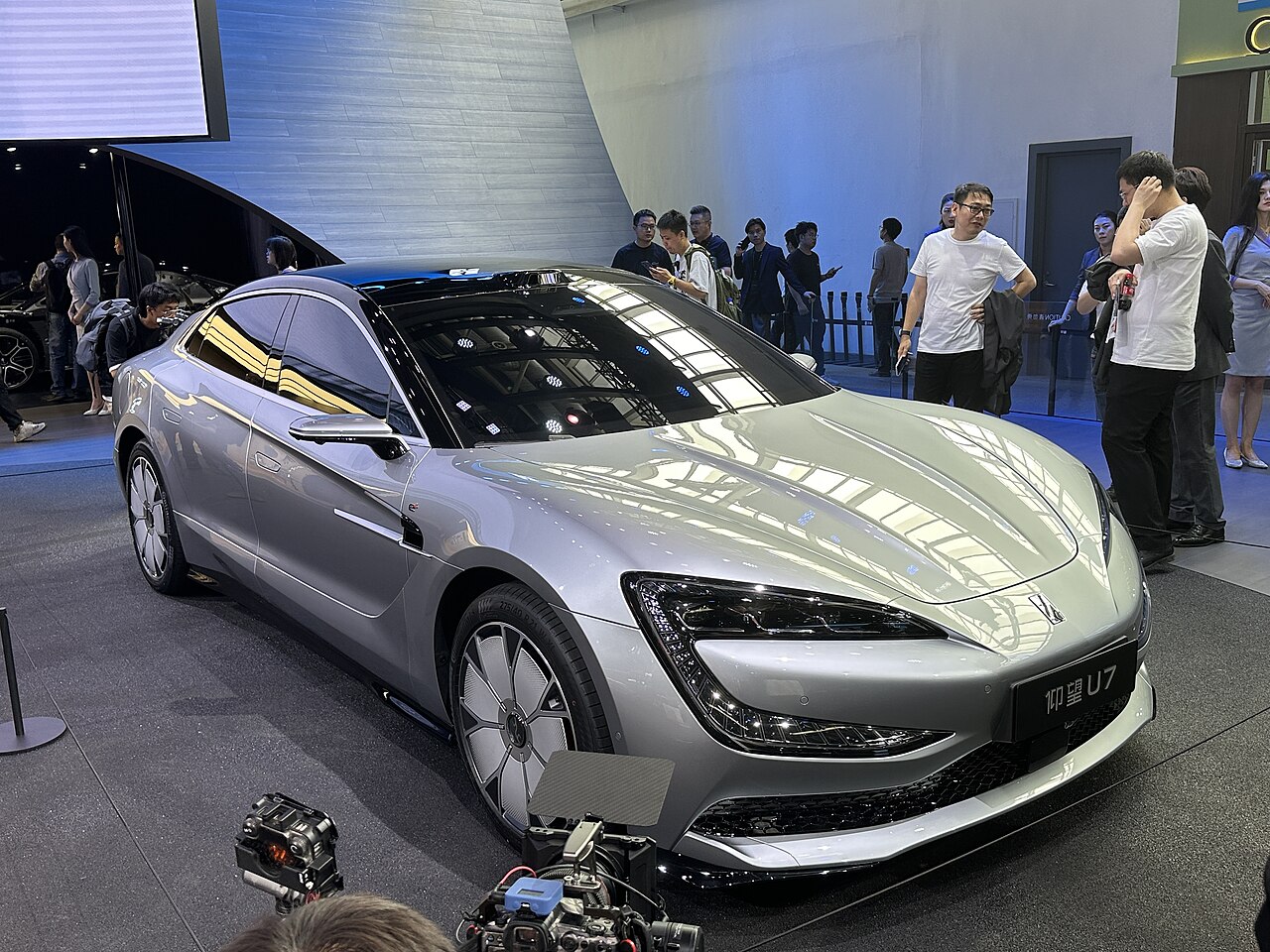
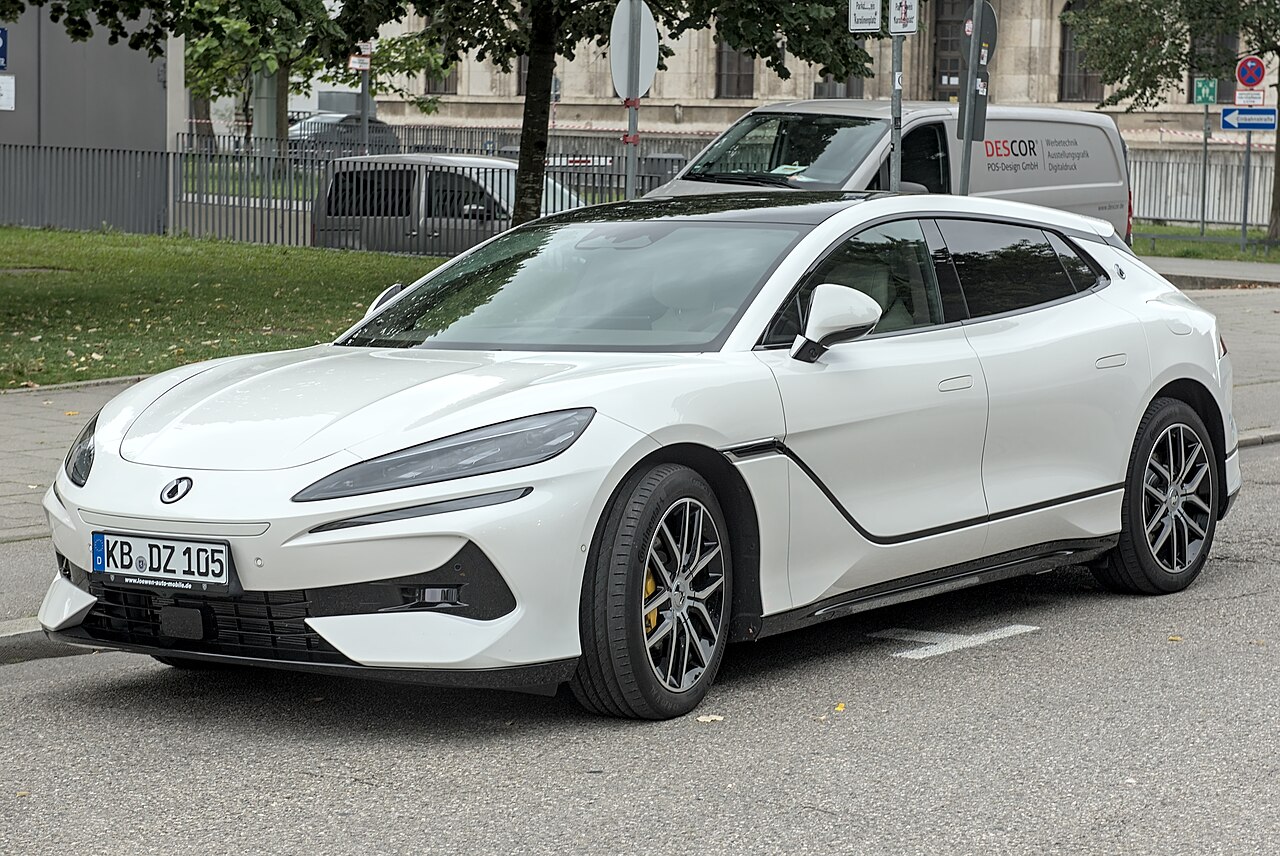
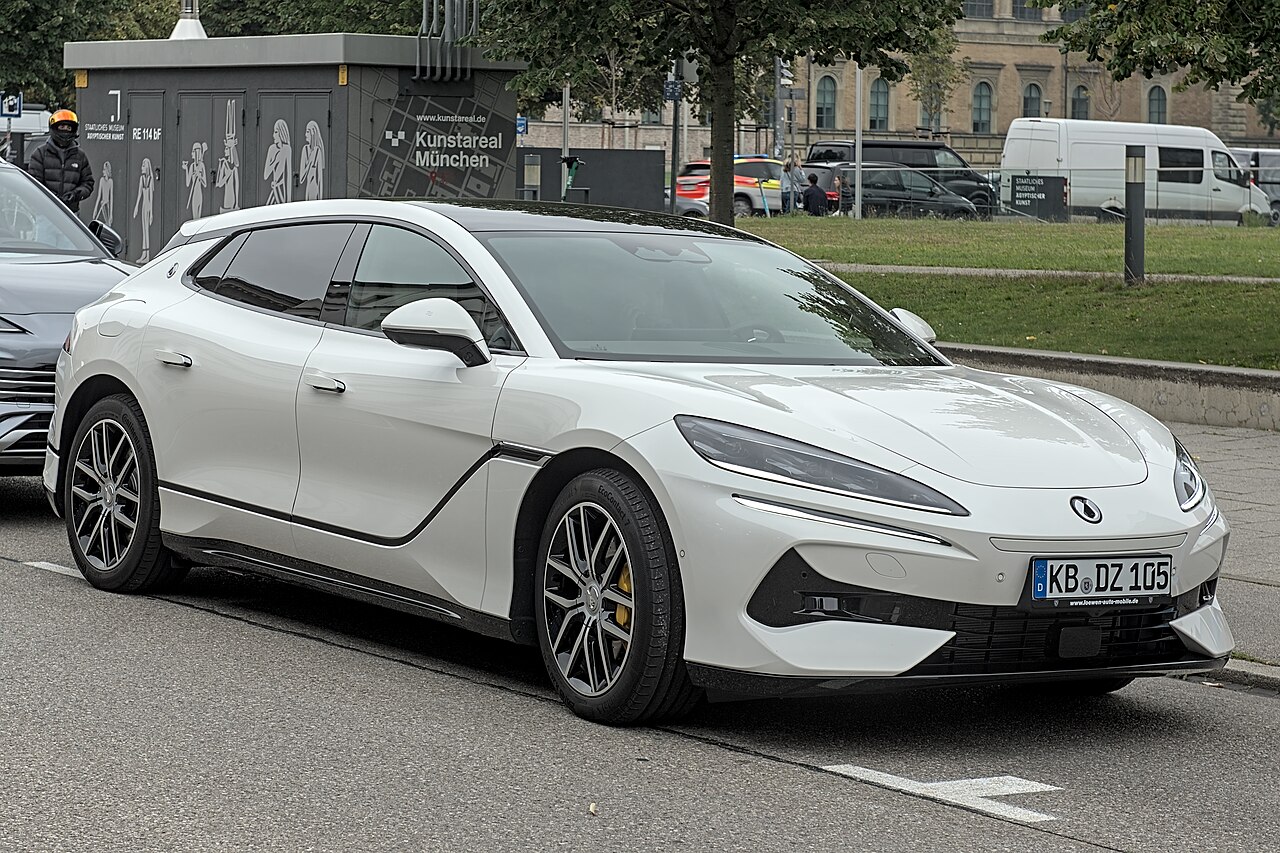
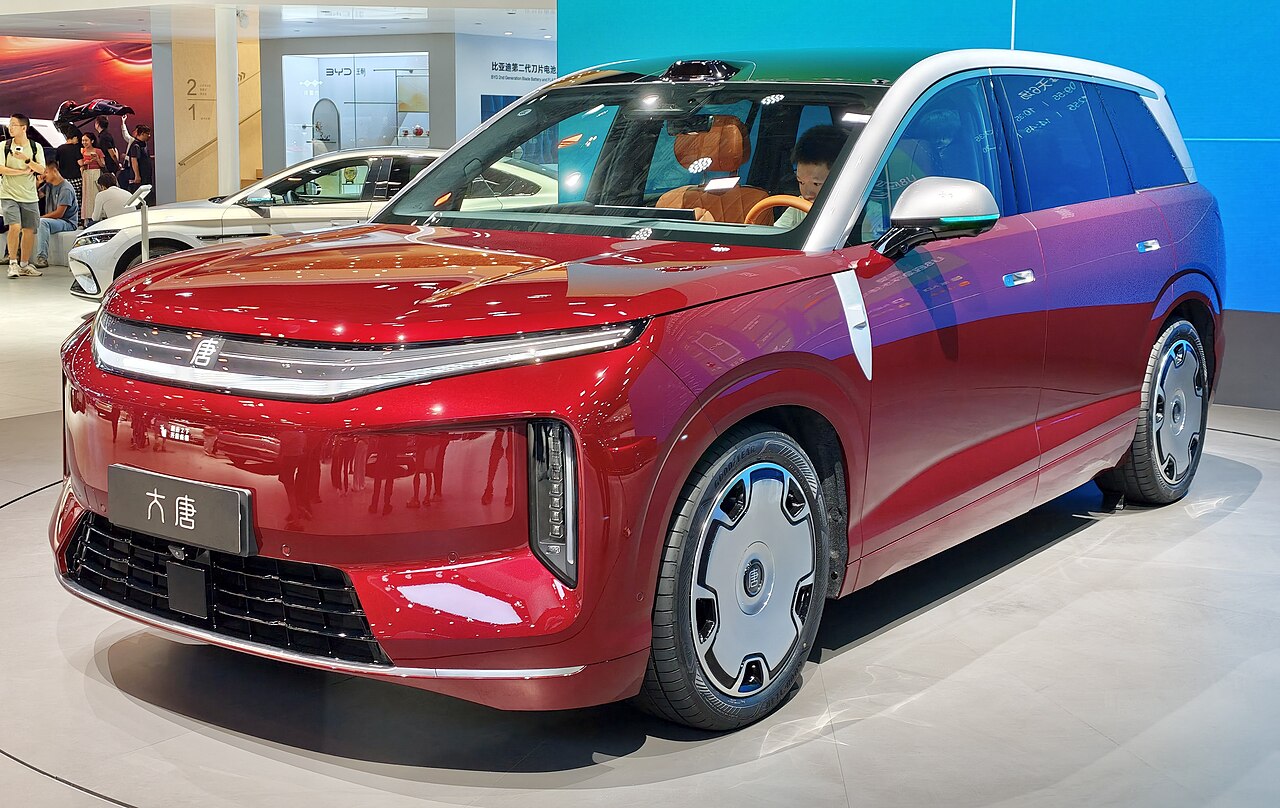
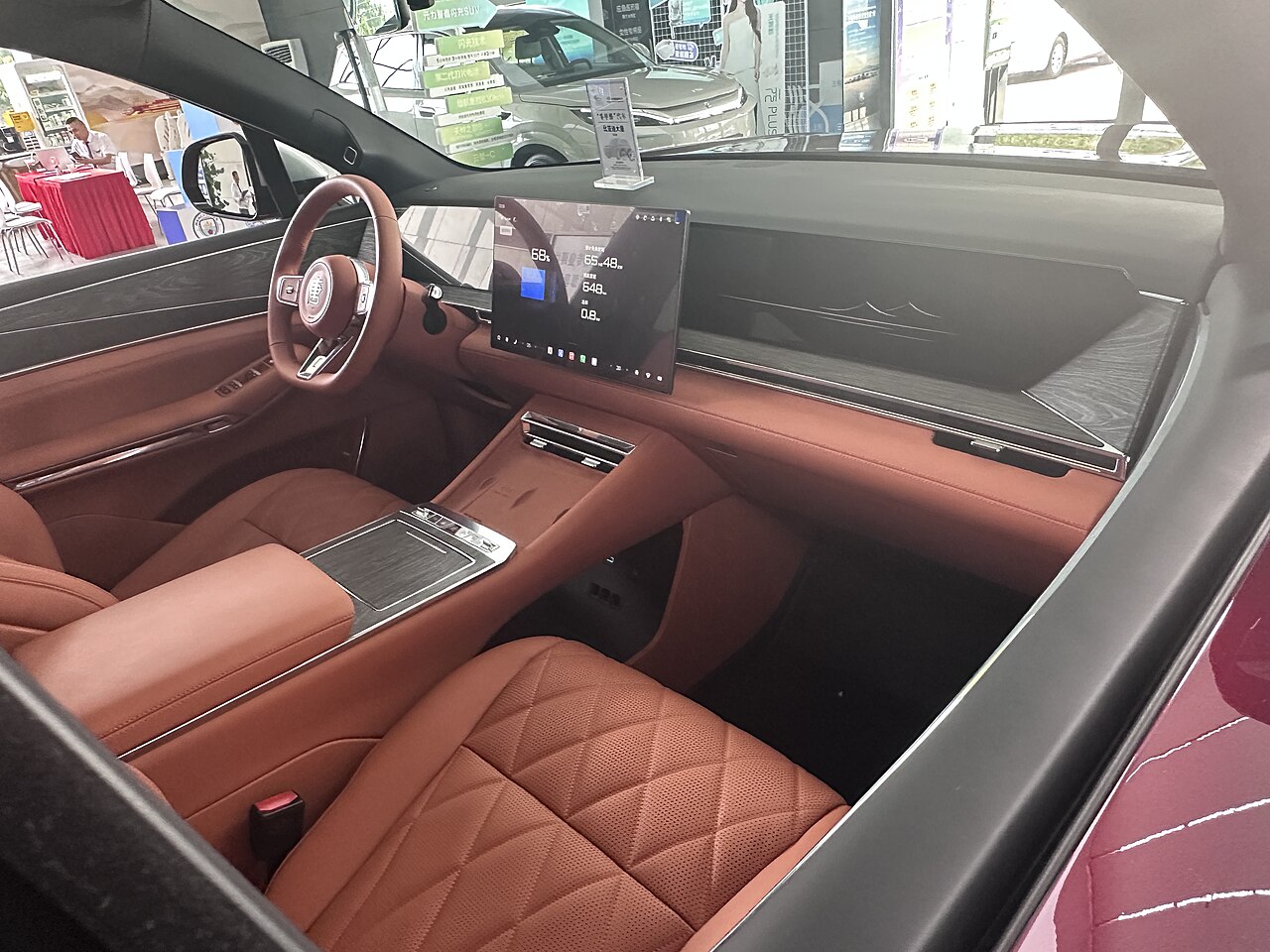
Photo gallery: The new Atto 3 EVO
The model that made BYD known in Europe in 2023, in its 2026 relaunch: rear- or all-wheel drive, 74.8 kWh Blade Battery, 800 volts, up to 510 km WLTP; in the all-wheel-drive version, 330 kW and 3.9 seconds to 100 km/h.
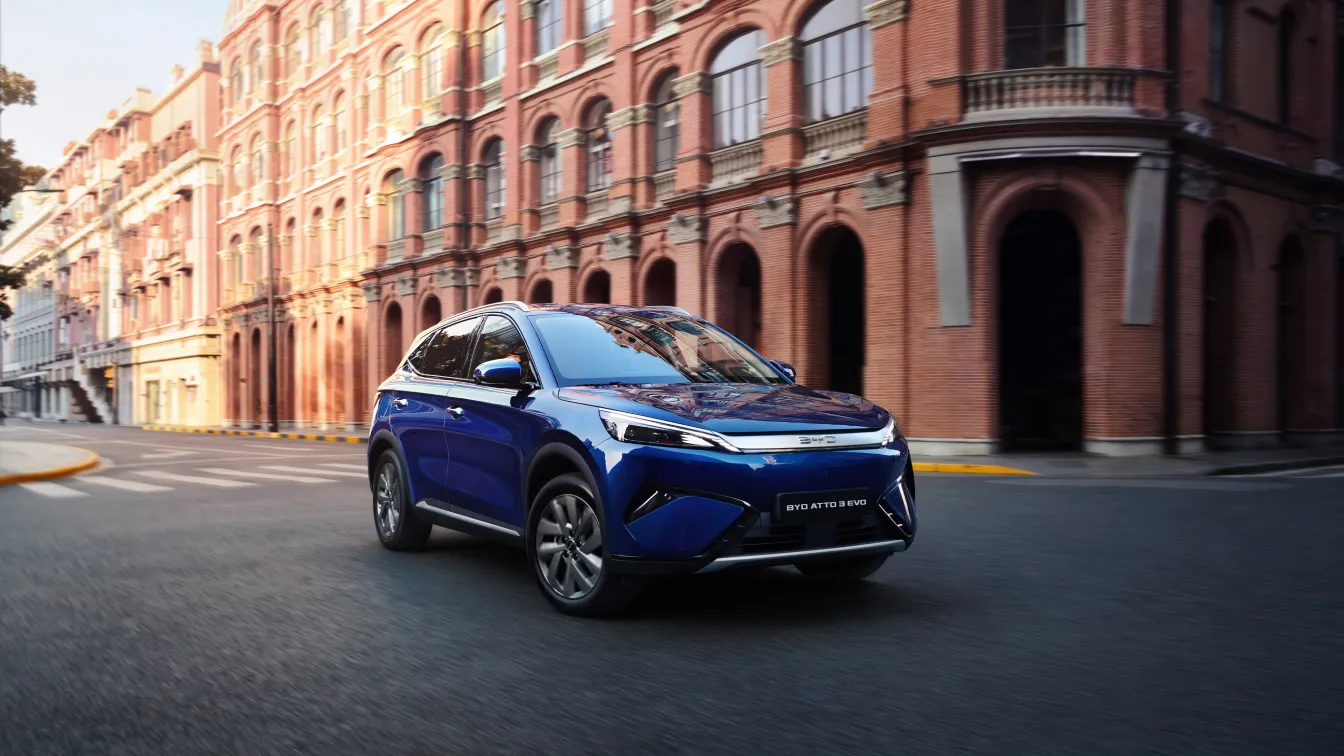
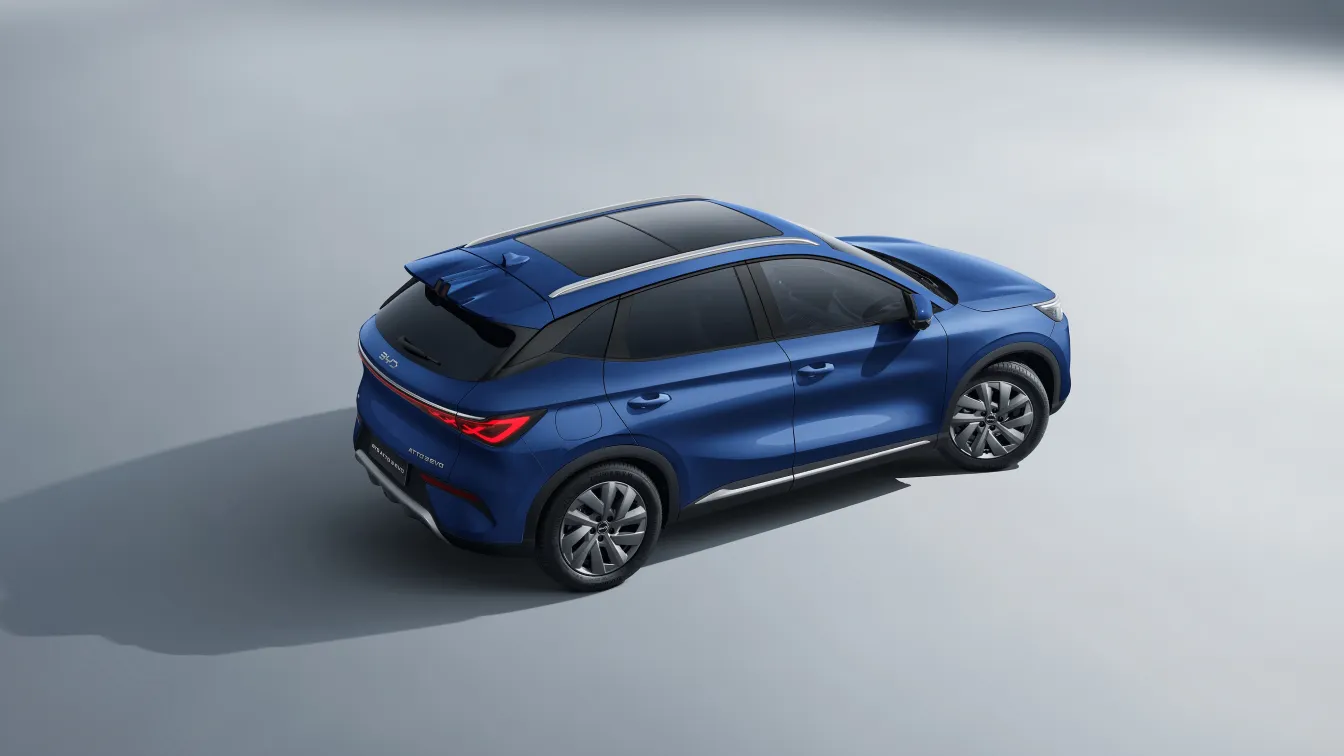
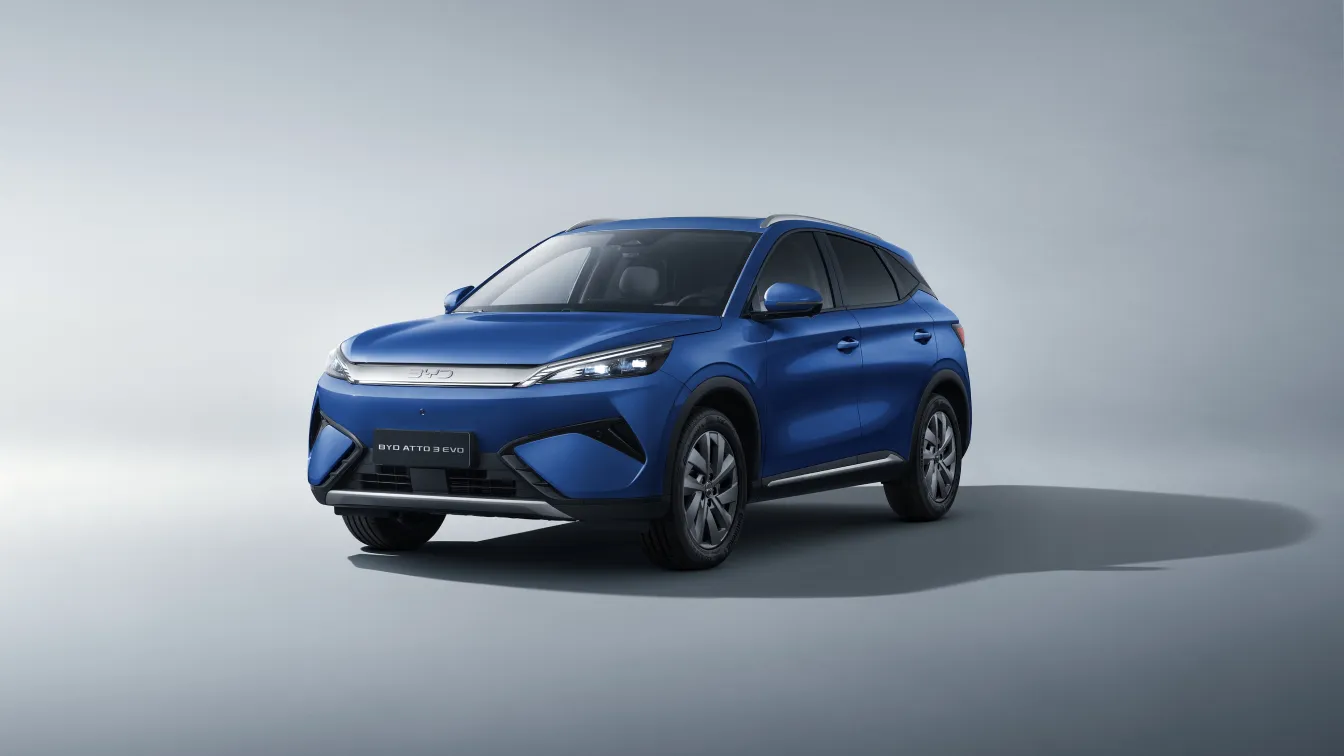
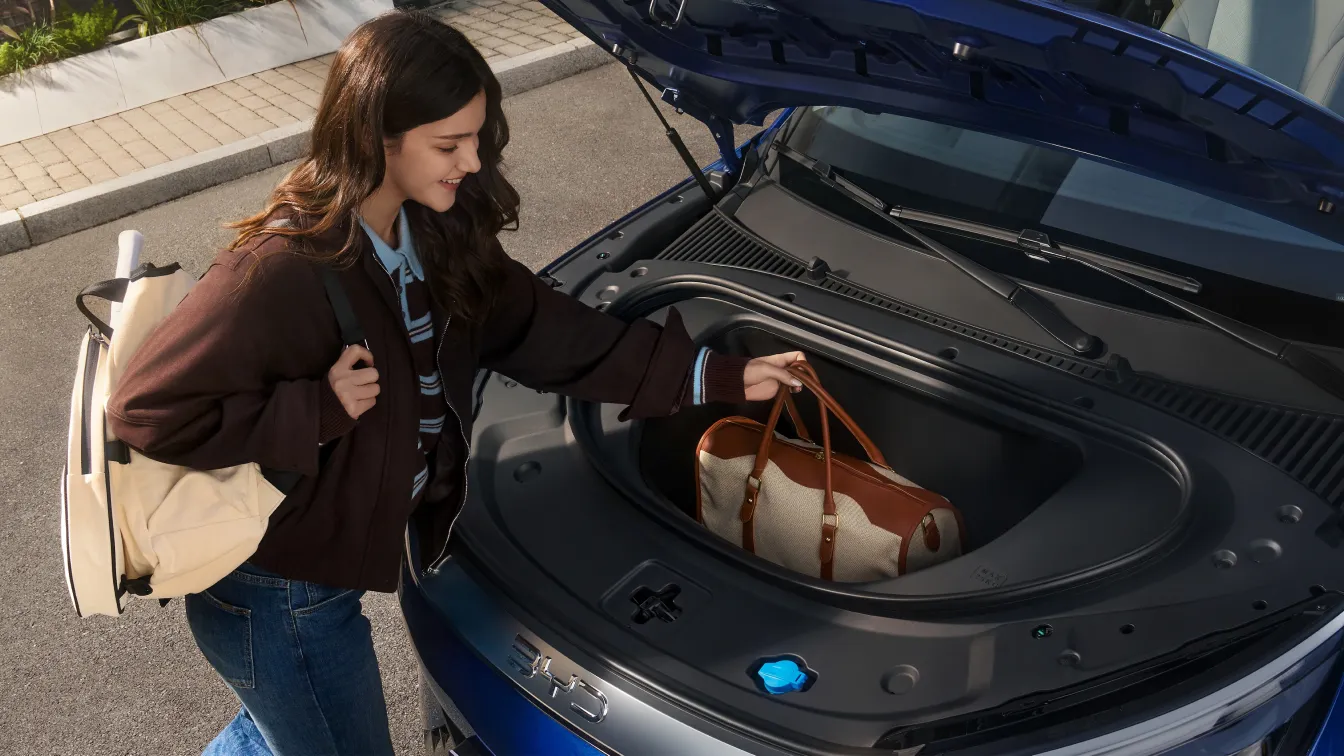
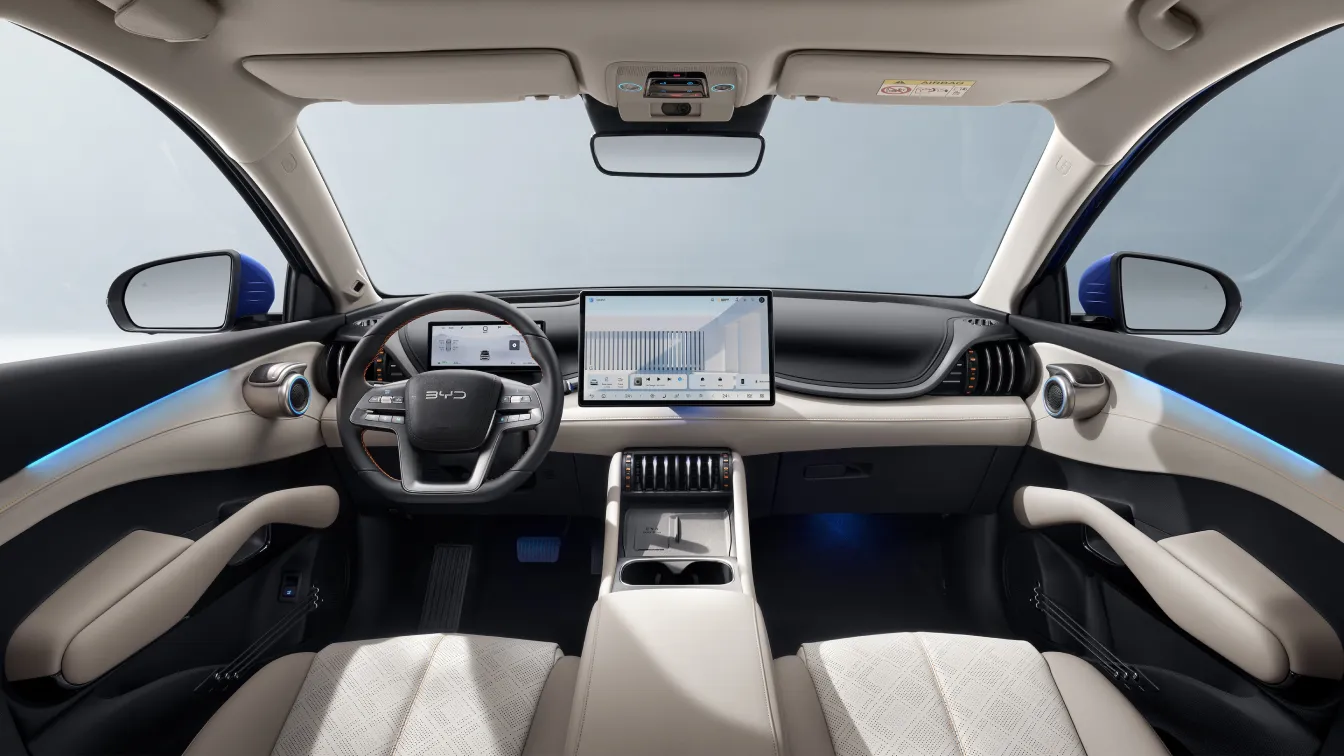
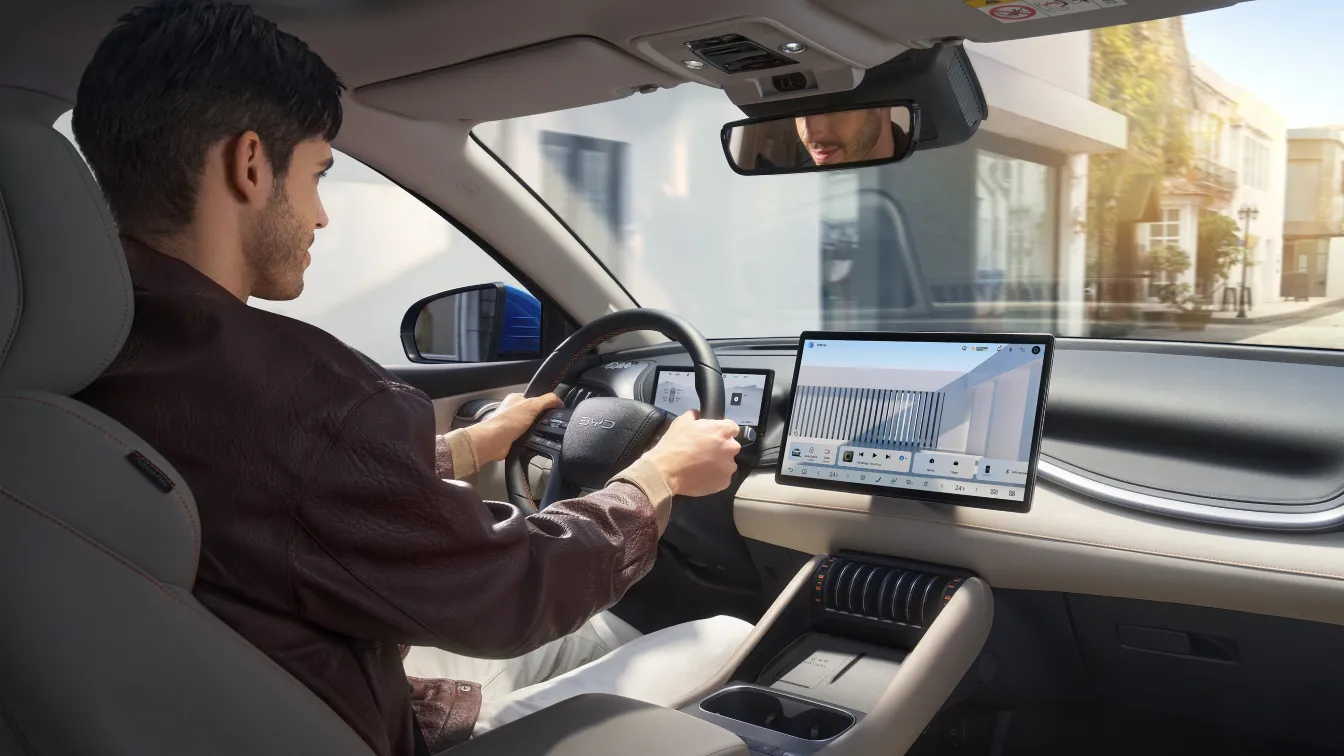
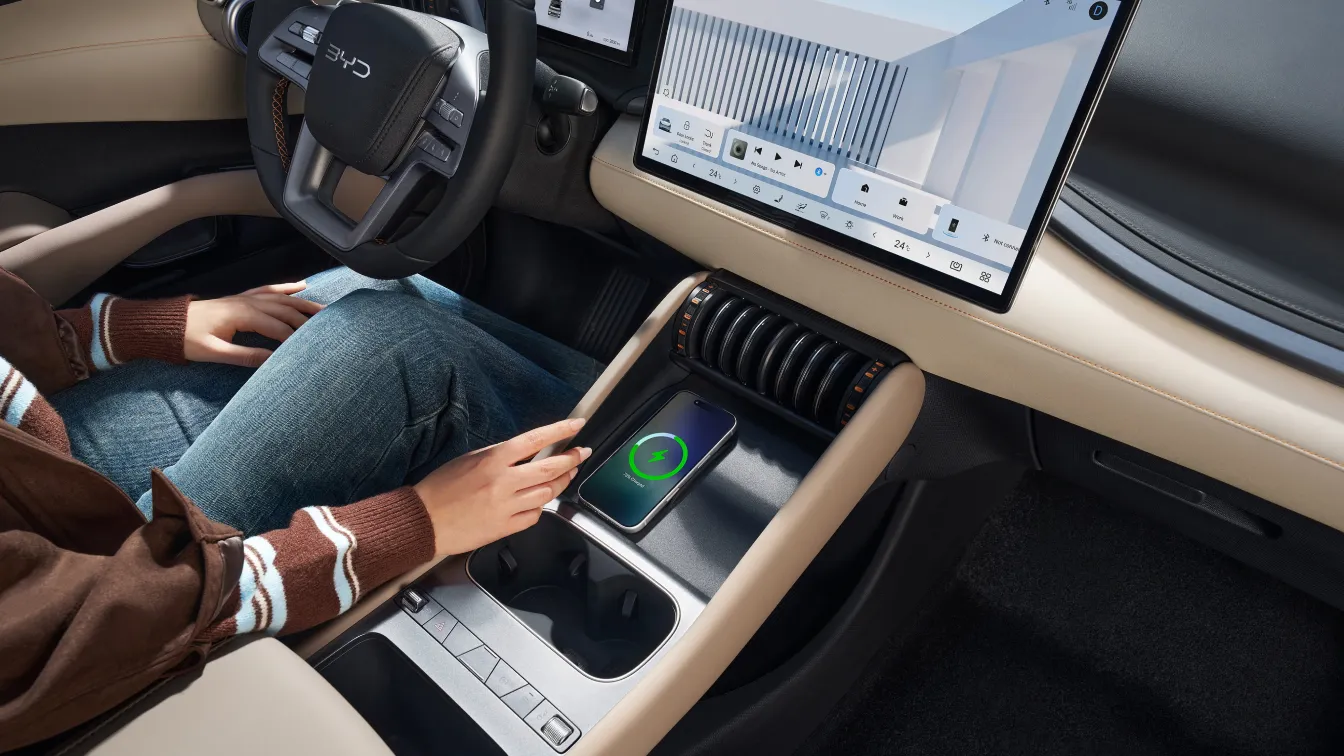
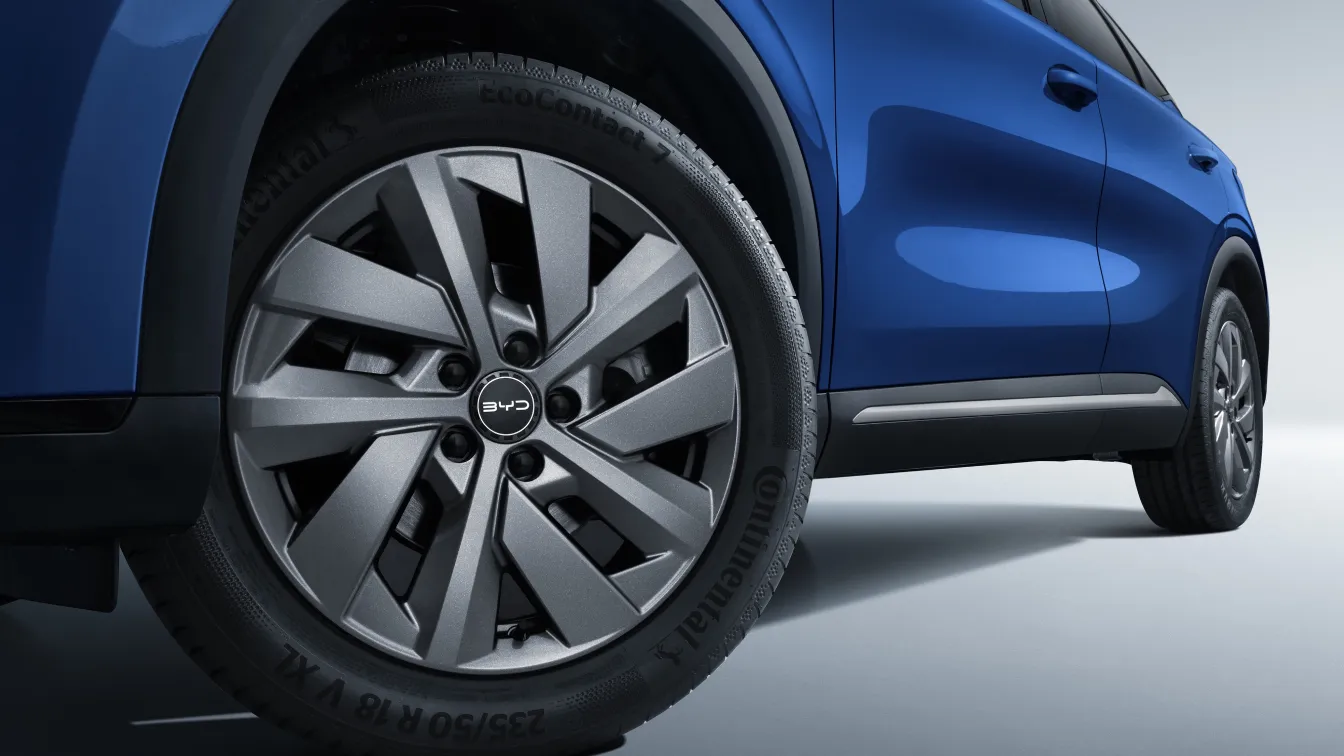
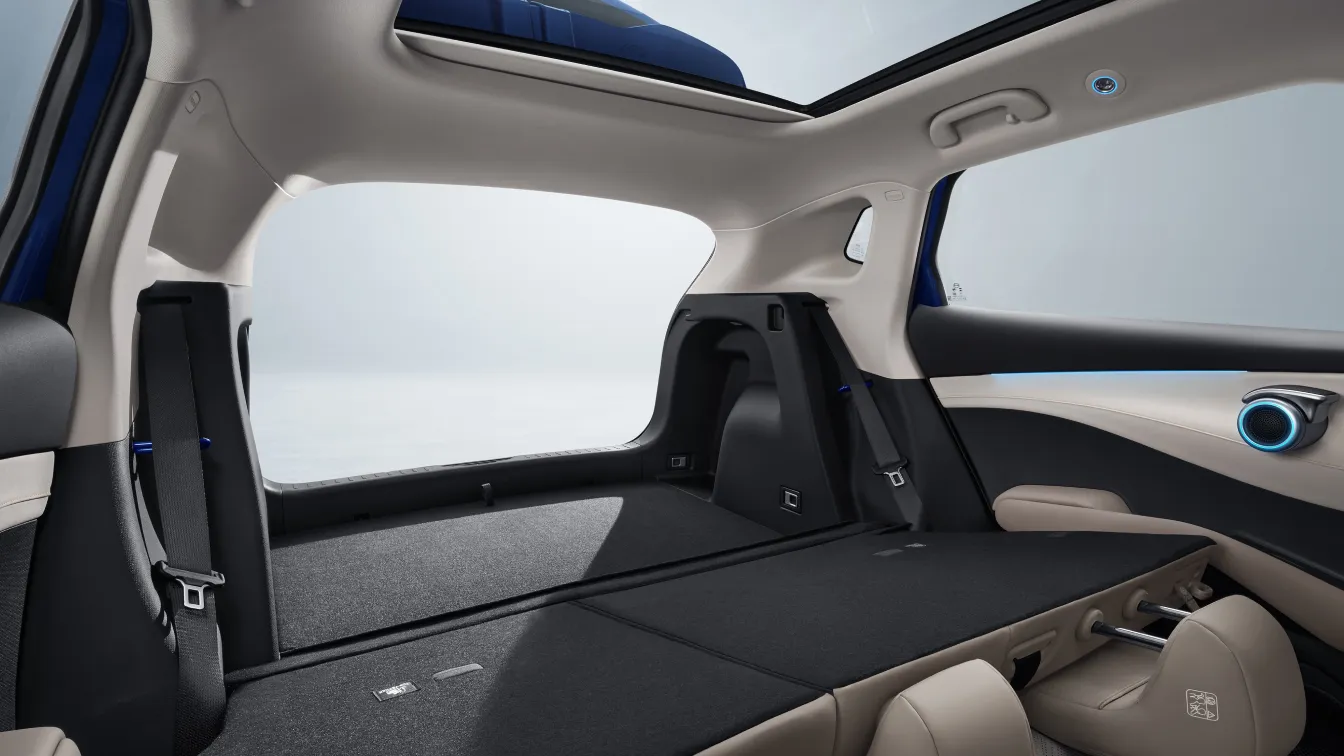
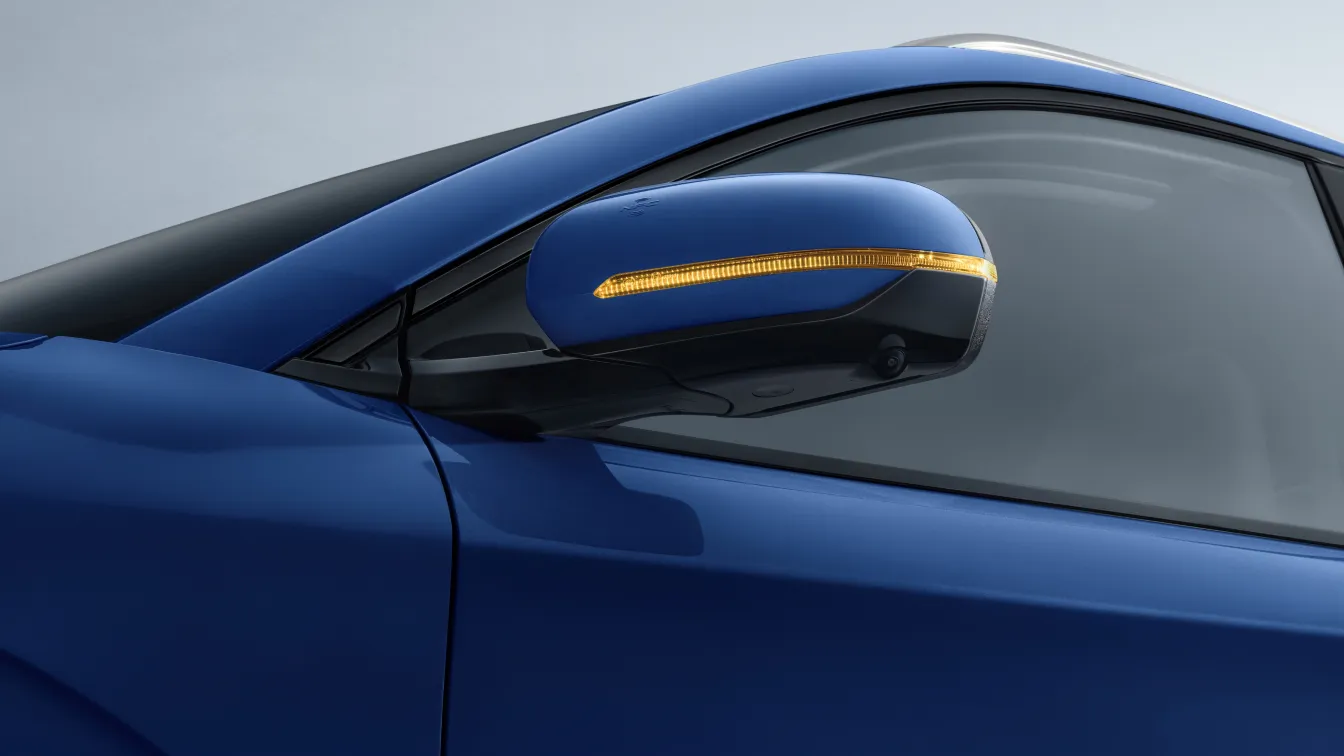
Source: BYD Germany, press release of Feb. 10, 2026. BYD press photos for editorial use; BYD notes on its website that some images are generated or edited with AI.
Photo gallery: Seal, Dolphin Surf and Atto 2
Press photos of the volume models BYD is selling in Germany and Switzerland in 2026.
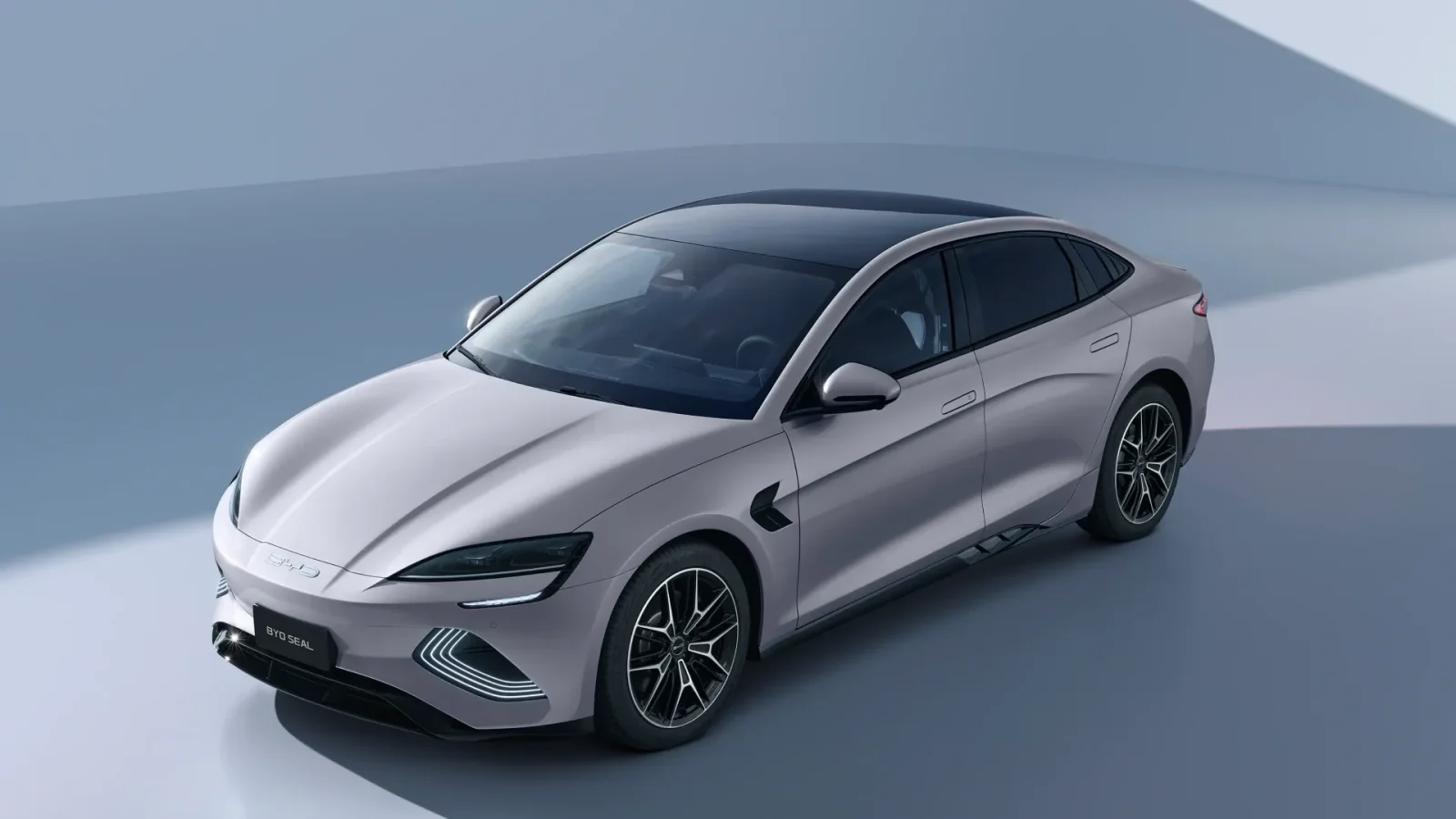
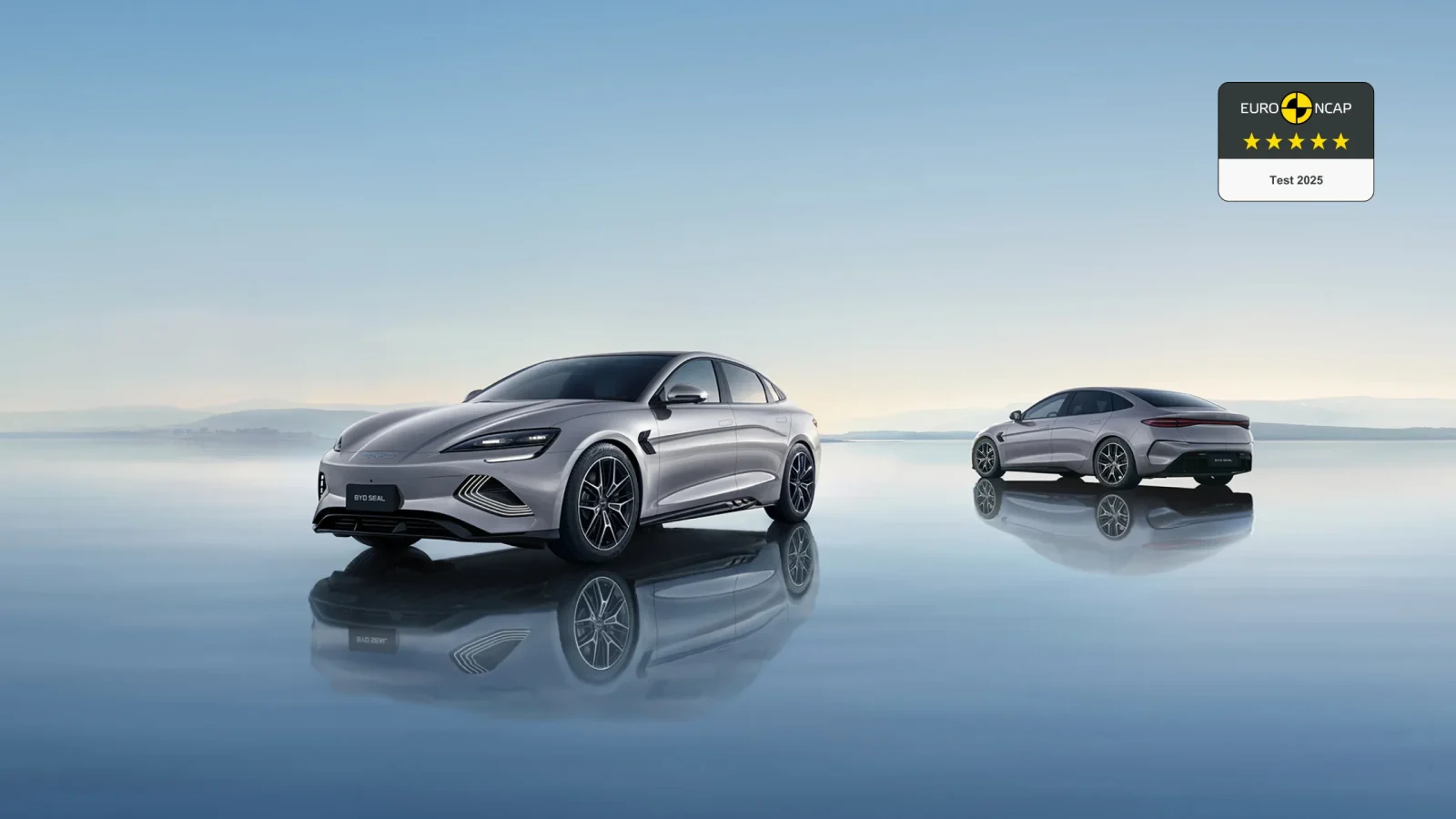
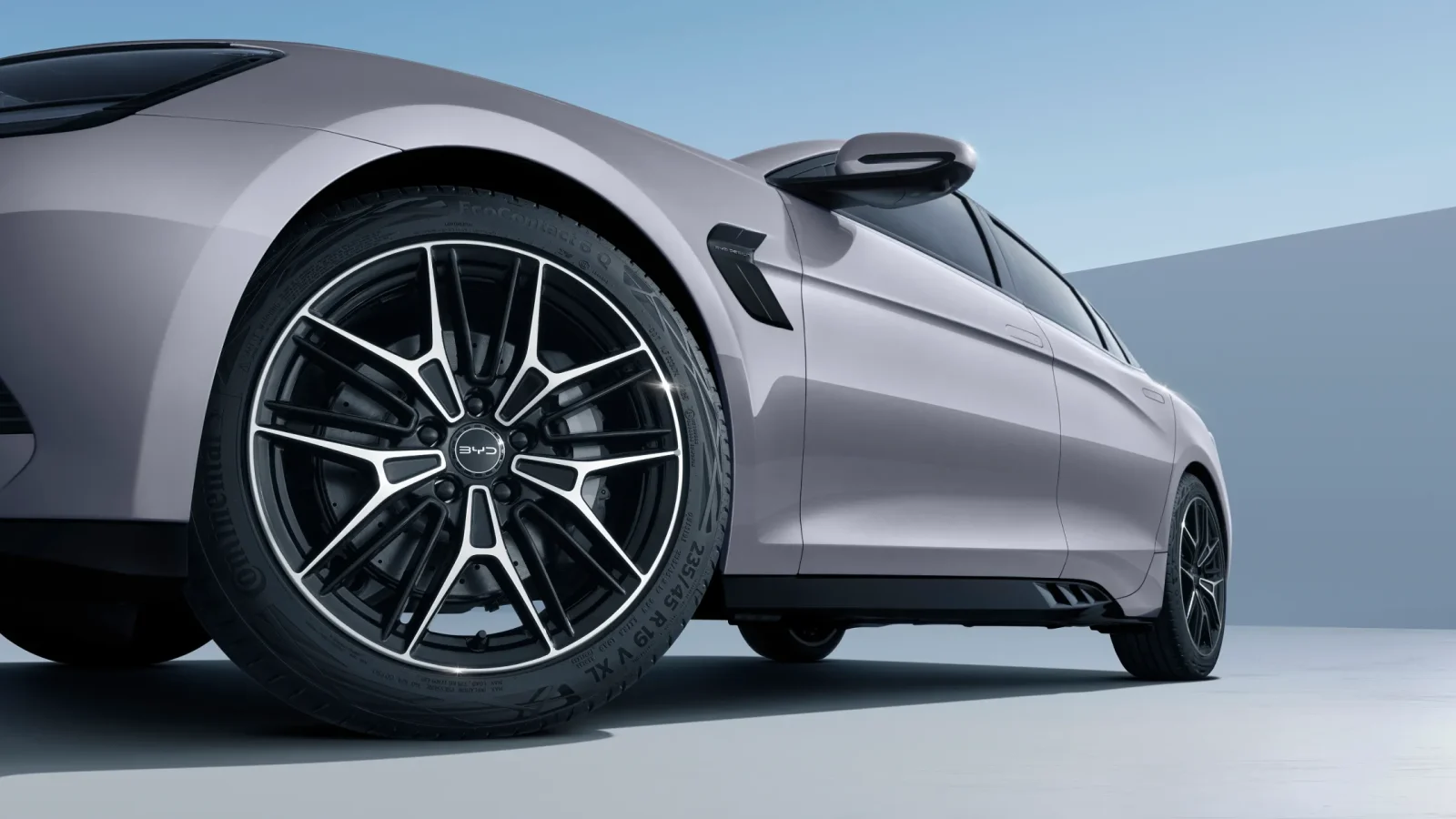
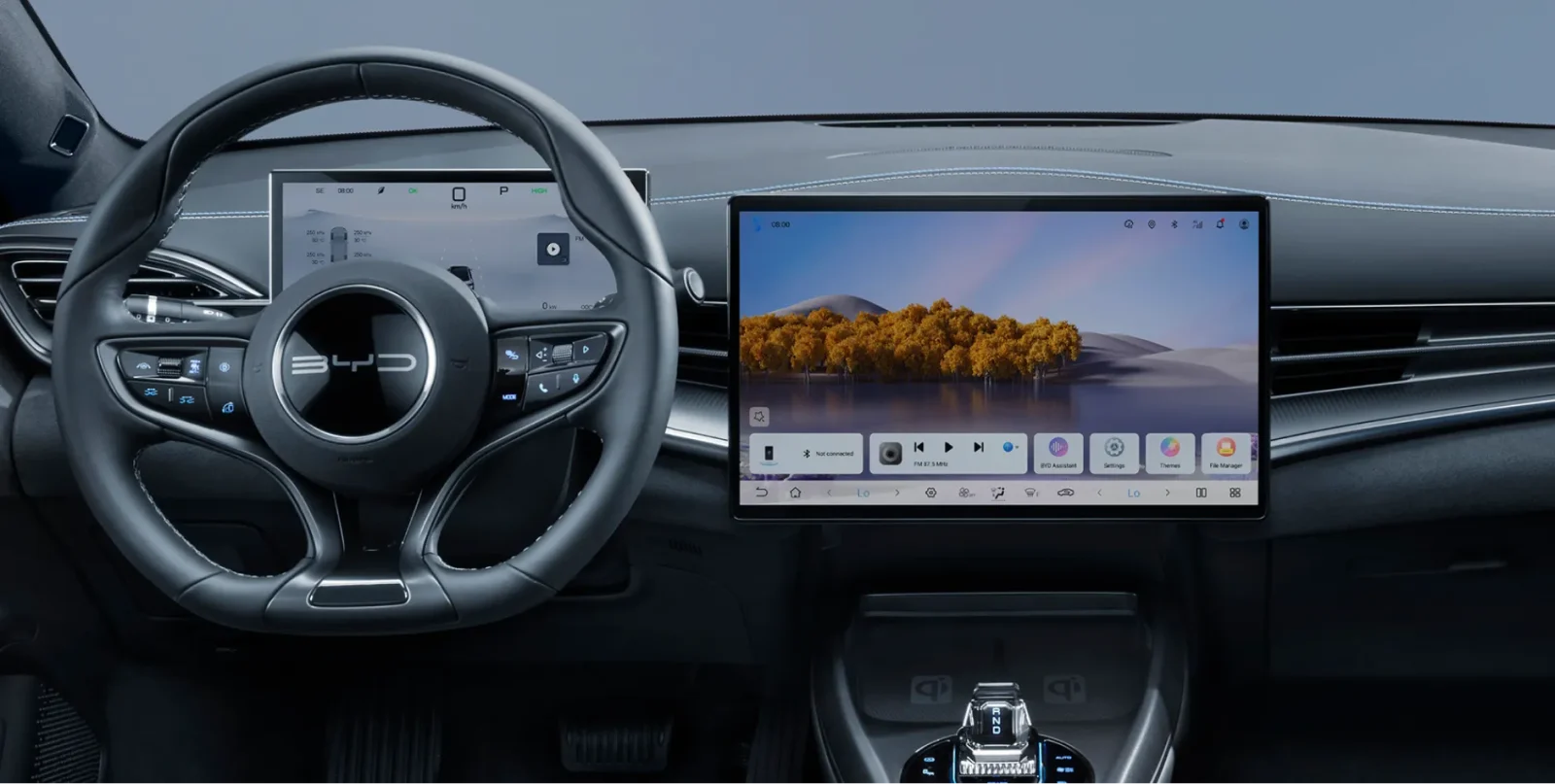
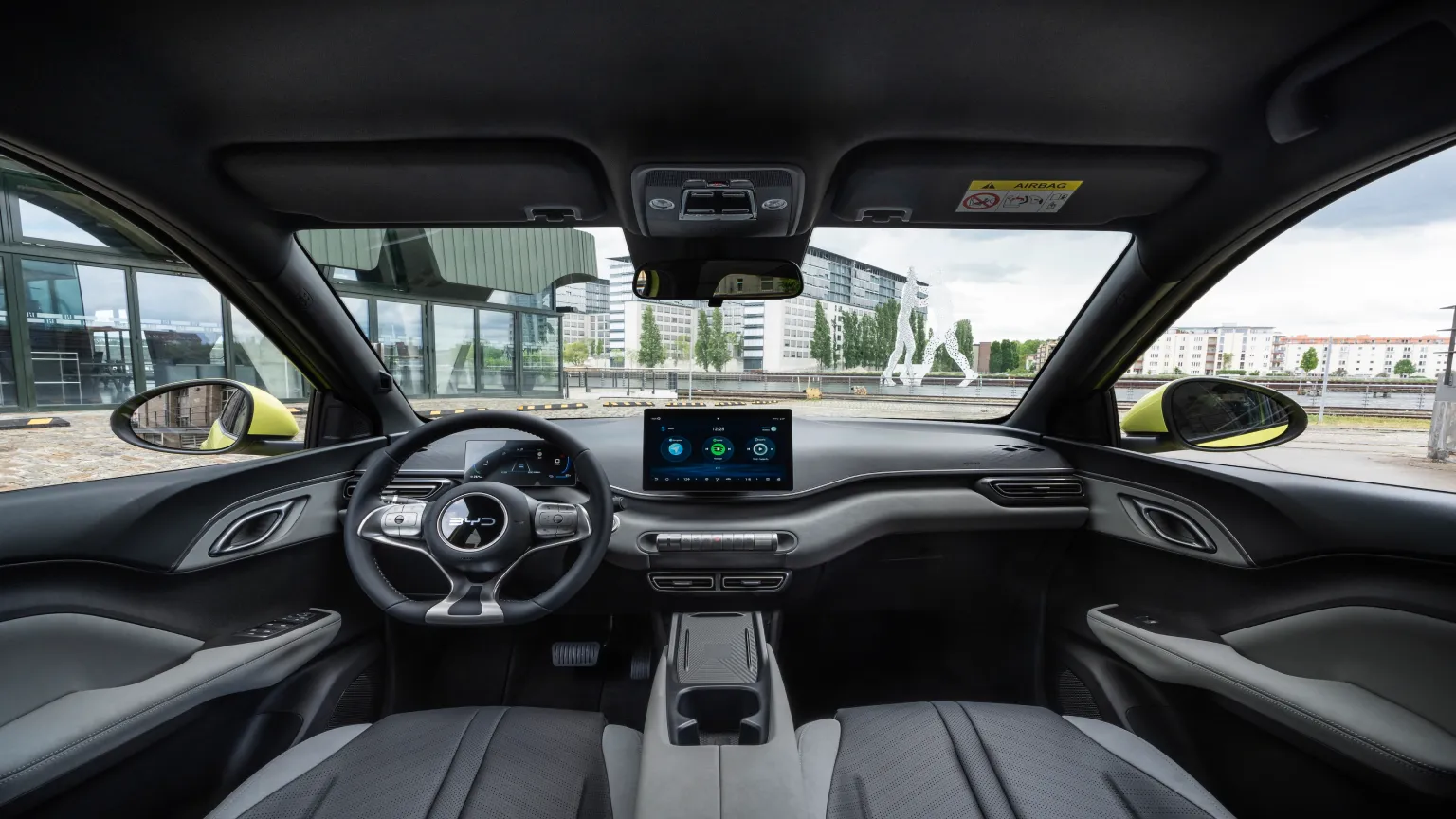
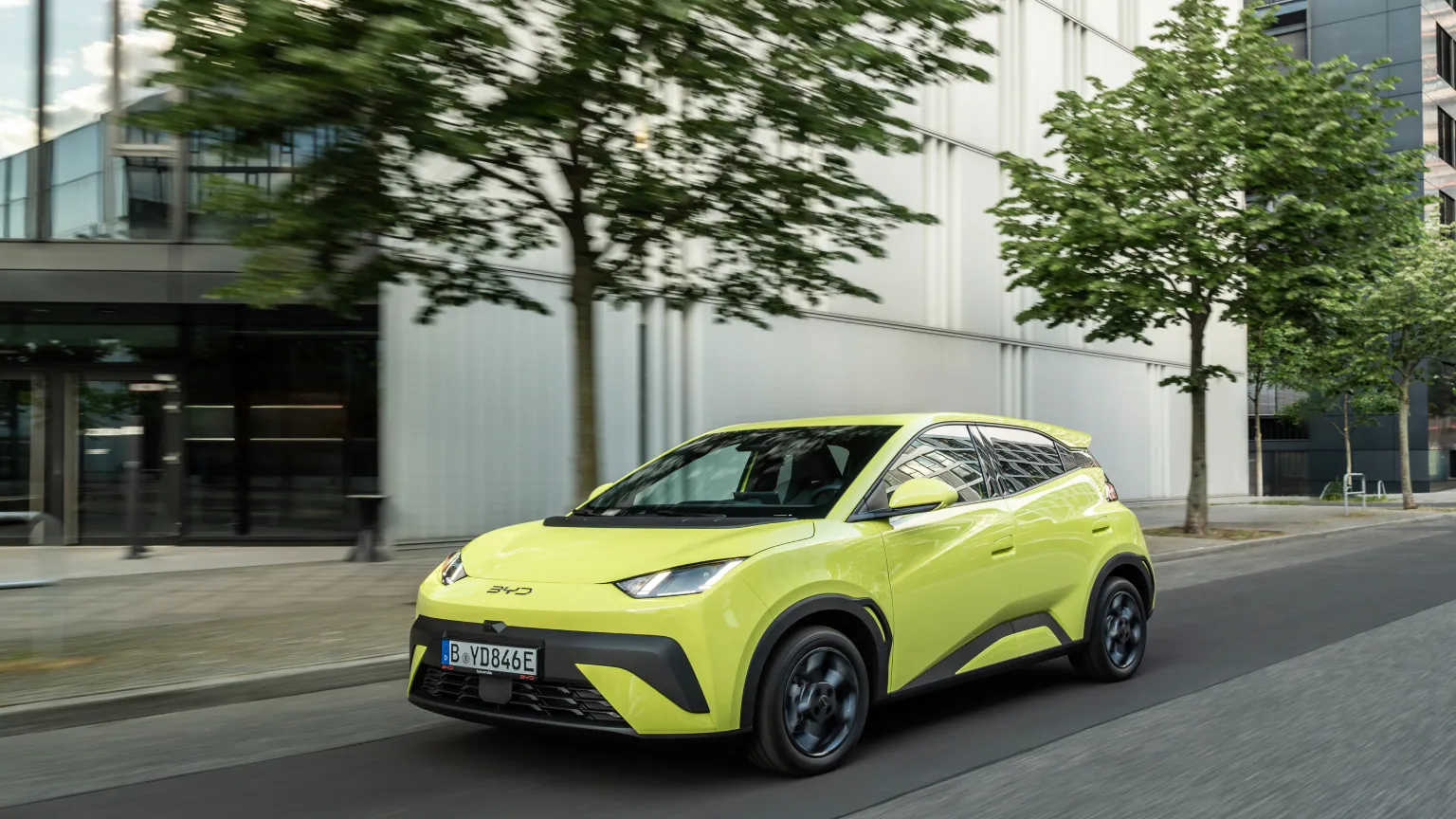
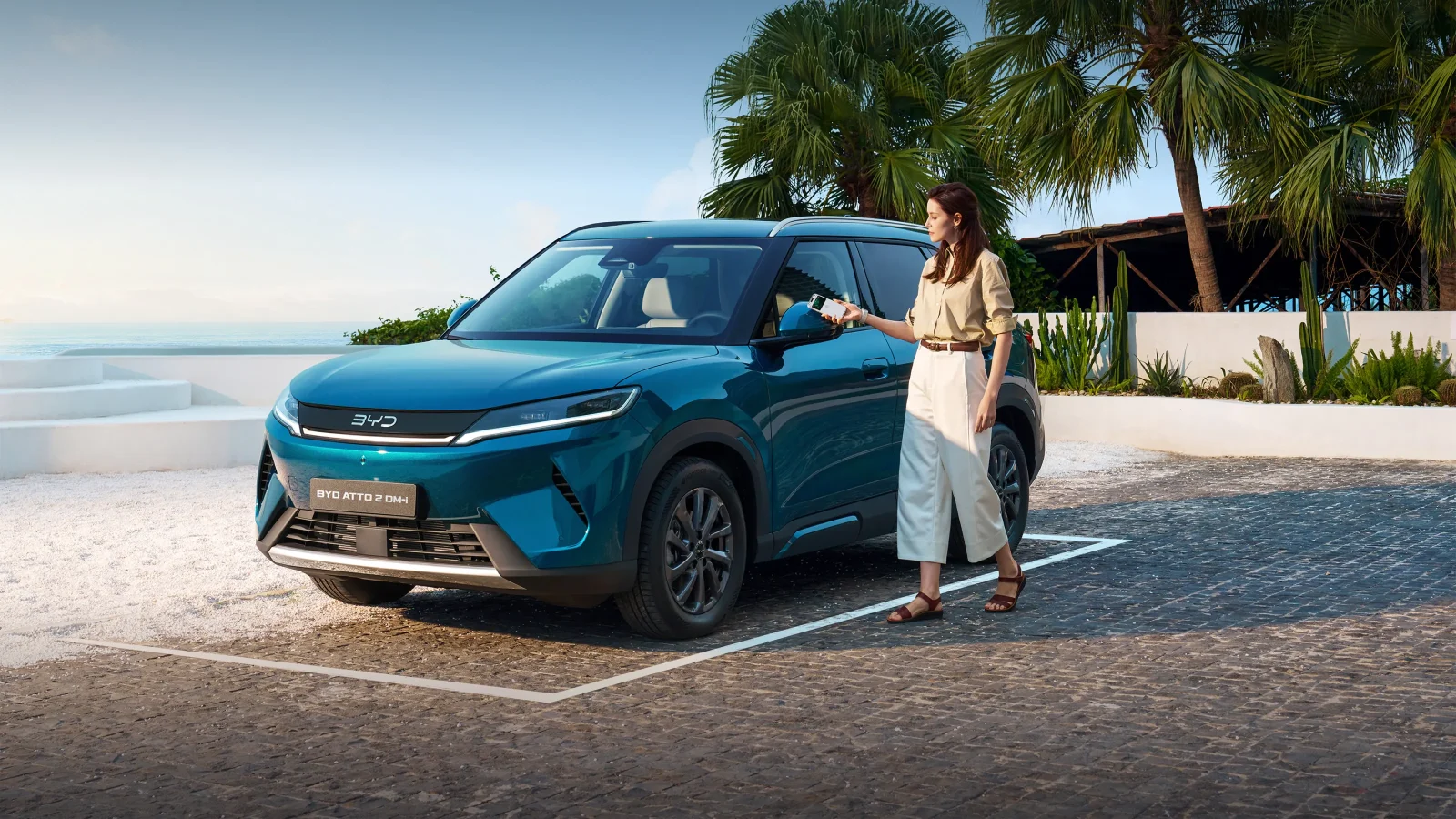
Source: BYD Germany, press releases from March 2026 and model page. BYD press photos for editorial use; BYD notes on its website that some images are generated or edited with AI.
Besides passenger cars, BYD is a major manufacturer of electric buses, which it has also been exporting for a good decade; in Europe, they have been built in Komárom, Hungary, since 2017. Then there are trucks: At IAA Transportation in Hanover in September 2026, BYD presented the ETT 44 semi truck, with up to 1,000 metric horsepower, a 651 kWh Blade Battery and a range of 600 kilometers; at a 1.5-megawatt charger, BYD says, it charges from 20% to 80% in about 20 minutes. The European lineup thus ranges from 3.5 to 44 metric tons. On top of that come forklifts, stationary energy storage systems and monorails. In 2025, BYD won an order from the Saudi utility Saudi Electricity Company for 12.5 gigawatt-hours of storage capacity. The electronics division, which accounts for about a fifth of revenue, manufactures iPads for Apple, among other contract work.
The price war at home
It was precisely at the height of its success that the foundations began to shake. China’s car market is the largest in the world, but also the most fiercely contested. Dozens of brands compete for customers, and production capacity far exceeds demand. BYD itself fueled this dynamic with aggressive price cuts, which Beijing tried to curb from 2025 under the slogan “anti-involution.” With the partial removal of the purchase tax exemption for plug-in cars at the start of 2026, domestic demand slumped further. Competitors such as Geely, Leapmotor and Xiaomi caught up; in the first half of 2026, Geely was only narrowly behind BYD in domestic sales, according to reports by CarNewsChina.
The consequences show up in the financial statements. In 2025, revenue rose by only 3.5% to 804 billion yuan and net profit fell 19% to 32.6 billion yuan, while the gross margin slipped from 19.44% to 17.74%, according to the annual report. An analysis of the annual report also shows that BYD moved from a net cash position to a net debt position. In the first quarter of 2026, profit plunged 55%. For the first half, BYD reported on Aug. 28, 2026, that revenue had fallen 7.13% to 344.8 billion yuan and that profit was down 20.54% at 12.3 billion yuan. The company cited currency losses as the main reason; in the second quarter alone, profit rose again by 30%.
Since the spring, the picture has brightened somewhat. In September, BYD sold 463,561 vehicles (production: 463,864), according to a voluntary filing with the Hong Kong Stock Exchange, more than in any other month of the year and 17% more than in the same month a year earlier. It was the fifth consecutive month of growth. That month was driven by fully electric cars, which hit a record of 273,143 units (up 33%), while plug-in hybrids declined slightly. But the figure obscures the shift: 180,700 of these cars went abroad. In the first nine months, domestic sales fell 30.22% to 1.79 million, while overseas sales rose 92.66% to 1.34 million. Overall, BYD was still 4% below the previous year at the end of September. The annual target of 5 million to 5.5 million vehicles that Reuters attributes to management is thus barely within reach anymore.
The expansion: A company on a world tour
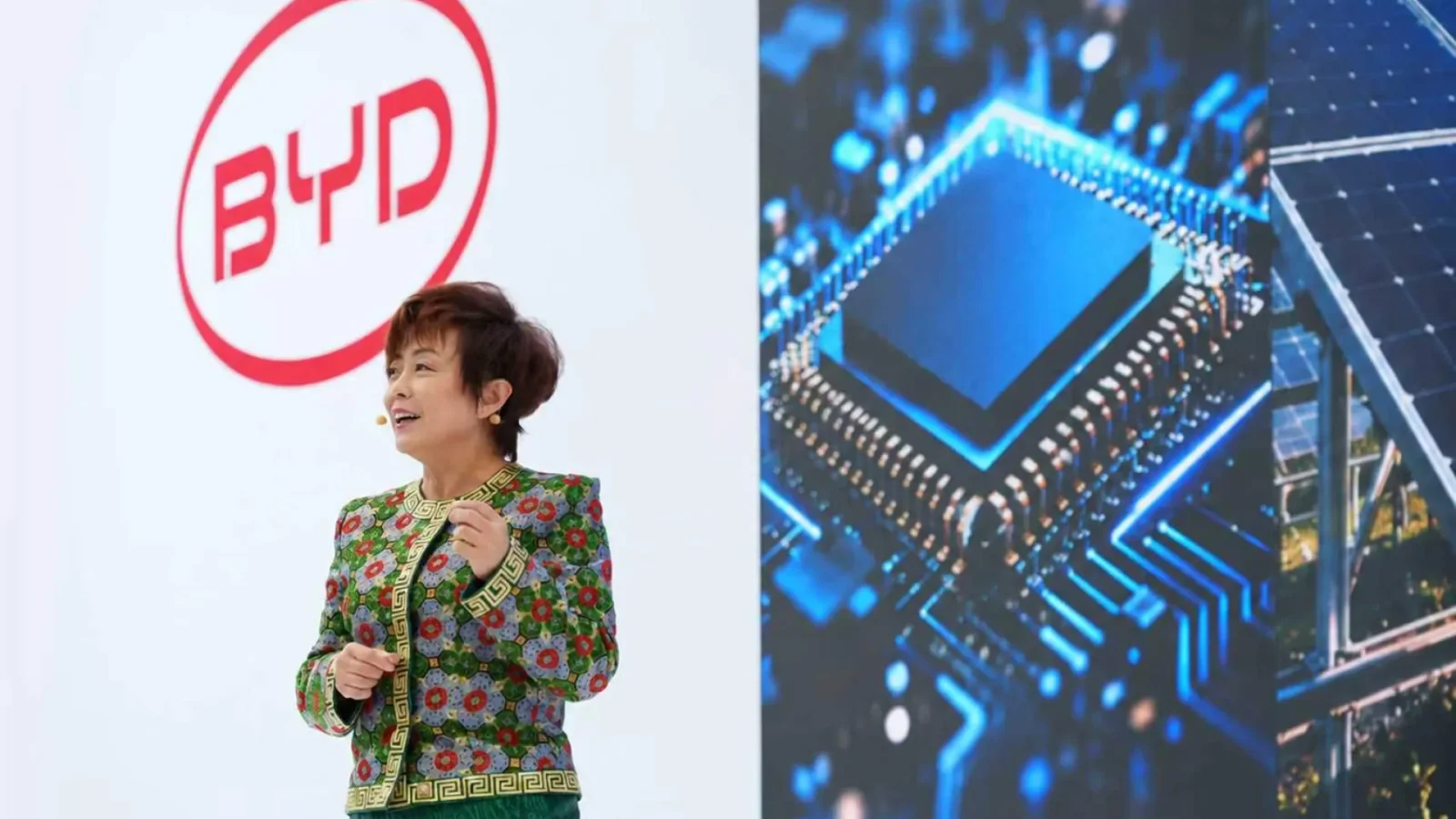
BYD prepared its move abroad early. In the late 1990s, Stella Li, now an executive vice president, opened offices in Hong Kong and the Netherlands, at the time still for the battery business. Today Li runs the business in the Americas, Europe, the Middle East and Africa; in January 2025, she became the first woman to be named “World Car Person of the Year.” BYD has exported passenger cars in significant numbers only since 2021, first to Norway, Australia and Southeast Asia. In 2023, exports totaled 242,765 vehicles; in 2025, they exceeded 1 million for the first time.
For 2026, BYD had set an overseas target of 1.3 million in January, later raising it to 1.5 million. According to a Deutsche Bank Research note following an investor briefing on Sept. 7, 2026, management is now aiming for 1.9 million to 2.0 million, and for more than 2.5 million in 2027. BYD itself did not comment on these figures to Bloomberg. In the first half of 2026, 53% of revenue came from abroad, where vehicles generally sell at considerably higher prices than in China. The overseas business is thus not just a safety valve but a profit engine: Despite lower revenue, the gross margin rose to 18.85% in the first half.
A fleet of its own on the high seas
To avoid depending on scarce freight capacity, BYD became one of the first automakers to build up its own shipping logistics. Since the “Explorer No. 1” entered service in January 2024, eight car carriers have been added, most of them named after Chinese cities where BYD has plants. The “BYD Shenzhen,” with 9,200 vehicle spaces, was considered the largest car carrier in the world when it entered service; it runs on liquefied natural gas and diesel. According to shipping media, BYD has ordered 10 more vessels with 9,200 spaces each from China Merchants, for delivery from 2027 to 2029. The order has not been officially confirmed.
Factories on four continents
In parallel, BYD is building a network of overseas plants to get around tariffs and produce closer to its customers. The results are mixed: Thailand and Brazil are up and running, while Europe is lagging behind.
| Location | Status | Annual capacity | Notes |
|---|---|---|---|
| Rayong, Thailand | since July 2024 | 150,000 | First wholly owned overseas plant; 100,000th vehicle in September 2026; also supplies Europe |
| Uzbekistan | since 2024 | n/a | Joint venture with the state-owned UzAuto |
| Camaçari, Brazil | since July 2025 | 150,000, expanding to 300,000 | Former Ford site; 100,000th vehicle in July 2026; more than 5,500 employees |
| Subang, Indonesia | opened in 2026 | 150,000 (planned) | For the domestic market and Southeast Asia |
| Szeged, Hungary | series production from Q4 2026 | 150,000 initially, up to 300,000 | First passenger car plant in the EU; starting with the Dolphin Surf; about a year behind schedule |
| Manisa, Turkey | on hold | 150,000 (planned) | Construction not started, no timetable, according to Stella Li (June 2026) |
| Komárom, Hungary | since 2017 | Buses | Electric buses for Europe; plus battery assembly in Fót and Páty |
The European part is particularly revealing. The plant in Szeged, Hungary, announced in December 2023 and tied to investments of about 4 billion euros, was originally supposed to start production at the end of 2025. As late as January 2026, BYD Germany was holding out the prospect of a production start in the first half. After trial production from February, however, Stella Li announced in June that series production would not begin until the fourth quarter of 2026. At the same time, BYD put its planned plant in Manisa, Turkey, on hold and is instead looking for a second site, possibly by taking over an existing plant in southern Europe. High energy and labor costs in Europe are seen as one reason for the more cautious pace.
In Brazil, by contrast, BYD is showing how fast things can move. On the site of a former Ford plant in Camaçari, in the state of Bahia, production began in July 2025; in July 2026, the 100,000th vehicle rolled off the line. The start was overshadowed, however. In December 2024, Brazilian labor inspectors and labor prosecutors said they had found 163 Chinese workers employed by the subcontractor Jinjiang at the plant’s construction site in “slavery-like” conditions and that passports had been withheld. Jinjiang rejected the account; BYD initially announced that it would terminate the contract. In May 2025, labor prosecutors in Bahia filed a lawsuit against BYD and two subcontractors, and in April 2026, according to media reports, the Labor Ministry added BYD to its list of employers found to have kept workers in slavery-like conditions. No final court ruling is known. In July 2026, a union also raised harassment allegations at the site.
Europe: Neck and neck with Tesla
For BYD, Europe is the most demanding and most prestigious market. The official launch came in October 2022 at the Paris Motor Show with the Han, Tang and Atto 3. The first years were sluggish: Dealer networks had to be built up and importers replaced; in Sweden, for example, BYD parted ways with its distribution partner Hedin in 2025. The tide has since turned. In the first half of 2026, BYD registered 174,144 vehicles in the EU, EFTA and Britain, slightly more than Tesla’s 170,351. Both reached a market share of 2.4%; BYD more than doubled its share within a year. From January to August, BYD registrations rose 144.1% to 234,099. Germany shows how rapid the buildup has been: According to BYD, new registrations there rose by about 708% in 2025 to 23,360, and the dealer network grew from 26 to 150 locations. The 200th dealer contract was signed in June 2026; about 350 locations are planned by year-end. In April 2026, BYD reached a market share of 1.89% with 4,709 new registrations; among plug-in hybrids, more than one in 10 new cars was a BYD.
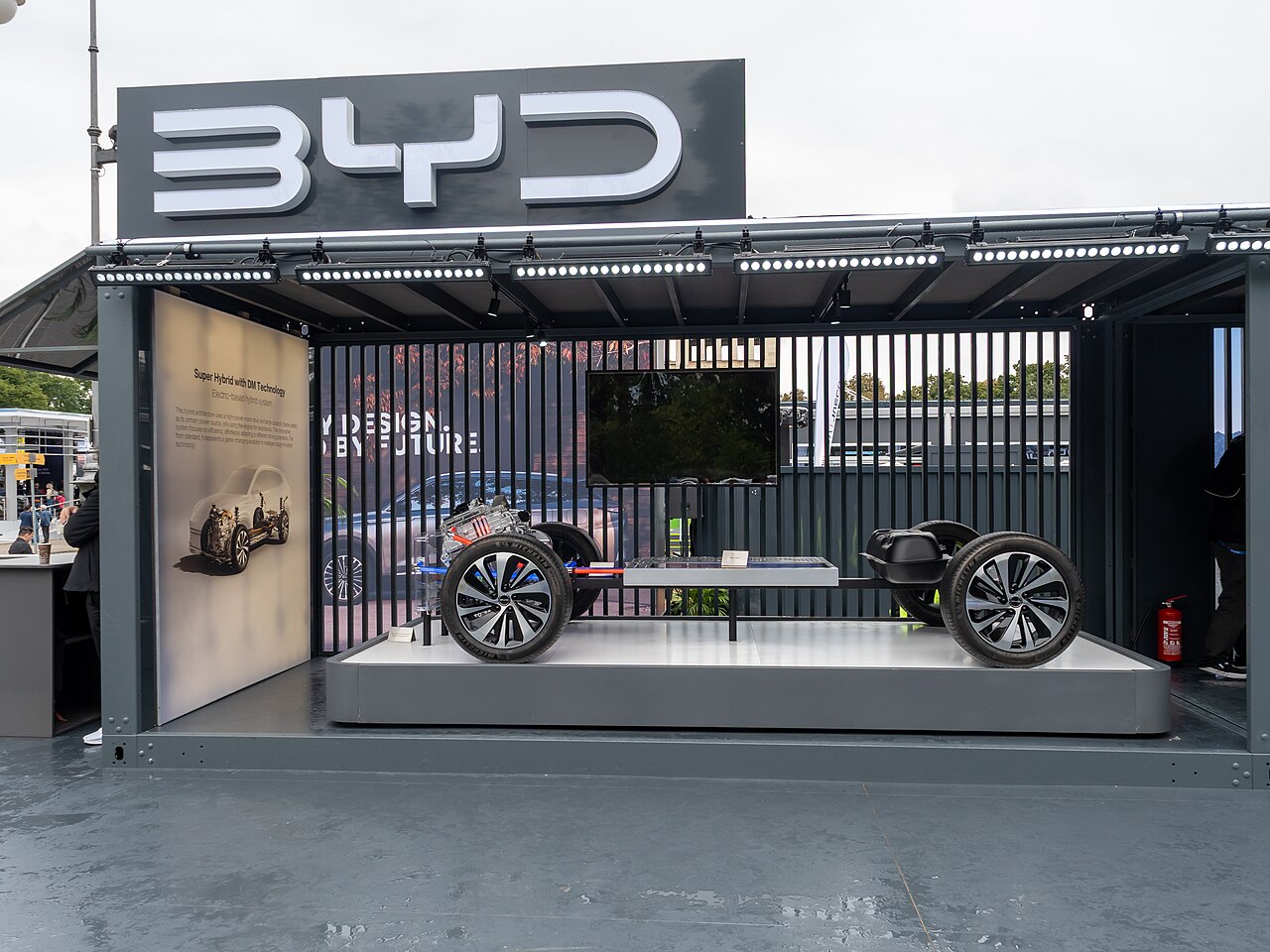
Photo gallery: BYD conquers Europe
Trade shows, dealers, soccer: how BYD is building its brand in Europe.
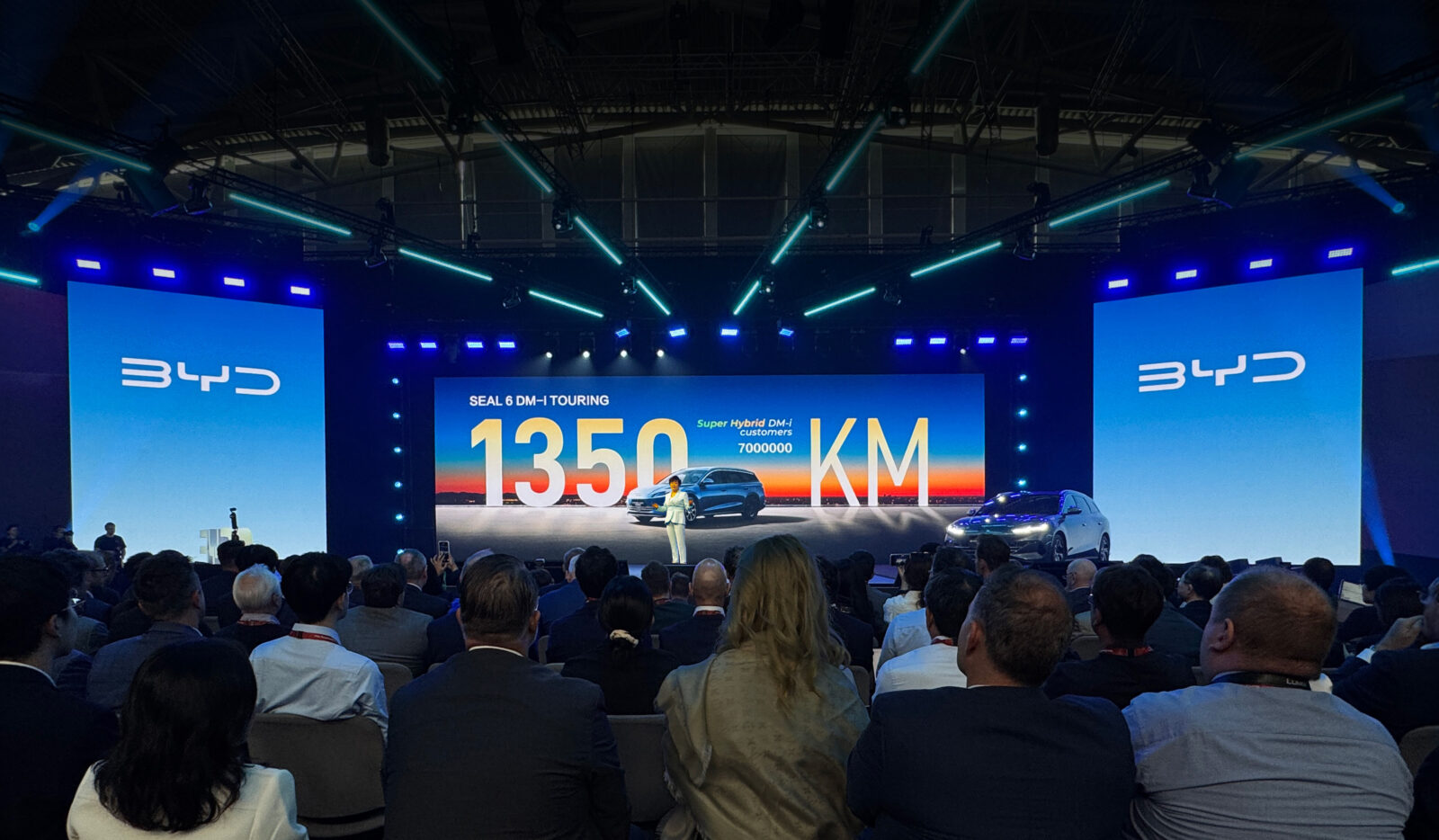
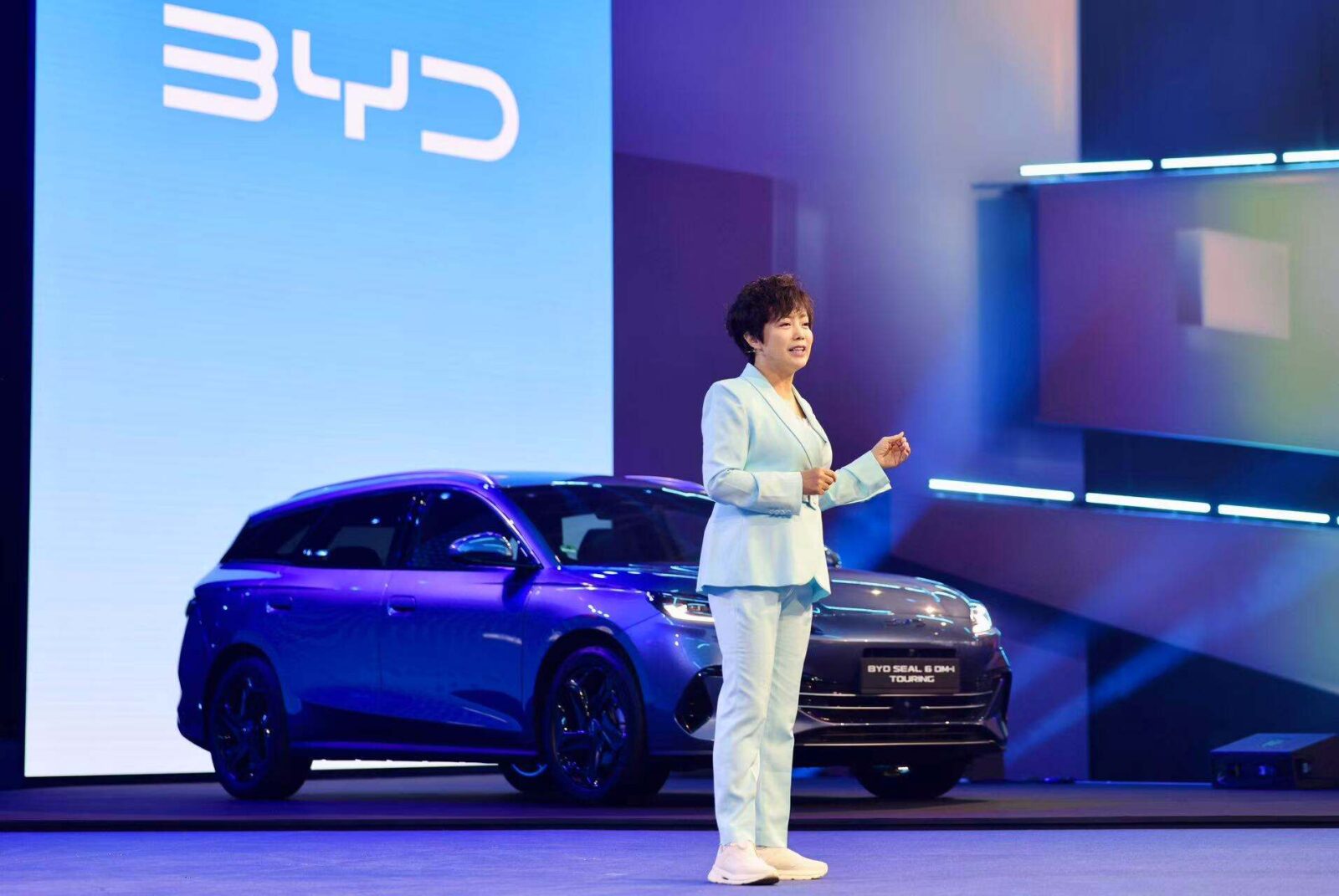
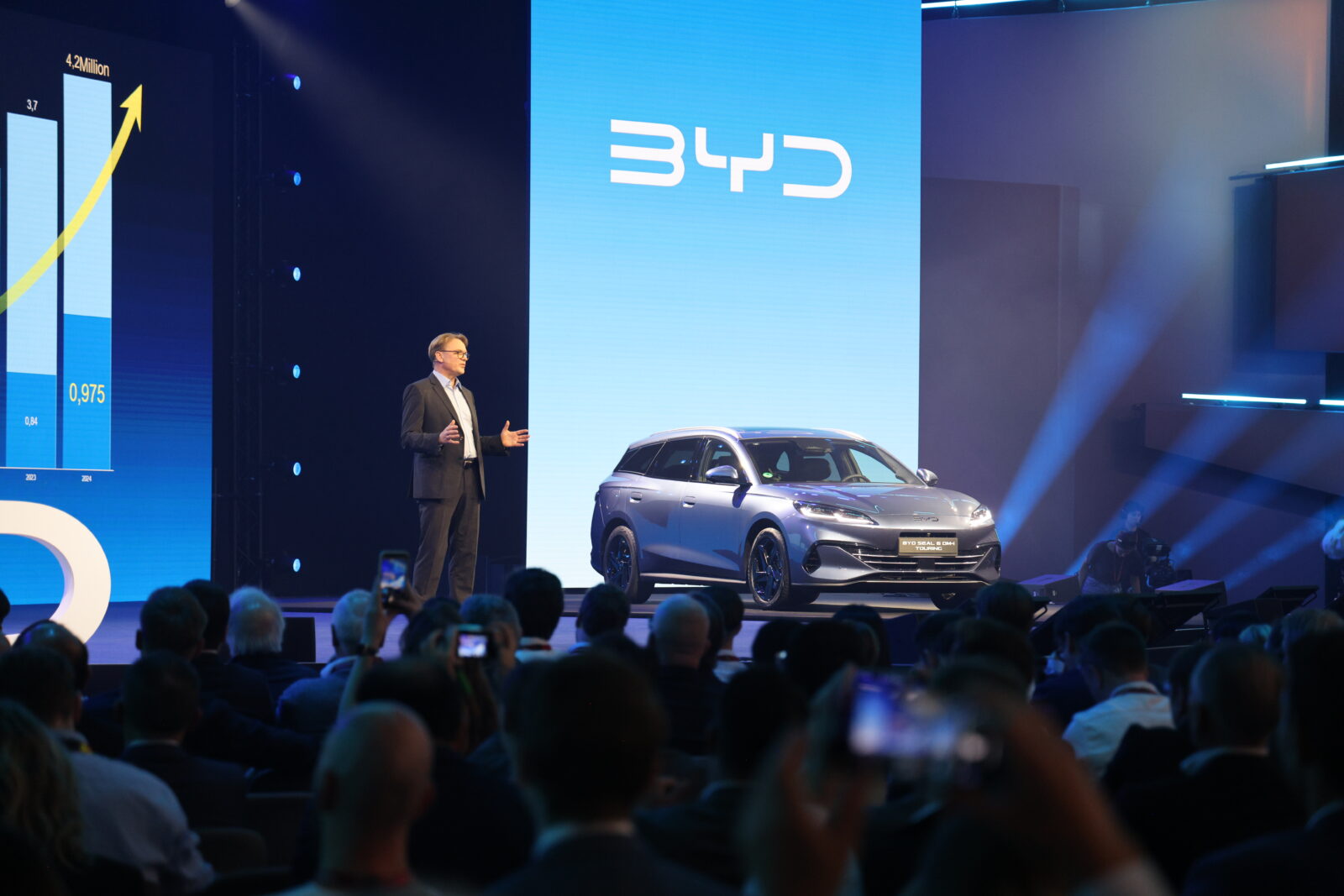
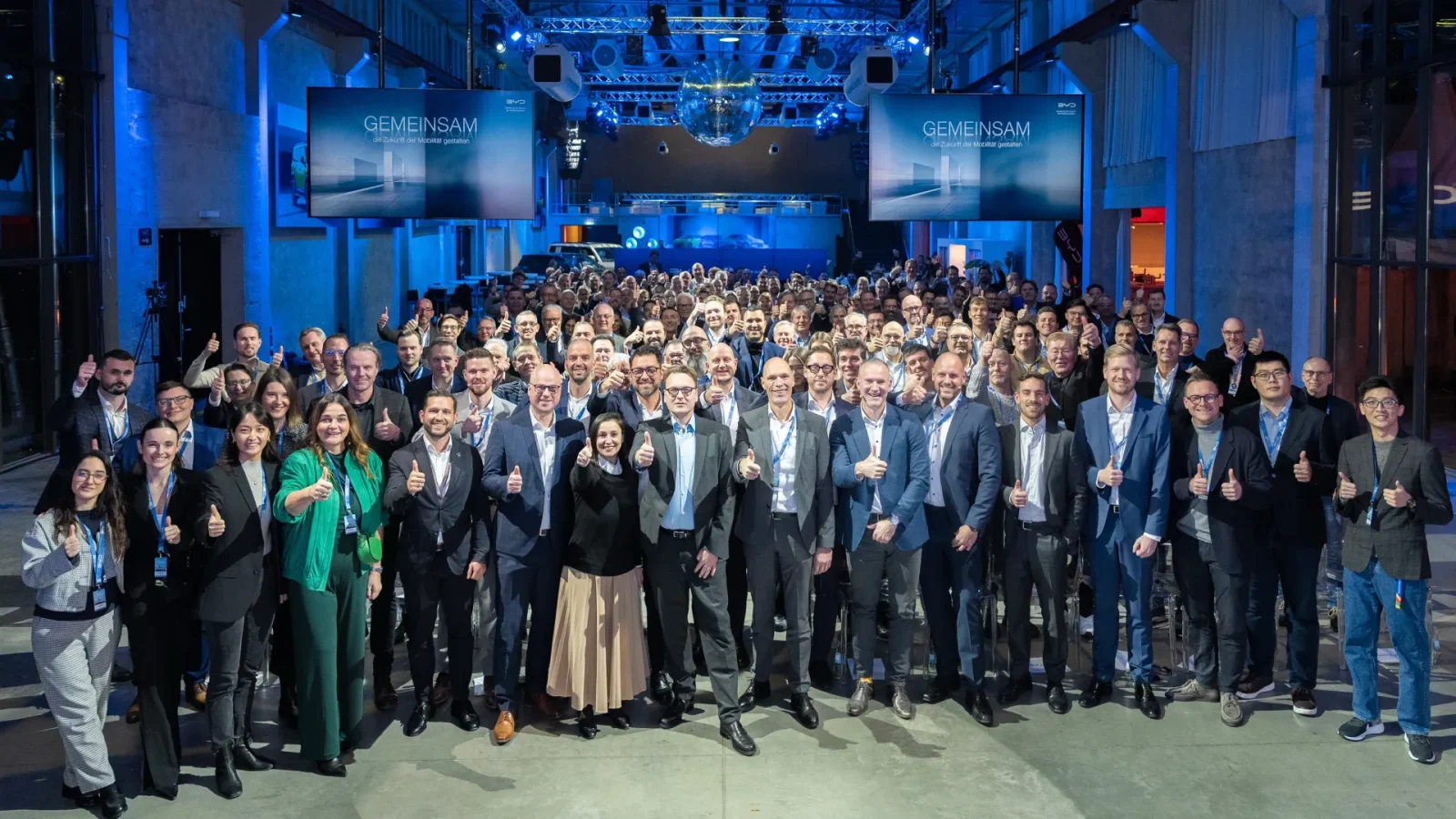
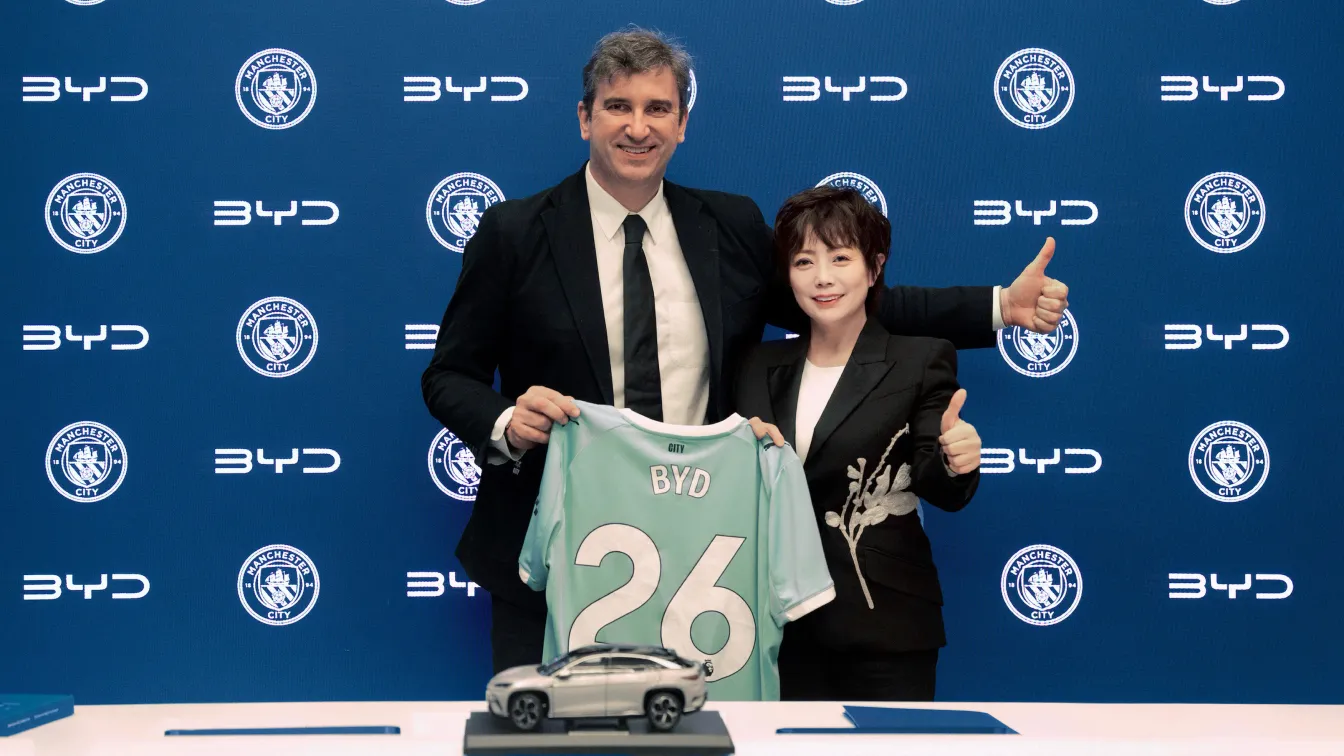
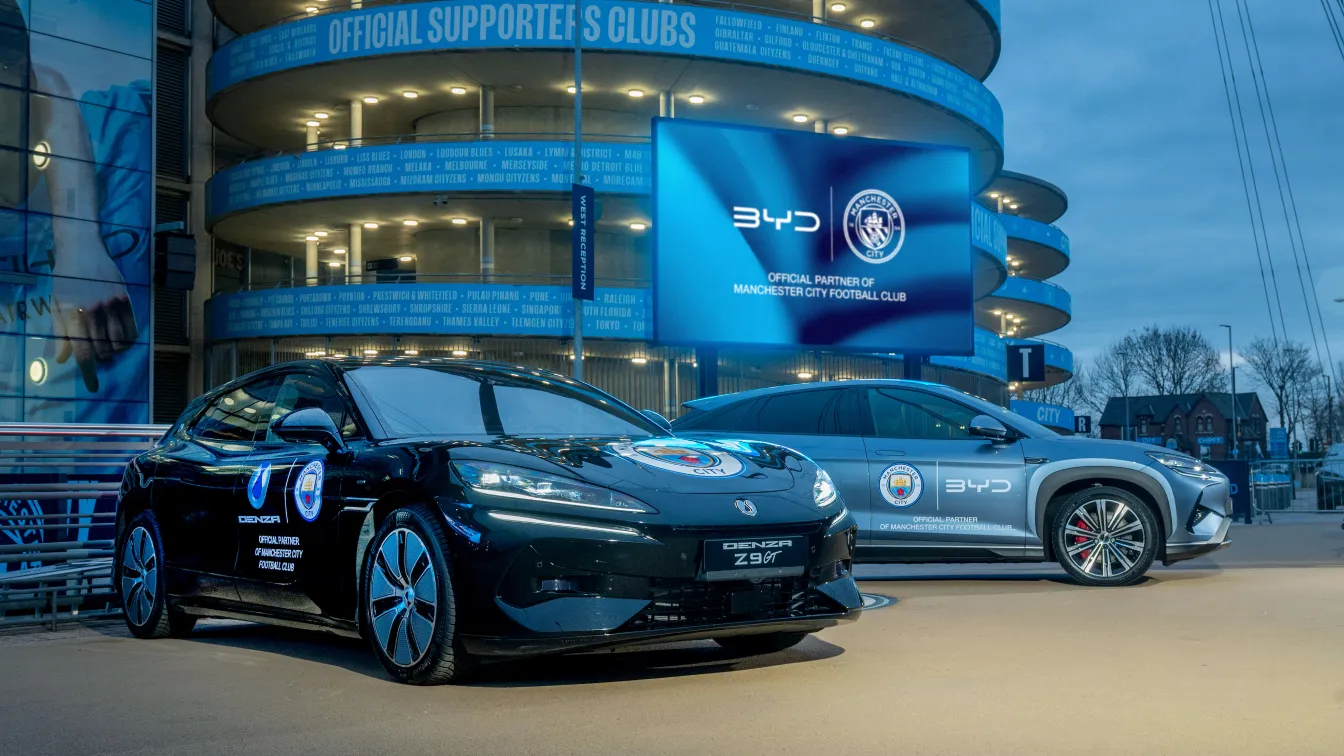
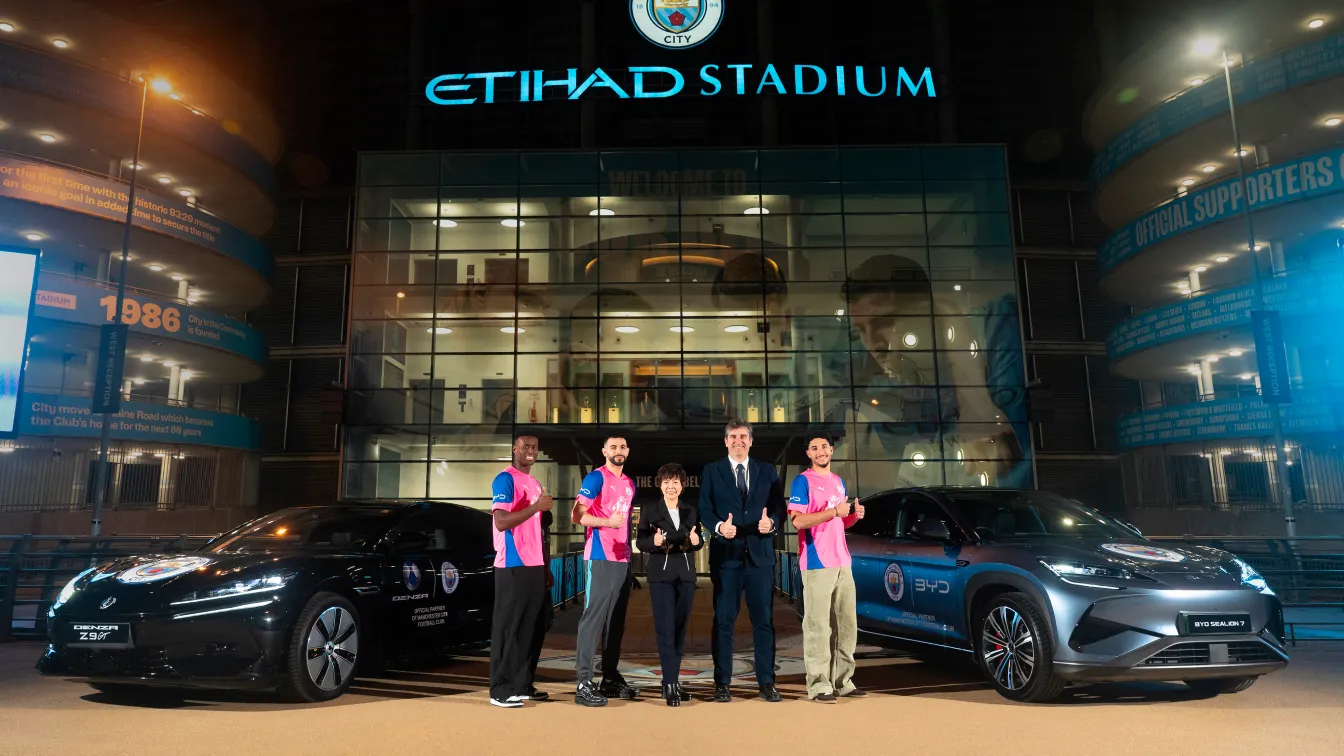
Source: BYD press releases (IAA 2025, dealer conference, Manchester City, April 2026). BYD press photos for editorial use; BYD notes on its website that some images are generated or edited with AI.
The success relies heavily on plug-in hybrids. Because the EU countervailing duties apply only to fully electric cars, BYD can compete aggressively on price with models such as the Seal U DM-i or the Dolphin G without paying the combined 27% in duties. In January 2026, Brussels and Beijing agreed on a framework under which Chinese manufacturers can offer binding minimum prices instead of paying duties. Whether BYD has entered into such a price undertaking could not be reliably determined by press time.
Switzerland: Small market, big signal
Different rules apply in Switzerland. It levies no countervailing duties on Chinese cars. Its free trade agreement with China also makes imports easier. Accordingly, the market share of Chinese makes is growing quickly. According to an analysis by auto consultant Guido Biffiger for the Swiss Sunday paper SonntagsBlick, Chinese brands reached a share of 6.5% in the first half of 2026; counting China-built models from Western brands such as the Volvo EX30, the figure was 10.3%. The most successful Chinese brand is now BYD.
BYD officially entered the Swiss market in April 2025 with an event at the Umwelt Arena exhibition center in Spreitenbach, with four models, a first showroom on Uraniastrasse in Zurich and prices starting at 42,990 Swiss francs for the Seal U DM-i. A year later, BYD Switzerland reported 555 new registrations in April 2026 (up 3,864% from the same month a year earlier) and a market share of about 3%. From January to April, the total was 1,349 vehicles, up from 87, according to the business magazine Bilanz; Tesla registered 1,245 in the same period. In the fully electric segment, BYD reached 5.5%, according to its own announcement, and the Sealion 7 is among the 10 best-selling electric cars in the country. In the spring, the network comprised 26 partner dealerships: 15 in German-speaking Switzerland, nine in French-speaking Switzerland and two in Ticino; the plan is for 50 by the end of 2026 and about 80 by 2028. According to country manager Dimitris Chanazoglou, the premium brand Denza was to follow by the end of summer 2026. The market is receptive: In August 2026, fully electric cars reached a record 30.2% share of new registrations in Switzerland and Liechtenstein.
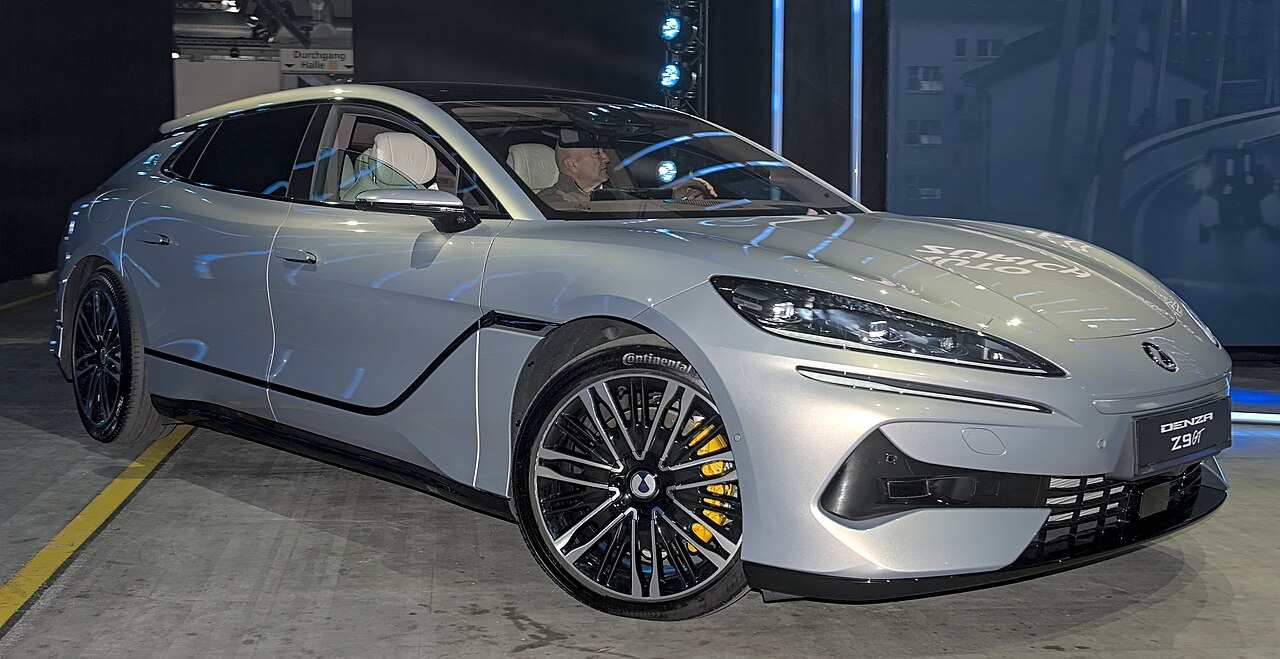
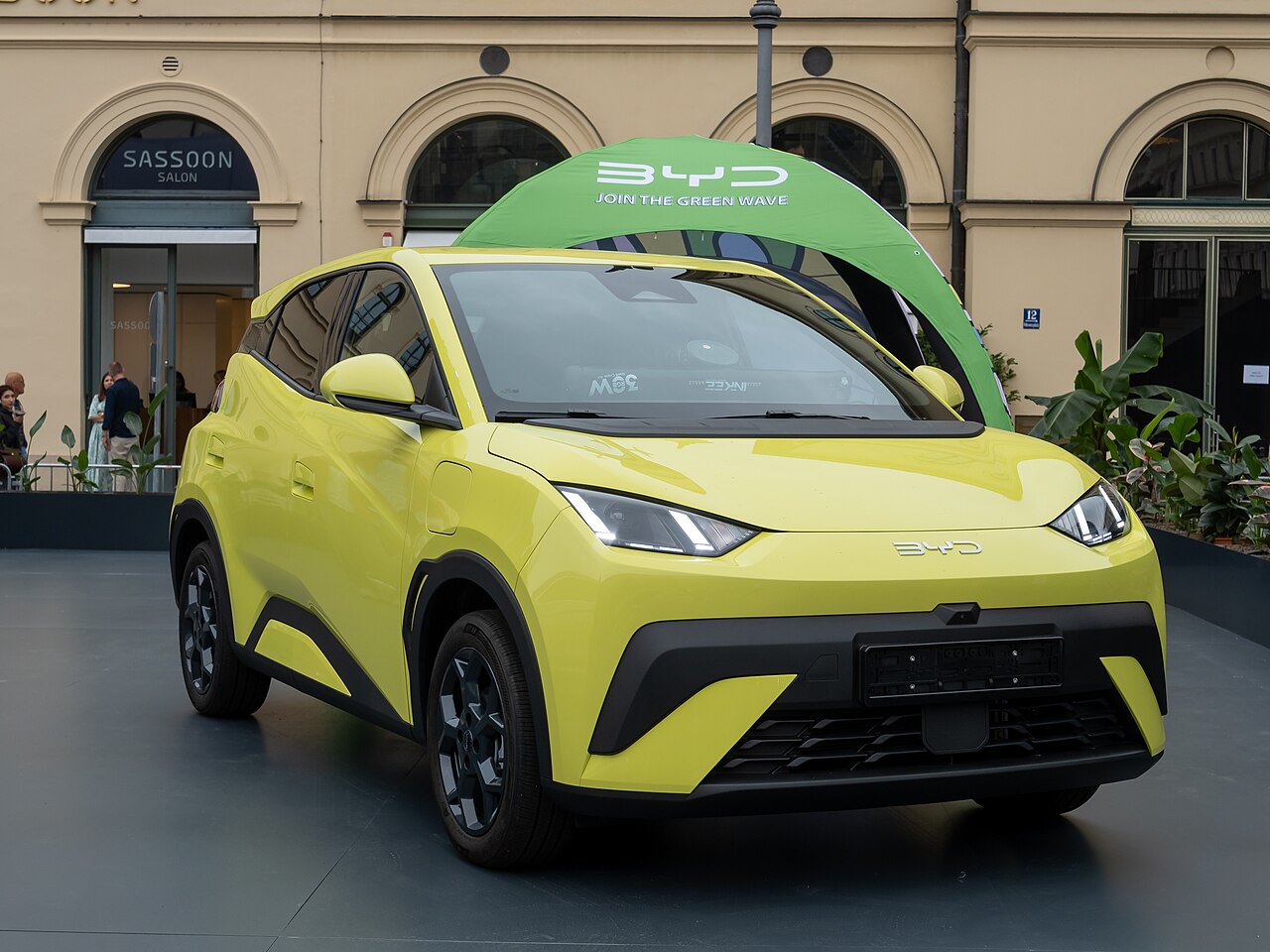
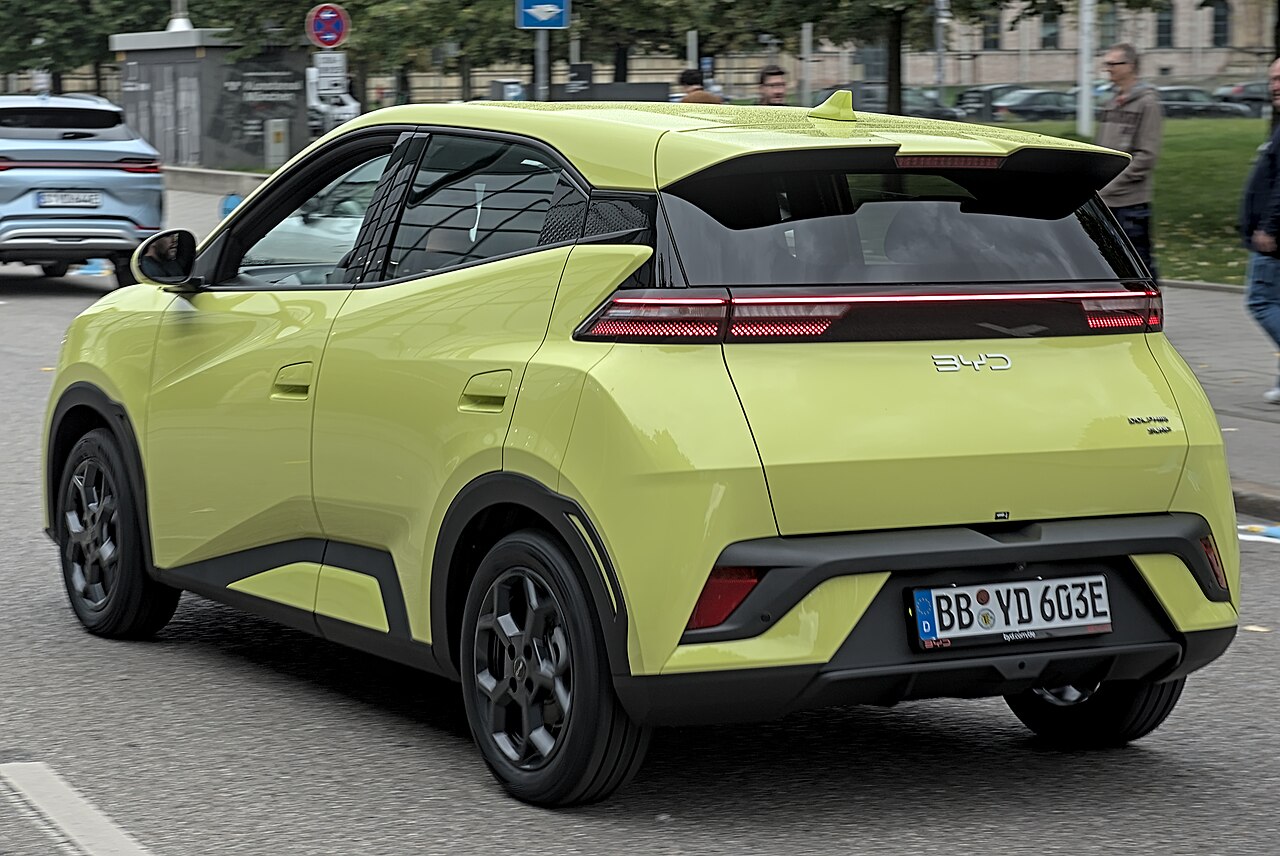
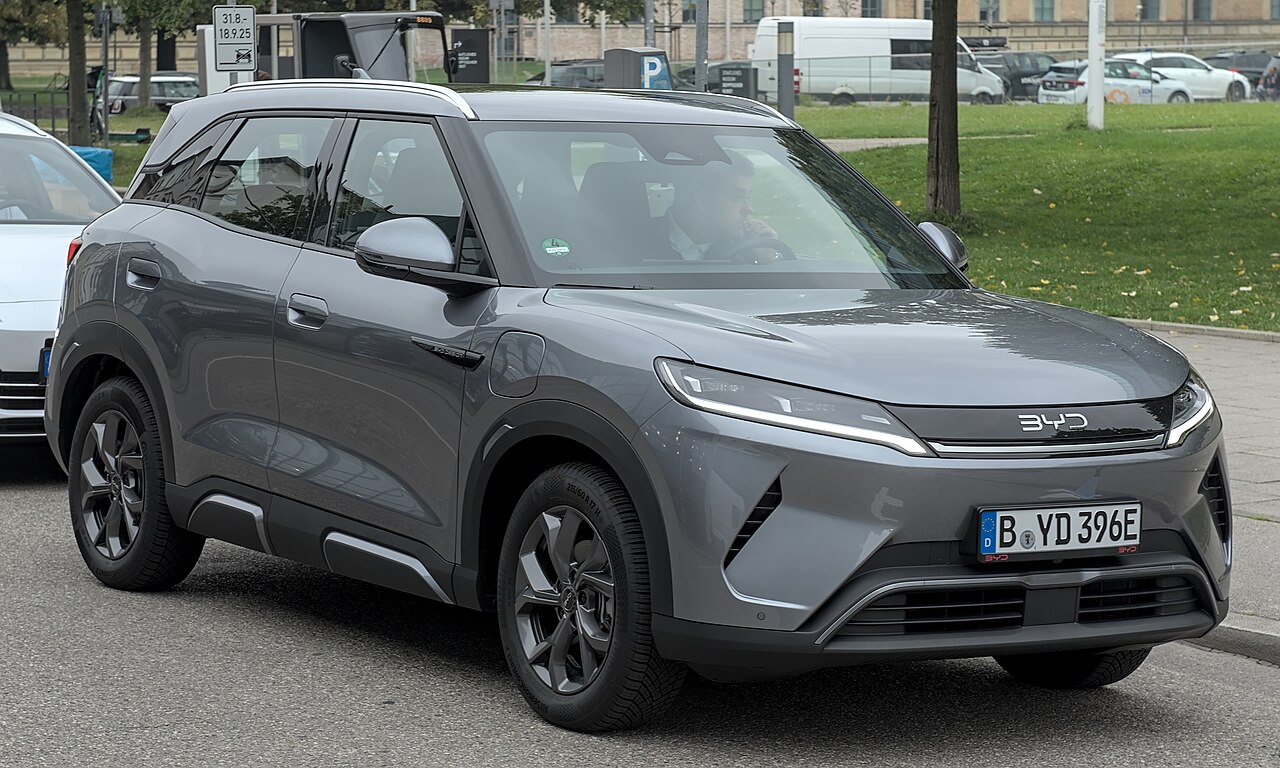
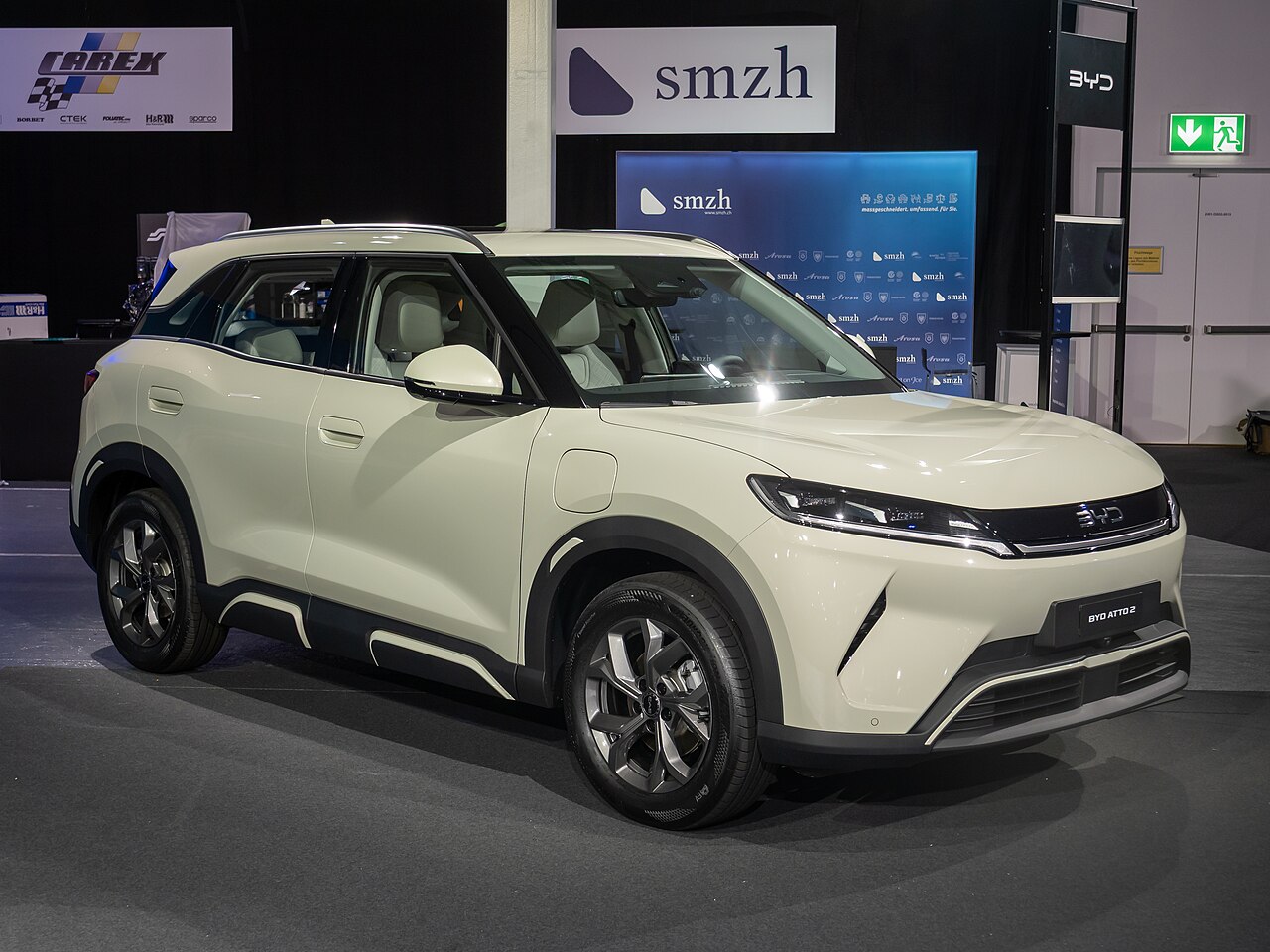
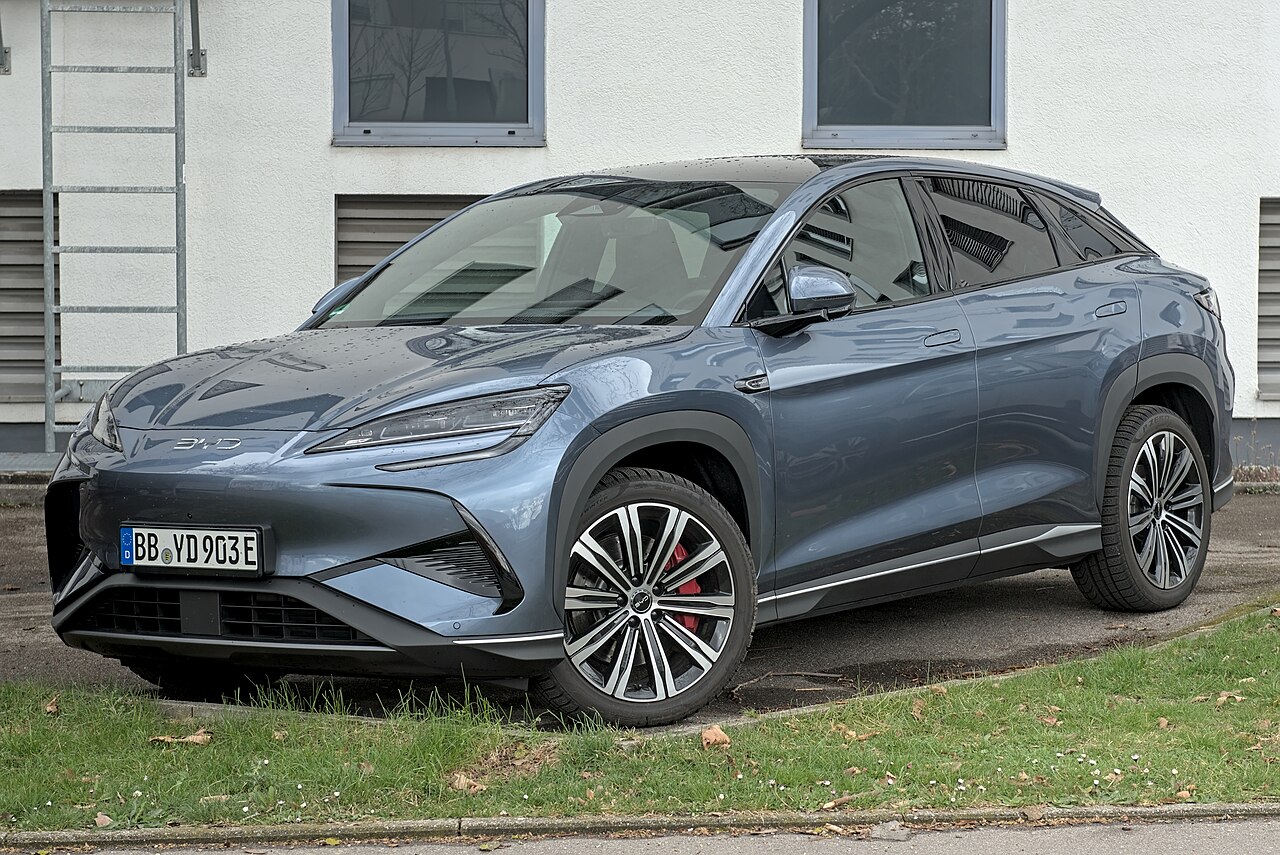
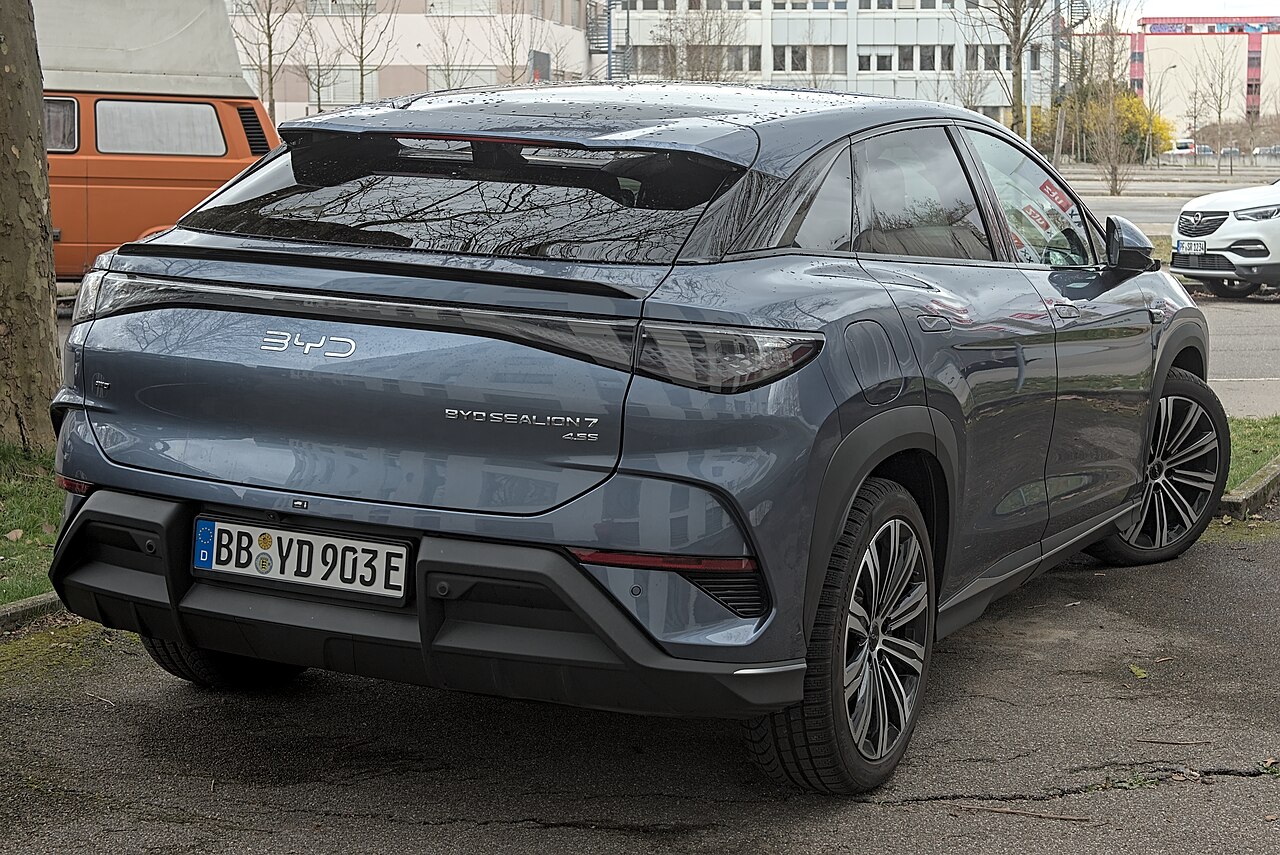
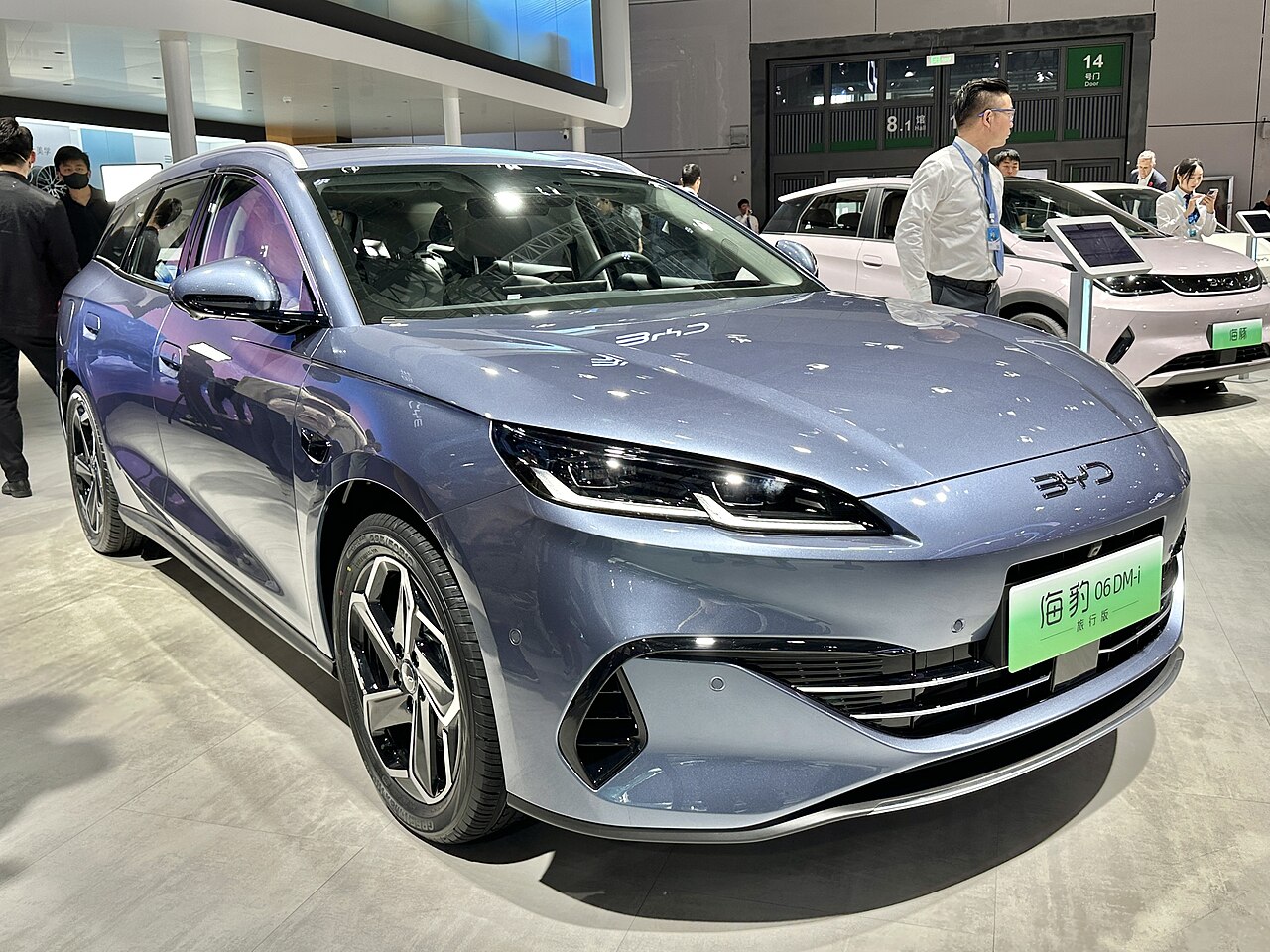
Photo gallery: The models for Europe
From small cars to station wagons: These vehicles are driving BYD’s rise in Germany, Switzerland and the rest of Europe.
America: The closed door
The only major car market BYD does not supply with passenger cars is the United States. High tariffs on Chinese electric cars and rules on connected vehicles make market entry practically impossible for now. The bus business in California was spun off under the name RIDE. Since the defense authorization act for 2024, the Pentagon has been barred from procuring BYD batteries. In June 2026, the U.S. Defense Department added BYD to its list of companies with ties to the Chinese military. BYD has always rejected such allegations. U.S. courts dismissed earlier defamation suits the company had filed against U.S. media outlets and an industry organization that had linked BYD to forced labor in supply chains; this did not confirm the substance of the allegations, but BYD was unable to prove defamation.
Timeline
- 1995On Feb. 10, Wang Chuanfu founds Shenzhen BYD Battery Company in Shenzhen: 20 employees, 2.5 million yuan in capital, nickel-cadmium batteries.
- 1996 to 1997Sanyo becomes a customer, followed by Philips, Panasonic and Motorola. BYD relies on extensive manual labor instead of expensive fully automated Japanese machinery.
- 2002IPO in Hong Kong in July. According to the specialist literature, BYD is the world’s largest maker of nickel-cadmium batteries.
- 2003Against shareholder resistance, BYD buys the small automaker Xi’an Qinchuan from the defense group Norinco, and with it a production license.
- 2005Production of the BYD F3, an inexpensive gasoline car, begins.
- 2008F3DM, one of the world’s first series-production plug-in hybrids. In September, Warren Buffett’s Berkshire Hathaway acquires a stake of about 10%.
- 2009 to 2020A long period of stagnation at about 400,000 to 500,000 cars a year. In 2019, profit falls to 1.6 billion yuan.
- 2020The Blade Battery (lithium iron phosphate) comes to market in the Han. The FinDreams component division is founded.
- 2022In March, production of purely combustion-engine cars ends. European launch at the Paris Motor Show in October.
- 2023Just over 3 million vehicles. New brands Yangwang and Fangchengbao. China’s largest car brand.
- 2024First company-owned car carrier; Rayong plant (Thailand) opens. Sales reach 4.27 million vehicles; 10 millionth plug-in car.
- 2025Sales reach 4.6 million vehicles, more than 1 million of them abroad for the first time. More fully electric cars than Tesla. Camaçari plant (Brazil) starts up; Berkshire exits completely.
- 2026Blade Battery 2.0 and Flash Charging (March). First half-year profit decline since 2021. Overseas markets account for 53% of revenue.
Arena: Opportunity or threat for Europe?
The case for BYD
Advocates of an open market argue that BYD offers exactly what Europe lacks in electric cars: affordable models, robust battery technology and speed. The lithium iron phosphate cell is considered safe and durable, and the depth of in-house production keeps costs down. For consumers in Switzerland, which does not levy the EU’s punitive tariffs, more competition means lower prices and greater choice.
Moreover, the argument goes, BYD is now investing in Europe itself: Szeged is creating jobs, and a second plant is being planned. A manufacturer that produces locally is subject to European rules, wages and standards.
The case against BYD
Critics point to state support in China, to which the EU has responded with countervailing duties. They also cite overcapacity that has triggered a ruinous price war in the home market. In this light, they argue, exports to Europe are also a safety valve for surplus production.
Then there are geopolitical concerns: Since June 2026, the U.S. Defense Department has included BYD on its list of Chinese military companies, a designation BYD rejects. Connected vehicles collect data; value creation in batteries is migrating to Asia. In Brazil, working conditions at the plant construction site made headlines.
Risks and outlook
Five factors will determine whether BYD keeps its lead. First, the home market: As long as the price war continues and state purchase incentives are being scaled back, China remains a risk to margins. Second, trade policy: The EU’s minimum-price arrangement, possible tariffs in other countries and developments in the United States can quickly change export plans. Third, currencies: More than half of revenue is now generated in foreign currencies, which weighed on profit in the first half of 2026. Fourth, execution abroad: The delays in Hungary and the halt in Turkey show that Chinese speed cannot easily be exported. Fifth, technology: The lead in batteries and charging is real, but CATL, Tesla and the European manufacturers are investing heavily.
Against this stand strengths that no competitor possesses in this combination: a cost structure based on control of almost the entire value chain, a research staff of more than 100,000 people, its own ships, its own charging infrastructure and financial reserves of 167 billion yuan as of mid-2026. In the 2026 Fortune Global 500 ranking, BYD rose to No. 91.
Commentary: Yes to competition, no to naiveté
BYD is not a phenomenon that can be explained by subsidies alone. The company owes its rise above all to an engineering culture that works faster, cheaper and more rigorously than the established competition. And it owes it to a founder who bet on the car in 2003 against the will of his shareholders and held on to research during the 2019 crisis. That a company with these qualities becomes a world leader is not a conspiracy; it is the market economy at work.
For Switzerland, this is, first of all, good news. A country with no auto industry of its own that relies on free trade benefits when choice grows and prices fall. It would be wrong to close the doors opened by the free trade agreement with China out of deference to foreign manufacturers. At the same time, it would be naive to ignore the downsides: dependence on batteries and raw materials, data flows from connected vehicles, opportunities for state influence. The right response is not EU-style punitive tariffs but clear rules, applying equally to all manufacturers, on data security, spare parts supply and supply chain transparency.
European manufacturers, for their part, should treat BYD not as a threat that can be regulated away but as a benchmark. Anyone who in 2026 still considers a nine-minute charging time impossible has not learned the lesson from Shenzhen.
Notes on the data
- BYD’s sales figures include passenger cars and commercial vehicles with electric and hybrid drive. Figures for overseas sales differ slightly depending on the definition (e.g., 1,342,960 including commercial vehicles vs. 1,337,831 passenger cars and pickups for January to September 2026).
- Overseas sales for 2024 (about 417,000) were back-calculated from the published 2025 growth rate; the prior-year figures in the regional chart are also calculated.
- The targets for 2026 and 2027 come from an analyst note, not from an official BYD announcement.
- The figures for the Blade Battery 2.0 are manufacturer data. Conflicting figures are circulating for energy density (officially 5%, up to 40% in analyses).
- No reliable primary source is available on the status of an EU price undertaking for BYD.
- The Swiss figures come from an announcement by BYD Switzerland (May 2026) and from media reports based on data from auto-schweiz, the association of Swiss car importers; the prior-year figure for Tesla is calculated.
- Images: Photos from Wikimedia Commons (author and license in the caption) and BYD press photos for editorial use. BYD points out that some images on its website are generated or edited with AI.
Sources
- BYD press releases (byd.com, BYD Germany press portal): Blade Battery 2.0 and Flash Charging (March 6, 2026), annual results for Germany (Jan. 8, 2026), Atto 3 EVO (Feb. 10, 2026), April registrations (May 5, 2026), 200th dealer contract (July 1, 2026), IAA Transportation (Sept. 16, 2026); BYD Media Hub: Fortune Global 500 (July 2026); BYD Switzerland: one year since market launch (May 2026); voluntary HKEX announcement on production and sales, September 2026
- BYD Company Ltd.: 2025 annual report (March 27, 2026), interim report for the first half of 2026 (Aug. 28, 2026), monthly sales reports; analyzed via CnEVPost, CarNewsChina, Gasgoo
- Reuters, Bloomberg, Nikkei Asia: September 2026 sales, overseas targets (Sept. 7 to Sept. 8, 2026), plants in Hungary and Turkey
- AP, Reuters/CNN, Euronews: working conditions at the Camaçari construction site (December 2024), lawsuit (May 2025), Labor Ministry register (April 2026)
- electrive.net / electrive.com: Szeged, Manisa, Swiss market figures
- ACEA, Dataforce/CAM: new registrations in Europe, 2026
- European Commission: countervailing duties (October 2024), guidance on price undertakings (Jan. 12, 2026)
- Fortune, CNBC, CnEVPost: Berkshire Hathaway’s exit (September 2025)
- Bilanz/Handelszeitung, SonntagsBlick (Guido Biffiger), auto-schweiz: Swiss market
- Wikipedia, “BYD Company” (revenue/profit time series based on annual reports, company history), accessed Oct. 3, 2026



Comments 0