Fairness initiative: The Centre challenges the yes to individual taxation
On March 8, 2026, Swiss voters said yes to individual taxation. On Nov. 29, 2026, they will vote on the opposite model: The Centre's Fairness initiative seeks to keep taxing married couples jointly at the federal level and to ban the marriage penalty. The Federal Council warns of tax chaos, and the polls contradict one another. An analysis of four decades of dispute, costs running into the billions and the question of who ultimately benefits.

On March 8, 2026, Switzerland decided how married couples will be taxed in the future: each person separately, regardless of marital status. About 54% of voters approved individual taxation. It will apply from Jan. 1, 2032, at the federal, cantonal and municipal levels. That, it seemed, ended a dispute that has preoccupied Swiss politics for more than four decades.
Nine months later, the dispute is back on the ballot. On Sunday, Nov. 29, 2026, the people and the cantons will vote on The Centre party’s Fairness initiative. Its official title is “Ja zu fairen Bundessteuern auch für Ehepaare” (yes to fair federal taxes for married couples too), with the addendum “Diskriminierung der Ehe endlich abschaffen!” (finally abolish discrimination against marriage). It demands the opposite of what was decided in March: For the direct federal tax, the incomes of married couples are to continue to be added together. At the same time, married couples must not be placed at a disadvantage compared with other taxpayers. The marriage penalty would thus be banned in the Constitution.
Finance Minister Karin Keller-Sutter considers the matter settled. On Oct. 13, 2026, she opened the campaign against the initiative on behalf of the Federal Council, Switzerland’s government. “The goal of abolishing the marriage penalty has already been achieved with the approval of individual taxation,” she said. A yes vote, she argued, would lead to two contradictory tax systems: “That would be an unfortunate, complicated scenario.” The Centre sees it differently. In March, it argues, only the individual taxation model was on the ballot, not the joint taxation of married couples. The polls contradict one another: In the survey by Leewas for the media group Tamedia and the newspaper 20 Minuten, the no side led by 51% to 38%, while the yes side was ahead with 55% in the first poll for SRG SSR, the Swiss Broadcasting Corporation, and with 57% in the YouGov poll.
| At a glance | Popular initiative “Ja zu fairen Bundessteuern auch für Ehepaare” |
|---|---|
| Vote | Sunday, Nov. 29, 2026; requires a popular majority and a majority of the cantons |
| Key provision | New Article 128 paragraph 3bis of the Federal Constitution, under which a married couple’s income is added together and the law ensures that married couples are not placed at a disadvantage compared with other taxpayers |
| Scope | Direct federal tax only; cantonal and municipal taxes are not directly affected |
| Deadline | Implementing legislation within three years, otherwise a Federal Council ordinance introducing an alternative tax calculation |
| Launched by | The Centre, supported by the Evangelical People’s Party (EVP) in collecting signatures |
| Signatures | 101,382 valid, submitted on March 27, 2024 |
| Parliament | Recommendation to reject: National Council by 102 votes to 97, Council of States by 24 to 20 (final votes on June 19, 2026) |
| Recommendation | Federal Council and Parliament: no |
What the Fairness initiative demands
The initiative writes into the Constitution that, for the direct federal tax, a married couple remains a single tax unit. The couple’s incomes are added together, and one joint tax return suffices. What would be new is the ban on disadvantaging married couples: They could not be charged more federal tax than unmarried people in the same economic circumstances. Only the marriage penalty would thus be prohibited. Married couples who currently pay less than cohabiting unmarried couples would keep their advantage, the so-called marriage bonus.
The initiative leaves it to Parliament to decide how equal treatment is to be achieved. The Federal Council’s explanatory brochure lists three models. Under full splitting, the couple’s joint income is divided by two to determine the tax rate. Under partial splitting, the divisor lies between one and two. Under the alternative tax calculation, the tax administration does the math twice: once for the married couple and once as if the two were not married. The couple is billed the lower amount.
This third model is the initiative’s contingency plan. If Parliament has not brought implementing legislation into force after three years, the Federal Council must introduce the alternative tax calculation by ordinance. According to the federal government, that would be the case by 2030 at the latest. Philipp Matthias Bregy, president of The Centre, describes the procedure as a tax return with two columns and two calculation formulas.
Four decades of the marriage penalty
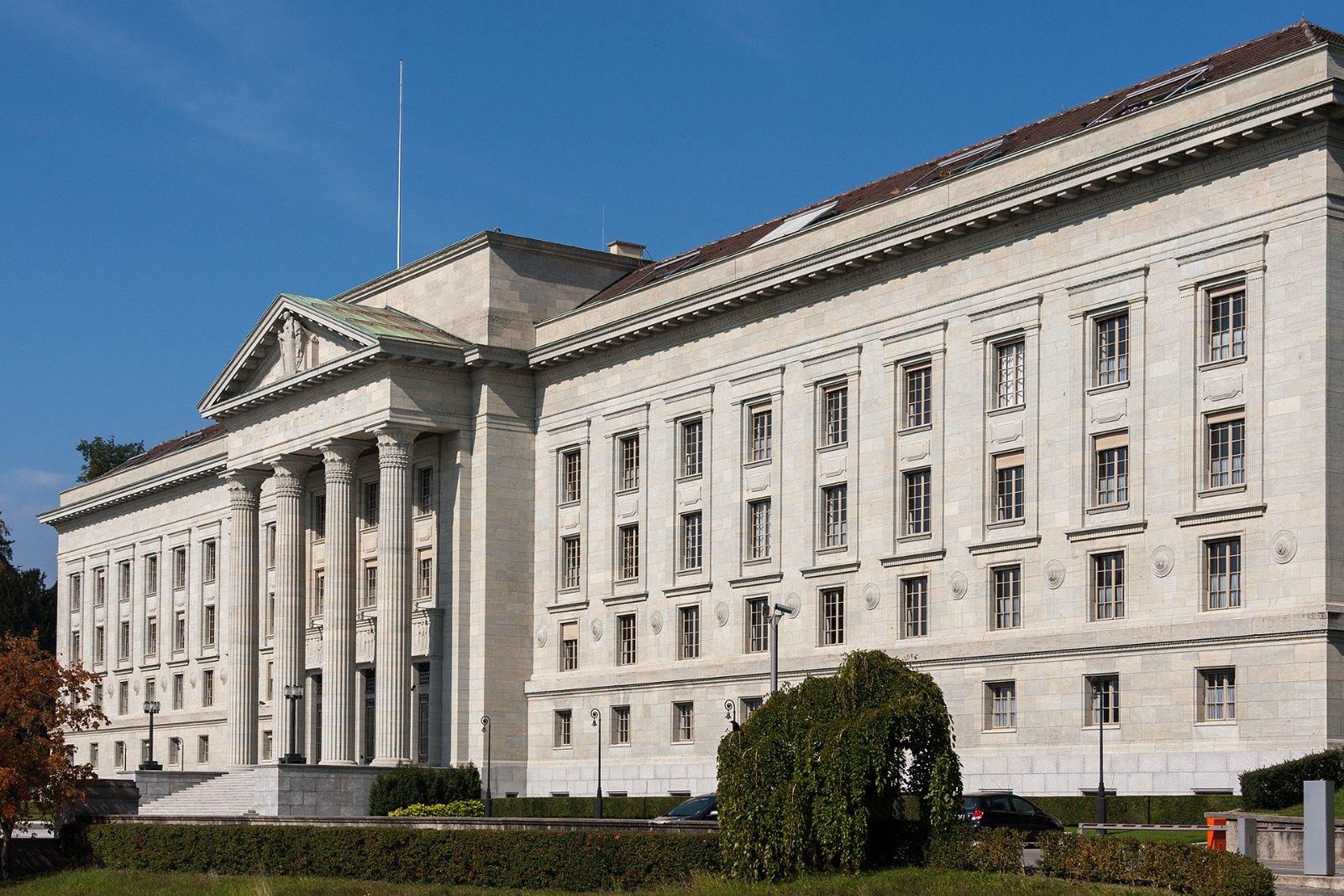
The dispute began in Lausanne in 1984. In the Hegetschweiler ruling, the Federal Supreme Court held that married couples must not be required to pay more tax than cohabiting couples with the same total income. The cantons adjusted their tax laws in the years that followed, while the federal government eased the additional burden only partially, for example in 2008 with a deduction for married couples and a higher dual-income deduction. As a result, the marriage penalty today exists mainly in the direct federal tax; at the cantonal level, according to the Federal Council, it persists only in part. The Federal Tax Administration (FTA) speaks of a marriage penalty when married couples pay at least 10% more tax than an unmarried couple in the same circumstances. Those mainly affected are couples with two incomes and retired couples.
The Centre’s first attempt, when the party was still called the Christian Democratic People’s Party (CVP), ended in one of the biggest blunders in the history of Swiss popular votes. On Feb. 28, 2016, the initiative “Für Ehe und Familie” (for marriage and family) narrowly failed to win a popular majority, with 49.2% voting yes; it had won a majority of the cantons. The official voting booklet had put the number of affected dual-income married couples at about 80,000. In 2018, the federal government corrected the number of dual-income married couples to 454,000. Together with about 250,000 retired married couples, that meant 704,000 married couples were affected. On April 10, 2019, the Federal Supreme Court overturned the vote, the first time this had ever happened to a federal ballot measure. There was no repeat vote: The sponsors withdrew their initiative in 2020, partly because it defined marriage as a union between a man and a woman.
The Federal Council, too, had already failed in 2019. Its bill “Ausgewogene Paar- und Familienbesteuerung” (balanced taxation of couples and families) essentially provided for the same alternative tax calculation that now appears in the initiative’s transitional provision. “It is a smart compromise,” Pirmin Bischof, a CVP member of the Council of States from Solothurn, said at the time. Nevertheless, the Council of States and the National Council sent the bill back to the Federal Council, the National Council by 113 votes to 80 in December 2019. The criticism: Cohabiting couples would be disadvantaged, and the high marginal tax rates for second earners would remain.
The yes vote in March
The breakthrough came from FDP.The Liberals. The party’s women’s wing launched the tax justice initiative, and the Federal Council put forward individual taxation as a counter-proposal. Parliament approved it by a narrow margin; in the Council of States, the president of the chamber had to cast the deciding vote several times. Several cantons called a referendum against the law, only the second time this had happened in the history of the federal state. On March 8, 2026, about 54% of voters said yes. A majority of the cantons voted no, but a law does not require a majority of the cantons.
Individual taxation abolishes both the marriage penalty and the marriage bonus at the federal level. Each person files a separate tax return, about 1.7 million more in total than today. The child deduction for the direct federal tax rises to 12,000 Swiss francs, half for each parent. The federal government estimates the shortfall in direct federal tax revenue at about 630 million francs a year. On Aug. 19, 2026, the Federal Council set Jan. 1, 2032, as the date on which the law takes effect, the latest possible date.
The Centre did not withdraw its initiative afterward. “It is an initiative, so the people have the last word,” Yvonne Bürgin, the leader of the party’s parliamentary group, was quoted as saying by the public broadcaster SRF the day after the vote. Whether the law adopted in March or the initiative voted on in November sets the course has been the real question of this vote ever since.
One tax system, two principles
A yes vote would put Switzerland in a situation that has never existed before. The initiative applies only at the federal level. The law on individual taxation would remain valid, as the FTA noted in a report of April 2, 2026, to the Economic Affairs and Taxation Committee of the Council of States. Without adjustments, married couples would be taxed individually by the cantons and municipalities from 2032 but jointly by the federal government. According to the report, running the two systems side by side would cause major difficulties in implementation. The Federal Council’s explanatory brochure warns that contradictory systems could emerge.
To resolve the contradiction, Parliament would have to amend the law on individual taxation. That amendment, in turn, could be challenged in a referendum. In the Council of States, Keller-Sutter spoke of a process that sounded “like a perpetual motion machine.” Opponents see The Centre’s approach as an attempt to reverse a popular decision. “One gets the impression that a vote could be erased simply because one didn’t like it,” Eva Herzog, a Social Democratic (SP) member of the Council of States from Basel, said in June. Martin Schmid, an FDP member of the Council of States from Graubünden, found the coexistence of two contradictory initiatives “intellectually interesting” but made clear: “We should, however, accept the popular decision of March. That is why I am voting no out of conviction.”
Supporters deny that the March vote settled the question. The people “said yes to abolishing the marriage penalty,” Bregy argues, “but not to a model.” Andrea Gmür-Schönenberger, a member of the Council of States for The Centre from Lucerne, put it this way: “The yes of March 8 is not a no to the Fairness initiative.” In fact, The Centre’s model was not on the ballot in March. The law on individual taxation was a counter-proposal to the FDP initiative, not to the Fairness initiative.
Who wins, who loses
According to an FTA estimate for 2022, about 690,000 married couples pay a marriage penalty on the federal tax, while about 630,000 benefit from a marriage bonus. The Federal Council acknowledges that such estimates are subject to considerable uncertainty because tax data do not show how income is divided between spouses. After the 2016 debacle, that is no minor detail.
The Federal Council states clearly in its explanatory brochure who would benefit: Compared with today, it says, the alternative tax calculation would benefit above all married couples with two higher, comparable incomes. In the least expensive version, with tax relief of about 680 million francs, married couples with very unequal incomes as well as unmarried parents would even have to pay more than today, according to the brochure. Nothing would change for unmarried people without children. But only married couples would get the more favorable of the two amounts. “Couples without a marriage certificate are left stuck with the potentially higher amount,” Franziska Ryser, a Green from St. Gallen, objected in the National Council.
A look back shows where the money could flow. Under the 2019 bill, according to the Federal Council’s supplementary dispatch, about 88% of the tax relief would have gone to taxpayers with a taxable income of 100,000 francs or more, who together accounted for just under 12% of all taxpayers. These figures concern the package at the time, which besides the alternative tax calculation also included relief for retired couples and a single-earner deduction, not the current initiative. For the initiative, the federal government has not published a comparable distributional analysis.
Supporters do the math differently. Peter Hegglin, a member of the Council of States for The Centre from Zug, presented the chamber with the example of a family with an income of 150,000 francs. If the parents split the income equally, by his calculation they would pay 227 francs in federal tax under individual taxation, 1,108 francs less than today. If only one parent earns an income, the family would pay 4,928 francs in federal tax under individual taxation, 2,500 francs more than today. “Is that fair?” Hegglin asked. The media reports do not reveal the assumptions behind the calculation, for example regarding the number of children and the deductions.
What it costs
The Fairness initiative would be more expensive than individual taxation. Depending on the model, the Federal Council expects revenue shortfalls of 680 million to 3 billion francs a year. Because the cantons receive 21.2% of the direct federal tax, they would bear about one-fifth of that, 140 million to 640 million francs. The alternative tax calculation would be the least expensive model, full splitting the most expensive. According to the Swiss news agency SDA, Markus Ritter, a National Council member for The Centre, called the estimates pure fantasy during the debate, as long as Parliament had not worked out tax schedules and models together with the cantons.
The costs come at a time when the federal government is looking for money. On the same day, Switzerland votes on a higher value-added tax (VAT) to finance the 13th pension payment of the AHV, Switzerland’s state old-age pension, and Parliament is debating a further increase for the army. The Federal Council’s dispatch also points to an effect that extends beyond the federal budget: According to empirical studies, it notes, second earners respond more strongly to taxation than primary earners. Under joint taxation, the second income is added to the first and is therefore taxed at the couple’s higher marginal tax rate. As a result, the Federal Council writes, equality between women and men is promoted to a lesser extent.
The camps
The initiative is backed by The Centre and the Swiss People’s Party (SVP), whose parliamentary groups voted yes unanimously. The Centre launched its campaign at its delegates’ assembly in Granges-Paccot on Sept. 5, 2026. “The penalization of marriage must come to an end,” Bregy said. The initiative committee points to the realities of everyday life: Paid work, child care and caring for relatives are divided differently from one marriage to the next, it argues. Retired couples in particular, the committee says, can no longer change the division of labor of earlier decades. In the explanatory brochure, the committee sums up its case in a single sentence: Fairness, it says, means the same tax burden for the same economic situation.
The Federal Council and the majority in Parliament are against it. The FDP, the Green Liberals (GLP), the SP and the Greens voted no unanimously in Parliament. The industry association Swissmem also recommends a no vote. It warns of a two-track tax system that would mean considerable extra work and fears that the contribution of individual taxation to easing the shortage of skilled workers would be lost. Andrea Caroni, an FDP member of the Council of States from Appenzell Ausserrhoden, warned that a yes vote would create “an impossible situation.”
The votes in Parliament were unusually close. The National Council’s Economic Affairs and Taxation Committee recommended rejecting the initiative by 13 votes to 12, its Council of States counterpart by 7 to 6. In the final votes on June 19, 2026, the National Council adopted the recommendation to reject by 102 votes to 97, the Council of States by 24 to 20. The camps are almost the same as in 2016: At that time, the CVP, the SVP, the EVP and the Federal Democratic Union (EDU) supported the initiative, while the FDP, the SP, the Greens, the GLP and the Conservative Democratic Party (BDP) rejected it.
Arena: Joint taxation for married couples?
For: Yes to the initiative
- The marriage penalty in the federal tax disappears, more than four decades after the Federal Supreme Court’s ruling.
- A married couple remains an economic unit; one joint tax return suffices.
- The state does not impose a way of life on families; single-income families are taken into account as well.
- Retired couples can no longer change the division of labor of earlier decades and remain jointly taxed.
- The Centre’s model was not on the ballot in March; the people should be able to decide on it.
Against: No to the initiative
- The people decided in March: The marriage penalty will disappear with individual taxation from 2032.
- Two systems loom: joint taxation at the federal level, individual taxation in the cantons and municipalities.
- The penalty goes, the bonus stays: Unmarried couples are put at a disadvantage.
- Revenue shortfalls of 680 million to 3 billion francs a year, one-fifth of it borne by the cantons.
- Those who would benefit most are married couples with two high incomes.
- Weaker incentives to work for second earners, mostly women.
The polls: Contradictory signals
The three polls do not even agree on which side is ahead. In the first survey by Leewas for Tamedia and 20 Minuten, conducted on Oct. 7 and 8, 2026, the initiative trailed by 38% to 51%. YouGov, by contrast, found 57% in favor and 29% against in a survey from Oct. 7 to Oct. 19, 2026, and the research institute gfs.bern, in its first trend survey for SRG SSR, conducted from Oct. 5 to Oct. 18, 2026, found 55% in favor, 34% against and 11% undecided. None of the sources offers an explanation for the discrepancy. The institute headlines its findings “Narrow lead for yes” and says the lead is “not yet firmly established”: Only 35% are definitely in favor, 20% definitely against. Approval is highest among supporters of The Centre, at 71%, and of the SVP, at 64%; among supporters of the SP and the Greens, it stands at 40% each. Married people and those in registered partnerships back the initiative by 65%, single people by 41%. “Being personally affected plays a major role,” Corina Schena of gfs.bern told SRF. Nothing has been decided yet: Popular initiatives often lose support during the campaign. The initiative also needs both a popular majority and a majority of the cantons. The two can diverge: In 2016, the CVP initiative won a majority of the cantons but missed the popular majority. In March 2026, a majority of the cantons rejected individual taxation.
| Poll | Survey period | Yes | No | Undecided |
|---|---|---|---|---|
| gfs.bern for SRG SSR | Oct. 5 to Oct. 18, 2026, 14,874 respondents | 55 | 34 | 11 |
| YouGov Switzerland | Oct. 7 to Oct. 19, 2026, 2,949 respondents | 57 | 29 | n/a |
| Leewas for Tamedia and 20 Minuten | Oct. 7 and 8, 2026, 11,239 respondents | 38 | 51 | n/a |
What a yes and a no would mean
| If yes | If no | |
|---|---|---|
| Constitution | Joint taxation and a ban on the marriage penalty at the federal level written into the Constitution | No change |
| Implementation | Parliament chooses a model within three years; otherwise the Federal Council introduces the alternative tax calculation by 2030 at the latest | Individual taxation from Jan. 1, 2032, at the federal, cantonal and municipal levels |
| Individual taxation | The law remains valid for the time being but would have to be adjusted at the federal level; a new referendum would be possible | Implemented as decided |
| Married couples | Marriage penalty banned, marriage bonus retained | Marriage penalty and marriage bonus abolished in the federal tax |
| Direct federal tax | 680 million to 3 billion francs less a year, about one-fifth of it borne by the cantons | About 630 million francs less a year |
| Tax return | Married couples continue to file a joint return | Each person files a separate return |
Timeline
Commentary: A legitimate concern, the wrong tool
The Centre is right about one thing: The federal marriage penalty is a failure to act that has lasted four decades. For decades, the Federal Council and Parliament did only a half-hearted job of correcting the fact that hundreds of thousands of married couples pay more federal tax than cohabiting couples in the same circumstances. It is understandable that a party whose initiative narrowly failed in 2016 after the federal government supplied incorrect figures no longer trusts the political process.
Nevertheless, the Fairness initiative is the wrong way to go about it. It corrects one form of unequal treatment by creating a new one: The penalty disappears, the bonus remains. Couples without a marriage certificate may well end up paying more than married couples with the same income, and married couples with two high salaries gain the most. That is not fairness; it is a privilege. On top of that come revenue losses of up to 3 billion francs a year, at the very moment when the federal government is looking for new revenue for the AHV and the army.
The timing weighs even more heavily. Nine months after a clear popular decision, the opposite model is to be written into the Constitution. Formally, that is legitimate; an initiative, too, expresses the will of the people. In practice, it threatens to produce a tax system built on two principles, followed by legislative revisions and further referendums. Anyone who wanted to abolish the marriage penalty did so on March 8, 2026. The legitimate concerns of single-income families and retired couples belong in the cantons’ implementation of individual taxation, not in the Federal Constitution.
All figures as of Oct. 30, 2026. The figures on the number of couples affected and on tax revenue losses are estimates by the federal administration and are subject to considerable uncertainty. The second SRG SSR poll will be published in November, and this article will be updated afterward. Quotes originally given in another language were translated by the editors. Sources are cited in their original language.
Related coverage: 13th AHV pension payment: The people ordered it, now they are asked to pay · War Materiel Act: How much neutrality can the arms industry take? · Fireworks initiative: Why Switzerland is fighting over its bang
Sources
- Federal Council: voting page “Ehepaarbesteuerung” with the explanatory brochure (as of Oct. 12, 2026)
- Swissvotes: text put to the vote, federal decree of June 19, 2026
- Swissvotes: Federal Council dispatch (March 7, 2025)
- Federal Tax Administration: Gemeinsame Besteuerung
- National Council: final vote (June 19, 2026)
- Council of States: final vote (June 19, 2026)
- Parliament/SDA: Nationalrat empfiehlt Heiratsstrafen-Initiative zur Ablehnung (Sept. 17, 2025)
- Economic Affairs and Taxation Committee of the Council of States (WAK-S): press release (March 24, 2026)
- Plattform J: Hauchdünne Entscheidung im Ständerat (June 4, 2026)
- SRF/SDA: Heiratsstrafe zurück im Rat (June 4, 2026)
- SRF: interview with Philipp Matthias Bregy (June 5, 2026)
- SRF: debate in the National Council (Sept. 15, 2025)
- SRF/SDA: Bundesrat eröffnet Nein-Kampagne (Oct. 13, 2026)
- cash.ch/AWP: Keller-Sutter warnt vor Steuerchaos (Oct. 13, 2026)
- blue News: Marriage penalty back to the polls (Oct. 12, 2026)
- nume.ch: Drei Steuererklärungen für Ehepaare ab 2032? (Aug. 21, 2026)
- cash.ch/SDA: delegates’ assembly of The Centre (Sept. 6, 2026)
- Swissmem: voting recommendations on the federal votes (Sept. 8, 2026)
- cash.ch/AWP: first Tamedia poll on the Nov. 29, 2026, vote (Oct. 14, 2026)
- YouGov Switzerland: opinion barometer on the Nov. 29, 2026, votes (Oct. 20, 2026)
- gfs.bern: SRG SSR trend survey, first wave, on the Nov. 29, 2026, vote (Oct. 23, 2026)
- SRF: Erste SRG-Umfrage zur Initiative gegen die Heiratsstrafe (Oct. 23, 2026)
- Südostschweiz/SDA: opponents launch their campaign (Oct. 19, 2026)
- SRF: how Switzerland voted on March 8, 2026
- SRF: Wie reagiert die Mitte? (March 9, 2026)
- blue News/SDA: Individualbesteuerung kommt erst 2032 (Aug. 19, 2026)
- Federal Supreme Court: BGE 110 Ia 7, Hegetschweiler ruling (April 13, 1984)
- Année Politique Suisse: dossier “Abschaffung der Heiratsstrafe”
- SRF: Abstimmung über Heiratsstrafe ist ungültig (April 10, 2019)
- SRF: Die CVP hofft auf eine Abkürzung (Sept. 15, 2019)
- Blick: Pläne für Abschaffung der Heiratsstrafe gescheitert (Dec. 18, 2019)
- Federal Council: supplementary dispatch “Ausgewogene Paar- und Familienbesteuerung” (2019)
- SRF: Mitte lanciert zwei Initiativen (Oct. 18, 2022)
- National Council: final vote on individual taxation (June 20, 2025)
- Parliament/SDA: Council of States on the marriage penalty (June 4, 2026)
- moneycab/SDA: Initiative hat schweren Stand (Sept. 16, 2025)
- Federal Council: Bundesrat lehnt Volksinitiative «Ja zu fairen Bundessteuern auch für Ehepaare» ab (June 26, 2024)



Comments 0