Diesel at 2.42 francs: What a fuel tax cut would cost and what it would achieve
Diesel costs nearly as much as it ever has, the neighbors are cutting taxes, Bern is saying no. What goes into the price per liter, what a fuel tax cut would cost and what it would achieve.
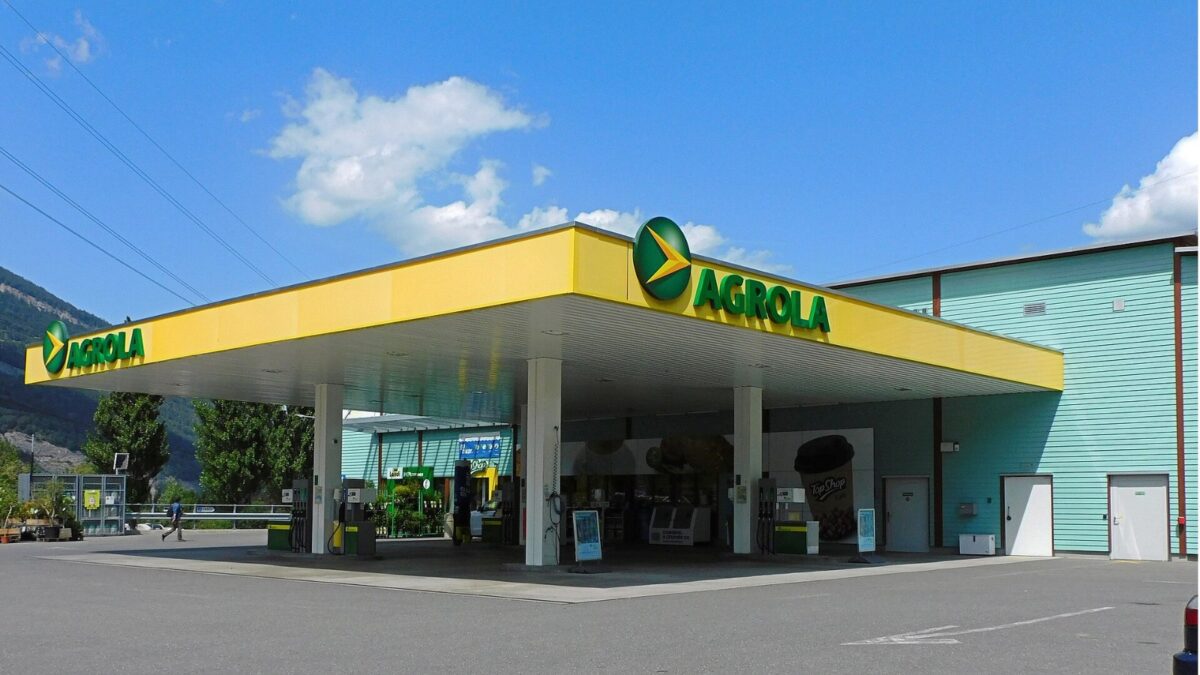
Motorists in Switzerland pay an average of 2.42 Swiss francs for a liter of diesel. The Touring Club Switzerland (TCS), a motoring association, recorded that figure on Oct. 23, 2026; a week earlier, it had been 2.45 francs. At some pumps, a liter cost more than 2.50 francs, according to the newspaper Blick. The TCS recorded the highest level to date on Sept. 19, 2026, at 2.46 francs; the previous record, set in 2022, was 2.40 francs. Before the Iran war began in late February, a liter had cost 1.79 francs. In late October, the price of oil rose to its highest level since April.
The price of diesel has thus become a political issue. Lawmakers from the Swiss People’s Party (SVP) in the National Council, the lower house of parliament, are demanding that the federal government cut the mineral oil tax, the Swiss excise duty on fuel, or suspend it for two months. The Centre, the Social Democrats (SP), the Green Liberals (GLP) and the Greens reject the idea. Germany, Austria and Italy have cut their taxes on fuel; Switzerland is instead opening its compulsory stocks, the emergency reserves the industry is required by law to hold. The aim is to secure supply, not to push down the price. Whether a fuel tax cut would help depends on what goes into the price per liter, where the money goes and how much of a cut would reach customers.
| Indicator | Value | Source |
|---|---|---|
| Diesel, average price on Oct. 23, 2026 | 2.42 francs per liter | TCS |
| Peak in 2026 (Sept. 19, 2026) | 2.46 francs per liter | TCS |
| Before the Iran war (Feb. 26, 2026) | 1.79 francs per liter | TCS |
| Mineral oil tax including surcharge | 79.57 centimes per liter of diesel | FOCBS |
| Release from diesel compulsory stocks | Up to 45,000 cubic meters through Nov. 22, 2026, just under 4% of stocks | Federal government |
| Price gap with Austria (Oct. 2, 2026) | Diesel 42 centimes more expensive | TCS |
| Two months without mineral oil tax | Roughly 0.7 to 0.8 billion francs | Expertistan estimate |
From the outbreak of war to a record
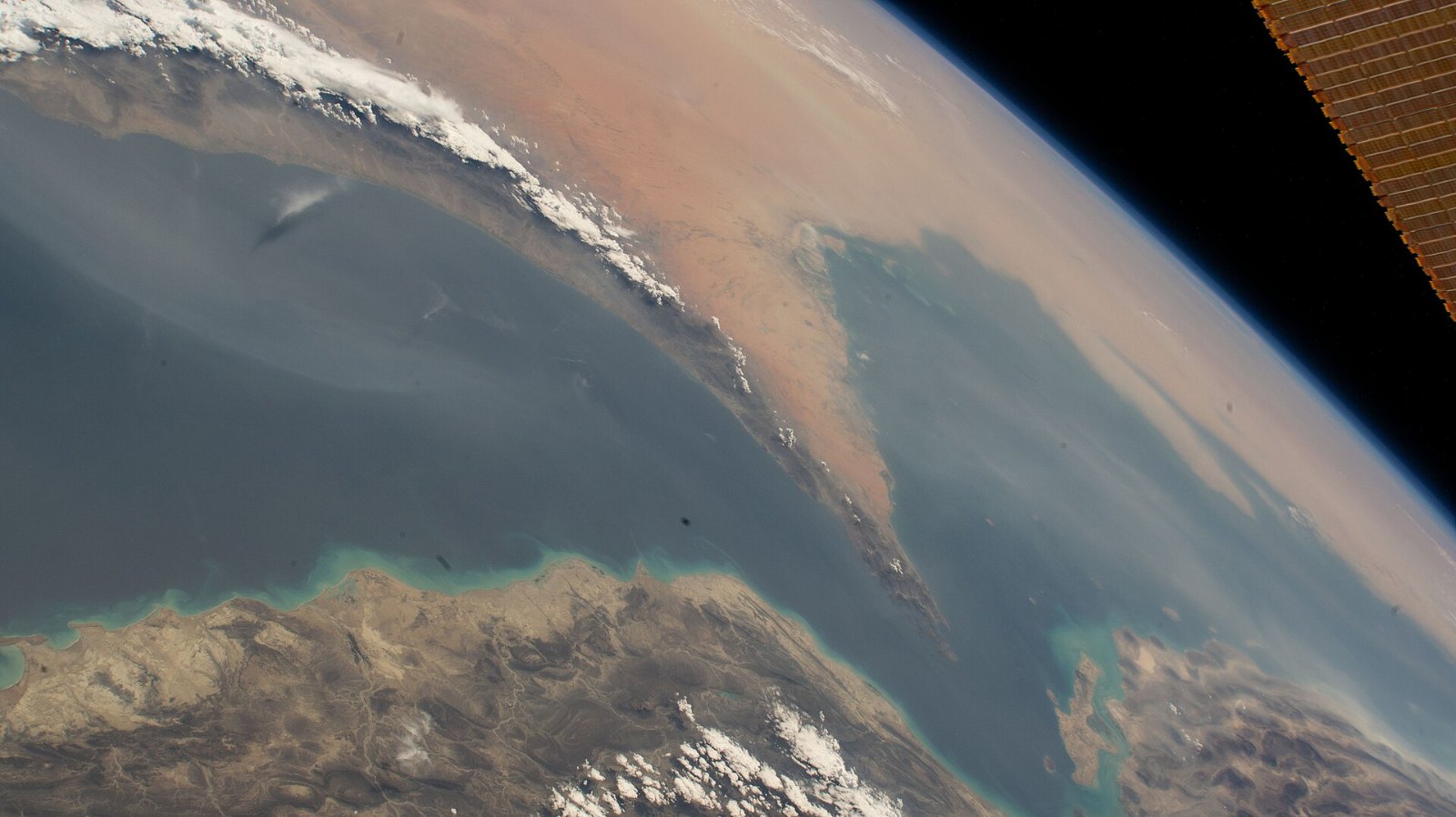
The rise began with the war. On Feb. 28, 2026, the United States and Israel attacked Iran; Tehran then restricted shipping in the Strait of Hormuz. According to Blick, about a fifth of the world’s oil consumption passes through the strait. On the day before the attack, a barrel of the North Sea benchmark Brent had cost $72.48; in mid-September it was $108, roughly half as much again. On Sept. 18, 2026, Ueli Bamert of the industry association Avenergy Suisse even told the newspaper 20 Minuten that crude oil had become “around 80%” more expensive, without naming a baseline.
The shock quickly reached the pump. On March 18, 2026, according to TCS figures published by Blick, diesel averaged 2.01 francs, above the 2-franc mark for the first time since the war began. The price eased in early summer; at the end of June, a liter was down to 1.98 francs. It climbed again in late summer. In mid-September, the Houthis also advanced at the Bab el-Mandeb strait, through which about 12% of global seaborne trade passes. On Sept. 18, 2026, the TCS reported an all-time high of 2.41 francs; a day later, the average stood at 2.46 francs.
Since then, the price has fluctuated between 2.40 and 2.46 francs. From the last reference date before the war to Oct. 23, 2026, diesel rose by 63 centimes (35.2%) and unleaded 95 gasoline by 46 centimes (27.5%). The gap between the two fuels widened from 12 to as much as 32 centimes.
In October, Brent rose above $110 again after Iran’s Revolutionary Guards reported explosions on two tankers and once more declared passage through the Strait of Hormuz illegal. In late October, the price reached its highest level since April, according to the financial news agency dpa-AFX; on Oct. 30, 2026, a barrel cost $116.43 in early trading. Concern is growing in the market about renewed U.S. strikes on Iran after the congressional elections on Nov. 3, 2026; at the same time, media are reporting new diplomatic efforts. According to the Swiss news agency Keystone-SDA, such swings usually reach the pump only with a delay.
Why diesel is rising more steeply than gasoline
That diesel is climbing more steeply than gasoline has mainly to do with the market. Diesel is used in freight transport, construction and agriculture and is similar to heating oil. Moreover, refineries cannot switch production from gasoline to diesel at short notice, as the TCS explains. By March 10, 2026, according to the TCS, diesel at the Rotterdam trading hub had risen by $371 per metric ton (50%) and gasoline by $175 (about 25%). In Germany, France, Italy and Austria, too, diesel is now significantly more expensive than gasoline: according to TCS data from early October, by about 31 cents per liter in Austria and by about 15 cents in France.
In its oil market report in mid-October, the International Energy Agency (IEA) warned of extreme pressure on the market for diesel and heating oil, according to Blick. Supply, the agency said, would probably remain tight well into 2027. Walter Pfeiffer, an energy expert and partner at the consulting firm Roland Berger, points not only to the Iran war but also to attacks on Russian refineries and fuel depots: “As a result, less crude oil and especially less diesel is reaching the market.” In September, he outlined three scenarios for the Swiss diesel price: 2.00 to 2.20 francs, 2.20 to 2.40 francs and 2.70 to 3.00 francs. At the time, he saw Switzerland in the middle scenario. Today’s price is just above it.
Rhine, refinery, pipeline: Switzerland’s particular burdens
Bottlenecks at home add to the pressure from the world market. According to the TCS, Switzerland is “completely dependent on imports” for fuel. Seven out of 10 liters enter the country as finished products; the rest is processed from imported crude oil by the refinery in Cressier, in the canton of Neuchâtel. According to a July breakdown by the news agency AWP, 41% of petroleum imports reach the country through pipelines from southern France, 31% by rail, 22% via the Rhine and the rest by road.
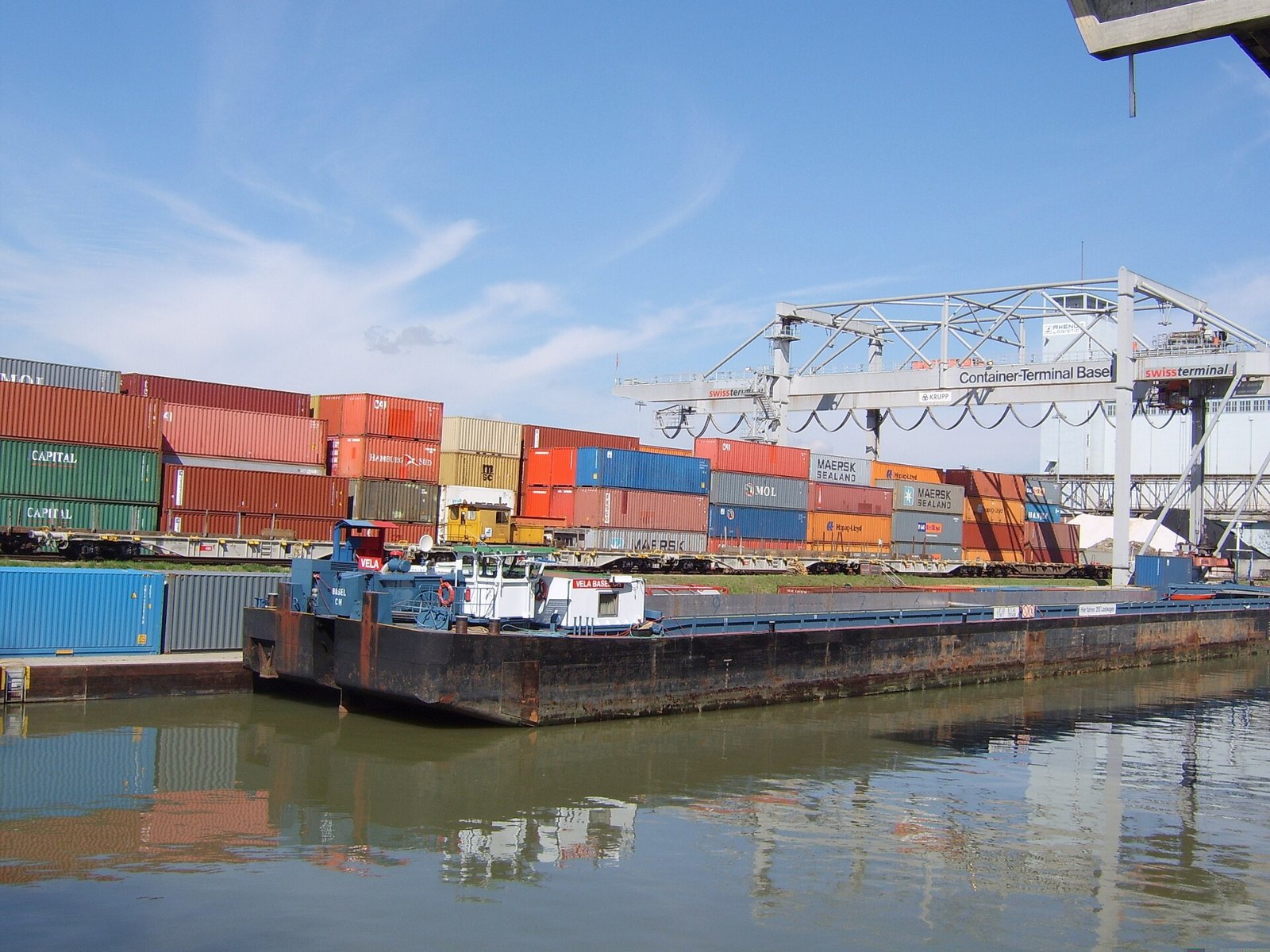
All three main routes came under strain in 2026. The Rhine has been running low for months. On July 16, 2026, the water level at the Kaub gauge in Germany stood at 45 centimeters; the critical threshold for shipping is 77 centimeters. Tankers between Rotterdam and Basel could take on only about a quarter of their capacity. When the gauge threatened to drop into single digits in August, Jens Schwanen, managing director of the Federal Association of German Inland Navigation, said: “In principle, this means the Rhine is no longer navigable all the way through and is thus split in two.” In August, shipping a metric ton from Rotterdam to Basel cost 240 francs instead of 33.50 francs, according to Blick. The TCS says freight alone added about 15 centimes to the price of a liter in September.
In early September, the Cressier refinery also went offline because of a technical fault. According to the TCS, it covers about 30% of domestic demand. It resumed operations after an interruption of about two weeks. In October, heavy rain in southern France delayed deliveries through the pipeline. Also in October, trains carrying jet fuel for Zurich Airport on the rail lines from Germany were canceled or arrived late.


Compulsory stocks as a buffer
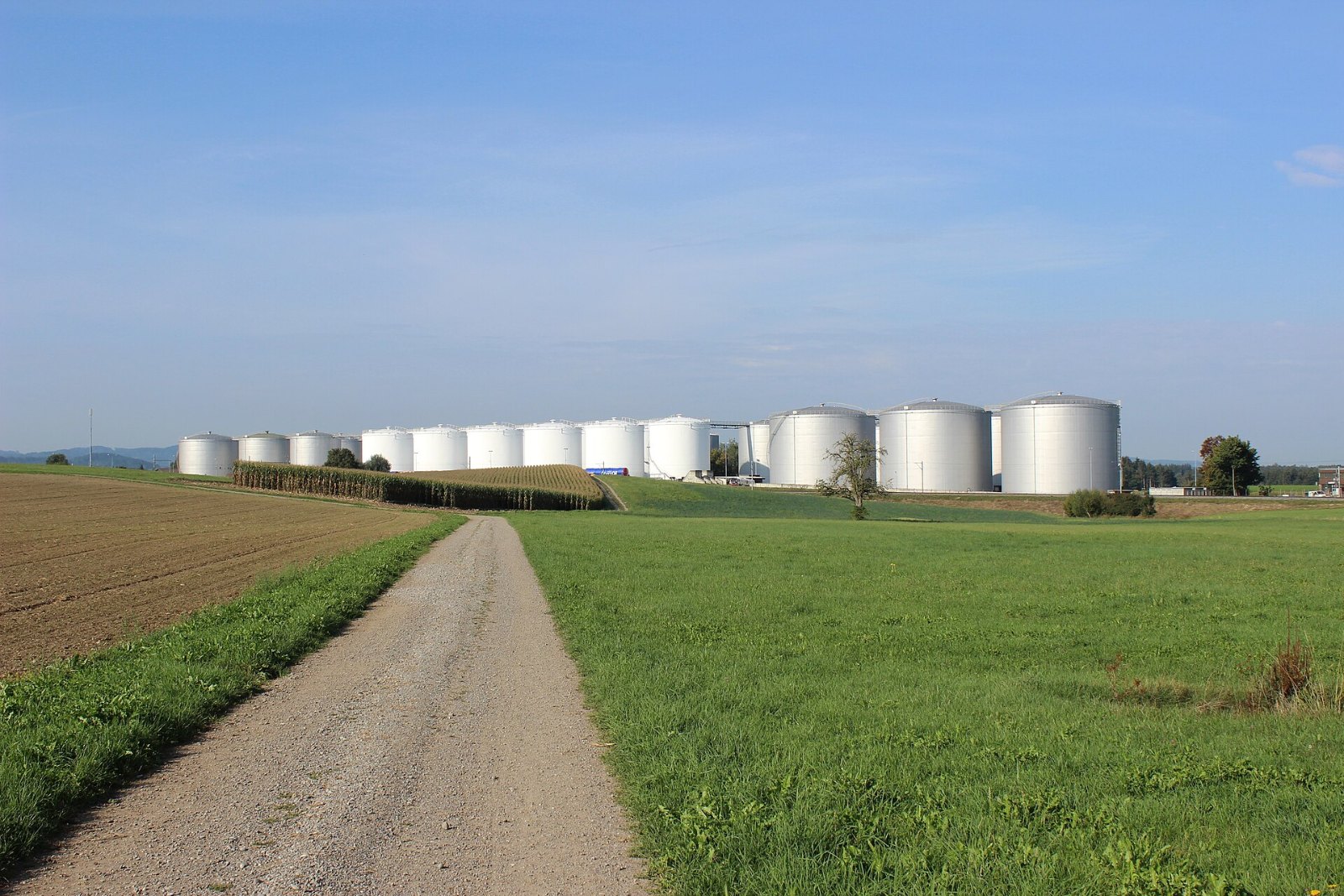
Switzerland keeps compulsory stocks for situations like these. Under an ordinance of the Federal Department of Economic Affairs, Education and Research (EAER), stocks of gasoline, diesel and heating oil must cover 4.5 months of average demand; for jet fuel, the requirement is three months. The stocks belong to the companies and are organized through Carbura, the industry’s compulsory stockholding organization.
In 2026, the federal government has had to step in three times. From Sept. 8 to Sept. 20, 2026, up to a total of 30,000 cubic meters of diesel and the same amount of gasoline could be drawn, in each case less than 3% of stocks. All of the gasoline was drawn; of the diesel, about two-thirds. From Oct. 15 to Nov. 1, 2026, up to 30,000 cubic meters of jet fuel may be drawn, 6.5% of the quantity available. On Oct. 23, 2026, Roland Pfister, the Delegate for National Economic Supply, authorized withdrawals of up to 45,000 cubic meters of diesel oil until Nov. 22, 2026. According to the federal government, that is just under 4% of the diesel oil currently held in compulsory stocks.
The federal government justifies the releases on grounds of supply, not price. In its statement of Oct. 23, 2026, it said the situation remained tense and fragile for all petroleum products. Compared with 2018, when the Rhine was also low, the withdrawals have so far been small. At that time, according to the public broadcaster SRF, the federal government released 160,000 cubic meters of diesel from mid-October to late November, about 13% of the diesel reserve.
Jet fuel reveals a weak spot. According to the supervisory report of the Federal Office for National Economic Supply (FONES), kerosene stocks at the end of 2025 were about a quarter below the required level, while gasoline, diesel and heating oil exceeded their targets. They have apparently been topped up since then: The release of Oct. 15, 2026, implies a stock of about 460,000 cubic meters, a good quarter more than at the end of 2025 but still about 7% below the target at that time.
What goes into the price of diesel
Anyone arguing about a fuel tax cut has to take the price per liter apart. The largest fixed components are the mineral oil tax and the mineral oil tax surcharge. Together they add 79.57 centimes to a liter of diesel and 76.82 centimes to a liter of gasoline. These are the figures published by the Federal Office for Customs and Border Security (FOCBS); the TCS and Blick give rounded figures of about 77 to 80 centimes. Value-added tax (VAT) of 8.1% is levied on the entire price, including the mineral oil tax. The tax on the tax alone works out to 6.45 centimes per liter of diesel.
The other components, from the product to the margin, are not reported individually. A calculation by Expertistan nonetheless shows where the increase has come from. Of the 63-centime rise since February, about 58 centimes is attributable to the product, freight and trading and just under 5 centimes to higher VAT. The mineral oil tax is fixed per liter and has not changed.
This leads to a further finding. Because the tax is fixed, the state’s share shrinks as the price rises. Before the war, mineral oil tax and VAT accounted for 51.9% of the price of diesel; on Oct. 23, 2026, they made up only 40.4%. The TCS rule of thumb that government taxes account for about half of the price no longer holds at today’s level. In francs, however, the federal government is taking in more because of VAT: just under 5 centimes per liter of diesel and about 3.5 centimes per liter of gasoline. Because businesses can deduct VAT as input tax, though, this additional revenue arises only on private consumption.
How the price per liter is made up
Where the money goes
The mineral oil tax is no ordinary tax. According to the TCS, its revenue feeds the National Roads and Agglomeration Transport Fund (NAF), the special financing account for road transport and the general federal budget. As its name suggests, the NAF finances the national roads and transport in urban agglomerations. Referring to the planned replacement levy on electric cars, TCS Central President Peter Goetschi said in the club’s magazine Touring (issue 2/2026): “Road funding today depends to a large extent on the mineral oil tax and the mineral oil tax surcharge.”
In 2005, when it rejected a tax cut, the Federal Council, the Swiss government, put figures on how a revenue shortfall would be distributed. At the time, according to the Federal Council, more than two-thirds of the losses would have hit the construction and maintenance of roads and about 30% the federal budget. Today, according to the FOCBS, half of the mineral oil tax on motor fuels goes to the special financing account for road transport, usually 10% to the NAF and 40% to 50% to the federal budget. The surcharge goes entirely to the NAF. Even today, more than two-thirds of any shortfall would therefore hit road funding. In 2024, the department of Federal Councillor Albert Rösti warned that an immediate cut would deprive the NAF of revenue for projects already approved. According to Knutti, the Federal Council is once again pointing to a funding gap in the fund.
Knutti considers this argument a pretext. “Nobody in this country can complain about bad roads,” he told 20 Minuten in September.
What a fuel tax cut would cost
The cost of forgoing the tax can only be estimated, because the industry’s current sales figures were not available to us. A rough calculation by Expertistan is therefore based on the compulsory stocks. Since the required quantities correspond to four and a half months of consumption, according to the FONES supervisory report, annual consumption works out to about 2.9 billion liters of gasoline and 3.2 billion liters of diesel. The FOCBS puts mineral oil tax revenue at about 4.4 billion francs a year. On that basis, two months without the mineral oil tax and surcharge, as Knutti is demanding, would cost roughly 0.7 billion to 0.8 billion francs. If the cut were passed on in full, VAT revenue would also fall by at most about 60 million francs; because businesses deduct input tax, the actual loss would be considerably smaller. A 10-centime cut for one year would mean revenue losses of about 550 million to 600 million francs. In 2005, the Federal Council had put the cost of the same cut at 690 million francs.
At the pump, the effect would be large, provided the trade passed the cut on in full. A liter of diesel would then be cheaper by 79.57 centimes in tax and 6.45 centimes in VAT and would cost about 1.56 francs. For a 60-liter tank, that would mean a saving of about 52 francs per fill-up. Diesel would then be considerably cheaper in Switzerland than in neighboring countries; a liter would cost about 48 centimes less than the Austrian price in early October. The likely result would be fuel tourism into Switzerland, of all things in a fuel for which the federal government is currently opening its compulsory stocks.
Not taken into account are refunds, for example for agriculture, as well as additional sales from fuel tourism. The figures should be read as orders of magnitude.
The neighbors cut taxes, Bern says no
Governments all around Switzerland have intervened. Germany is cutting its energy tax by 14.04 cents per liter from Oct. 1 to Dec. 31, 2026; including VAT, the reduction comes to 16.7 cents. According to the explanatory statement of the coalition parliamentary groups in the Bundestag, this will cost the state 2.485 billion euros in energy tax and 293 million euros in VAT. Since April 1, 2026, German gas stations have also been allowed to raise prices only once a day, at noon.
Austria is taking a different route. Since the spring, the finance minister has been cutting the mineral oil tax every month by ordinance. The relief is meant to be budget-neutral: The state gives back the additional VAT revenue that the crisis brings it. “The state must not become a crisis profiteer,” Chancellor Christian Stocker said in March. In April, the cut amounted to at least 5 cents per liter; in August, it was only 1.9 cents. For October and November, an amendment to the law allows up to 6.7 cents, even without being covered by additional revenue. In addition, the oil industry must cut its margin by 3.5 cents; including VAT, that adds up to as much as 12 cents per liter. As early as March, Vice Chancellor Andreas Babler had announced: “We are limiting the profit margins of refineries and gas stations.”
Italy let its diesel tax cut expire on Oct. 5, 2026. Since Oct. 28, 2026, it has again been granting 4.9 cents per liter including VAT by decree, until Nov. 7, 2026, funded from additional VAT revenue in September. Spain is cutting its fuel excise tax on gasoline and diesel by 20 cents per liter in October. Thanks to a safeguard clause, the cut will remain at 20 cents in November instead of the planned 13 cents, because consumer prices for gasoline and diesel in September were more than 15% higher than a year earlier. Whether 13 or 20 cents will apply in December depends on the October figures.
| Country | Measure | Amount | Period |
|---|---|---|---|
| Germany | Energy tax cut (second fuel discount) | 14.04 cents per liter, 16.7 cents including VAT | Oct. 1 to Dec. 31, 2026 |
| Austria | Monthly cut in the mineral oil tax, plus a margin cap in October and November | At least 5 cents in April, 1.9 cents in August, up to 6.7 cents in October and November plus a margin reduced by 3.5 cents | Since April 2026 |
| Italy | Tax cuts by decree, most recently for diesel only | 25 cents for 20 days in March, 17 cents on diesel in late July, 4.9 cents including VAT since Oct. 28, 2026 | In phases, most recently until Nov. 7, 2026 |
| France | Fuel allowance for low-income workers who drive long distances for their jobs | 100 euros; about 1.5 million applications in the spring | New allowance for October to December, applications from Oct. 27, 2026 |
| Switzerland | No tax cut, releases from compulsory stocks | No effect on prices intended | September to November 2026 |
In Switzerland, the federal government has neither cut the mineral oil tax nor adopted a fuel discount. As early as April, the Federal Office for National Economic Supply stated that supply was secure and that the federal government had no influence on how prices developed. In late September, the State Secretariat for Economic Affairs (SECO) reaffirmed the government’s refusal in comments to 20 Minuten: What mattered, it said, was “that fuel prices reflect the signals of scarcity.” Further measures would only be worth examining if a severe recession loomed.
The consequences are visible at the border. In March, Germans were still filling up in the Swiss border town of Kreuzlingen because gasoline there was a good 40 centimes cheaper and diesel about 25 centimes cheaper. In early October, according to the TCS, diesel in Switzerland was 19 centimes more expensive than in Germany, 24 centimes more than in France, 28 centimes more than in Italy and 42 centimes more than in Austria. The German figure probably does not yet reflect the fuel tax cut of Oct. 1, 2026: It is higher than the average that the ADAC, Germany’s largest motoring club, had measured on the day before the cut. On Oct. 21, 2026, diesel in Germany cost an average of 2.246 euros, according to the ADAC, a good 16 cents less than in the TCS survey; the gap has therefore probably widened. For diesel, fuel tourism has reversed direction.
What economists think of fuel tax cuts
The central question is whether a discount reaches customers. According to the Ifo Institute, 15 of the 17 cents of the tax cut on diesel reached customers in Germany in the first five days; later, diesel lagged behind gasoline. In the week to Oct. 20, 2026, the full cut was passed on for Super E5 gasoline but not for diesel: “Here, only about 14 of the 17 cents were passed on to motorists,” Ifo researcher Florian Neumeier said, according to dpa-AFX. The German Institute for Economic Research (DIW) calculated that about two-thirds had been passed on in the first three weeks of October; in mid-October, the Federal Cartel Office judged pass-through at the refinery and wholesale levels to be “largely, but not entirely, complete.” Neumeier’s colleague Christian Gréus cautioned: “The fuel discount is also poorly targeted.”
Other findings are more skeptical. A study by the ZEW economic research institute, which the Left Party (Die Linke) cites in the Bundestag, concludes that oil companies have raised their margins on gasoline “by about a further 6 cents per liter” since the noon rule was introduced. Johannes Schwanitz of Münster University of Applied Sciences said in March, according to Der Spiegel: “The oil industry is using this situation to widen its profit margin.” In the Swiss National Council, critics pointed to Germany as early as 2022, where they said the fuel discount of the time had mainly benefited oil companies.
In Switzerland, the Federal Council argued as early as 2005 that, because demand is inelastic, a cut would not reach consumers immediately and in full. It wrote at the time that the high oil price was sending the right signal for oil, a scarce, nonrenewable resource. According to Blick, geopolitics and energy specialist Laurent Horvath observed in March that higher prices are passed on after about three days, lower ones only after about 10 days.
For the economy as a whole, the impact has so far been limited: Inflation stood at 1.0% year over year in September; according to the Federal Statistical Office (FSO), the prices that rose included those of heating oil, gasoline and diesel.
The politics: The SVP pushes, the others put on the brakes
In Bern, the demand comes from the SVP. On March 6, 2026, National Council member Rémy Wyssmann (Solothurn) announced a parliamentary proposal: The federal government should cut the mineral oil tax far enough to keep fuel prices at their prewar level. “Higher fuel prices lead in particular to higher food and construction costs,” he told Blick. Whether and in what form the proposal was submitted could not be established.
Thomas Knutti (Bern), co-owner of a transport company, goes furthest. In March, he and three other SVP members of the National Council called in an open letter for the mineral oil tax to be waived; in June, by his own account, he submitted interpellation 26.3951, a formal question to the Federal Council, titled “Treibstoffpreise auf Rekordniveau” (Fuel prices at record levels). “I already called for relief in March and submitted an interpellation in June, but my calls fell on deaf ears,” he said in September. With a petition, he is now demanding the immediate suspension of the mineral oil tax on motor fuels. According to the regional broadcaster Radio BeO, he envisions testing the measure for two months at first. He told 20 Minuten: “I believe there is enough money available to forgo the revenue for two months, just this once.” In a guest article, he writes: “When fuel prices explode, the federal government must not simply keep cashing in.”
In a nonrepresentative Blick poll in March with more than 5,200 participants, 62% favored federal intervention in gasoline prices; 36% were against it.
The Centre, the GLP, the SP and the Greens are opposed. “A knee-jerk move,” Centre National Council member Martin Candinas (Graubünden) said in April. “We need the tax revenue to finance our infrastructure.” Green Liberal Barbara Schaffner (Zurich) said: “It is rather interesting that this demand comes from a party that normally holds the free market in high regard.” High oil prices, she said, are a market signal that the state should not override. SP National Council member David Roth (Lucerne) believes: “If you want to provide relief to the population, purchasing power as a whole has to be strengthened.” Instead of a scattershot approach, Green Kilian Baumann (Bern) wants targeted relief for low-income households, for example through higher contributions to health insurance premium subsidies. No statement from FDP.The Liberals was found in the sources reviewed.
The debate is not new. After Russia’s attack on Ukraine, the SVP demanded at an extraordinary session in June 2022 that the mineral oil taxes be at least halved. On June 16, 2022, the National Council rejected the demand by 132 votes to 53, with one abstention; the Council of States, the upper house, had said no three days earlier. According to AWP, the FDP, the Centre, the GLP, the SP and the Greens considered it a “scattershot” measure.
Arena: Should the federal government cut the mineral oil tax?
For: Yes, relieve commuters and businesses
- At 2.42 francs, diesel costs 63 centimes more than before the Iran war; at the end of September, filling a 60-liter tank cost 11.40 francs more than a month earlier (TCS, Südostschweiz).
- Every liter carries just under 80 centimes in mineral oil tax, plus a calculated 6.45 centimes in VAT on the tax (FOCBS, Expertistan calculation).
- Germany, Austria and Italy have cut taxes; in Austria, diesel was 42 centimes cheaper in early October (TCS).
- Higher fuel prices make food and construction more expensive (Wyssmann, Blick). Diesel is used above all by agriculture, construction and freight transport (TCS).
- VAT rises with the price: The federal government takes in just under 5 centimes more on every liter of diesel bought by private motorists. Until September, Austria returned such extra revenue on a budget-neutral basis; in October and November, it is cutting even more (Expertistan calculation, Austrian Finance Ministry, Austrian Parliament).
- “I believe there is enough money available to forgo the revenue for two months, just this once” (Knutti).
Against: No, a tax cut would fizzle out
- Two months without the mineral oil tax would cost roughly 0.7 billion to 0.8 billion francs, much of it missing from road construction (Expertistan estimate, FOCBS).
- Not every centime gets through: In Germany, only about 14 of 17 cents reached diesel customers in October (Ifo).
- A discount gives all drivers scattershot relief. Targeted help for low-income households would be more precise (Baumann); relief should strengthen the purchasing power of the whole population (Roth).
- High prices are a market signal that the state should not override (Schaffner, SECO, Federal Council 2005).
- Diesel is scarce; the federal government is opening the compulsory stocks. A price of about 1.56 francs per liter would attract fuel tourists (federal government, Expertistan calculation).
- Parliament rejected halving the mineral oil taxes in 2022, the National Council by 132 votes to 53 (AWP).
Commentary: No tax cut, but no crisis windfall either
Suspending the mineral oil tax, as SVP National Council member Thomas Knutti demands, would be the wrong answer. For two months, it would cost roughly three-quarters of a billion francs, much of which would be missing from road construction. It would give the most relief to those who drive the most, regardless of income. And it would lower the price of a fuel so scarce that the federal government is opening its emergency reserves. Lower prices do not resolve a shortage; they make it worse.
Still, the proponents are right on one point. The state, too, is making money from the crisis. Because VAT grows with the price, the federal government now takes in just under 5 centimes more on every liter of diesel bought by private motorists than before the war. Until September, Austria turned this into a simple rule: Whatever extra the crisis brings the treasury is returned through a lower mineral oil tax. That is not a subsidy but the renunciation of a gain the state has not earned. For Switzerland, it would come to a few centimes per liter. For the federal government as a whole, it would be neutral, provided it compensated the road fund out of the additional VAT revenue.
Supply matters more than price. Switzerland has only one refinery left, which covers about 30% of demand. It also depends on a Rhine that, as in 2018, is carrying too little water. The rail lines from Germany are already running at capacity. The compulsory stocks have proved their worth; they are a piece of sovereignty put into practice. That kerosene stocks were about a quarter below target at the end of 2025 and were still not fully replenished in the fall is a warning sign. This is where the federal government must act, not at the pump.
For households and businesses, the high price remains a signal they can respond to. With inflation at 1%, there is no emergency. A state that subsidizes away every price shock at the pump trains its citizens to expect that it will always step in. Switzerland will fare better if it keeps a cool head.
All figures as of Oct. 30, 2026. Prices: TCS averages on reference dates, most recent available figure from Oct. 23, 2026; the TCS has not updated its country comparison since Oct. 2, 2026. The franc figures in the text are taken from the TCS fact sheet of Oct. 2, 2026; its web table converts the same prices at a more recent exchange rate. For France, the fact sheet lists the price of E10 in the diesel column; the diesel figure from the web table has been used, converted at the fact sheet’s exchange rate. The tax rates of 79.57 centimes (diesel) and 76.82 centimes (gasoline) per liter come from the FOCBS. The price breakdown, the cost of forgoing the tax and the price gaps are Expertistan calculations and should be read as estimates. Kerosene stocks at the end of 2025 are taken from the FONES supervisory report; the current stock has been calculated from the release of Oct. 15, 2026. The release from the diesel compulsory stocks applies until Nov. 22, 2026; no more recent releases were found. Quotes originally given in another language were translated by the editors. Sources are cited in their original language.
Related coverage: The V8 is back: Why Detroit is unwinding its electric bet and what that means for Switzerland (in German) · The electric car is winning, but not because Brussels ordered it (in German) · Switzerland does not have a revenue problem. It has a promises problem (in German)
Sources
- TCS: Diesel erreicht in der Schweiz mit 2.41 Franken ein Allzeithoch (Sept. 18, 2026)
- TCS: Benzinpreise Schweiz, 2026 table (accessed Oct. 30, 2026)
- TCS: Benzinpreise in Europa (accessed Oct. 30, 2026)
- TCS: Benzinpreise in der Schweiz und in Europa (as of Oct. 2, 2026)
- TCS: Standpunkte des Präsidenten
- TCS: Stellungnahme zur Ersatzabgabe auf Elektrofahrzeuge (Jan. 9, 2026)
- FOCBS: Mineralölsteuer, Information, Bedeutung, Rahmenbedingungen (accessed Oct. 25, 2026)
- Federal government: Bezüge aus Diesel-Pflichtlager stellen Versorgung sicher (Oct. 23, 2026)
- Federal government: Versorgung mit Mineralölprodukten ist aktuell sichergestellt (Sept. 8, 2026)
- Federal government: Die Versorgung ist nicht mehr auf Bezüge aus Pflichtlagern angewiesen (Sept. 21, 2026)
- Federal government and FSO: Die Konsumentenpreise sind im September stabil geblieben (Oct. 1, 2026)
- FONES: Aufsichtsbericht über die Pflichtlagerorganisationen, as of Dec. 31, 2025
- EAER: Verordnung über die Pflichtlagerhaltung von flüssigen Treib- und Brennstoffen, via Lexfind
- Cash (AWP): Bund bewilligt Bezüge aus Flugpetrol-Pflichtlager für Zürich (Oct. 15, 2026)
- Cash (AWP): Bund gibt wegen Versorgungsengpass Teile der Ölreserven frei (Sept. 8, 2026)
- Cash (AWP): Tiefer Rhein-Pegel, höhere Treibstoffpreise, aber kein Mangel (July 16, 2026)
- Cash (AWP): Deutscher Tankrabatt startet mit schnell fallenden Preisen (Oct. 1, 2026)
- Cash (AWP): Parlament erteilt tieferen Steuern auf Benzin eine Absage (June 16, 2022)
- Radio Central (SDA): Treibstoffpreise in der Schweiz ziehen wieder an (Oct. 16, 2026)
- Ariva (dpa-AFX): Ölpreis auf 5-Monatshoch, Strasse von Hormus-Sorge treibt Brent über 110 Dollar (Oct. 20, 2026)
- Ariva (dpa-AFX): Ölpreise sinken, Berichte über neue diplomatische Initiative am Golf (Oct. 29, 2026)
- Energy News Magazine (APA/dpa-AFX): Ölpreise steigen, Sorge vor US-Militärschlag im Iran wächst (Oct. 30, 2026)
- Blick: Schweiz zapft Diesel-Pflichtlager an (Oct. 23, 2026)
- Blick: Fast 2.50 Franken, der Liter Diesel kostet so viel wie nie (Sept. 16, 2026)
- Blick: Benzin über 2 Franken, Diesel bei 2.30 Franken (Sept. 14, 2026)
- Blick: Huthis sorgen für Panik im Westen (Sept. 14, 2026)
- Blick: Bleifrei 95 knackt 2-Franken-Marke (Aug. 20, 2026)
- Blick: Pegel sinkt dramatisch, der Rhein ist bald zweigeteilt (Aug. 10, 2026)
- Blick: Diesel-Rabatt in Italien (July 28, 2026)
- Blick: Diesel- und Benzinpreise steigen wegen Frachtpreisexplosion (July 5, 2026)
- Blick: Darum sind Diesel-Fahrer beim Tanken die Dummen (March 18, 2026)
- Blick: Einkaufstourismus umgekehrt, Deutsche tanken in der Schweiz (March 8, 2026)
- Blick: Folge des Iran-Kriegs, Bund soll Benzinpreise drosseln (March 6, 2026)
- Blick: SVP fordert Eingriff in Benzinpreise, das sagen die Leser (March 6, 2026)
- Blick: Benzinpreise Schweiz, Experte kritisiert Nahost-Aufschlag (March 6, 2026)
- Blick: Iran-Krieg, Ölpreis steigt, Benzin wird teurer (March 2, 2026)
- Blick: Iran will Strasse von Hormus blockieren (March 1, 2026)
- Blick: SVP will günstigeres Benzin (Dec. 15, 2024)
- 20 Minuten: Treibstoffpreise auf Rekordhoch, Bund lehnt Senkung der Mineralölsteuer ab (Sept. 25, 2026)
- 20 Minuten: SVP-Nationalrat fordert Aussetzung der Mineralölsteuer (Sept. 18, 2026)
- 20 Minuten: Dieselpreis könnte bis auf 3 Franken steigen, die drei Szenarien (Sept. 18, 2026)
- 20 Minuten: Ölpreis bricht ein (April 17, 2026)
- 20 Minuten: Nachbarländer helfen Autofahrern, Bundesbern winkt ab (April 14, 2026)
- 20 Minuten: Italien und Österreich reagieren mit Steuersenkung (March 19, 2026)
- Simmentalzeitung: Treibstoffpreise senken, Mineralölsteuer aussetzen, guest article by Thomas Knutti (Sept. 28, 2026)
- Radio BeO: Petition fordert tiefere Treibstoffpreise (Sept. 17, 2026)
- TeleBärn: Berner Nationalrat fordert Aussetzung der Mineralölsteuer (Sept. 19, 2026)
- Südostschweiz: Diesel-Rekord in der Schweiz (Sept. 25, 2026)
- SRF: Pflichtlager für Erdöl, Bund gibt weitere Mengen frei (Nov. 14, 2018)
- Moneycab: Bundesrat gegen Reduktion der Mineralölsteuer (Nov. 21, 2005)
- German Bundestag: Finanzausschuss beschliesst Tankrabatt, hib 730/2026 (Sept. 23, 2026)
- German Bundestag: Motion by the Die Linke parliamentary group, Drucksache 21/6465 (June 11, 2026)
- VerkehrsRundschau: Ifo sieht Rabatt nicht vollständig weitergegeben (Oct. 7, 2026)
- VerkehrsRundschau: Tankrabatt, Diesel bleibt hinter Benzin zurück (Oct. 22, 2026)
- Finanznachrichten (dpa-AFX): Ifo, Tankrabatt kommt stärker an, Benzin deutlich billiger (Oct. 22, 2026)
- Finanznachrichten (dpa-AFX): Zwei Wochen Tankrabatt, Kritik an Weitergabe (Oct. 15, 2026)
- Leinetal24, citing Der Spiegel: Preisaufschläge an den Tankstellen nicht zu rechtfertigen (March 10, 2026)
- Austrian Finance Ministry (BMF): Treibstoffpreisabfederungsverordnung September 2026
- Austrian Finance Ministry (BMF): Treibstoffpreisabfederungsverordnung Oktober 2026
- Austrian Finance Ministry (BMF): Explanatory notes on the ordinance for August 2026
- Spanish Ministry of Finance: Rebaja del Impuesto sobre Hidrocarburos (Sept. 29, 2026)
- Connaissance des Énergies (AFP): L’aide carburant aux gros rouleurs ne s’arrêtera pas le 30 septembre (Sept. 18, 2026)
- Jechange: Indemnité carburant, le plafond de revenus passe à 22 770 € par part (Oct. 16, 2026)
- Austrian Business Service Portal (USP): Mineralölsteuergesetz, BGBl. I Nr. 82/2026 (Sept. 30, 2026)
- Austrian Parliament: Nationalrat gibt grünes Licht für erweiterte Spritpreisbremse (Sept. 29, 2026)
- Energiemagazin: Spritpreisbremse Österreich, 12 Cent weniger ab 01.10.2026 (as of Sept. 29, 2026)
- Euronews: Italy lets diesel tax cut expire as Europe tackles fuel costs (Oct. 7, 2026)
- ItaliaOggi: Gasolio, torna il taglio delle accise fino al 7 novembre (Oct. 28, 2026, in Italian)
- elDiario.es: El INE confirma que el IPC cerró en el 4,9% en septiembre y mantiene la rebaja de 20 céntimos en gasolina y diésel en noviembre (Oct. 14, 2026)
- Motor.es: Cambian los descuentos al repostar, cuántos céntimos te ahorrarás por litro en noviembre y diciembre (Oct. 27, 2026)



Comments 0