Fireworks initiative: Why Switzerland is fighting over its bang
On Aug. 1, 2026, the sky stayed dark in many places because of the drought. On Nov. 29, 2026, Switzerland will decide whether to ban loud fireworks for private use altogether. The first SRG SSR poll shows 69% in favor, while the Federal Council and Parliament say no. An analysis of animal welfare, tradition, a failed firecracker ban and an initiative that leaves open exactly what it would ban.
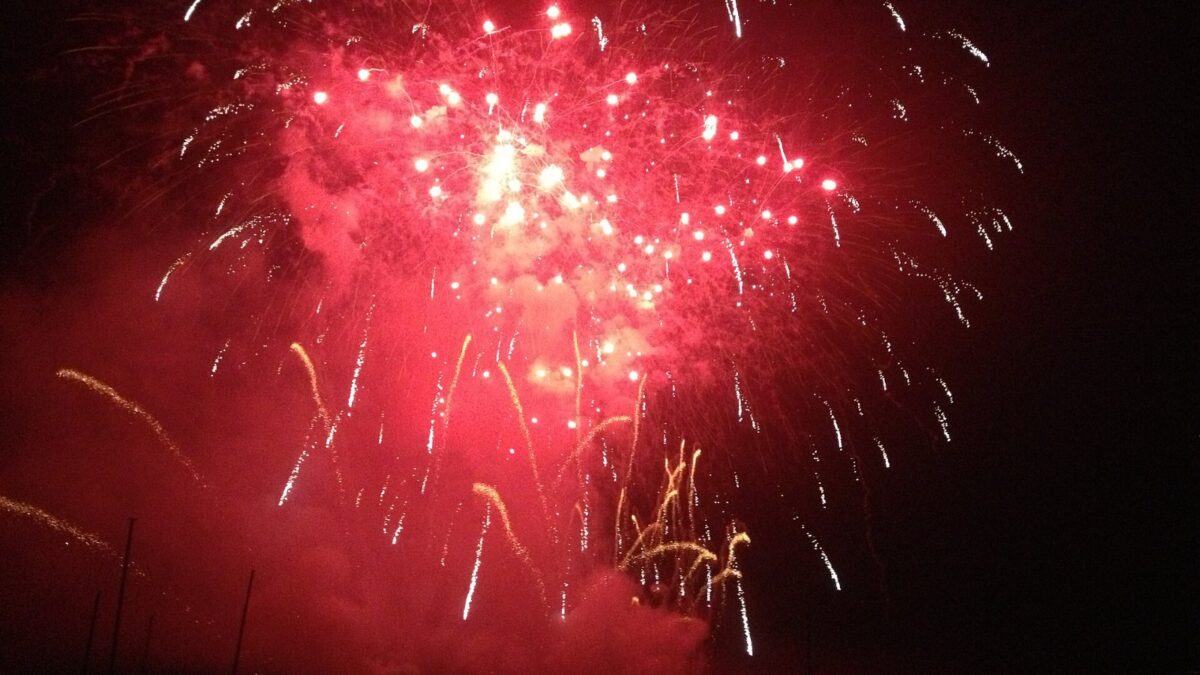
On Aug. 1, 2026, the sky over large parts of Switzerland stayed dark. Because of the drought, several cantons, including Basel-Landschaft, St. Gallen and Lucerne, banned setting off fireworks. Supporters of a ban see this as proof that the country can do without them. “The village squares were full, and much of the suffering was avoided,” Marco Mettler, executive director of Swiss Animal Protection (STS), said in October.
On Sunday, Nov. 29, 2026, the people and the cantons will decide whether the exception becomes the rule. The popular initiative known as the fireworks initiative (“Für eine Einschränkung von Feuerwerk”) would write into the Constitution a ban on the sale and use of noise-producing fireworks. Large fireworks displays would remain possible only at events of supraregional significance, with a permit from the canton. Parliament and the Federal Council, Switzerland’s government, oppose the initiative.
So far, voters see things differently. In the first poll conducted by gfs.bern for SRG SSR, the Swiss Broadcasting Corporation, 69% supported the initiative and 29% opposed it. Leewas and YouGov found 68% and 62% support, respectively. Of the four proposals on the Nov. 29, 2026, ballot, the fireworks initiative has the clearest majority behind it in every poll. At the same time, it is the one for which it is least clear what a yes vote would mean in practice.
| At a glance | The fireworks initiative |
|---|---|
| Vote | Sunday, Nov. 29, 2026; requires a popular majority and a majority of the cantons |
| Core provision | A new Article 74a of the Federal Constitution would prohibit the sale and use of fireworks that produce noise |
| Exceptions | Permits issued by the canton for events of supraregional significance |
| Still allowed | Fireworks without a bang, such as fountains and Bengal lights |
| Implementation | Implementing provisions no later than two years after a yes vote |
| Backers | The fireworks initiative association, together with Swiss Animal Protection (STS), Four Paws, the Foundation for the Animal in the Law and the Fondation Franz Weber |
| Signatures | 137,193 valid, submitted Nov. 3, 2023 |
| Parliament | Recommendation to reject: 131 to 50 with 18 abstentions in the National Council, 40 to 3 with 1 abstention in the Council of States |
| Recommendation | Federal Council and Parliament: No |
An initiative without a party
The initiative is the work not of a party but of an association. Its initiator is Roman Huber of Baden, a former journalist who owns a dog-training school. At the launch, he said his concern was protecting people, animals and the environment. When the signatures were submitted in November 2023, it was also stressed, according to Swiss public broadcaster SRF, that wild animals suffer from loud fireworks as well, because they cannot flee and are thrown into a panic. The initiative is backed by Swiss Animal Protection, Four Paws, the Foundation for the Animal in the Law and the Fondation Franz Weber. The Swiss anti-noise league Lärmliga Schweiz also supports it.
Signatures were collected starting in May 2022, and the initiative was submitted Nov. 3, 2023, with 137,429 signatures, of which the Federal Chancellery recognized 137,193 as valid. Since Oct. 5, 2026, the yes campaign has been advertising on more than 900 digital screens at train stations and in city centers. The ads show a dog, a girl and a deer covering their ears. One of the slogans: “Not everyone is celebrating.”
What exactly the fireworks initiative would ban
The initiative would ban fireworks that produce noise. The text leaves open what that means. In its dispatch to Parliament, the Federal Council writes that there is currently no recognized definition of what noise-producing fireworks are. The existing categories, F1 to F4, are of no help, because every category contains products that can be considered loud. If the initiative passes, Parliament and the Federal Council would have to draw the line.
Where they draw it is crucial. According to the industry, bang-only firecrackers account for only 8% to 10% of sales. Noise-producing fireworks as a whole, including rockets and batteries with a bang effect, account for about 70%, according to industry estimates cited by the Federal Council in its dispatch. The entire leeway for implementation lies between banning one-tenth of the market and banning seven-tenths of it. Those who vote yes on Nov. 29, 2026, do not know exactly what they are banning.
The exception is unclear, too. Large fireworks displays would remain permitted only at events of supraregional significance, such as a lakeside festival or a large Aug. 1 celebration. The initiators promise: “The big fireworks display at a lakeside festival and at Aug. 1 celebrations in municipalities can also still take place.” Whether an ordinary municipal celebration would actually count as supraregional would have to be settled by the implementing legislation. Opponents see this as the de facto end for village festivals, weddings and club anniversaries. Only one thing is clear: Private individuals would no longer be allowed to set off loud fireworks, not even at permitted events.
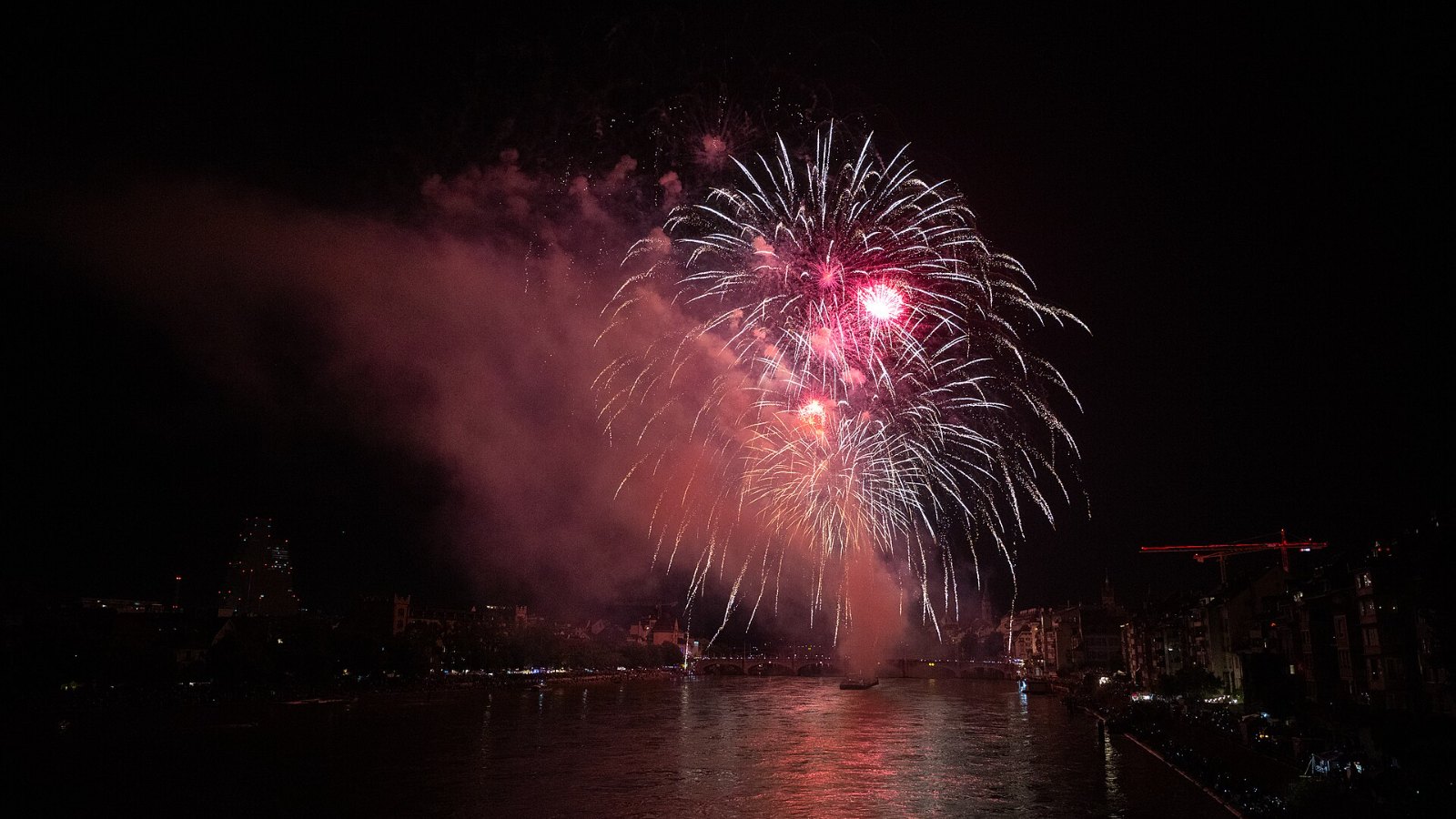
Small shares, big peaks
The figures show a small industry and a burden concentrated on a few nights. According to the industry association’s estimate, the Swiss fireworks market is worth 50 million to 60 million Swiss francs a year. About three-quarters of the goods are imported, mainly from China. Four Swiss manufacturers produce almost exclusively quiet fireworks, and the industry employs about 200 people directly. In 2025, 1,443 metric tons of fireworks were used, compared with 1,876 metric tons in 2022. The Federal Council sees no clear trend.
Fireworks generate several hundred metric tons of particulate matter a year, 2% to 3% of Switzerland’s particulate emissions, depending on the year. When the air is still and there is a temperature inversion, the daily limit can be exceeded for short periods. Of an average of 8,500 building fires a year between 2018 and 2022, an average of 93, or about 1%, were traced to fireworks. Among people in employment, accident statistics recorded an average of about 200 fireworks accidents a year between 2016 and 2020, just over a third of them involving hearing damage. About 1,300 metric tons of debris are left behind, and the public sector pays for the cleanup.
What moves the initiators most is hard to measure: the stress on animals. According to the dispatch, pets react in different ways, including by running away. In wild animals, it says, flight can use up energy reserves and lead to accidents, some of them fatal, and birds are temporarily driven from their resting and feeding grounds. “People can prepare for fireworks; animals cannot,” Andrea Schaller of Swiss Animal Protection said at the yes committee’s news conference.
The firecracker ban nobody wanted
A compromise was within reach. The education committee of the National Council, the lower house of Parliament, drew up an indirect counter-proposal: a ban on bang-only firecrackers and stricter rules on fireworks brought into the country by travelers. In November 2025, the Federal Council, which opposes the initiative, took the view that the counter-proposal also went too far. It did, however, come out in favor of banning fireworks that only bang and have no light effects. The National Council approved the counter-proposal in December 2025 by 97 votes to 85, and the Council of States, the upper house, followed in June 2026.
In the final vote on June 19, 2026, the counter-proposal failed in the National Council by 79 votes to 114. The Swiss People’s Party (SVP) and FDP.The Liberals voted against it, with the SVP warning of more red tape. The Greens rejected it because it no longer went far enough for them. In December, they had still voted in favor. “That would have left 90% of fireworks completely unaffected,” said Kilian Baumann, a Green from Bern, explaining the about-face. The initiators called the counter-proposal a “sham compromise” and stuck with their initiative.
The upshot is paradoxical. If voters reject the initiative, everything stays as it is at the federal level: no ban on bang-only firecrackers, no stricter import rules. The counter-proposal is off the table, and with it the ban on bang-only firecrackers that the Federal Council itself had supported.
The patchwork
What the federal government does not regulate, the cantons and municipalities do. The use of fireworks is restricted in nine of the 10 largest Swiss cities. In Bern’s Old Town, fireworks in categories F2 to F4 have been banned since 2021, and the canton of Basel-Stadt allows rockets and firecrackers only on the eve of Swiss National Day and on the day itself, as well as on New Year’s Eve. Davos banned loud fireworks by municipal vote in 2020, and 37 municipalities in the canton of Graubünden prohibited loud fireworks in 2025. In Rüti, in the Zurich Oberland, voters approved a year-round ban with 59.7% of the vote on Nov. 30, 2025. According to Swiss Animal Protection, more than 100 municipalities have adopted restrictions or bans.
In addition, a ban on fireworks in indoor spaces open to the public has been in force in all cantons since April 1, 2026. It was prompted by the fire disaster at the bar Le Constellation in Crans-Montana in the early hours of New Year’s Day 2026, in which 40 people died. According to initial findings by the Valais public prosecutor’s office, sparkler fountains on champagne bottles started the fire. This ban has nothing to do with the initiative, which seeks to ban noise-producing fireworks. Because of the cantonal ban, however, the Council of States committee decided against also regulating indoor fireworks at the federal level.
For opponents, the patchwork shows that the current rules work: Anyone who wants peace and quiet can secure it in their own municipality. For supporters, it shows the opposite. Lukas Jost, a farmer who appears on behalf of the yes committee, says the many local restrictions add up to a confusing patchwork.
The camps
The Federal Council and Parliament recommend a no vote. The SVP, the FDP and The Centre are on the no side, and in Parliament, most of the Green Liberals (GLP) were, too. A cross-party committee with representatives of the SVP, The Centre, the Young Liberals (the FDP’s youth wing), the Swiss small-business association and the Pro Feuerwerk association is running the no campaign, mainly online, according to its own account, because its resources are limited. “Fireworks are part of any proper celebration,” said Daniel Bussmann, president of the Pro Feuerwerk association. Urs Furrer, director of the small-business association, warned: “If all we have in this country is bans, small business will be stifled in the end.”
In Parliament, the Greens and the Social Democrats (SP) backed the initiative, although 13 SP members abstained in the vote on the recommendation to reject it. “Many people are no longer willing to suffer for days from fireworks noise that brings joy to only a few,” Kilian Baumann said in the National Council. Bettina Balmer, an FDP member from Zurich, countered: “Is it the state’s job to patronize the population?” Environment Minister Albert Rösti pointed to the Federal Supreme Court: “According to the Federal Supreme Court, there is a public interest worthy of protection in upholding the tradition of fireworks.”
Arena: Should loud fireworks be banned?
For: Yes to the initiative
- Animals suffer: Pets, livestock and wild animals panic, and birds are driven from their resting places.
- Private use has gotten out of hand, and the banging often goes on for days.
- Safety: Burns, hearing damage and fires could be avoided.
- Environment: particulate matter, metals and about 1,300 metric tons of debris a year.
- A national rule would replace the patchwork of municipal rules.
- Large displays at supraregional events remain possible, and so do quiet fireworks for private use.
Against: No to the initiative
- The existing rules are sufficient: Cantons and municipalities can already impose restrictions and bans.
- Tradition: Fireworks are part of Aug. 1, New Year’s Eve and village festivals.
- The burden is limited to a few days a year.
- Unclear terms: What counts as loud and what counts as supraregional remains open.
- Circumvention: Purchases abroad and online are hard to control, and specialist retailers would be squeezed out.
- A ban does not belong in the Constitution.
A look across the border
Switzerland would not be alone in imposing a ban. The Netherlands has adopted a ban on consumer fireworks for private individuals, and the coming New Year’s Eve is set to be the first without private fireworks. That makes it the second European country, after Ireland, to restrict private use so strictly. In Germany, fireworks may as a rule be set off only around New Year’s Eve, and several cities have set up no-fireworks zones. In surveys from 2018 and 2019, 57% to 58% of respondents there favored a ban on loud fireworks or on setting off firecrackers on New Year’s Eve, depending on the survey.
The polls: A clear lead
In the first trend survey conducted by gfs.bern for SRG SSR from Oct. 5 to Oct. 18, 2026, the initiative leads 69% to 29%. Of those surveyed, 55% are definitely in favor and 19% definitely against. Leewas, polling for Tamedia and 20 Minuten on Oct. 7 and 8, 2026, found 68% to 30%; YouGov, polling from Oct. 7 to Oct. 19, 2026, found 62% to 33%. Support reaches deep into the center-right camp: According to gfs.bern, supporters of the SVP, at 53%, and of the FDP, at 59%, also back the initiative, even though their parties have recommended a no vote. Women, at 76%, are more clearly in favor than men, at 60%. “The fireworks initiative really has a good chance of being approved,” Lukas Golder, a political scientist at gfs.bern, told SRF. The figures are consistent with earlier surveys: At the end of 2023, the Demoscope institute found 76% support in a poll for the news site Watson, and at the end of 2024, gfs.bern found 68%. Popular initiatives, however, typically lose support during the campaign, as gfs.bern itself notes. In addition to a popular majority, the initiative also needs a majority of the cantons. According to YouGov, the initiative leads in every canton, narrowly in Geneva, Vaud, Valais and Obwalden.
| Poll | Survey | Yes | No | Undecided |
|---|---|---|---|---|
| gfs.bern for SRG SSR | Oct. 5 to Oct. 18, 2026, 14,874 respondents | 69 | 29 | 2 |
| YouGov Schweiz | Oct. 7 to Oct. 19, 2026, 2,949 respondents | 62 | 33 | 6 |
| Leewas for Tamedia and 20 Minuten | Oct. 7 and 8, 2026, 11,239 respondents | 68 | 30 | n/a |
What a yes and what a no would mean
| If yes | If no | |
|---|---|---|
| Law | Ban in the Constitution, implementing provisions no later than two years after the vote | Current rules remain; cantons and municipalities decide |
| Aug. 1 | Loud fireworks only at permitted events of supraregional significance; privately, only quiet fireworks | As now, including bans during droughts |
| New Year’s Eve | Private use of loud fireworks banned; large events need a permit from the canton | As now |
| Business | Losses mainly for importers and retailers; Swiss manufacturers less affected | No intervention; municipal bans remain possible |
| Firecracker ban | included in the initiative | off the table; the counter-proposal failed |
If the initiative passes, the new rules would have to take effect by the end of November 2028 at the latest. This means that the turn of the year 2028-29 would be the first, at the latest, at which private individuals could no longer set off loud fireworks, and Aug. 1, 2029, the first such Swiss National Day.
Timeline
Commentary: The anger is justified, but the Constitution is the wrong place
Anyone who has ever helped a dog through a New Year’s Eve understands the initiators. The banging that goes on for days before and after the holidays is an imposition on many people and animals. It rarely serves any purpose beyond the amusement of a few. That two-thirds of those surveyed want a ban is a clear signal.
Even so, this ban does not belong in the Federal Constitution. The initiative bans something it does not itself define. It allows exceptions according to a criterion that no one knows. What counts as loud and which celebration is supraregional would be decided later by the administration and Parliament. Anyone who votes yes is signing a blank check. The municipalities, meanwhile, show that there is another way: Davos and Rüti decided at the ballot box, and dozens of municipalities in Graubünden have banned loud fireworks of their own accord. That is federalism at work, not a patchwork.
It is Parliament that has failed on this issue. With the ban on bang-only firecrackers, a sensible compromise was on the table. The Federal Council did consider the counter-proposal as a whole to go too far, but it supported the ban on bang-only firecrackers. The SVP, the FDP and the Greens sank the counter-proposal for opposite reasons. Now voters are left with an all-or-nothing choice. Those who want to save the tradition will have to make sure after a no vote that the banging gets quieter anyway. Otherwise, the next initiative will follow. It will not be any milder.
All figures as of Oct. 30, 2026. Figures on the market and consumption are based on estimates by the industry association and federal authorities. The second SRG SSR poll will be published in November, and this article will be updated afterward. Quotes originally given in another language were translated by the editors. Sources are cited in their original language.
Related coverage: 13th AHV pension payment: The people ordered it, now they are asked to pay · Fairness initiative: The Centre challenges the yes to individual taxation · War Materiel Act: How much neutrality can the arms industry take?
Sources
- Federal Council: Voting page on the fireworks initiative, with the explanatory brochure (as of Oct. 12, 2026)
- Swissvotes: Voting text, federal decree of June 19, 2026
- Swissvotes: Federal Council dispatch (Oct. 16, 2024)
- Federas on behalf of the Federal Office for the Environment (FOEN): Rechtliche und wirtschaftliche Abklärungen (July 9, 2024)
- Federal Council: Opinion on the indirect counter-proposal (Nov. 26, 2025)
- Parliament/SDA: Debate in the National Council (Dec. 11, 2025)
- SRF: Nationalratsdebatte zwischen Freiheit und Rücksicht (Dec. 11, 2025)
- Council of States education committee (WBK-S): Press release on the indoor ban (May 5, 2026)
- Parliament/SDA: Debate in the Council of States (June 3, 2026)
- National Council: Final vote on the initiative (June 19, 2026)
- Council of States: Final vote on the initiative (June 19, 2026)
- National Council: Final vote on the counter-proposal (June 19, 2026)
- SRF: Initiative kommt ohne Gegenvorschlag vors Volk (June 26, 2026)
- Südostschweiz/SDA: Nach gescheitertem Gegenvorschlag vor dem Volk (June 26, 2026)
- Blick/Beobachter: Was am 1. August gilt (July 28, 2026)
- blue News: A Swiss National Day without fireworks (Aug. 2, 2026)
- cash.ch/AWP: Gewerbe und Bürgerliche warnen vor Feuerwerksverbot (Oct. 6, 2026)
- cash.ch/AWP: Ja-Komitee fordert mehr Rücksicht (Oct. 13, 2026)
- Plattform J: The yes committee’s campaign kickoff (Oct. 13, 2026)
- SRF: Ja-Komitee fordert mehr Rücksicht beim Feiern (Oct. 13, 2026)
- swissinfo.ch: Nuisance or festive tradition? (Oct. 13, 2026)
- cash.ch/AWP: First Tamedia poll on the Nov. 29, 2026, vote (Oct. 14, 2026)
- YouGov Schweiz: Opinion barometer on the Nov. 29, 2026, votes (Oct. 20, 2026)
- gfs.bern: SRG SSR trend survey, first wave, on the Nov. 29, 2026, vote (Oct. 23, 2026)
- SRF: First SRG SSR poll on the fireworks initiative (Oct. 23, 2026)
- Südostschweiz/SDA: Bundesrat gegen die Feuerwerksinitiative (Oct. 22, 2026)
- NZZ: Stille Nacht statt 1.-August-Raketen (July 30, 2025)
- Plattform J: Berner Stadtrat für ein Verbot (March 13, 2026)
- SRF: Submission of the initiative (Nov. 3, 2023)
- Aargauer Zeitung: Fertig mit der Knallerei (Nov. 3, 2023)
- SRF: Launch of the initiative (May 3, 2022)
- Volksstimme/dpa: Fireworks in Germany (Dec. 27, 2019)
- GfK for PETA Deutschland: Survey on loud fireworks (2018)
- NL Times: Dutch consumer fireworks ban cleared (July 1, 2026)
- blue News: Cause of the Crans-Montana fire
- SRF: Pyroverbot in öffentlich zugänglichen Räumen beschlossen
- Federal Council: Opinion on the report of the National Council education committee (WBK-N) of Oct. 24, 2025, BBl 2025 3488 (Nov. 26, 2025)
Comments 0