Purge or self-defense? The Young SVP throws out its Lucerne leadership
The Young SVP, the youth wing of the Swiss People’s Party, has expelled 10 Lucerne members, including the cantonal president. It accuses the far-right group Junge Tat of a targeted infiltration. Those affected deny everything. An analysis of the evidence, the law on associations and how serious the party leadership is about drawing a line.
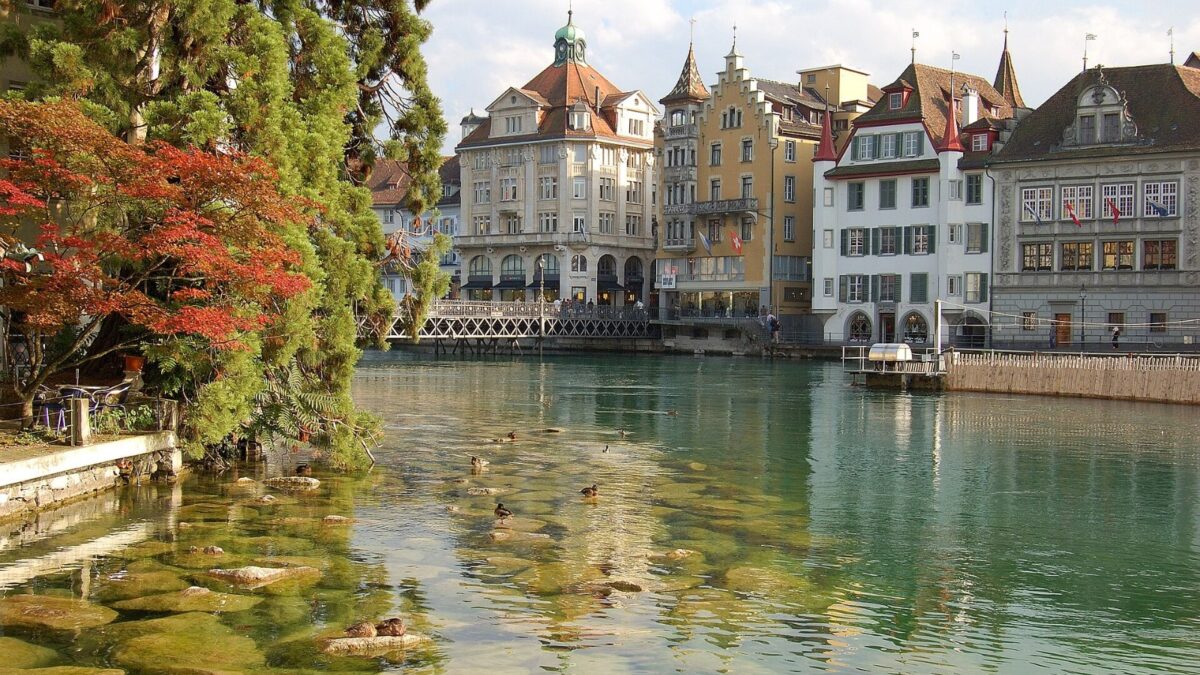
On Thursday evening, Nov. 26, 2026, the Young SVP of Switzerland sent out a statement of a kind a Swiss party rarely writes about its own people. The youth wing of the Swiss People’s Party said its national leadership had expelled 10 members of its Lucerne branch, among them cantonal president Joel Bucher. The leadership had already made the decision on Tuesday, unanimously. The justification is grave: An internal investigation had established, it said, that the far-right group Junge Tat orchestrated a “targeted infiltration of personnel” in the Lucerne branch. President Nils Fiechter was quoted making a point of principle: “We will not allow a Young SVP branch to be infiltrated by an outside organization that is not part of the party.”
Within hours, the expulsion turned into an open conflict. The Lucerne members deny any infiltration, do not recognize the expulsions and are considering legal action against Fiechter. The other youth parties in Lucerne have ended their cooperation with the Young SVP. The cantonal SVP is backing the expelled president for now but wants the allegations clarified. Junge Tat itself speaks of an “unnecessary affront.”
This analysis puts the case in context and examines what is proven and what is not. It asks who Junge Tat is, whether a national party can expel members of a legally independent branch at all and why this particular leadership is cracking down now. The case invites two convenient answers. One sees a party bravely defending itself against extremists. The other sees a leadership that has cultivated ties to the far right itself and is now getting rid of unwelcome rivals with a handy label. Neither story fully survives a sober examination.
The case at a glance
| Item | Status as of Nov. 28, 2026 |
|---|---|
| Decision | National leadership of the Young SVP, unanimous on Tuesday, Nov. 24, 2026; made public on Thursday, Nov. 26, 2026 |
| Those affected | Ten members of the Young SVP of the canton of Lucerne, including president Joel Bucher and another board member; plus bans on joining other branches |
| Allegation | Junge Tat allegedly planted people in the branch and in March 2026 secured a majority to oust then-president Quentin Zweili |
| Evidence | According to the leadership, a “comprehensive” internal investigation; it has published no evidence |
| Response from Lucerne | It says the allegations are untrue and the expulsions invalid; legal steps against Fiechter are under review |
| Admitted | One dual membership that came to light in early November (the person left); one member had brought a Junge Tat member to a delegates’ assembly |
| Reactions | The Young Green Liberals, Young Liberals, Young Center, Young Greens and Young Socialists in Lucerne halt cooperation; the SVP Lucerne is looking into the matter; the national SVP says it is a matter for the youth wing |
| Next dates | Extraordinary general meeting of the Young SVP of Lucerne on Tuesday, Dec. 1, 2026, where the national party says by-elections are to be held; Lucerne cantonal election on March 21, 2027; National Council election on Oct. 24, 2027 |
Timeline: From a 2018 poster to the expulsion
This week’s events have a history that goes back to an election poster in the canton of Bern. It is the story of a youth party that has struggled for years with where to draw its line on the right. And it is the story of a group that seeks out exactly that line.
| Date | Event |
|---|---|
| February 2018 | The Young SVP of the canton of Bern, co-chaired by Nils Fiechter and Adrian Spahr, publishes a drawing against transit sites for foreign Travelers ahead of the cantonal election. The association Sinti und Roma Schweiz files a criminal complaint. |
| 2020 | Junge Tat emerges from the neo-Nazi scene as a merger of the groups Eisenjugend and Nationalistische Jugend Schweiz. |
| March 10, 2022 | The Federal Supreme Court upholds the convictions of Fiechter and Spahr for racial discrimination. |
| May 2023 | Sarah Regez, later head of strategy of the national Young SVP, attends an appearance by Austrian far-right activist Martin Sellner in the canton of Zurich. According to the Sunday paper SonntagsBlick, members of Junge Tat are also present. |
| September 2023 | SonntagsBlick reports that the two leaders of Junge Tat worked for the then-president of the SVP in Winterthur. |
| March 9, 2024 | Fiechter is elected president of the national Young SVP at the delegates’ assembly in Thun. |
| March 31, 2024 | SonntagsBlick reveals Regez’s meeting. Six cantonal branches demand that she suspend her role. Fiechter backs her. |
| October 2024 | Quentin Zweili becomes president of the Young SVP of Lucerne. |
| March 19, 2026 | At the general meeting, Joel Bucher takes over the presidency from Zweili. According to the national leadership, people planted in the branch gave the new leadership its majority; the Lucerne members deny this. |
| Sept. 4, 2026 | The trial of six members of Junge Tat opens at the Zurich District Court. |
| Oct. 3, 2026 | The national Young SVP’s delegates’ assembly in Lugano amends the bylaws: The leadership may, with a two-thirds majority, directly expel members of branches that are unable to act. |
| Oct. 30, 2026 | The court sentences leaders Tobias Lingg and Manuel Corchia to suspended prison terms of 12 months each. The verdicts are not final. |
| Early November 2026 | The Lucerne branch says it learned of a dual membership; the person leaves. |
| Nov. 23, 2026 | The Sursee electoral district nominates Bucher for the Lucerne cantonal election. |
| Nov. 24, 2026 | The national leadership decides on the expulsions. |
| Nov. 25, 2026 | According to the national party’s statement, those affected receive their expulsion letters, without reasons and without a prior hearing. |
| Nov. 26, 2026 | The Lucerne branch and the national party go public. Junge Tat rejects the allegations. |
| Nov. 27, 2026 | The Lucerne members weigh a lawsuit; the other youth parties end cooperation; the SVP Lucerne wants the allegations clarified. |
| Dec. 1, 2026 | General meeting of the Young SVP of Lucerne. |
What the leadership alleges and what it proves
The national Young SVP’s statement is short and strikingly precise in its wording. It speaks not of beliefs but of procedure. SRF summed it up this way: This is not about vetting opinions but about an undemocratic act of infiltration. Specifically, the leadership accuses Junge Tat of deliberately placing people in the Lucerne branch and thereby securing a majority in March 2026 to oust then-president Quentin Zweili. On this account, the new president, Bucher, owed his office to that infiltration. The expulsions, the party says, are meant to ensure that the Lucerne branch can enter the 2027 cantonal and national elections without baggage. The statement contains a formula that reads like a program: “The only things that count are the positions and actions of the Young SVP.” Mere statements of distance, it says, are worthless.
The allegation has a strength and a weakness. Its strength is that it describes behavior that can be verified. Whether someone organizes a majority at a general meeting by recruiting members of another organization can in principle be checked against membership dates, chat histories and voting lists. A party does not need to look into its members’ heads to reach such a finding. Its weakness is that the leadership has not shown any of this evidence so far. According to SRF, those affected complain that no evidence was put to them. From the outside, it is therefore impossible to confirm or refute that Junge Tat actually engineered Zweili’s ouster. It is one side’s word against the other’s.
What the statement leaves out is just as notable. On Friday, SRF noted that the party justified the expulsions on purely formal grounds and said nothing about Junge Tat’s ideology. There is no distancing on substance, for instance from the terms and concepts the group promotes. That is no accident. Whoever objects only to procedure does not have to address content and avoids a dispute over positions that might resonate with parts of the party’s own base.
SRF’s extremism specialist, Daniel Glaus, sees something notable in the allegation: It points to a systematic approach rather than isolated cases. It is also striking, he said, that the party did not settle the conflict internally but made it public. At the same time, Glaus voiced doubts about whether the distancing runs deep on substance or is mainly driven by election tactics.
A small part of the facts is undisputed because the Lucerne members admit it themselves. They learned of a dual membership in early November, Bucher wrote. The person left immediately when asked to. In addition, a party member had brought a Junge Tat member to a Young SVP delegates’ assembly. These are points of contact, but not yet an infiltration. Between a single dual member and an orchestrated takeover lies exactly the gap the leadership would have to fill with evidence.
The response from Lucerne
The Lucerne branch reacted at once. It confirmed the expulsions on Thursday and rejected them; overnight into Friday, its president followed up with a detailed statement. The allegations of a targeted infiltration “do not correspond to the facts,” its press release says. Neither Bucher nor the nine others affected had ever been members of Junge Tat, it says. The branch points out that it is a legally independent association and that the power to expel lies with the cantonal board. It accuses the national leadership of trying to influence the general meeting on Dec. 1, 2026. Bucher said Fiechter’s position was untenable. The branch had always kept its distance from Junge Tat, he said, something Fiechter also knew. Whether Bucher is still president of the branch has itself become disputed: The national party considers the branch to be without an elected board and wants to hold by-elections at the extraordinary general meeting on Dec. 1, 2026.
The Lucerne position gains weight from the stance of the cantonal parent party. Party secretary Remo Schranz expressed confidence in Bucher to the newspaper Blick and suggested he may at most have been influenced unwittingly by right-wing extremists. Party president Martin Wicki wants to talk to Fiechter and first establish how many of those affected are also members of the cantonal SVP. His wording is cautious: “Should the allegations be confirmed, appropriate consequences must follow.” Any expulsion from the SVP itself, Wicki said, would first have to be decided by the respective local party. Bucher had been nominated for the cantonal election by the Sursee district only on Monday.
Who Junge Tat is
To grasp the weight of the allegation, one has to know whom it targets. Junge Tat emerged in 2020 from Switzerland’s neo-Nazi scene. It is a merger of the disbanded group Eisenjugend and the Nationalistische Jugend Schweiz. Its leading figures have been the same for years: Manuel Corchia of Winterthur and Tobias Lingg, who according to the weekly Wochenzeitung comes from the Lucerne Hinterland region. In August 2026, the paper put the hard core at about a dozen people. Experts place the group in the New Right; among other things, it opposes migration and LGBTQ issues. It also has a strong presence on social media.
The group itself denies being far-right or xenophobic. In early November 2022, it published a video in which, by its own account, it distanced itself from National Socialism and other totalitarian ideologies. Experts are largely unconvinced. Extremism researcher Dirk Baier of the Zurich University of Applied Sciences told SRF back in 2024 that the group wants to change Switzerland in a way that is incompatible with democracy. His conclusion: “It must therefore be classified as right-wing extremist.” In its report on discrimination in 2023, published in April 2024, the Foundation Against Racism and Antisemitism explicitly warned about the group; according to SRF, the report describes Junge Tat as the dominant organization of Switzerland’s far-right scene.
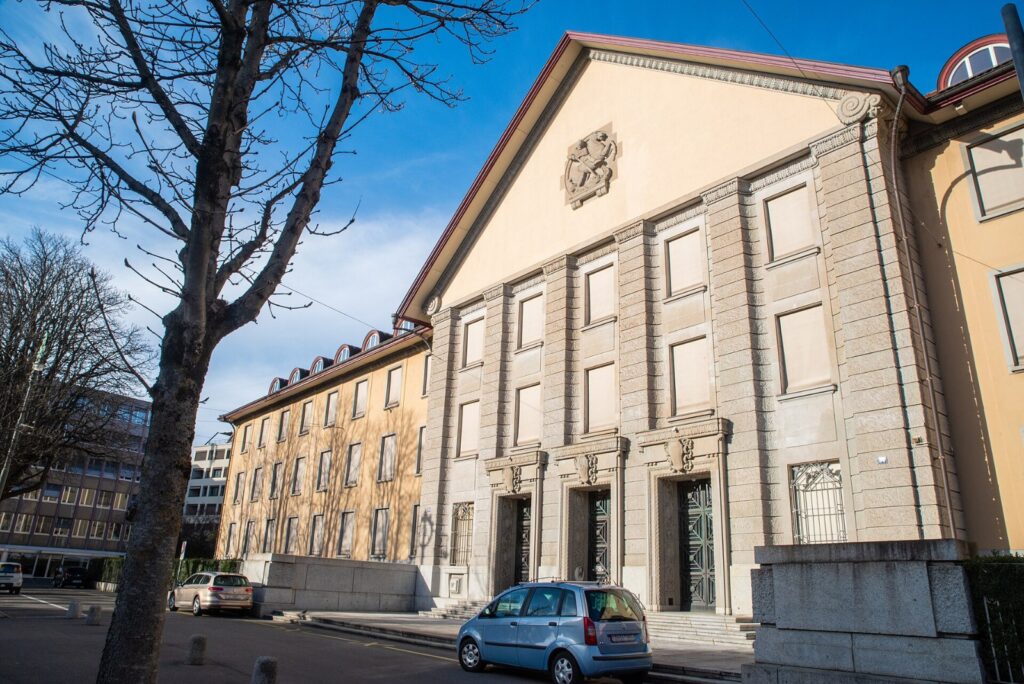
Since this fall, that assessment has also had a legal dimension. On Oct. 30, 2026, the Zurich District Court sentenced Lingg and Corchia to suspended prison terms of 12 months each with four years’ probation, plus a fine each. Two actions were at the center of the case. For disrupting a reading for children, a so-called Drag Story Time at the Tanzhaus Zurich, the court found the two guilty of coercion but acquitted them of discrimination on that count. For disrupting a church service held as part of Pride, at which members put up a cross reading “No Pride Month,” it convicted them of disturbing the freedom of faith and worship and of incitement to hatred. There were also convictions for rioting. Three other members received suspended fines; the only woman charged was acquitted. Prosecutors had sought 15 months, six of them to be served. The defense had largely sought acquittals; at the opening of the trial, one of the defendants called the charges “politically motivated by the left,” according to SRF. The verdicts are not final. Both men already had prior convictions, including for racial discrimination.
For the Young SVP, another trait of the group is decisive: its interest in established parties. Glaus describes Junge Tat as a group that seeks attention and spreads far-right positions, partly with the aim of carrying them into established parties. It presents itself as an independent resistance group, which some young people find appealing, he said. Investigations in recent years show that the proximity is not abstract. In January 2025, the investigative outlets Correctiv and Republik reported that some members of the group had worked for SVP politicians. SonntagsBlick had revealed as early as fall 2023 that the group’s two leaders worked for the then-president of the SVP in Winterthur.
A leadership with a history of its own
That the national Young SVP now presents itself as the guardian of the line on the right surprises anyone who has followed events over the past two years. In March 2024, SonntagsBlick revealed that Sarah Regez, the youth wing’s head of strategy, had attended an appearance by Martin Sellner in the canton of Zurich in May 2023. Sellner is considered the leading figure of the Identitarian movement in Austria and a leading ideologue of so-called remigration plans. Members of Junge Tat were reportedly present at the event as well. Regez later told SRF: “The name Sellner meant absolutely nothing to me.” She called the term “secret meeting” nonsense and the coverage an orchestrated campaign.
Inside the party, the outrage was considerable nonetheless. Six cantonal branches, namely Basel-City, Graubünden, Solothurn, Schaffhausen, Thurgau and Säntis, demanded a clear separation from extremist groups and asked Regez to suspend her role for the time being. Twenty-seven current and former members called in an open letter for an unequivocal distancing from right-wing extremism. Fiechter backed his head of strategy on SRF’s program “Rundschau”: “She did everything right.” He told SRF that the party discusses all topics with everyone, without blinders. It would be wrong, he said, for a party to distance itself wholesale from certain positions. Fiechter and Regez have since married.
The parent party held back at the time. Sandra Sollberger, a member of the party’s executive committee, told SRF that the Young SVP is an independent party and that the SVP would not interfere. Party president Marcel Dettling later called the allegations against members of the youth wing “right-wing extremism theater.” Former Federal Councilor Christoph Blocher said the media were blowing the issue out of proportion.
Fiechter’s own conviction is also part of the history. On March 10, 2022, the Federal Supreme Court upheld the Bern courts’ verdict against him and Spahr for racial discrimination. The case concerned the drawing against transit sites for foreign Travelers from the 2018 cantonal campaign. Both received suspended fines of 30 daily penalty units each. Fiechter accepted the verdict but spoke of a muzzle: “This is a muzzle for everyone who wants to speak out pointedly.”
Two opposite conclusions can be drawn from this history. The first is that a leadership that saw no reason to draw a line two years ago has learned and is now cracking down resolutely where contacts have turned into an attack on its own organization. The second is that this very leadership has little credibility when it accuses others of infiltration without presenting evidence. Both readings are consistent with the known facts. Which one holds will depend on the evidence the leadership has yet to produce.
Can the national party do this? What the law on associations says
Swiss parties are generally associations within the meaning of Articles 60 and following of the Swiss Civil Code. The expulsion of members is governed by Article 72. Under it, the bylaws may specify the grounds on which a member may be expelled. They may also allow expulsion without stating reasons. In such cases, a challenge on the grounds for the expulsion is not admissible. If the bylaws say nothing on the matter, a member may only be expelled by a decision of the association and for good cause. The Federal Supreme Court has always made this broad autonomy of associations subject to the prohibition of abuse of rights. In addition, expelled members can raise internal procedural flaws even if the reason for the expulsion cannot be reviewed. Under Article 75, any member who did not consent to a decision may challenge decisions that violate the law or the bylaws in court within one month of learning of them.
In the Lucerne case, the key question is therefore what the bylaws allow. On Oct. 3, 2026, in Lugano, the national Young SVP’s delegates’ assembly adopted a provision on which the leadership now relies. Under it, the leadership may, with a two-thirds majority, expel members of branches directly and without stating reasons and may impose bans on joining. This applies when cantonal branches “are unable to act and cannot expel individual members.” According to the news site nau.ch, the provision lapses when Fiechter leaves office. According to the statement, the expulsion letters went out on Wednesday, Nov. 25, 2026, without reasons and without a prior hearing. If the bylaws allow expulsion without reasons, a challenge on the grounds is ruled out under Article 72. Procedural questions remain open, such as whether the leadership was right to find the branch unable to act and whether an expulsion without a hearing withstands the abuse-of-rights test. The Lucerne members counter that their association is legally independent and that expulsions are decided by the cantonal board. Both can be true at the same time. In parties with a federal structure, memberships often exist at several levels. It is therefore conceivable that the national party can expel people from its own association and bar them from joining other branches, but not directly from the cantonal association. Which version applies would have to be settled by the courts in a dispute.
Incompatibility rules are nothing unusual in Swiss party politics. The bylaws of the national Young Socialists, for example, rule out membership in other political party organizations “in principle,” with the exception of the Social Democratic Party of Switzerland and politically allied organizations abroad. There are conflicts over organized factions on the left as well. In 2024, Young Socialist members close to the Marxist current “Der Funke” openly campaigned at the annual assembly for founding a Revolutionary Communist Party. In its statement, the Young SVP itself drew a comparison with the Young Socialists, which it said had been “infiltrated by left-wing extremists and antisemites years ago.” That is the Young SVP’s claim, not an established fact. One difference remains: Junge Tat is not a faction within the party but an independent organization whose leaders have been convicted at first instance of, among other things, incitement to hatred.
The Lucerne dimension
The conflict comes in a pre-election year. On March 21, 2027, the canton of Lucerne elects a new cantonal parliament; the National Council election follows on Oct. 24, 2027. Lucerne will gain an additional National Council seat because of population growth. The SVP is the second-strongest force in the canton. In the cantonal election of April 2, 2023, it won 27 of 120 seats, behind the Center party with 32.
The party’s strength is unevenly distributed across the canton, however. In the Entlebuch district, the SVP won 36.1% of the vote in 2023, compared with only 12.7% in the city of Lucerne. In the Sursee district, which nominated Bucher, it stood at 24.7%, slightly above the cantonal average of 23.1%. For a youth party that wants to get candidates onto the lists, a public dispute about right-wing extremism is the opposite of a good start. That is precisely how the national leadership justifies its intervention: It wants to prevent the branch from going into the elections with baggage.
The other Lucerne youth parties have already upset that calculation. The Young Green Liberals, Young Liberals, Young Center, Young Greens and Young Socialists speak of a warning signal and demand a full investigation. They are halting cooperation with the Lucerne Young SVP until it clearly distances itself from Junge Tat and from any form of right-wing extremism. They also criticize the conduct of the Lucerne branch. For cross-party events such as school debates, where youth parties traditionally appear together, that is a noticeable break.
Why parties attract extremists
Why would a group like Junge Tat want to infiltrate a youth party at all? The answer is less exotic than it seems. Established parties offer what a small group lacks: legitimacy, access to spots on electoral lists and to public office, infrastructure, money and publicity. Extremism researcher Dirk Baier told SRF in 2024 that Junge Tat was trying “to connect with much larger groups and even parties.” On Friday, the free daily 20 Minuten also looked at why established parties can be attractive to extremists. The January 2025 investigation by Correctiv and Republik showed how such connections work: At an event organized by Junge Tat in December 2024 in Kloten, Roger Beckamp, a politician of the German party AfD and then a member of the Bundestag, argued that lawmakers could hand out money and jobs to people who in their spare time are useful to the extra-parliamentary activist scene.
The Federal Intelligence Service is observing a broader trend at the same time. In May 2026, the Federal Council noted that radicalization via social media increasingly affects young adults and minors, while violent right-wing and left-wing extremism persists. For youth parties, this leads to an uncomfortable insight. Their target audience is the same one extremists are courting. The more open a youth party is toward the far right in its language and topics, the harder it is to draw a line when people from that milieu show interest in joining.
Claims fact-checked
Both sides of the debate make claims that can be checked. A selection:
| Claim | Finding |
|---|---|
| “The expelled Lucerne members belong to Junge Tat.” | Not publicly proven. All 10 deny it. A single dual membership is admitted; the person has left. |
| “Junge Tat organized Quentin Zweili’s ouster.” | A claim by the national leadership based on an unpublished investigation. It cannot currently be verified independently. |
| “The Young SVP is now clearly distancing itself from right-wing extremism.” | Formally yes, on substance no, according to SRF: The statement says nothing about Junge Tat’s ideology. |
| “The national party has no right to expel members of a branch.” | Open. It depends on the bylaws (Article 72 of the Civil Code). The Lucerne members invoke their independence, the national party a bylaw change of Oct. 3, 2026. |
| “Junge Tat is a harmless activist group.” | Not tenable. Its leaders have been convicted at first instance of incitement to hatred and coercion, among other things (not final). They already had prior convictions. Experts classify the group as far right. |
| “The party leadership never had contact with this milieu.” | Not tenable. Head of strategy Regez attended an appearance by Sellner in 2023 at which, according to SonntagsBlick, members of Junge Tat were present. Fiechter defended her. |
| “Fiechter has been convicted himself.” | Correct. In 2022, the Federal Supreme Court upheld his conviction for racial discrimination; he received a suspended fine. |
| “Other parties have no such problems.” | Not tenable. Incompatibility rules exist elsewhere too, for example among the Young Socialists; there have been conflicts with organized factions there as well. |
The Arena: Was the Young SVP right?
On contested questions, Expertistan sets out the strongest arguments on both sides.
Yes: A party must be allowed to defend itself against infiltration
- Self-determination: Anyone who organizes a majority by smuggling in members of an outside organization attacks the party’s internal democracy. Fiechter puts it as a principle: A branch must not be infiltrated by an outside organization.
- Action instead of lip service: Extremism researcher Dirk Baier said back in 2024 that if established parties distanced themselves from Junge Tat, “this organization would starve on the right-wing fringe.” An expulsion puts exactly that into practice.
- Admitted points of contact: The Lucerne branch itself confirms a dual membership and a Junge Tat member’s attendance at a delegates’ assembly.
- The nature of the group: Junge Tat’s leaders have been convicted at first instance. A party that gives such people influence damages itself.
- Credibility before the elections: The party wants its Lucerne branch to enter the 2027 elections without baggage. A decisive cut serves that better than months of quarreling.
- Not a special case: Incompatibility rules are common. The Young Socialists, too, rule out membership in other party organizations in principle.
No: An expulsion without evidence is a purge
- No evidence: The leadership cites an internal investigation it does not disclose. The 10 people affected deny ever having been members of Junge Tat. Anyone who labels someone part of a far-right infiltration owes them more than an assertion.
- Federalism: The Lucerne branch is an independent association. By its account, the power to expel lies with the cantonal board, not in Bern.
- Power struggle: The target is precisely the leadership that won the vote to oust its predecessor in March. Reversing a lost internal election after the fact with the label of infiltration sets a dangerous precedent.
- Questionable accusers: In 2024, the leadership defended its head of strategy after the Sellner event. Its president has himself been convicted of racial discrimination. Of all leaderships, it is this one that is now drawing a line without saying where it runs.
- Only formal: According to SRF, the party does not distance itself from Junge Tat on substance. Daniel Glaus questions whether the distancing runs deep or is mainly driven by election tactics.
- The cantonal party has doubts: The SVP Lucerne is backing Bucher for now and wants to examine the allegations first. Those who know the people affected evidently do not see an obvious case.
What comes next
The extraordinary general meeting of the Young SVP of Lucerne takes place on Tuesday, Dec. 1, 2026. It should show whether the branch stands united behind Bucher. The national party wants to hold by-elections at the same meeting because, in its view, the branch no longer has an elected board. The Lucerne members do not recognize the expulsions. In the worst case, two sides will afterward each claim to lead the branch.
Legally, the expulsions start a clock. If those affected want to challenge the decision as contrary to the bylaws, they must go to court within one month of learning of it, under Article 75 of the Civil Code. The Lucerne members have not specified what legal steps they are considering against Fiechter personally. The SVP Lucerne wants to talk to Fiechter and clarify how many of those affected also belong to the parent party. Decisions on their membership rest first with the local parties.
Meanwhile, the case against Junge Tat continues. The verdicts of Oct. 30, 2026, are not final. If those convicted appeal, the Zurich High Court will have to rule on where the line lies between provocative activism and punishable discrimination. And in the spring of 2027, Lucerne voters will decide how much this dispute matters to them.
Commentary: A party that draws a line must say where it runs
A democracy depends on parties that do not let themselves be hollowed out by groups that despise democracy. In that sense, the national Young SVP is right in principle. A party may defend itself against organized infiltration; indeed it must. Anyone who smuggles in members of an outside group to swing general meetings is not doing politics but seizing territory. That the leadership is not looking away this time deserves credit.
But credibility does not come from toughness alone. It requires two things the party leadership has so far failed to deliver. The first is evidence. If the investigation was as comprehensive as claimed, the leadership must at least disclose its key findings to those affected and to the members. Anyone who publicly links 10 young people to a far-right organization bears a responsibility that goes beyond a press release. This is not only a matter of fairness. It is also the foundation on which such a decision would have to stand in court.
The second is substance. A distancing that objects only to procedure is half a distancing. Whoever accuses Junge Tat of infiltration but stays silent about its ideology leaves open what is actually wrong with it, apart from the fact that it smuggles in outside members. A party that seriously wants to distance itself from right-wing extremism must say which terms, concepts and worldviews it rejects. That is exactly what the current leadership refused to do two years ago, when it argued that one should not distance oneself wholesale from positions.
This time, the parent party can no longer hide behind the independence of its youth wing. The SVP Lucerne has recognized this and wants the allegations clarified. The national SVP declares the matter the youth wing’s business. That is too little for a party that rightly demands not to be lumped in with the far right. A party that wants to reject that accusation must draw the line clearly itself.
The Lucerne case is therefore a test. If the national Young SVP presents evidence and says clearly what Junge Tat stands for and why that is incompatible with its values, the expulsion will have been an act of self-defense. If it fails on both counts, what remains is a purge with a convenient label.
Editor’s note
Expertistan names only people who hold or have held public roles: the presidents of the national Young SVP and of the Lucerne branch, as well as the former Lucerne president. The other expelled members are not named. The infiltration allegations come from the national Young SVP and are denied by those affected; the presumption of innocence applies to everyone. The Zurich District Court’s verdicts of Oct. 30, 2026, against members of Junge Tat are not final. Quotes from media reports are marked as such and attributed to their sources. Quotes have been translated from German by the editorial team. Article as of Saturday, Nov. 28, 2026.
Sources
- 1. Junge SVP Schweiz, Medienmitteilung zum Ausschluss von Exponenten der Luzerner Kantonalsektion, 26.11.2026: https://jsvp.ch/junge-svp-schweiz-schliesst-diverse-parteiexponenten-der-luzerner-kantonalsektion-aus-der-jungen-svp-aus/
- 2. nau.ch, «JSVP ändert Statuten zum Parteiausschluss und schweigt», 11.2026: https://www.nau.ch/politik/bundeshaus/jsvp-andert-statuten-zum-parteiausschluss-und-schweigt-67200719
- 3. Bote der Urschweiz, «JSVP: Joel Bucher übernimmt Präsidium», 03.2026: https://www.bote.ch/nachrichten/zentralschweiz/jsvp-joel-bucher-uebernimmt-praesidium-art-1694355
- 4. plattformj, Wahl von Nils Fiechter zum Präsidenten der Jungen SVP Schweiz, 09.03.2024: https://www.plattformj.ch/artikel/218972/
- 5. 20 Minuten, «Wir sind keine Rechtsextremisten»: Junge Tat äussert sich per Video, 11.2022: https://www.20min.ch/story/wir-sind-keine-rechtsextremisten-junge-tat-aeussert-sich-per-video-205758035138
- 6. Kanton Luzern, Wahlen 2027: https://www.lu.ch/verwaltung/JSD/wahlen_abstimmungen/Wahlen_2027
- 7. SRF News, «Junge SVP Schweiz schliesst zehn Luzerner aus», 26.11.2026: https://www.srf.ch/news/schweiz/unterwanderungs-vorwuerfe-junge-svp-schweiz-schliesst-zehn-luzerner-aus
- 8. SRF News, «Junge SVP lässt inhaltliche Abgrenzung zu Junge Tat vermissen», 27.11.2026: https://www.srf.ch/news/schweiz/vorwurf-der-unterwanderung-junge-svp-laesst-inhaltliche-abgrenzung-zu-junge-tat-vermissen
- 9. SRF News, «Was der Mitglieder-Ausschluss für die Junge SVP bedeutet» (Daniel Glaus), 27.11.2026: https://www.srf.ch/news/schweiz/parteiinterner-konflikt-was-der-mitglieder-ausschluss-fuer-die-junge-svp-bedeutet
- 10. NZZ, «Unterwanderung durch Junge Tat: Junge SVP schliesst mehrere Mitglieder aus Luzerner Sektion aus», 26.11.2026: https://www.nzz.ch/schweiz/unterwanderung-durch-junge-tat-junge-svp-schliesst-mehrere-mitglieder-aus-luzerner-sektion-aus-ld.10075890
- 11. zentralplus, «Unterwanderung durch Junge Tat: Luzerner kontern», 27.11.2026: https://www.zentralplus.ch/news/unterwanderung-durch-junge-tat-jsvp-luzern-kontert-2914283/
- 12. Blick, «Junge SVP wirft Luzerner Exponenten aus der Partei», 26.11.2026: https://www.blick.ch/politik/junge-svp-wirft-luzerner-exponenten-aus-der-partei/rb55wtv
- 13. Blick, «SVP Luzern prüft Konsequenzen nach Junge-Tat-Vorwürfen», 27.11.2026: https://www.blick.ch/politik/svp-luzern-prueft-konsequenzen-nach-junge-tat-vorwuerfen/m922hzn
- 14. watson, «JSVP Schweiz schliesst zehn Luzerner aus: das ist der Grund», 27.11.2026: https://www.watson.ch/schweiz/svp/365873710-jsvp-schweiz-schliesst-zehn-luzerner-aus-das-ist-der-grund
- 15. Tages-Anzeiger, «Junge SVP schliesst in Luzern zehn Mitglieder samt Präsident aus», 26.11.2026: https://www.tagesanzeiger.ch/junge-svp-luzern-zehn-mitglieder-wegen-junge-tat-ausgeschlossen-480439288751
- 16. 20 Minuten, «Junge Tat und Junge SVP: Warum Parteien für Extremisten attraktiv sein können», 27.11.2026: https://www.20min.ch/story/jsvp-und-junge-tat-extremisten-wollen-das-system-von-innen-heraus-bekaempfen-103674646
- 17. 20 Minuten, «Junge SVP Luzern: Zehn Mitglieder wegen Junger Tat ausgeschlossen», 26.11.2026: https://www.20min.ch/story/auch-luzerner-praesident-von-junger-tat-unterwandert-jsvp-schliesst-zehn-mitglieder-aus-103674392
- 18. Keystone-SDA via bluewin, «Junge SVP Luzern bestreitet Unterwanderung durch Junge Tat», 27.11.2026: https://www.bluewin.ch/de/news/politik/junge-svp-luzern-bestreitet-unterwanderung-durch-junge-tat-li.3688822
- 19. Bote der Urschweiz, «JSVP Schweiz schliesst Luzerner Mitglieder wegen Junge Tat aus», 26.11.2026: https://www.bote.ch/nachrichten/zentralschweiz/jsvp-schweiz-schliesst-luzerner-mitglieder-wegen-junge-tat-aus-art-1734389
- 20. Luzerner Zeitung, «Die Junge SVP ist unter neuer Führung» (Wahl Quentin Zweili), 2024: https://www.luzernerzeitung.ch/zentralschweiz/kanton-luzern/kanton-luzern-die-junge-svp-ist-unter-neuer-fuehrung-ld.2683242
- 21. Keystone-SDA via nau.ch, «Bezirksgericht Zürich verurteilt Anführer der Jungen Tat», 30.10.2026: https://www.nau.ch/news/ausland/bezirksgericht-zurich-verurteilt-anfuhrer-der-jungen-tat-67195765
- 22. Radio Central, «Bezirksgericht Zürich verurteilt Anführer der Jungen Tat», 30.10.2026: https://www.radiocentral.ch/news/schweiz/bezirksgericht-zuerich-verurteilt-anfuehrer-der-jungen-tat-165886815
- 23. ref.ch, «Anführer der Jungen Tat nach Störung von Gottesdienst verurteilt», 30.10.2026: https://www.ref.ch/news/zurich-junge-tat-urteil-gericht-pride-gottesdienst/
- 24. SRF News, «Mitglieder der Jungen Tat in Zürich vor Gericht», 04.09.2026: https://www.srf.ch/news/schweiz/rechtsextreme-gruppierung-mitglieder-der-jungen-tat-in-zuerich-vor-gericht
- 25. WOZ, «Im identitären Universum», 27.08.2026 (PDF via Universität Freiburg): https://www.unifr.ch/histcont/assets/public/files/medien/skenderovic/woz_20260827.pdf
- 26. SRF News, «Junge Neonazis auf dem Vormarsch», 07.04.2021: https://www.srf.ch/news/schweiz/rechtsradikalismus-junge-neonazis-auf-dem-vormarsch
- 27. SRF News, «So gefährlich ist die rechtsextreme Organisation Junge Tat», 2024: https://www.srf.ch/news/schweiz/rechtsextremismus-so-gefaehrlich-ist-die-rechtsextreme-organisation-junge-tat
- 28. Correctiv, «Unter Rechtsextremen: Wie sich Neonazis, Querdenker und junge SVPler vernetzen», 31.01.2025: https://correctiv.org/aktuelles/neue-rechte/2025/01/31/unter-rechtsextremen-wie-sich-neonazis-querdenker-und-junge-svpler-vernetzen-junge-tat-afd-svp-kloten/
- 29. Blick, «Die Rechtsextremen-Connection der Winterthurer SVP-Chefin», 2023: https://www.blick.ch/politik/winterthurer-svp-praesidentin-engagiert-rechtsextreme-id18972316.html
- 30. SRF News, «JSVP-Präsident Fiechter: Sarah Regez hat alles richtig gemacht», April 2024: https://www.srf.ch/news/schweiz/junge-svp-unter-druck-jsvp-praesident-fiechter-sarah-regez-hat-alles-richtig-gemacht
- 31. SRF News, «Sarah Regez: Der Name Sellner war mir überhaupt kein Begriff», April 2024: https://www.srf.ch/news/schweiz/junge-svp-sarah-regez-der-name-sellner-war-mir-ueberhaupt-kein-begriff
- 32. SRF News, «Kein Kommentar von der SVP-Spitze zur Jungpartei», April 2024: https://www.srf.ch/news/schweiz/unruhe-um-die-junge-svp-kein-kommentar-von-der-svp-spitze-zur-jungpartei
- 33. SRF News, «Junge SVP und Rechtsextreme: Christoph Blocher relativiert», 06.04.2024: https://www.srf.ch/news/schweiz/alt-bundesrat-nimmt-stellung-junge-svp-und-rechtsextreme-christoph-blocher-relativiert
- 34. Blick, «Sarah Regez verteidigt Treffen mit Rechtsextremen», April 2024: https://www.blick.ch/politik/nach-treffen-mit-rechtsextremen-jetzt-spricht-sarah-regez-id19598555.html
- 35. Blick, «Mitglieder fordern unmissverständliche Distanzierung von Rechtsextremismus», April 2024: https://www.blick.ch/schweiz/mitglieder-fordern-unmissverstaendliche-distanzierung-von-rechtsextremismus-streit-in-der-jungen-svp-eskaliert-id19610965.html
- 36. Blick, «Nils Fiechter und Sarah Regez haben geheiratet»: https://www.blick.ch/politik/svp-traumpaar-nils-fiechter-und-sarah-regez-haben-geheiratet-id20974078.html
- 37. Keystone-SDA via bluewin, «Kritik an JSVP ist für SVP-Präsident Rechtsextremismus-Theater», 2024: https://www.bluewin.ch/de/news/schweiz/kritik-an-jsvp-ist-fuer-svp-praesident-rechtsextremismus-theater-li.2306204
- 38. SRF News, «Präsidium der JSVP Bern wegen Rassendiskriminierung verurteilt», 10.03.2022: https://www.srf.ch/news/schweiz/urteil-des-bundesgerichts-praesidium-der-jsvp-bern-wegen-rassendiskriminierung-verurteilt
- 39. Bundesgericht, BGE 148 IV 113 (6B_636/2020, 6B_637/2020): https://relevancy.bger.ch/cgi-bin/JumpCGI?id=BGE_148_IV_113
- 40. Bundesgericht, Urteil 5C.136/2004 vom 09.12.2004 zu Art. 72 ZGB: https://servat.unibe.ch/dfr/bger/2004/041209_5C-136-2004.html
- 41. Schweizerisches Zivilgesetzbuch, Art. 60 bis 79 (Verein): https://www.fedlex.admin.ch/eli/cc/24/233_245_233/de
- 42. Juso Schweiz, Statuten vom 14.02.2026 und 15.02.2026: https://juso.ch/media/downloads/260214_Statuten_JUSO_CH_DE.pdf
- 43. Juso Schweiz, Resolution R6 zur Jahresversammlung 2024: https://juso.ch/media/downloads/R6_SchlussReformismus_DE_lRKc4Ur.pdf
- 44. LUSTAT Statistik Luzern, Jahrbuch 2026 (Kantonsratswahlen 2023): https://www.lustat.ch/files/lustat/analysen/jahrbuch/2026/jbkt_2026_bj.pdf
- 45. LUSTAT, Parteistärke der SVP nach Wahlkreis 2023: https://www.atlas.bfs.admin.ch/core/projects/122.517/xshared/pdf/26875_131.pdf
- 46. Bundesrat, «Nationalratswahlen 2027: Änderung bei der Sitzverteilung auf die Kantone», 27.08.2025: https://www.admin.ch/de/newnsb/vSue6NEwJdNUFXHNhHUUs
- 47. Kanton Zug, Termine Gesamterneuerungswahlen (Nationalratswahlen 24.10.2027): https://zg.ch/de/staat-politik/wahlen-und-abstimmungen/allgemeines-wahlen-und-abstimmungen/termine-gesamterneuerungswahlen
- 48. Bundesrat, «Das Sicherheitsumfeld der Schweiz hat sich erheblich verschlechtert», 06.05.2026: https://www.admin.ch/de/newnsb/yqIi8G8xWX3wDSsZthAGn

Comments 0