Safety or a risk to Switzerland as a business hub? The National Council weighs the Lex UBS
On Wednesday, Dec. 16, 2026, Switzerland’s National Council decides how much common equity tier 1 capital UBS must hold against its foreign subsidiaries. Its committee sided with the Council of States by a single vote. A preview of the numbers, the battle lines and the question of whether the bank could leave the country.

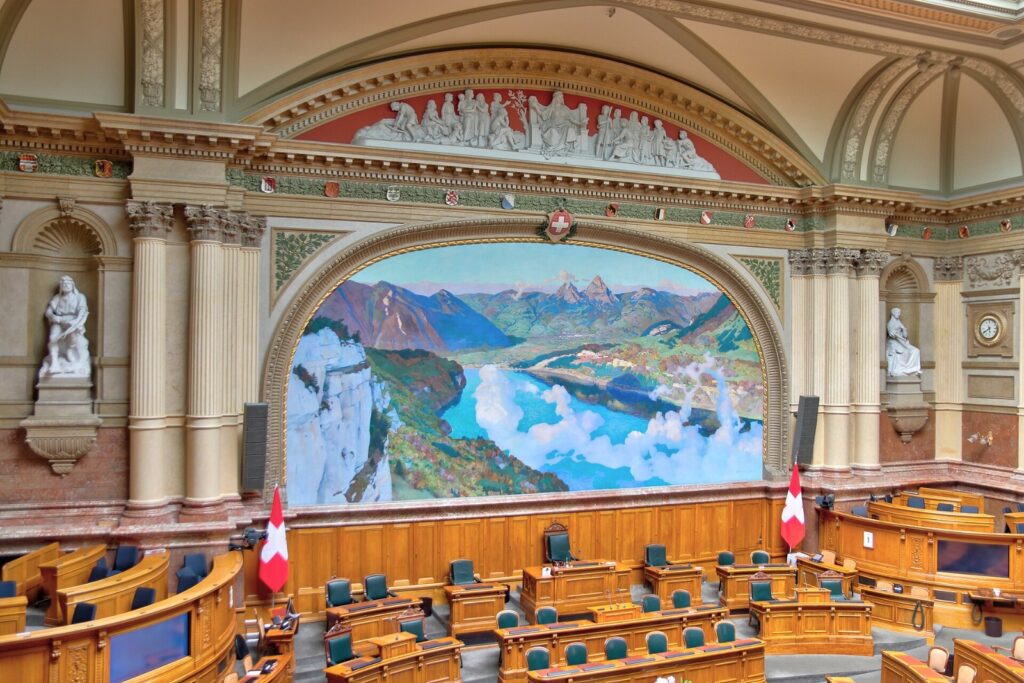
It is the last major act in a dispute that has preoccupied Switzerland since the collapse of Credit Suisse. On Wednesday, Dec. 16, 2026, the National Council will debate the so-called Lex UBS. The question sounds technical: What share of the book value of its foreign subsidiaries must UBS back with common equity tier 1 capital (CET1) at its Swiss parent bank? Today the figure is about 45%. The Federal Council wants 100%. In September, the Council of States opted for 90%.
The National Council’s Economic Affairs and Taxation Committee (EATC-N), which prepares the debate, sided with the Council of States on Nov. 24, 2026, voting 13 to 12 against an alternative of 80%. It could hardly have been closer. If the full chamber follows its committee, the core question will be settled after more than three years of debate. If it departs from it, the bill goes back to the Council of States.
No one disputes that a lot of money is at stake. How much is contested. UBS puts its additional CET1 requirement under the 90% rule at about $16 billion. According to the news agency Bloomberg, the federal government expects an effective shortfall of about $5 billion, partly because it counts capital buffers the bank already holds. UBS, for its part, is examining whether the new rules would justify moving its headquarters abroad, according to Reuters. It plans to present its findings in early February.
This preview explains what is at stake, how parliament arrived at 90%, what the figures from the government and UBS mean and where the battle lines run ahead of the debate.
The case at a glance
| Item | Status as of Nov. 28, 2026 |
|---|---|
| Bill | Amendment to the Banking Act (bill 26.027), the so-called Lex UBS; currently only UBS is affected |
| The issue | How much CET1 capital the parent bank UBS AG must hold against its stakes in foreign subsidiaries |
| Today | About 45% CET1, plus about 17% AT1 bonds |
| Federal Council | 100% CET1, phased in over seven years |
| Council of States | 90% CET1 (Sept. 23, 2026; 29 votes to 16 against its committee’s model; final vote 33 to 10 with 2 abstentions) |
| National Council committee | 90% by 13 votes to 12 against 80%; 100% rejected by 17 votes to 7 with 1 abstention (Nov. 24, 2026) |
| Additional CET1 | According to UBS, about $16 billion; according to the government (via Bloomberg), an effective shortfall of about $5 billion |
| Phase-in | According to UBS, in stages from 2028 at the earliest |
| Next step | National Council debate on Wednesday, Dec. 16, 2026 |
| Referendum | Possible; according to Reuters, the leadership of the Social Democrats (SP) wants to call one if the law turns out softer than the Federal Council’s bill |
Timeline: From emergency takeover to the final round
| Date | Event |
|---|---|
| March 19, 2023 | In an emergency takeover orchestrated by the federal government, UBS agrees to buy Credit Suisse; the deal closes on June 12, 2023. The government grants a loss guarantee of up to 9 billion francs; it also guarantees Swiss National Bank liquidity assistance loans of up to 100 billion francs. |
| Aug. 11, 2023 | UBS ends the government guarantees early. The government incurs no loss. |
| April 10, 2024 | The Federal Council presents its report on banking stability, with 22 measures for direct implementation. |
| Dec. 20, 2024 | The parliamentary investigation committee publishes its report on the emergency merger of Credit Suisse. |
| June 6, 2025 | The Federal Council spells out its plans: Foreign stakes are to be fully backed by CET1 capital. UBS sharply criticizes the plans. |
| Sept. 8, 2025 | The National Council rejects, by 104 votes to 86 with 4 abstentions, a motion by Beat Walti (FDP) and Céline Amaudruz (SVP) that sought to slow the tightening. |
| Oct. 1, 2025 | In a partial ruling, the Federal Administrative Court declares the write-down of Credit Suisse’s AT1 bonds unlawful. Finma and UBS appeal to the Federal Supreme Court. |
| April 22, 2026 | The Federal Council adopts dispatch 26.027: full backing with CET1 capital, phased in over seven years. |
| Aug. 31, 2026 | The Council of States’ committee (EATC-S) proposes a model with at least 50% CET1 capital and up to 50% specially designed AT1 bonds. |
| Sept. 23, 2026 | The Council of States follows a minority led by Peter Hegglin (Center) and demands 90% CET1 capital. |
| Sept. 24, 2026 | The Swiss National Bank welcomes the decision. |
| Oct. 14, 2026 | The Wall Street Journal reports on UBS contingency plans that could include moving its headquarters. |
| Oct. 26, 2026 and Oct. 27, 2026 | The EATC-N hears the Swiss National Bank, Finma, UBS and the Swiss Bankers Association. Taking up the bill is undisputed. |
| Oct. 28, 2026 | Presenting quarterly results, UBS CEO Sergio Ermotti sharpens his tone toward Bern. |
| Nov. 17, 2026 | Reuters reports that UBS has largely resigned itself to defeat. |
| Nov. 24, 2026 | The EATC-N follows the Council of States by 13 votes to 12. |
| Dec. 16, 2026 | Debate in the National Council. |
What is at stake: The weak spot at the parent bank
UBS is a nested structure. At the top sits the holding company UBS Group AG. Below it is UBS AG, the parent bank, a Swiss bank that in turn owns subsidiaries abroad, for example in the United States. For the parent bank, these subsidiaries are stakes carried on the balance sheet at book value. If a subsidiary loses value, the parent bank’s equity, which is actually meant for its own business, shrinks by the same amount.
How strongly this effect hits depends on how much CET1 capital is set aside for the stakes. At UBS, it is currently about 45% of book value; together with so-called AT1 bonds, the figure is about 60%. The Federal Department of Finance gives an example: A $10 billion loss in the value of foreign stakes leads to a regulatory shortfall of $5.5 billion at the parent bank. The current rule therefore does not protect against value losses of up to 45%, the department notes.
Credit Suisse demonstrated what this means in a crisis. According to the Federal Council’s dispatch, write-downs on its foreign stakes between the third quarter of 2021 and the third quarter of 2022 amounted to 60% of their original book value. Over the same period, the CET1 ratio of the parent bank Credit Suisse AG fell from 13.4% to 9.7%. As a result, the bank did not sell all of the affected business units, because a complete sale would have pushed the ratio down further. The fact that the foreign subsidiaries were only partially backed by equity was “a central weakness” in the crisis, the Federal Council writes.
The Federal Council’s solution: In the future, the parent bank is to deduct the full book value of its foreign stakes from its CET1 capital. A bank could then sell subsidiaries in whole or in part during the stabilization phase of a crisis, while it is still acting on its own, without its capital ratios suffering. The Swiss National Bank and Finma support this approach.
Two questions are at the heart of the political dispute. The first is the level of the requirement. The second is whether part of it may be covered with AT1 bonds. Such bonds are debt that can be converted into equity or written off in a crisis. For the bank, they are cheaper than share capital. Their reputation has suffered, however: In March 2023, Finma ordered the write-down of Credit Suisse AT1 bonds worth 16.5 billion francs. On Oct. 1, 2025, the Federal Administrative Court declared this write-down unlawful in a partial ruling. The Federal Supreme Court has granted UBS’s appeal suspensive effect; the bonds remain written off until it rules on the merits.
The Federal Council: 100% as a compromise
On April 22, 2026, the Federal Council adopted its dispatch on amending the Banking Act. If parliament deliberates quickly, it wants to phase in full backing over seven years. At the same time, it amended the Capital Adequacy Ordinance. These changes, for example on the regulatory treatment of software, take effect on Jan. 1, 2027. On other points, such as deferred tax assets and AT1 instruments, it dropped the proposed changes for now.
Finance Minister Karin Keller-Sutter described even her own 100% proposal as a compromise. According to the Federal Council, the Swiss National Bank and Finma, the package is sensible, necessary and targeted; they also consider it affordable for UBS. More equity also strengthens competitiveness in the long run, the Department of Finance argues: In the short term, a higher return can be achieved with less equity; in the long term, more equity secures the bank’s stability.
The Council of States: The turnaround in the fall
The Council of States’ Economic Affairs and Taxation Committee initially took a different route. On Aug. 31, 2026, it proposed, by 7 votes to 5 with 1 abstention, a model under which UBS could back its foreign stakes with at least 50% CET1 capital and at most 50% specially designed AT1 bonds. It was coupled with a mechanism: If the bank falls below its CET1 requirement, it must halt AT1 buybacks, coupon and dividend payments as well as share buybacks and cut its bonus pool. If that does not restore the requirement within six months, further measures kick in. Committee Chairman Erich Ettlin (Center) spoke of a compromise that would make the financial center safer. The proposal is no gift to UBS, he stressed, since AT1 bonds also cost money.
The five dissenting committee members wanted 90% CET1 capital. Like the Federal Council, they argued that AT1 bonds do not absorb losses in a crisis. In addition, the new model would only create new legal uncertainty. Pitted against 90%, the Federal Council’s proposal was clearly rejected by the committee, by 10 votes to 2 with 1 abstention. The Social Democrats warned of a “token reform.” Expertistan described the situation before the Council of States’ decision in an analysis on Sept. 19, 2026 (in German).
In the full chamber, the mood shifted. The debate began on Sept. 17, 2026; it did not conclude until Sept. 23, 2026. FDP Council of States member Andrea Caroni initially wanted to leave the matter entirely to the Federal Council. “As parliament, we would now have the opportunity to put the bill back where it really belongs, namely with the Federal Council,” he said, but withdrew his proposal at the last minute. Center Party Council of States member Fabio Regazzi called for respect for UBS. He recalled that taxpayers had not lost a single franc in the two major banking crises.
The decisive push came from Peter Hegglin (Center, Zug), who proposed 90% on behalf of the committee minority. “This would send a signal for a safe, a trustworthy banking center,” he said. Keller-Sutter campaigned for her own solution but, as a fallback, asked for support for the 90%. “We should not repeat the mistakes that were already made after the 2008 financial crisis,” she said. And: “I am convinced that the population is not prepared to be held liable once again for the risks that a profitable large company takes abroad.”
First, the 90% option prevailed over the Federal Council’s proposal, narrowly according to Bloomberg. It then won by 29 votes to 16 against the committee’s model. In the final vote, the Council of States approved the bill by 33 votes to 10 with 2 abstentions; according to the news agency AWP, the votes against came from the SVP, the FDP and the Center. The business magazine Bilanz spoke of a “bombshell,” especially since the smaller chamber is considered friendly to business and banks.
The Swiss National Bank reacted positively the next day. According to Bloomberg, Vice Chairman Antoine Martin called 90% a good amount of CET1 capital to back the foreign stakes; from a financial stability perspective, 100% would have been even better. Chairman Martin Schlegel stressed that it was extremely important to draw the right lessons from the Credit Suisse crisis. UBS, by contrast, spoke of another excessive tightening of Swiss capital requirements, which it said already rank among the strictest in the world. The decision, UBS added, also disregarded the financial support of its shareholders, who had helped protect Switzerland’s reputation through the takeover. For the Swiss Bankers Association, the decision was an “extreme go-it-alone approach.”
The National Council committee: One vote apart
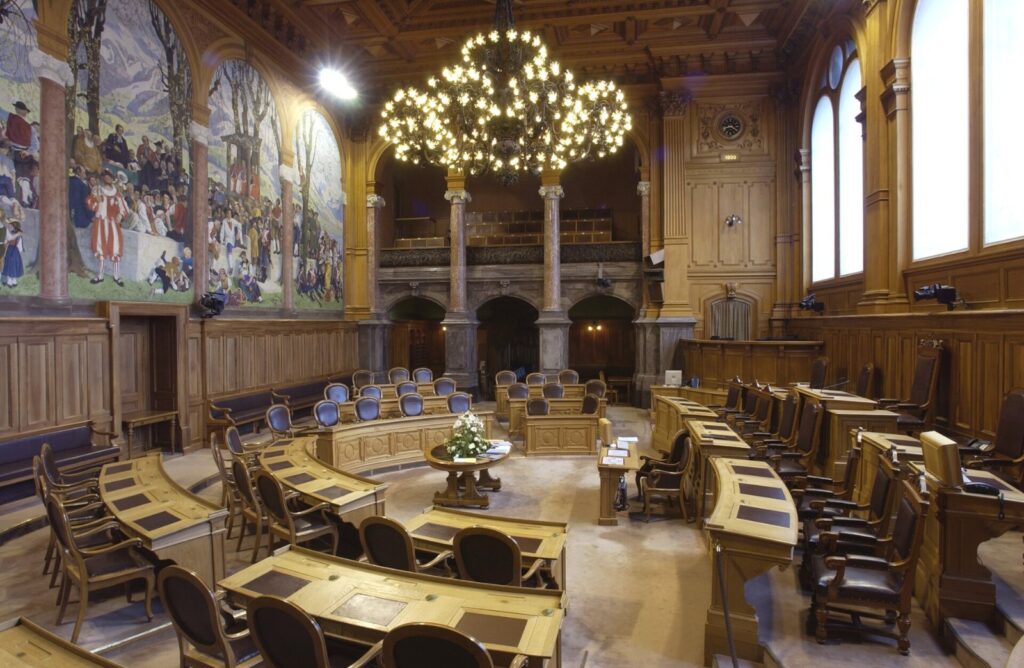
The EATC-N, chaired by Samuel Bendahan (SP, Vaud), heard the key players on Oct. 26, 2026 and Oct. 27, 2026, including SNB Chairman Martin Schlegel, Finma Chair Marlene Amstad, UBS CEO Sergio Ermotti and UBS Vice Chairman Markus Ronner. That action was needed was undisputed. Opinions differed on the scale: Some warned of the consequences of an overly strict rule; others considered the Federal Council’s draft a compromise that should not be undercut.
In early November, a new approach emerged. According to Bloomberg, UBS might be allowed to value its foreign subsidiaries under an alternative method, the so-called equity method, which could reduce its capital needs. UBS shares rose sharply on Nov. 4, 2026.
On Nov. 24, 2026, the committee decided. The results, according to the press release of the parliamentary services:
| Proposal | Result |
|---|---|
| 90% (Council of States) against 80% (minority) | 90% adopted by 13 votes to 12 |
| 75% (minority) against 80% | 75% rejected by 12 votes to 8 with 5 abstentions |
| 100% (Federal Council, minority) against 90% | 100% rejected by 17 votes to 7 with 1 abstention |
| Adjusted equity method without goodwill directly in the law | Rejected by 13 votes to 12 |
| Automatic halt to dividends, buybacks and part of variable pay if requirements are breached | Rejected by 13 votes to 12; the majority wants to settle pay issues in the third package |
| Committee motion 26.4727: review of a new valuation method at the ordinance level, with consultation | Adopted unanimously |
According to Reuters, FDP National Council member Hans-Peter Portmann had already floated a 75% rate in October, combined with a mechanism to strengthen loss absorption. The motion on the valuation method leaves the door open for UBS: It aims at a possible change to the valuation method at the ordinance level; the committee considers a consultation indispensable for this.
The reactions were predictable. UBS again warned of excessive tightening. For the Swiss Bankers Association, the rule would be “a massive Swiss finish” by international standards, a special regulation going far beyond international norms. Regulation that structurally impaired UBS’s international competitiveness was not in Switzerland’s interest, the association said; a balanced compromise was needed.
The math: How much capital is really needed
Anyone following the debate encounters a confusing variety of figures. They can be sorted by distinguishing between two quantities: the additional requirement and the effective shortfall.
The additional requirement describes how much the required CET1 capital increases. For full backing, the Department of Finance puts it at about $20 billion, of which about $2 billion stems from the measures in the ordinance. In the 2025 consultation, the figure was still $26 billion. Since then, the volume of foreign stakes at the parent bank has decreased; the Federal Council has also adjusted the ordinance changes. For the 90% option, UBS cites about $16 billion; for 100%, the figure would be about $20 billion, according to Bloomberg. According to Reuters, the government also estimates the additional requirement at 90% at about $17 billion.
The effective shortfall is smaller. It takes into account that the parent bank and the group clearly exceed today’s requirements and that UBS in any case targets its own buffer for the parent bank, a CET1 ratio of 12.5%. According to the Department of Finance, these buffers can be used in part to finance the new requirements. Had full backing been introduced as of Jan. 1, 2026, the effective shortfall would have been about $9 billion. For 90%, the government expects about $5 billion, according to Bloomberg.
UBS counts differently. In its report for the third quarter of 2026, it states that the 90% rule would require UBS AG to hold about $16 billion in additional CET1 capital, on top of about $2 billion from the ordinance changes. Adding up the requirements since the takeover of Credit Suisse, the bank says, yields an additional need of about $33 billion. The bank expects the rules to be phased in over several years starting in 2028 at the earliest.
Estimates of the costs also diverge. Nor do they always refer to the same quantity. UBS puts the total annual costs it would face from the takeover of Credit Suisse and the new requirements at about $2.5 billion; this figure covers the entire additional need of about $33 billion. The two expert reports on which the government relies arrive at lower figures: For every $10 billion in additional CET1 capital, UBS’s cost of capital rises by about $320 million a year according to the Zimmermann report; according to Alvarez & Marsal, the increase would be about $560 million. In both reports, costs rise linearly with the capital requirement. Extrapolated to the roughly $33 billion, Expertistan calculates about $1.1 billion to $1.8 billion a year; for the $16 billion of the 90% solution alone, about $0.5 billion to $0.9 billion.
To put these figures in perspective: UBS earned $2.69 billion in the third quarter of 2026; in the first nine months, its profit reached $8.53 billion. At the end of September, the group had $73.1 billion in CET1 capital; its CET1 ratio stood at 14.7%. After implementation of all measures proposed by the Federal Council, that is, with full backing, the group would arithmetically reach a ratio of 15.5% on the basis of end-2025 figures, according to the government; it would thus be in the range of its international competitors. UBS counters that under the Federal Council’s plans, its capital requirements would be at least 50% higher than those of its competitors in Europe and the United States.
The bank is likely to finance the additional need mainly through retained earnings. Johann Scholtz of Morningstar calls this his base case, according to the Financial Times; he does not expect a capital increase. JPMorgan analyst Kian Abouhossein estimates that the return on tangible equity would fall by about half a percentage point in 2028. Shareholders would bear the brunt: In October, Ermotti made clear that he would rather pay out profits to them than use them to meet regulatory requirements.
The threat: Will UBS stay in Switzerland?
Since the Council of States’ decision, there has been open speculation about UBS leaving. At the end of September, the news site Semafor reported that the bank had resumed talks about a move. The investment firm Artisan Partners, which says it manages about 1.8% of UBS shares, publicly called on the bank to leave the country. On Oct. 14, 2026, The Wall Street Journal reported that UBS was preparing contingency plans that could include moving its headquarters; according to Blue News, potential American partners have already come forward.
In October, the Financial Times outlined the options: a move, for example to the United States or to a large eurozone country such as Germany; a takeover by a smaller foreign bank to escape the Swiss regime; a split into a Swiss UBS and an international part under foreign management; a partial or complete sale of the U.S. business, which the bank’s leadership is not considering according to the report, because it calls the U.S. indispensable to its success. The most likely scenario, according to the report, is that the bank stays and pays. Morgan Stanley analysts estimate a possible exit tax at up to $10 billion. The report quotes Keller-Sutter as saying that a move would be far more expensive than complying with the new rules and legally very complex. In an interview with the Swiss daily Blick, she called the threat unrealistic.
Ermotti himself sharpened his tone when presenting quarterly results on Oct. 28, 2026. According to Bloomberg, he said UBS was examining the long-term implications for its ability to compete from Switzerland. The outcome in the Council of States was very concerning, he said. Swiss DNA was a great advantage, he added, but not the reason clients were with UBS. At the same time, he stressed that there was no rush, since a new law would likely provide for long transition periods.
On Nov. 17, 2026, Reuters reported, citing three people familiar with the matter, that the bank had largely resigned itself to defeat. It would continue to lobby for concessions but no longer expected significant relief; it was now turning to a detailed analysis of its options. These include the question of whether the requirements would justify moving the headquarters. The bank intends to present its findings in early February along with its annual results, according to the report. UBS did not comment on the reports themselves. Officially, for example in a statement responding to Artisan’s call, it reaffirms that its goal is to continue operating successfully as a global bank from Switzerland.
How serious the threat is cannot be judged from the outside. Swiss public broadcaster SRF reported that the prevailing view among those around Ermotti and Chairman Colm Kelleher is that there is a pain threshold at which an exit abroad would be the lesser evil. Lausanne political scientist Georg Lutz, by contrast, said after the Council of States’ decision, according to Bloomberg, that UBS’s arguments had simply lacked credibility with lawmakers.
The battle lines in the National Council
In the National Council, parties left of center are more strongly represented than in the Council of States. Even after the 2023 elections, the SVP and FDP groups together do not have a majority. Anyone seeking to go below 90% therefore needs votes from the Center or the Green Liberals while keeping their own ranks as united as possible. Neither is assured.
A vote on Sept. 8, 2025, gives an indication of the camps. At the time, the National Council rejected the Walti/Amaudruz motion, which sought to slow the tightening. According to finews, the SVP group voted practically as a bloc in favor, the Green Liberals unanimously. The FDP was split: 13 of its members voted in favor, 10 against. The Center group rejected it by 29 votes to 2, the Social Democrats and the Greens unanimously. The bill has changed since then, but the camps have remained recognizable.
Voices ahead of the debate are correspondingly varied. FDP National Council member Olivier Feller, who personally prefers full backing, told Reuters in mid-October that he believed the National Council could land at 90%. Switzerland was a small country for a big bank, he added. Center Party National Council member Leo Müller, a member of the committee, warned in the same report that the bank could look elsewhere if the rules were too strict; it might conclude that Switzerland had become a difficult place to do business. At the same time, he noted that a referendum could loom if the bill were watered down too much. SVP Vice President Thomas Matter defended the 50/50 model on the SRF debate program “Arena”: “The end result in a crisis would be exactly the same as what the Federal Council wants, namely 100% hard equity.” According to Reuters, the Social Democrats’ leadership has decided to call a referendum if the law turns out softer than the Federal Council’s bill. Whether that also applies to 90% is open: During the Council of States debate, the Social Democrats had signaled, according to SRF, that they could live with 90% if necessary.
After the Council of States’ decision, Bloomberg wrote that Keller-Sutter’s chances in the larger chamber were no worse, since the SVP seemed less willing to go to bat for UBS. The narrow committee vote shows, however, that the outcome is open.
Claims fact-checked
| Claim | Assessment |
|---|---|
| “With 45%, the parent bank is protected today against losses of up to 45%.” | False. According to the Department of Finance, every loss in the value of stakes leads to a loss of CET1 capital of the same size. A $10 billion loss creates a regulatory shortfall of $5.5 billion. |
| “UBS must raise $16 billion in fresh capital.” | Misleading. According to UBS, the $16 billion is the additional requirement for the parent bank, phased in from 2028 at the earliest. The government estimates the effective shortfall to be lower. Analysts expect the bank to cover the need mainly through retained earnings. |
| “Taxpayers have never lost money on bank rescues.” | Correct in outcome, but incomplete. The government incurred no loss in the 2023 emergency takeover. But it bore risks: a loss guarantee of up to 9 billion francs and a guarantee for Swiss National Bank liquidity assistance of up to 100 billion francs. |
| “AT1 bonds protect as well as CET1 capital.” | Disputed. UBS and the majority of the Council of States committee consider the 50/50 model equivalent. The Federal Council, the Swiss National Bank and Finma doubt that AT1 bonds reliably absorb losses in a crisis. Former bank supervisor Daniel Zuberbühler noted in a statement for the committee that even the authors commissioned by UBS acknowledge that today’s AT1 bonds “come into play far too late in the important stabilization phase (recovery).” The write-down of the Credit Suisse bonds is also still pending in court. |
| “The new rules will make UBS an outlier among big banks.” | Disputed. For full backing, UBS speaks of requirements at least 50% higher than those of its competitors. The government points out that UBS’s capital ratio would be in the range of its international competitors even after all measures. Britain and the U.S. also regulate strictly, it says. |
| “UBS can leave at any time.” | Not easily. According to the finance minister, a move would be expensive and legally very complex. Analysts estimate a possible exit tax alone at up to $10 billion. A move is not ruled out, however. |
The Arena: Should UBS have to back its foreign subsidiaries with 90% hard equity capital?
On contested questions, Expertistan sets out the strongest arguments on both sides.
Yes: Never again a state rescue
- The lesson of Credit Suisse: The collapse in the value of its foreign subsidiaries ate up the capital of the Credit Suisse parent bank and blocked sales. This is exactly the gap the rule is meant to close.
- Protecting taxpayers: The population is not prepared to be held liable once again for the foreign risks of a profitable large company, the finance minister says. UBS currently benefits de facto from a state guarantee, Keller-Sutter argued in the Council of States, according to Bloomberg; whoever removes this subsidy inevitably causes costs.
- Backing from the expert authorities: The Swiss National Bank and Finma support the tightening. The SNB considers 90% a good level.
- Affordable for the bank: UBS earns billions. The phase-in stretches over years. Analysts such as Johann Scholtz of Morningstar expect it to cover the need from earnings.
- Doubts about the alternative: At Credit Suisse, AT1 bonds triggered a legal dispute that is still undecided. The Council of States rejected the AT1 model by 29 votes to 16.
No: It will drive UBS away
- A Swiss go-it-alone approach: For the Swiss Bankers Association, the rule is “a massive Swiss finish” that goes far beyond international standards.
- High costs: UBS puts the total annual costs from the takeover of Credit Suisse and the new requirements at about $2.5 billion. That reduces payouts, investment and growth.
- An equivalent solution was on the table: The 50/50 model of the Council of States committee would protect taxpayers just as well, UBS argues, because it would trigger stabilizing measures earlier and would be more cost-efficient.
- A risk to Switzerland as a business location: If the rule is too strict, the bank could conclude that Switzerland has become a difficult place to do business, says Center Party National Council member Leo Müller. It could then look elsewhere. In the opponents’ view, a move would cost jobs, tax revenue and expertise.
- Fairness toward the rescuer: UBS took over Credit Suisse at the authorities’ request. The government did not lose a franc in the process. The bank feels its shareholders’ contribution is being disregarded.
What comes next
On Wednesday, Dec. 16, 2026, the National Council will debate the bill. If it agrees with the Council of States on all points, the bill is settled; only the final votes in both chambers will then be needed. If it opts for a lower rate, the bill goes back to the Council of States to reconcile the differences.
A referendum can be called against the law; it requires 50,000 signatures within 100 days of publication in the Federal Gazette. According to Reuters, the Social Democrats’ leadership wants to call a referendum if the law turns out softer than the Federal Council’s bill; whether it will actually do so at 90% is open. It is equally unclear whether groups that want a lower rate would call a referendum.
Other threads are running in parallel. The committee motion on the valuation method, adopted unanimously, must be approved by both chambers before the Federal Council is obliged to act. According to UBS, the consultation on the third package of too-big-to-fail regulation ran until November 2026; the Federal Council plans to present its dispatch in the first half of 2027. The majority of the National Council committee wants to settle pay issues in this package. In early February 2027, the bank plans to set out its options along with its annual results, according to Reuters. And the dispute over the write-down of the Credit Suisse bonds is still pending before the Federal Supreme Court.
Commentary: Ten points of concession are enough
The National Council should follow the Council of States. The 90% is not a maximum demand but already a step toward UBS. Anyone who lowers it further shifts the burden back to where it has repeatedly landed since 2008: to a state that cannot stand by in an emergency.
The lesson of Credit Suisse is precise and uncomfortable. The parent bank’s capital melted away because stakes abroad lost value. It was missing at exactly the moment when sales could have stabilized the bank. A rule that closes exactly this weak spot is not a punishment for UBS. It is the precondition for a bank of this size to function without an implicit state guarantee. That AT1 bonds of all things, whose write-down at Credit Suisse is pending in court, should take on part of this task rightly failed to convince the Council of States.
That does not mean the bank’s objections are worthless. The costs are real, even if the expert reports on which the government relies arrive at lower figures than the bank does. The right place for technical relief is the valuation question, which the committee unanimously wants to refer to the Federal Council, with a proper consultation instead of in back rooms. It would also make sense to have the rule’s effect reviewed independently after a few years.
The threat to leave deserves respect, but not submission. A bank may examine its options; that is its duty to shareholders. But a parliament must legislate for the worst case, not for the next round of negotiations. Moreover, more lenient supervisors are not necessarily waiting abroad: Britain and the U.S. also regulate strictly, according to the Department of Finance. UBS did Switzerland a great service in 2023. Switzerland will repay it best by making sure the next rescue is never needed.
Editor’s note
Committee deliberations are confidential. The voting results come from the press releases of the parliamentary services and from news agency reports. The figures on additional capital needs are estimates by the government and UBS based on different assumptions; the government’s estimates for the 90% option are known only through the news agencies Bloomberg and Reuters. The cost extrapolations are calculations by the editorial team based on the expert reports cited by the government. Several reports on UBS’s options rely on anonymous sources. Quotes from German-language sources have been translated by the editorial team; statements made in English are rendered in indirect speech. This article is not investment advice. The commentary reflects the opinion of the editorial team. We will update the article after the National Council debate. Article as of Saturday, Nov. 28, 2026.
Sources
- 1. Parlamentsdienste, Medienmitteilung der WAK-N, 25.11.2026: https://www.parlament.ch/press-releases/Pages/mm-wak-n-2026-11-25.aspx
- 2. Parlamentsdienste, Medienmitteilung der WAK-N, 28.10.2026: https://www.parlament.ch/press-releases/Pages/mm-wak-n-2026-10-28.aspx
- 3. Parlamentsdienste, Medienmitteilung der WAK-S, 01.09.2026 (Sitzung vom 31.08.2026): https://www.parlament.ch/press-releases/Pages/mm-wak-s-2026-08-31.aspx
- 4. Parlamentsdienste, Medienmitteilung der WAK-S, 04.05.2026: https://www.parlament.ch/press-releases/Pages/mm-wak-s-2026-05-04.aspx
- 5. SDA, «Ständerat will 90 Prozent Eigenkapital für UBS-Auslandbeteiligungen», 23.09.2026: https://www.parlament.ch/de/services/news/Seiten/2026/20260923090928240194158159026_bsd043.aspx
- 6. Bundesrat, «Too-Big-To-Fail-Regulierung: Bundesrat verabschiedet Botschaft und Eigenmittelverordnung», 22.04.2026: https://www.admin.ch/de/newnsb/_9e8qd5sXEzLww7dK3H_9
- 7. Botschaft zur Änderung des Bankengesetzes vom 22.04.2026 (BBl 2026 1177), Wiedergabe: https://bfadmin.cdbf.ch/Serveur/documents/8253
- 8. Eidgenössisches Finanzdepartement, Fragen und Antworten zur Too-big-to-fail-Regulierung: https://www.efd.admin.ch/dam/de/sd-web/9Yl45auQWYyV/tbtf-faq-de.pdf
- 9. Eidgenössisches Finanzdepartement, Dossier Too big to fail: https://www.efd.admin.ch/en/tbtf-en
- 10. Eidgenössisches Finanzdepartement, FAQ zur Übernahme der Credit Suisse: https://www.efd.admin.ch/dam/efd/de/finanzplatz/uebernahme-cs-ubs/faq-cs-ubs-de.pdf.download.pdf/faq-cs-de.pdf
- 11. Bundesrat, «CS/UBS: Sämtliche Garantien des Bundes beendet», 11.08.2023: https://www.admin.ch/gov/de/start/dokumentation/medienmitteilungen.msg-id-97300.html
- 12. Bundesrat, «Bankenstabilität: Bundesrat will Lücken in der Too-Big-To-Fail-Regulierung schliessen», 10.04.2024: https://www.admin.ch/gov/de/start/dokumentation/medienmitteilungen.msg-id-100669.html
- 13. Parlamentsdienste, Medienmitteilung der PUK, 20.12.2024: https://www.parlament.ch/press-releases/Pages/mm-puk-2024-20-12.aspx
- 14. Bundesrat, «Bundesrat zieht Lehren aus Credit-Suisse-Krise und konkretisiert Massnahmen für Bankenstabilität», 06.06.2025: https://www.admin.ch/de/newnsb/ty6FlsBuspE-AXC9ClLJt
- 15. Bundesverwaltungsgericht, Medienmitteilung zum Teilentscheid B-2334/2023, 14.10.2025: https://www.bvger.ch/media-releases/3eeb1c4b-6120-4804-9512-271477ebb52a/de/mm_b-2334-2023_de_web.pdf
- 16. SRF News, AT1-Anleihen bleiben vorerst abgeschrieben: https://www.srf.ch/news/wirtschaft/aufschiebende-wirkung-at1-abschreibung-der-credit-suisse-anleihen-bleiben-wertlos
- 17. SRF News, «Bundesrat beharrt auf Grossteil der Forderungen», 22.04.2026: https://www.srf.ch/news/schweiz/auslaendische-tochterbanken-ubs-eigenkapital-bundesrat-beharrt-auf-grossteil-der-forderungen
- 18. SRF News, «Ständeratskommission kommt UBS entgegen», 31.08.2026: https://www.srf.ch/news/schweiz/schaerfere-kapitalvorschriften-staenderatskommission-kommt-ubs-entgegen
- 19. SRF News, «UBS oder KKS: Der Ständerat ringt ums Bankengesetz», 17.09.2026: https://www.srf.ch/news/schweiz/too-big-to-fail-regulierung-ubs-oder-kks-der-staenderat-ringt-ums-bankengesetz
- 20. SRF News, «Lex UBS: Jetzt kommt es zum Showdown im Ständerat», 17.09.2026: https://www.srf.ch/news/schweiz/too-big-to-fail-regulierung-lex-ubs-jetzt-kommt-es-zum-showdown-im-staenderat
- 21. SRF News, «Was der Ständerats-Entscheid für die UBS bedeutet», 23.09.2026: https://www.srf.ch/news/wirtschaft/90-prozent-eigenkapital-was-der-staenderats-entscheid-fuer-die-ubs-bedeutet
- 22. SRF News, «Arena» zur Lex UBS: https://www.srf.ch/news/schweiz/arena-zur-lex-ubs-eigenkapital-sicherheit-fuer-steuerzahler-oder-gefahr-fuer-ubs
- 23. SRF News, «Spekulation um UBS-Exit»: https://www.srf.ch/news/schweiz/spekulation-um-ubs-exit-swissness-ist-fuer-die-ubs-kein-muss-aber-ein-plus
- 24. AWP/SDA via VZ, «Ständerat stellt sich bei UBS-Regulierung weitgehend hinter Bundesrat», 23.09.2026: https://www.vermoegenszentrum.ch/boersen-und-maerkte/news/staenderat-stellt-sich-bei-ubs-regulierung-weitgehend-hinter-bundesrat-0
- 25. AWP via VZ, «Für Bankiervereinigung ist UBS-Entscheid extremer Sonderweg», 23.09.2026: https://www.vermoegenszentrum.ch/boersen-und-maerkte/news/fuer-bankiervereinigung-ist-ubs-entscheid-extremer-sonderweg
- 26. Reuters via cash.ch, «UBS erleidet in Kapitalstreit Niederlage im Schweizer Parlament», 23.09.2026: https://www.cash.ch/news/top-news/ubs-erleidet-in-kapitalstreit-niederlage-im-schweizer-parlament-970853
- 27. Reuters via cash.ch, «Insider: UBS stellt sich bei Schweizer Kapitalstreit auf Niederlage ein», 17.11.2026: https://www.cash.ch/news/top-news/insider-ubs-stellt-sich-bei-schweizer-kapitalstreit-auf-niederlage-ein-985876
- 28. Reuters via Börsen-Zeitung, «UBS: Streit um 90 Prozent Kernkapital für Auslandstöchter», 19.10.2026: https://www.boersen-zeitung.de/banken-finanzen/ubs-streit-um-90-prozent-kernkapital-fuer-auslandstoechter
- 29. Börsen-Zeitung, «Ständerat verschiebt Entscheidung zur UBS», 17.09.2026: https://www.boersen-zeitung.de/banken-finanzen/staenderat-verschiebt-entscheidung-zur-ubs
- 30. Börsen-Zeitung, «Insider: UBS könnte Bewertungsmethode zugunsten des Eigenkapitalbedarfs ändern», 04.11.2026: https://www.boersen-zeitung.de/banken-finanzen/insider-ubs-koennte-bewertungsmethode-zugunsten-des-eigenkapitalbedarfs-aendern
- 31. finews, «Eigenkapital-Vorschriften der UBS: Das sind die Frontlinien im Parlament», 09.09.2025: https://www.finews.ch/news/banken/69237-ubs-eigenkapital-nationalrat-motion-beat-walti-celine-amaudruz-fdp-svp-cvp-gruenliberale-gruene-sp-sergio-ermotti
- 32. finews, Bankiervereinigung zum Entscheid der WAK-N, 24.11.2026: https://www.finews.ch/news/banken/74650-bankiervereinigung-sbvg-ubs-eigenkapital-90-prozent-wak-n-swiss-finish
- 33. UBS, «Stellungnahme von UBS zum Beschluss des Ständerats zur Bankenregulierung», 23.09.2026: https://www.ubs.com/global/de/media/display-page-ndp/de-20260923-banking-regulation.html
- 34. UBS, «Schweizer TBTF-Debatte: Kernpunkte zur Diskussion des Bankengesetzes», September 2026: https://www.ubs.com/content/dam/assets/cc/about-ubs/our-firm/banking-stability/swiss-tbtf-discussion-key-points-for-the-debate-on-the-banking-act-de.pdf
- 35. UBS, Bankenstabilität: https://ubs.com/bankenstabilität
- 36. UBS, Banking stability in Switzerland: https://www.ubs.com/global/en/our-firm/bankingstability.html
- 37. UBS Group, Bericht zum dritten Quartal 2026 (Form 6-K): https://www.sec.gov/Archives/edgar/data/0001610520/000161052026000106/edgar3q26ubsgroup.htm
- 38. cash.ch, «UBS erzielt Quartalsgewinn von 2,7 Milliarden US-Dollar», 28.10.2026: https://www.cash.ch/news/ubs-erzielt-quartalsgewinn-von-27-milliarden-us-dollar-980219
- 39. Bilanz, «Mutig, aber nicht ohne Risiko», 23.09.2026: https://www.bilanz.ch/unternehmen/banken-analyse-zum-staenderats-entscheid-ueber-die-lex-ubs/551e1wg
- 40. Handelszeitung/Bilanz, Kommentar «Der Ständerat hat richtig entschieden», 2026: https://www.bilanz.ch/unternehmen/eigenkaptial-der-ubs-der-staenderat-hat-richtig-entschieden/gf4fww5
- 41. Blick, Interview mit Karin Keller-Sutter, «Diesmal blieben wir standhaft», 26.09.2026: https://www.blick.ch/politik/keller-sutter-ueber-den-streit-mit-der-ubs-diesmal-blieben-wir-standhaft-id22281066.html
- 42. blue News, Regazzi im Ständerat, 2026: https://www.bluewin.ch/en/news/switzerland/an-extremely-unconventional-path-the-banking-world-is-in-an-uproar-over-the-council-of-states-decision-on-ubs-li.3610502
- 43. Bloomberg via swissinfo, «UBS Left Reeling as Swiss Finance Chief Wins Over Lawmakers», 24.09.2026: https://www.swissinfo.ch/eng/ubs-left-reeling-as-swiss-finance-chief-wins-over-lawmakers/92111519
- 44. Bloomberg via swissinfo, Nationalbank zum Ständeratsentscheid, 24.09.2026: https://www.swissinfo.ch/eng/snb-welcomes-90%25-ubs-capital-plan-adopted-by-upper-house/92112444
- 45. Bloomberg via swissinfo, «UBS Faces Swiss Exit or Stay and Pay», 02.10.2026: https://www.swissinfo.ch/eng/ubs-faces-swiss-exit-or-stay-and-pay-as-capital-defeat-nears/92158188
- 46. Financial Times via swissinfo, «Switzerland has spoken: will UBS leave?», 09.10.2026: https://www.swissinfo.ch/eng/swiss-economy/switzerland-has-spoken-will-ubs-leave/92191023
- 47. Bloomberg via swissinfo, «Ermotti Sends Clearest Signal Yet of Possible UBS Swiss Exit», 28.10.2026: https://www.swissinfo.ch/eng/ermotti-sends-clearest-signal-yet-of-possible-ubs-swiss-exit/92287085
- 48. swissinfo, Artisan Partners fordert Wegzug der UBS, 01.10.2026: https://www.swissinfo.ch/eng/finance-banking/ubs-should-quit-switzerland-says-major-shareholder/92148660
- 49. Reuters via The Edge Malaysia, Bericht des «Wall Street Journal» über Notfallpläne, 15.10.2026: https://theedgemalaysia.com/node/821933
- 50. Semafor, «UBS considers an exit from Switzerland», 24.09.2026: https://www.semafor.com/article/09/24/2026/ubs-considers-an-exit-from-switzerland
- 51. Daniel Zuberbühler, Expertenmeinung zum WAK-Vorschlag zur Stärkung der AT1-Anleihen, 24.08.2026: https://www.parlament.ch/centers/documents/de/Stellungnahme%20D.%20Zuberbu%CC%88hler%20D.pdf
- 52. Expertistan, «Lex UBS: Der Ständerat zögert, die Bank rechnet, der Steuerzahler haftet», 19.09.2026: https://www.expertistan.ch/?p=1259405
- 53. blue News, «UBS is to explore alternatives to Switzerland» (zum Bericht des «Wall Street Journal»), 10.2026: https://www.bluewin.ch/en/news/ubs-is-to-explore-alternatives-to-switzerland-li.3636323
- 54. LawMedia, Zusammenfassung des Berichts des Bundesrats zur Bankenstabilität vom 10.04.2024: https://law.ch/lawnews/2024/04/bankenstabilitaet-br-will-luecken-in-der-too-big-to-fail-regulierung-schliessen/



Comments 0