934 billion francs: What is behind the record wealth of Switzerland’s 300 richest
Switzerland’s 300 richest people own 934.5 billion Swiss francs, more than ever. The Geneva shipping family Aponte now tops the list. An analysis of AI-driven stock markets, arrivals from London, the limits of the estimates and whether Switzerland should tax its super-rich more heavily.
It is the third record in a row. And the margin is wider than in the previous two. Switzerland’s 300 richest people and families own a combined 934.5 billion Swiss francs. That is 83.1 billion, or 9.8%, more than a year ago. Those are the figures in the list the business magazine Bilanz published on Thursday evening, Nov. 26, 2026. The editors note dryly that fortunes have never been higher since the ranking began. More than half of the entries are now billionaires: According to Bilanz, 163 people or families own at least 1 billion francs. On average, each of the 300 entries is worth 3.1 billion.
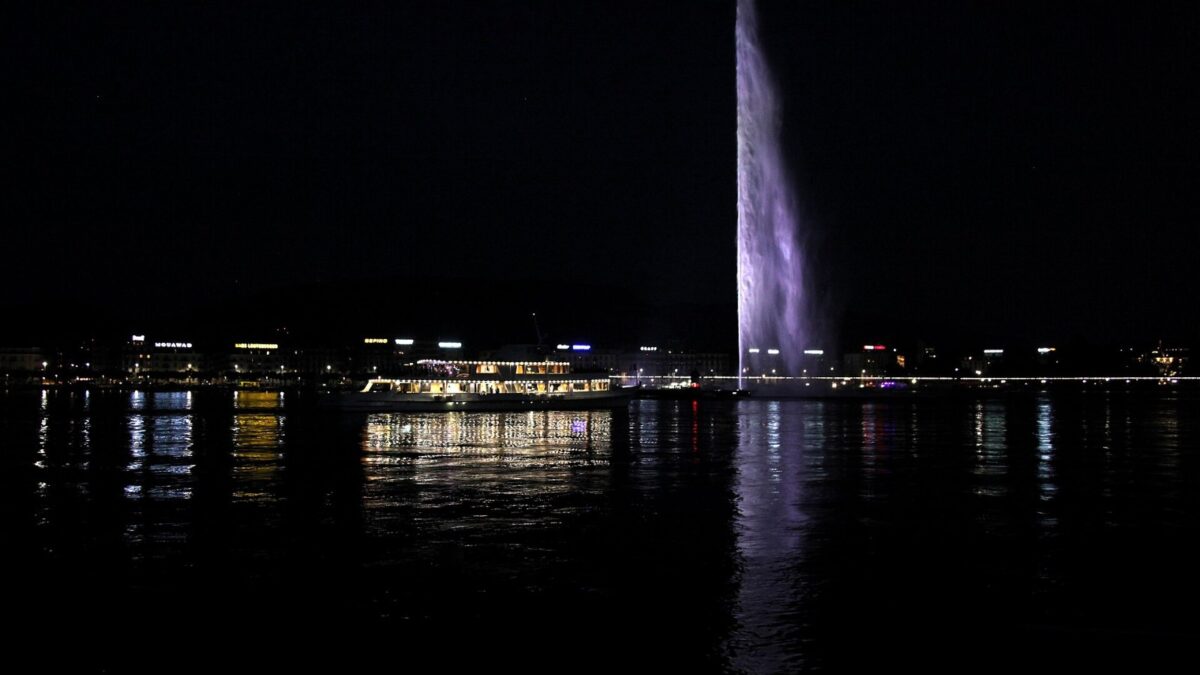
There is a change at the top. The Geneva shipping family Aponte, owner of the Mediterranean Shipping Company (MSC), pushes Chanel co-owner Gérard Wertheimer out of first place. Bilanz puts the family’s fortune at 39 billion to 40 billion francs, 15 billion more than a year earlier. New to the top 10 is Indian steel magnate Lakshmi Mittal, who has moved his tax residence from London to Switzerland. Also new is Palantir CEO Alexander Karp, who lives in neighboring Liechtenstein. The Blocher family returns to the leading group thanks to Ems-Chemie.
The figures are estimates. They are also only a partial picture. But they fit a pattern that official statistics show as well: In Switzerland, the richest 1% of taxpayers hold almost half of all taxable wealth. A year after voters clearly rejected the Young Socialists’ inheritance tax initiative, the question therefore arises again of how a country should deal with its super-rich, whom it courts, taxes and criticizes at the same time. This analysis shows what is driving the record, how solid the figures are and what answers economists and politicians offer.
The case at a glance
| Item | Status as of Nov. 28, 2026 |
|---|---|
| Total wealth | 934.5 billion francs (previous year: 851.5 billion), up 83.1 billion or 9.8% |
| Billionaires | 163 of the 300 entries; average across all 300 entries: 3.1 billion francs |
| Top 10 | Combined 271 billion francs, up 44 billion or just over 19%; that is more than a quarter of total wealth |
| New No. 1 | Aponte family (MSC, Geneva), 39 billion to 40 billion francs |
| New to the top 10 | Mittal family (27 billion to 28 billion), Alexander Karp (16 billion to 17 billion); return of the Blocher family (23 billion to 24 billion) |
| Newcomers | According to the Swiss public broadcaster SRF, 16 newcomers with a combined 66.3 billion francs, among them musician Phil Collins, Fiat heir Lapo Elkann and real estate entrepreneur Urs Ledermann |
| Losers | Schindler and Bonnard families (joint entry), down 2 billion combined; the founders of Partners Group, down about 500 million each |
| Main drivers according to Bilanz | Stock markets driven by the AI wave, pharmaceutical stocks, logistics, newcomers and a revaluation of the Aponte family’s fortune |
| Method | Estimates in ranges; entry threshold of 100 million francs; covers Swiss citizens and foreigners living in Switzerland, in individual cases also wealthy people with close ties to Switzerland |
Timeline: From the first ranking to the record
Bilanz has published its list since 1989. Its history shows how strongly large fortunes have grown. It also shows that they by no means always rise.
| Year | Event |
|---|---|
| 1989 | The first list covers the 100 richest, with a combined 66 billion francs. |
| 2021 | The total wealth of the 300 richest reaches 821.8 billion francs, a record at the time. |
| 2022 | For the first time since the financial crisis, total wealth falls, if only by 0.1%, to 821.0 billion. |
| 2023 | Second decline in a row, to 795.0 billion francs. Gérard Wertheimer replaces the Kamprad family at the top after 21 years. |
| 2024 | New record at 833.5 billion francs. |
| April 2025 | Britain abolishes the tax status of “non-doms.” In the following months, many wealthy people leave the country or loosen their ties to it; Lakshmi Mittal moves his tax residence to Switzerland. |
| November 2025 | Bilanz reports 851.5 billion francs. Several of the super-rich act as negotiators in the tariff dispute with the U.S. |
| Nov. 30, 2025 | Voters reject the Young Socialists’ initiative for an inheritance tax on fortunes above 50 million francs with 78.3% against; every canton says no. |
| Aug. 24, 2026 | Logistics entrepreneur Klaus-Michael Kühne dies at 89 in Schindellegi. |
| Oct. 23, 2026 | French economist Gabriel Zucman, speaking on SRF, calls for a minimum tax of 2% on very large fortunes in Switzerland too. |
| Nov. 5, 2026 | The Federal Tax Administration reports that the richest 1% held 45.9% of taxable wealth in 2023. |
| Nov. 26, 2026 | Bilanz publishes the 2026 list with 934.5 billion francs. |
The 10 richest in 2026
The top group has changed more than in previous years. Three of the 10 places have new occupants. In addition, the 10 richest increased their wealth twice as fast as the list as a whole.
| Rank | Name | Wealth in billions of francs | Source of wealth |
|---|---|---|---|
| 1 | Aponte family | 39 to 40 | Shipping company MSC, Hirslanden clinics |
| 2 | Hoffmann, Oeri and Duschmalé families | 35 to 36 | Roche |
| 3 | Andrea Pignataro | 33 to 34 | Financial software and data (ION Group) |
| 4 | Gérard Wertheimer | 32 to 33 | Chanel |
| 5 | Mittal family | 27 to 28 | Steel and mining (ArcelorMittal) |
| 6 | Safra family | 26 to 27 | Banking (J. Safra Group) |
| 7 | Blocher family | 23 to 24 | Ems-Chemie |
| 8 | Jorge Lemann family | 18 to 19 | Stakes in beer, fast food and other companies |
| 9 | Bertarelli family | 17 to 18 | Pharma, biotech, real estate and investments |
| 10 | Alexander Karp | 16 to 17 | Palantir |
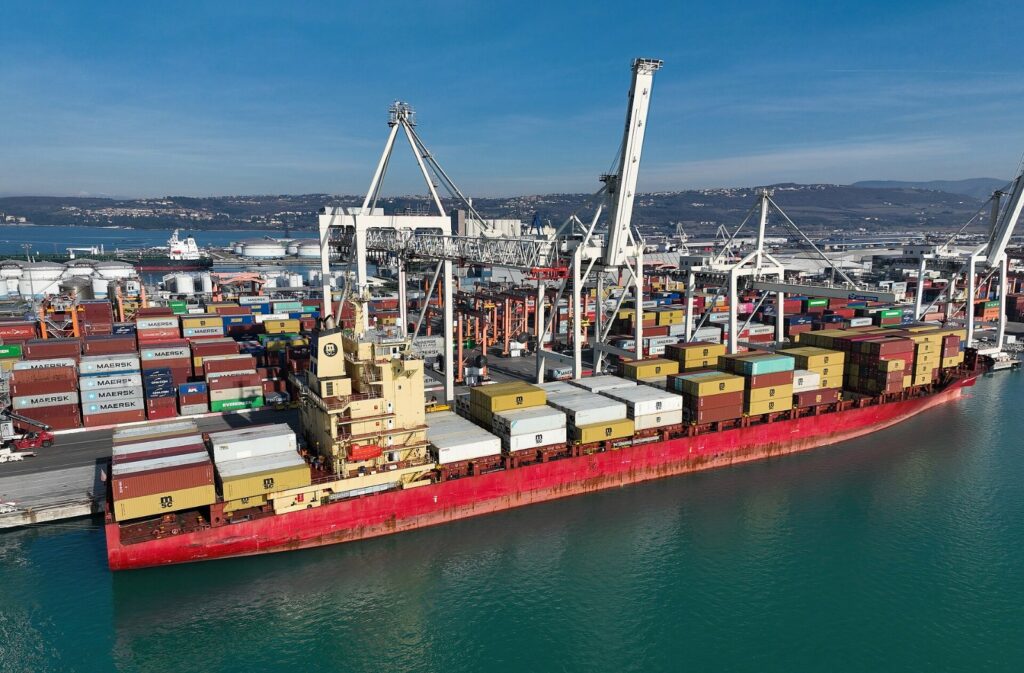
According to Bilanz, the Aponte family owes its jump partly to a revaluation of its assets. With more than 1,000 vessels, MSC is now the world’s largest shipping group; the family also owns the Hirslanden clinics. The logistics business is, however, seen as highly cyclical, as SRF also points out. A year of weaker world trade could wipe out part of the gain.
Gérard Wertheimer loses 1 billion and first place. According to Watson, Chanel increased its revenue by about 2% in 2025 to some $19 billion, but net profit fell by more than 14%. The Roche families benefited from strong pharmaceutical stocks, Andrea Pignataro from his financial data group ION. The Italian had entered the list in 2025 directly in third place as the biggest newcomer.
What is driving the record
Bilanz cites several causes. None of them is spectacular on its own, but together they add up to the strongest increase in years.
First: The AI wave on the stock markets
According to Bilanz, stock markets driven by the artificial intelligence wave were largely responsible for the rise. Nowhere is this clearer than with Alexander Karp. The co-founder and CEO of the U.S. data analytics company Palantir is in the top 10 for the first time, with 16 billion to 17 billion francs. Geopolitical crises have boosted Palantir’s revenue. Its market value has multiplied in two years. Karp himself spoke openly about the consequences of this development in a podcast in July 2026: AI could make him “20x wealthier,” he said, according to Fortune, on the podcast “MD Meets” hosted by Axel Springer CEO Mathias Döpfner. For the middle class, by contrast, he expects only modest raises; according to the report, he sees the widening gap as a problem.
Karp’s inclusion in a Swiss list does require an explanation, however. According to Watson, he is registered in Gamprin-Bendern in the Principality of Liechtenstein and is building an estate in Schaan. According to Watson, Bilanz justifies his inclusion by pointing to the close economic ties between Switzerland and Liechtenstein. He is new to the list in 2026; according to Blue News, he moved to Liechtenstein at the end of 2022. Anyone who reads the list as a portrait of Switzerland should be aware of such special cases.
Second: Arrivals from London and Oslo
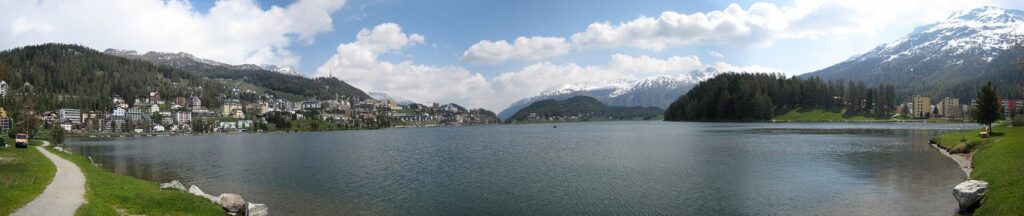
The second pattern is geographic. Switzerland benefits from other countries asking more of their rich. In April 2025, Britain abolished the status of so-called non-doms, who for decades were able to keep their foreign income and assets largely tax-free. Lakshmi Mittal, a U.K. resident since 1995 and one of its richest inhabitants, has since moved his tax residence to Switzerland, according to British media. According to Bilanz, his main residence is now in St. Moritz. The family controls almost 44% of ArcelorMittal and enters the list directly in fifth place with 27 billion to 28 billion francs. Mittal is not an isolated case. According to a Bloomberg analysis reported by Fortune in October 2026, billionaires with a combined fortune of about $160 billion have left Britain or loosened their ties to it over the past two years, often in favor of Monaco, Switzerland or the United Arab Emirates.
SRF had already pointed to a similar movement from Norway the year before, after the government there raised its wealth tax. Since then, many wealthy Norwegians and their heirs have moved to Switzerland; cruise entrepreneur Torstein Hagen, founder of Viking Cruises, has lived here since 1985, however, according to the newspaper Blick.

Third: Pharma, chemicals and logistics
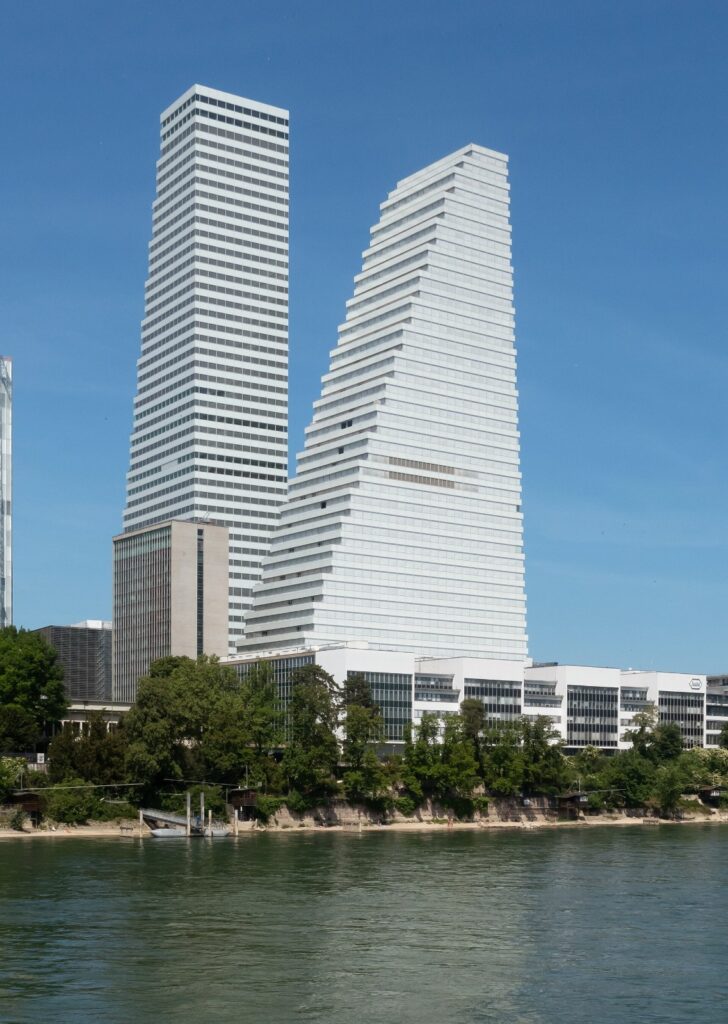
A large share of Switzerland’s biggest fortunes is invested in a small number of companies. Their share prices therefore have a strong impact. The Roche families benefited from rising pharmaceutical stocks. The Blocher family gained 9 billion francs because Ems-Chemie’s share price rose by about 55%, according to Watson; the company is now worth 20 billion francs on the stock market. The Lemann family benefited from its stake in the brewer AB InBev, whose shares rose by more than 38% in a year. And logistics contributed a great deal despite geopolitical conflicts, according to Bilanz.
Fourth: Revaluations
Finally, total wealth also changes because Bilanz reassesses existing fortunes. This year, the revaluation of the Aponte family’s fortune has the biggest effect. Such corrections are legitimate, but they also show that part of the increase is explained not by markets but by better or different information gathered by the researchers.
Winners, losers and departures
The biggest gain goes to the Aponte family, at 15 billion francs, followed by the Blocher family with 9 billion. On the losing side are the Schindler and Bonnard families, the main shareholders of the elevator maker Schindler, who are listed jointly. Together they lose 2 billion and fall from between 15 billion and 16 billion francs to between 13 billion and 14 billion. SRF attributes this mainly to the sharp fall in the share price up to the editorial deadline, Watson also to investor uncertainty over the announced merger of competitors Kone and TK Elevator. According to the news agency AWP, the founders of the investment firm Partners Group, Marcel Erni, Alfred Gantner and Urs Wietlisbach, are also among the biggest losers. After a slump in their company’s share price, they each lost about half a billion but each still owns more than 2 billion francs.
Klaus-Michael Kühne, the longtime majority shareholder of Kühne+Nagel, who died on Aug. 24, 2026, at his home in Schindellegi, has disappeared from the list. According to German media, his fortune is to go largely to his foundation. Also no longer listed, according to Watson, are singer Robbie Williams, now a resident of the Bahamas, as well as Andrey Melnichenko and Romain Girbal, who have left Switzerland. The list is therefore not a closed club. It reflects who lives here. The mobility of the rich works in both directions.
How reliable are the figures?
The list is a journalistic estimate, not official statistics. A Bilanz research team has compiled data every year since 1989; fortunes are given in ranges, which for the largest usually span 1 billion francs. For listed holdings this is comparatively easy, for private companies, real estate, art or foundations much harder. SRF summed it up back in 2024: The list is an approximation.
This leads to four caveats. First, the values depend on the cutoff date. A drop in share prices up to the editorial deadline can cost a family billions, as the Schindler example shows. Second, the list often groups entire families together, so the fortunes are spread across several people and generations. Third, it is not always clear how much of it is actually available; in 2023, for example, Bilanz valued the fortune of the Ikea heirs much lower because the family has no direct access to the Ikea foundation. Fourth, the list also includes people who do not live in Switzerland, such as Alexander Karp. For trends over several years, the list is nevertheless meaningful because it has been compiled according to similar rules for decades.
Concentration in official figures
Anyone who wants to know whether the list is a distortion or a mirror has to compare it with tax statistics. The Federal Tax Administration published its latest figures on Nov. 5, 2026. According to them, the richest 1% of taxpayers held 45.9% of total taxable wealth in 2023, almost the same as in the two previous years. Average taxable net wealth was about 459,000 francs. In 2005, the richest 1% had held 38.0%; in 2020, the share was 44.8%.
| Year | Share of the richest 1% in taxable wealth |
|---|---|
| 2005 | 38.0% |
| 2020 | 44.8% |
| 2022 | 45.8% |
| 2023 | 45.9% |
Economist Isabel Martínez, head of the inequality research group at the KOF Swiss Economic Institute of ETH Zurich, has studied this development together with researchers from the University of Lausanne and EPFL. The study “Vermögen und Erbschaften in der Schweiz des 21. Jahrhunderts” (Wealth and inheritance in 21st-century Switzerland), published in February 2026 as a white paper of the Lausanne research center E4S, draws on nationwide data and 16.7 million tax records from the cantons of Bern and Lucerne. “Our study confirms it: Wealth inequality is greater in Switzerland than in other countries,” Martínez told SRF in February 2026. The widespread notion that Switzerland is a country of low inequality needs qualifying, she said. “For wealth, that was never true.” The study also shows that wealth grows faster than income, is heavily concentrated among older people and is being passed on increasingly late in life.
In April 2025, SRF summed up the distribution in two figures: The richest 1% own an average of about 20 million francs, while almost two-thirds of taxpayers share only about 3% of wealth. Another comparison puts the scale of the Bilanz list into perspective. According to the Federal Statistical Office, Switzerland’s gross domestic product was 854 billion francs in 2024. The 300 richest now own more than the entire economy produces in a year. In the first list in 1989, the 100 richest covered at the time had a combined fortune of about 66 billion francs, according to SRF.
The distribution within the list is also striking. The 10 richest account for 271 billion francs, or about 29% of the total wealth of the 300. At just over 19%, their wealth grew twice as fast as that of the list as a whole. Concentration is thus increasing even among the richest.
A year after voters rejected the inheritance tax
Politically, the new list arrives at a charged moment. On Nov. 30, 2025, voters rejected the Young Socialists’ initiative “for a future” with 78.3% against; not a single canton approved it. It would have taxed the portion of inheritances and gifts above 50 million francs at 50% and used the revenue for climate protection. Opponents had argued that the initiative threatened family businesses; SRF analyses concluded that this is exactly how it was read. Before the vote, entrepreneur Magdalena Martullo-Blocher had threatened to leave the country if the measure passed, according to the investigative outlet Correctiv. Martin Hirzel, president of the industry association Swissmem, called the result a “vote of confidence in the Swiss economy.”
That does not settle the debate. In October 2026, French economist Gabriel Zucman, who does research at the Paris School of Economics and at Berkeley, told SRF that Switzerland, too, should introduce a minimum tax of 2% on very large fortunes, for example as a federal tax. Billionaires can avoid income taxes by not paying themselves dividends, he argues, which is why the tax must target wealth. He considers the cantonal rates in Switzerland too low; according to researchers at the University of Lausanne, the average tax on wealth is about 0.3%. Zucman even proposes that those who leave should continue to be taxed for five to 10 years.
The pushback came promptly. Michele Salvi of the free-market think tank Avenir Suisse told SRF that Switzerland already collects almost 10 billion francs a year in wealth taxes; for such a debate, he said, it is “the wrong country.” Entrepreneur Karin Stüber, herself a billionaire, said she is not opposed to wealth taxes in principle, but 2% is too much; her company would then have to distribute most of its profits instead of investing them. The FDP and the SVP reject such a tax; the Center party considers 2% too high.
Switzerland is indeed a special case internationally. It is one of the few countries in Europe that still levy a tax on net wealth, alongside Norway and Spain. According to OECD data cited in a report by the Federal Tax Administration, the wealth tax accounted for almost 4% of total tax revenue in Switzerland in 2018, just over 1% in Norway and about 0.5% in Spain. Switzerland thus taxes wealth at low rates, but on a broad base and with considerable revenue.
There are dissenting voices among the rich, too. Jan Colruyt, an entrepreneur and millionaire heir who lives in the Toggenburg region, spoke of a “flaw in the system” to the daily Tages-Anzeiger in March 2026 and called for higher taxes on the super-rich.
The super-rich as political actors
The list raises a second question that goes beyond taxes: influence. Bilanz described in 2025 how a handful of billionaires have a say in key dossiers of Swiss politics. In the fall of 2025, six Swiss business leaders negotiated the tariff deal with President Donald Trump in the Oval Office; according to Bilanz, Diego Aponte of MSC played a key role in the preparations. Expertistan has reported in detail on the outcome of those talks (in German). That entrepreneurs put their networks to work for the country can be seen as a public service. It can also be seen as a shift of power away from elected authorities. Both readings have merit. Both become more relevant the larger the fortunes grow.
Claims fact-checked
| Claim | Finding |
|---|---|
| “In Switzerland, the rich keep getting richer.” | True over the long term for the 300 richest, but not every year: Their wealth fell in 2022 and 2023. In 2026 it rose by 9.8%. |
| “The richest 1% own almost half of all wealth.” | Correct for taxable wealth: 45.9% in 2023 (Federal Tax Administration). Pension fund assets are not included. |
| “The list shows the real wealth of the super-rich.” | Only approximately. These are estimates in ranges, often for entire families. They depend on the cutoff date. |
| “The increase comes solely from the stock market.” | No. Besides stock market gains, newcomers such as those from Britain and revaluations such as that of the Aponte family contribute significantly. |
| “The super-rich hardly pay any taxes in Switzerland.” | Not tenable as a blanket statement. Switzerland is one of the few European countries with a wealth tax, which raises almost 10 billion francs (Avenir Suisse). Critics point to the low average burden of about 0.3% and to lump-sum taxation. |
| “A higher wealth tax would drive the rich away.” | Disputed. The exodus from Britain shows that the super-rich respond to taxes. Zucman argues that revenue in Norway rose nonetheless after the 2022 increase. |
| “Voters do not want higher taxes on the super-rich.” | At the ballot box, that has been clear so far. The Young Socialists’ inheritance tax failed in 2025 with 78.3% against, their 99% initiative in 2021 with 64.9% against. Voters and all cantons also rejected a more moderate federal inheritance tax of 20% on estates above 2 million francs on June 14, 2015, with 71.0% against. |
The Arena: Should the super-rich be taxed more heavily?
On contested questions, Expertistan sets out the strongest arguments on both sides.
Yes: Wealth is too concentrated
- Inequality: The richest 1% hold 45.9% of taxable wealth. According to Isabel Martínez, wealth inequality is greater in Switzerland than in other countries.
- Inheritance instead of achievement: Large fortunes are increasingly inherited rather than earned. Martínez told the magazine Beobachter back in 2025 that anyone who wants to be among the very richest needs an inheritance.
- Low burden: According to researchers at the University of Lausanne, the average tax on wealth is about 0.3%. In the view of advocates of a higher tax, that is far less than large fortunes earn in returns each year.
- Power: Those who own a great deal gain influence over politics, as the tariff negotiations show.
- Voices from their own ranks: Even wealthy heirs such as Jan Colruyt speak of a flaw in the system.
No: The rich pay a lot and are mobile
- High revenue: According to Avenir Suisse, Switzerland collects almost 10 billion francs a year in wealth taxes and is one of the few European countries with such a tax.
- Mobility: The departure of many wealthy people from Britain shows how quickly a tax base can move across borders. Switzerland is winning now, but it could just as easily lose.
- Investment: Entrepreneurs such as Karin Stüber warn that a high wealth tax would force family businesses to distribute profits instead of investing them.
- A democratic decision: A year ago, voters rejected the Young Socialists’ inheritance tax with 78.3% against.
- Economic benefit: The large family companies, from MSC to Roche to Ems-Chemie, create jobs and value; most of the wealth is invested in companies, not sitting in bank accounts.
What comes next
In the short term, the list changes little politically. No vote on higher taxes for the super-rich is scheduled. But three developments deserve attention. First, the stock markets: A large part of the increase depends on the share prices of a few companies and on the artificial intelligence boom. A setback would shrink total wealth just as quickly as it grew. Second, tax competition: After Britain and Norway, several countries are debating higher taxes on the super-rich, including France, where Zucman’s proposals are under discussion. Every tightening abroad makes Switzerland more attractive but also increases pressure on its special rules such as lump-sum taxation. Third, the wave of inheritances: The study by Martínez and her colleagues suggests that an unprecedented wave of inheritances is coming in Switzerland. The question of how Switzerland taxes inheritances is therefore likely to return, despite the clear no votes of 2015 and 2025.
Commentary: A record that should be sobering
The list of the 300 richest invites two reflexes. One is outrage at billions piling up in a few families. The other is pride in a country that attracts entrepreneurs and wealthy people like hardly any other. Both reflexes are comfortable. Both miss the point.
The point is that Switzerland has for years pursued a policy that is successful and at the same time raises questions. It taxes wealth moderately but consistently; it offers stability, legal certainty and quality of life. There is nothing disreputable about that. But part of this year’s record was not earned here; it moved here. When the super-rich switch from London to St. Moritz, the list grows, but the Swiss economy does not. That is part of an honest reading of the 934 billion.
It must be said just as honestly: With its wealth tax, Switzerland has an instrument that other countries envy. Anyone who wants to multiply the burden here, as Zucman proposes with his 2% minimum tax, risks precisely the exodus from which Switzerland benefits today. Voters clearly rejected the Young Socialists’ extreme variant. But that does not mean every debate about inheritances and large fortunes is settled. The wave of inheritances is coming. With it comes the question of whether family background will matter more than achievement in Switzerland.
The right answer lies neither in envy nor in complacency. It lies in a sober tax policy that considers competitiveness and fairness together. That also means reviewing special rules such as lump-sum taxation again and again. A country whose 300 richest own more than its entire annual economic output should be able to afford this debate without lapsing into class warfare or whitewashing.
Editor’s note
The wealth figures come from the 2026 Bilanz list and from reports by SRF, Watson, 20 Minuten and the news agency AWP. They are the magazine’s estimates in ranges, not audited figures. Expertistan has not been able to verify them independently. Official data on the distribution of wealth come from the Federal Tax Administration and refer to 2023. Statements by British media on Lakshmi Mittal’s change of residence are marked as such. Quotes from German-language sources have been translated by the editorial team. Article as of Saturday, Nov. 28, 2026.
Sources
- 1. SRF News, «Bilanz-Ranking: Sie gehören zu den Top Ten der reichsten Schweizer», 26.11.2026: https://www.srf.ch/news/wirtschaft/bilanz-ranking-sie-gehoeren-zu-den-top-ten-der-reichsten-schweizer
- 2. cash.ch (AWP), «MSC-Besitzer führt neu Ranking der Reichsten in der Schweiz an», 26.11.2026: https://www.cash.ch/news/msc-besitzer-fuhrt-neu-ranking-der-reichsten-in-der-schweiz-an-988520
- 3. watson, «Bilanz-Ranking 2026: So viel Geld besitzen die 300 Reichsten der Schweiz», 27.11.2026: https://www.watson.ch/wirtschaft/schweiz/305243627-bilanz-ranking-2026-so-viel-geld-besitzen-die-300-reichsten-der-schweiz
- 4. 20 Minuten, «Die Reichsten der Schweiz: Rekordvermögen von 934,5 Milliarden Franken», 26.11.2026: https://www.20min.ch/story/top-10-neue-familie-an-der-spitze-das-sind-die-reichsten-in-der-schweiz-103674150
- 5. Anzeiger von Saanen, «Die 300 Reichsten der Schweiz sind 83,1 Milliarden Franken reicher», 27.11.2026: https://www.anzeigervonsaanen.ch/die-300-reichsten-der-schweiz-sind-83-1-milliarden-franken-reicher
- 6. moneycab, «MSC-Besitzer führt neu Ranking der Reichsten in der Schweiz an», 26.11.2026: https://www.moneycab.com/schweiz/msc-besitzer-fuehrt-neu-ranking-der-reichsten-in-der-schweiz-an/
- 7. Bilanz, Übersicht «Die 300 Reichsten»: https://www.bilanz.ch/die-300-reichsten
- 8. Bilanz, Profil Alexander Karp (Liste 2026): https://www.bilanz.ch/people/alexander-karp
- 9. Blue News, die 16 Neuen der Liste 2026: https://www.bluewin.ch/de/news/wirtschaft/das-sind-die-16-neuen-schweizer-superreichen-li.3687747
- 10. Bilanz, Profil Familien Schindler und Bonnard: https://www.bilanz.ch/people/familien-schindler-bonnard
- 11. Bilanz, «Wie eine Handvoll Milliardäre zum Politfaktor wurden», 2025: https://www.bilanz.ch/die-300-reichsten/reiche-unternehmer-neue-macht-in-schweizer-politikdossiers/5q9qqjf
- 12. SRF News, «Neue Bilanz-Liste: Das sind die 300 reichsten Menschen in der Schweiz», 2024: https://www.srf.ch/news/wirtschaft/neue-bilanz-liste-das-sind-die-300-reichsten-menschen-in-der-schweiz
- 13. SRF News, «Neue Bilanz-Liste: Das sind die fünf neuen Milliardäre der Schweiz», 2025: https://www.srf.ch/news/wirtschaft/neue-bilanz-liste-das-sind-die-fuenf-neuen-milliardaere-der-schweiz
- 14. SRF News, «300 Reichste in der Schweiz: Warum so viele Norwegerinnen und Norweger dazugekommen sind», 2025: https://www.srf.ch/news/schweiz/300-reichste-in-der-schweiz-warum-so-viele-norwegerinnen-und-norweger-dazugekommen-sind
- 15. Bilanz, «Wie gewonnen, so zerronnen: Die 300 Reichsten werden ärmer», 2022: https://www.bilanz.ch/archiv/bilanz-300-reichste-2022-die-reichsten-werden-aermer/tcb2j66
- 16. SRF News, «Bilanz-Reichstenliste: Chanel-Mitbesitzer Gérard Wertheimer ist der reichste Schweizer», 2023: https://www.srf.ch/news/wirtschaft/bilanz-reichstenliste-chanel-mitbesitzer-gerard-wertheimer-ist-der-reichste-schweizer
- 17. Bilanz, «So reich waren die Reichsten noch nie», 2024: https://www.bilanz.ch/die-300-reichsten/bilanz-300-reichste-2024-die-zahl-der-milliardaere-erreicht-einen-neuen-hoechststand/f2gbfbm
- 18. Blick, «Von Ski-König bis zum Mathematik-Genie: Das sind die neuen Superreichen der Schweiz», 2025: https://www.blick.ch/wirtschaft/von-ski-koenig-bis-zum-mathematik-genie-das-sind-die-neuen-superreichen-der-schweiz-id21454723.html
- 19. Eidgenössische Steuerverwaltung, «Steuerstatistiken zur direkten Bundessteuer und Vermögensverteilung 2023», 05.11.2026: https://www.estv.admin.ch/de/newnsb/pHKbNup7mx03
- 20. Eidgenössische Steuerverwaltung, «Die Verteilung der steuerbaren Vermögen in der Schweiz im Jahr 2022», 29.10.2025: https://www.estv2.admin.ch/stp/berichte/stp-berichte-2022-vermoegen.pdf
- 21. cash.ch (AWP), «Im Pandemiejahr 2020 blieb Vermögens-Ungleichgewicht unverändert»: https://www.cash.ch/news/im-pandemiejahr-2020-blieb-vermogens-ungleichgewicht-unverandert-682276
- 22. SRF News, «Wie ungleich sind Vermögen in der Schweiz verteilt?», 24.02.2026: https://www.srf.ch/news/schweiz/vermoegensverteilung-wie-ungleich-sind-vermoegen-in-der-schweiz-verteilt
- 23. SRF News, «Superreiche in der Schweiz: Glücksfall oder Feindbild?», 09.04.2025: https://www.srf.ch/news/schweiz/reizthema-reichtum-superreiche-in-der-schweiz-gluecksfall-oder-feindbild
- 24. SRF News, «Linker Starökonom fordert Mindeststeuer für Superreiche», 23.10.2026: https://www.srf.ch/news/wirtschaft/vermoegenskonzentration-linker-staroekonom-fordert-mindeststeuer-fuer-superreiche
- 25. SRF News, «Erbschaftssteuer scheitert klar», 30.11.2025: https://www.srf.ch/news/abstimmungen-vom-30-november-erbschaftssteuer-scheitert-klar
- 26. SRF News, «Erbschaftssteuer ohne Chance», 30.11.2025: https://www.srf.ch/news/erbschaftssteuer-ohne-chance-ploetzlich-gilt-wieder-was-der-wirtschaft-schadet-hat-es-schwer
- 27. Swissmem, «Juso-Initiative: Das klare Nein ist ein Bekenntnis zum Werkplatz Schweiz», 30.11.2025: https://www.swissmem.ch/de/mediencorner/medienmitteilungen/ablehnung-juso-initiative.html
- 28. Correctiv, «Viel Vermögen, wenig Steuern: So profitieren Super-Reiche», 2025: https://correctiv.org/?p=238629
- 29. Beobachter, «Sie sind jung, steinreich und im Fokus der Juso», 2025: https://www.beobachter.ch/magazin/gesellschaft/die-richtig-grossen-vermogen-werden-vererbt-826956
- 30. blue News, «Toggenburger Millionenerbe fordert höhere Steuern für Superreiche», 01.03.2026: https://www.bluewin.ch/de/news/schweiz/toggenburger-millionenerbe-fordert-hoehere-steuern-fuer-superreiche-3119571.html
- 31. City A.M., «Steel mogul Lakshmi Mittal leaves UK for Switzerland and Dubai», 2025: https://www.cityam.com/?p=2380520
- 32. Fortune, Bloomberg-Auswertung zu Milliardären, die Grossbritannien verlassen oder ihre Bindungen gelockert haben, 07.10.2026: https://fortune.com/2026/10/07/billionaires-left-uk-taken-160-billion-to-likes-of-monaco-switzerland-uae-more-than-those-who-stayed-are-worth/
- 33. Fortune, Bericht über Alex Karps Aussagen im Podcast «MD Meets», 17.07.2026: https://fortune.com/2026/07/17/palantir-ceo-alex-karp-artifical-intelligence-wealth-inequality-problem-billionaire-net-worth-surge-but-middle-class-left-behind/
- 34. SRF News, «Logistik-Milliardär Klaus-Michael Kühne im Alter von 89 Jahren verstorben», 24.08.2026: https://www.srf.ch/news/wirtschaft/logistik-milliardaer-klaus-michael-kuehne-im-alter-von-89-jahren-verstorben
- 35. Bundesamt für Statistik, «Das BIP der Schweiz ist 2024 deutlich gewachsen», 29.09.2025: https://www.bfs.admin.ch/de/newnsb/g_gdkur8MbGnSQEUz5IWy
- 36. Der Standard, «Reichtum entsteht durch Kapital, nicht durch Arbeit», 2026: https://www.derstandard.at/story/3000000329106/reichtum-entsteht-durch-kapital-nicht-durch-arbeit
- 37. Blick, Bericht über den Zuzug norwegischer Milliardäre in die Schweiz, 01.10.2023: https://www.blick.ch/wirtschaft/alpen-exodus-der-superreichen-immer-mehr-kronen-milliardaere-fluechten-in-die-schweiz-id18997209.html
- 38. E4S, White Paper «Vermögen und Erbschaften in der Schweiz des 21. Jahrhunderts», 02.2026: https://e4s.center/wp-content/uploads/2026/02/E4S-White-Paper-Wealth-and-Inheritance-DEU-final2.pdf
- 39. Swissvotes, Volksabstimmung vom 14.06.2015 über die Erbschaftssteuerreform: https://swissvotes.ch/vote/594.00
- 40. SRF News, 99-Prozent-Initiative scheitert an der Urne, 26.09.2021: https://www.srf.ch/news/abstimmungen/initiative-kapitalbesteuerung/99-prozent-initiative-hoehere-kapitalbesteuerung-scheitert-an-der-urne
Comments 0