Four proposals, one Sunday: What is at stake on Nov. 29
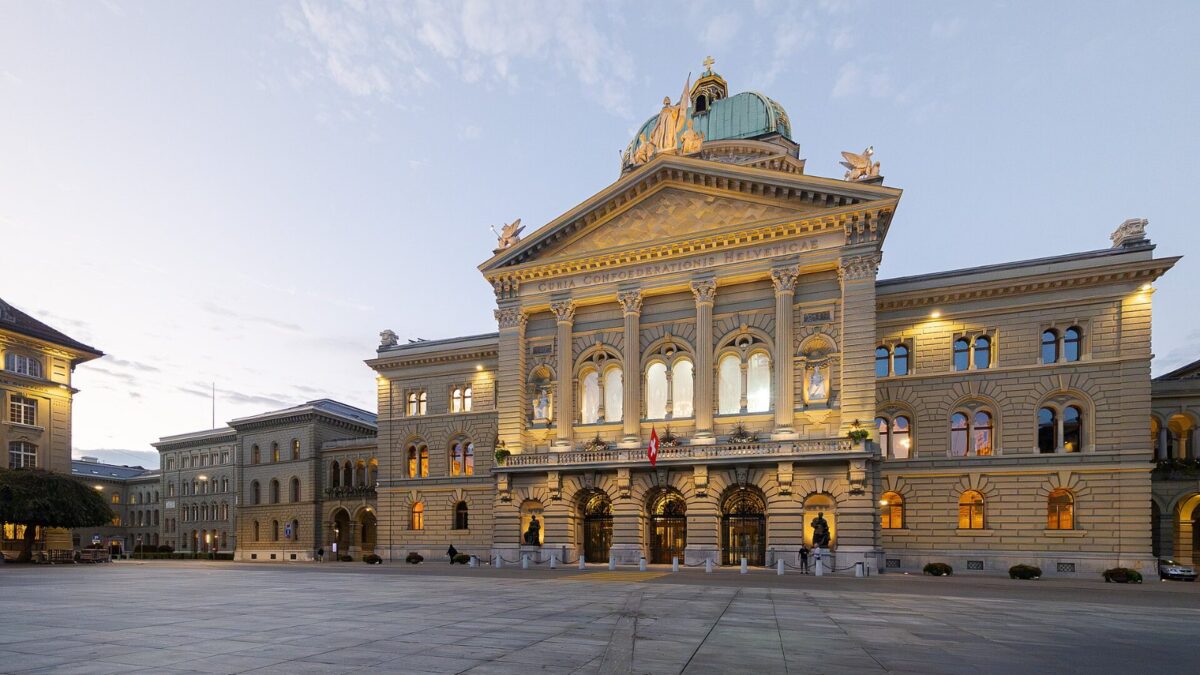
On Sunday, Nov. 29, 2026, Switzerland decides on the financing of the 13th OASI pension, a ban on loud fireworks, the taxation of married couples and the relaxation of the rules on arms exports. The latest polls show two open races, one clear trend and a frontrunner that is losing ground. Expertistan sets out what each proposal is about, who is campaigning for what, how much money is flowing and what follows after Sunday.
Schmitten, in the canton of Graubünden, has around 250 inhabitants. In March 2024, the village voted 81.63 percent in favor of the 13th OASI pension (AHV), the clearest yes in the entire country. Isenthal, in the canton of Uri, a good twice the size, rejected the same proposal with 80.5 percent. That is how SRF reconstructed it in a report on Nov. 17, 2026, and the reporter found the same uncertainty in both mountain villages: the pension has been decided, its financing is far from settled. That is precisely the question the federal government is putting to voters on Nov. 29, 2026, and it is only one of four.
The key number of this voting Sunday is 51. That is the percentage of eligible voters who, according to the second SRG trend survey by gfs.bern in early November, intended to vote definitely or probably against the higher value-added tax (VAT) for the OASI. On the Centre Party’s Fairness Initiative, the majority flipped within a month; on the War Material Act, three percentage points separate yes and no; and the fireworks initiative, while clearly ahead, is losing support. Four proposals, three of them requiring a majority of the cantons, an expected turnout above average: it is a Sunday that touches social policy, tax policy, security policy and the mood of New Year’s Eve all at once.
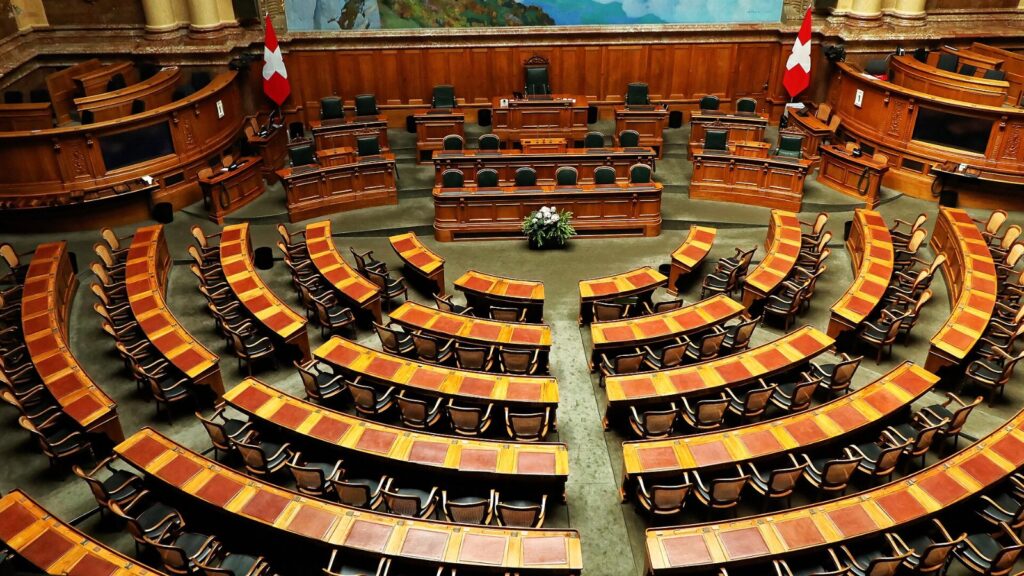
Key points at a glance
| Item | Status as of Nov. 23, 2026 |
|---|---|
| Date | Sunday, Nov. 29, 2026; four federal proposals, plus cantonal and municipal votes |
| Proposal 1 | Federal decree on the additional financing of the OASI through an increase in VAT (mandatory referendum, majority of the cantons required) |
| Proposal 2 | Popular initiative “For a restriction of fireworks” (majority of the cantons required) |
| Proposal 3 | Popular initiative “Yes to fair federal taxes for married couples too,” the Centre Party’s Fairness Initiative (majority of the cantons required) |
| Proposal 4 | Amendment of Dec. 19, 2025, to the War Material Act (optional referendum, popular majority only) |
| Recommendation of Federal Council and Parliament | Yes to the OASI proposal and to the War Material Act, no to both initiatives |
| Second SRG survey (Nov. 4 to 11, 2026) | OASI 46 yes, 51 no; fireworks 63 yes, 35 no; Fairness 40 yes, 54 no; war material 49 yes, 46 no |
| Campaign budgets (SFAO, Oct. 30, 2026) | CHF 6.56 million in total, of which CHF 3.63 million for the War Material Act |
| Expected turnout | 52 percent according to gfs.bern; long-term average 47.3 percent |
| Results | The federal government publishes results continuously from noon; first trend projections, based on experience, shortly after midday |
The four proposals have little in common, except that they all carry forward a decision that has already been made. The OASI proposal is meant to pay for what voters ordered in March 2024. The Fairness Initiative calls into question what voters decided in March 2026 with individual taxation. The War Material Act revision corrects a tightening that Parliament itself had adopted in 2021. And the fireworks initiative seeks to regulate at the federal level what, according to Swiss Animal Protection (STS), more than a hundred municipalities have already restricted on their own. Expertistan presented the proposals in detail in four individual analyses on Oct. 19, 2026; this preview brings them together, adds the developments of the past five weeks and puts the Sunday itself in context.
The four proposals at a glance
| Proposal | Type | Majority required | Federal Council and Parliament | National Council (yes/no/abst.) | Council of States (yes/no/abst.) |
|---|---|---|---|---|---|
| Additional financing of the OASI (VAT) | Federal decree, mandatory referendum | People and cantons | Yes | 108/85/6 | 28/13/3 |
| Fireworks initiative | Popular initiative | People and cantons | No | 50/131/18 | 3/40/1 |
| Fairness Initiative (taxation of married couples) | Popular initiative | People and cantons | No | 97/102/0 | 20/24/0 |
| Amendment to the War Material Act | Federal act, optional referendum | People | Yes | 122/68/6 | 31/11/1 |
Source: Explanatory brochure of the Federal Council on the popular vote of Nov. 29, 2026 (final votes or voting recommendations of the chambers).

Proposal 1: The bill for the 13th OASI pension
What it is about
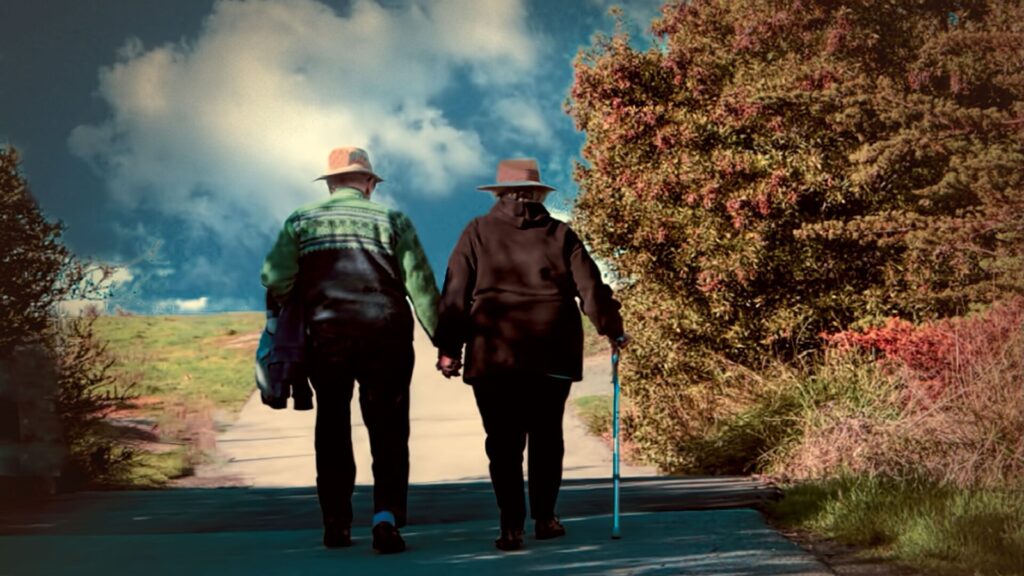
On March 3, 2024, the people and the cantons approved the initiative for a 13th OASI pension with 58.2 percent. The first payment will be made in December 2026, just days after the voting Sunday. Around 2.6 million pensioners will receive it; according to the Federal Social Insurance Office (FSIO), single people will get up to CHF 2,520 more per year, married couples up to CHF 3,780. The costs amount to more than CHF 4 billion in 2026 and, according to the FSIO, will rise to more than CHF 5 billion a year from 2035.
The initiative regulated the benefit, not its financing. The federal decree of June 19, 2026, is intended to close part of this gap. The standard VAT rate would rise from 8.1 to 8.5 percent, the special rate for accommodation from 3.8 to 4.0 percent. The reduced rate of 2.6 percent for food, medicines, newspapers, magazines and books would remain unchanged. The increase would be unlimited in time and could enter into force at the earliest at the beginning of 2028. From 2029, the Federal Council expects additional revenue of around CHF 1.4 billion a year and an average additional burden of around CHF 180 per household per year.
Together with the federal contribution, which covers around 20.2 percent of OASI expenditure, the proposal finances roughly half of the additional costs, according to the federal government. For the payments in 2026 and 2027 there will be no additional funds in any case; they will be charged to the OASI compensation fund. According to the FSIO, with the proposal the pay-as-you-go deficit in 2035 would be around CHF 3 billion instead of around CHF 5 billion, and the fund would hold just under 70 percent instead of around 50 percent of one year’s expenditure in 2035.
Because the VAT rates are set out in the Federal Constitution, this is a mandatory referendum. The proposal needs both the popular majority and the majority of the cantons.
The path through Parliament
In October 2024, the Federal Council had proposed an increase of 0.7 VAT percentage points. The Council of States wanted a mix of payroll contributions and VAT, the National Council VAT only. In June 2026, the conciliation conference proposed 0.2 payroll percentage points and 0.4 VAT percentage points; the National Council struck out the payroll contributions, 96 votes to 98. What remained was the pure VAT solution, which the National Council approved in the final vote of June 19, 2026, by 108 votes to 85 with 6 abstentions, and the Council of States by 28 to 13 with 3 abstentions. Expertistan traced the details in its analysis of Oct. 19, 2026.
Who is campaigning for what
Campaigning for a yes are the Social Democrats (SP), the Greens, the Centre Party, the Green Liberals (GLP), the Evangelical People’s Party (EVP) and the MCG, together with the Swiss Trade Union Federation (SGB) and Travail.Suisse. Opposed are the FDP.The Liberals, the Swiss People’s Party (SVP), the Federal Democratic Union (EDU) and the Lega, the Swiss Trade Association and Swissmem. According to the overview of voting recommendations compiled by gfs.bern, Economiesuisse has opted for a free vote, while the VPOD union recommends a no. The SVP delegates adopted their no recommendation on Oct. 17, 2026, in Bulle by 290 votes to 3, as SRF reported.
The alliance of supporters appeared before the media on Oct. 13, 2026. Samira Marti, co-president of the SP parliamentary group, called the OASI “our most important social institution,” according to SRF; Centre Party president Philipp Matthias Bregy warned: “A no to this financing solution would endanger the OASI and the people who draw on it.” The GLP adopted its yes on Oct. 24, 2026, without enthusiasm; National Councillor Patrick Hässig spoke of a “grudging YES,” with which the party shares “responsibility after this popular decision.” Travail.Suisse would have preferred payroll contributions or mixed financing, but supports the proposal because it eases the pressure on the retirement age.
The opponents argue with the burden on consumption and purchasing power and with the absence of structural reform. As early as June 2026, the Swiss Trade Association called for “no unlimited VAT increase for a single benefit such as the 13th pension” and stated: “The 13th OASI pension cannot be detached from the structural challenges of the OASI.” Swissmem writes: “Raising taxes indefinitely does not solve the challenge.” SVP National Councillor Nicolas Kolly argued at the delegates’ meeting, in essence, that the people had not approved the 13th pension so that taxes would rise; the SVP would have preferred savings in international cooperation and in the asylum sector.
The tone of the final phase
On SRF’s “Abstimmungs-Arena” debate program of Nov. 11, 2026, Federal Councillor Elisabeth Baume-Schneider, Centre Party Councillor of States Erich Ettlin and SGB chief economist Daniel Lampart faced FDP co-president Susanne Vincenz-Stauffacher, SVP president Marcel Dettling and Swiss Trade Association director Urs Furrer. Baume-Schneider said there: “It is also a bit in the DNA of our country that we look out for everyone.” Vincenz-Stauffacher called for the additional OASI funds to be paid “from existing tax revenue,” combined with a structural component. Lampart calculated that “structural” measures would in effect mean a higher retirement age. Dettling rejected a higher retirement age and proposed a lifetime working-hours model: “Anyone who enters working life only later should also be prepared to work a little longer.” Ettlin stated: “We must not wait.”
In an interview with the Tages-Anzeiger, published by the Federal Department of Home Affairs (FDHA) on Nov. 6, 2026, Baume-Schneider was more explicit: “A no would indeed be worrying: by 2035, CHF 35 billion would already be missing from the OASI fund.” Pressure on pensions would increase; it would be necessary “to raise VAT or payroll contributions much more sharply in the future.” At the same time, she sounded confident: “I am convinced that the population will approve this compromise.” The other side considers such warnings exaggerated: according to the headline of an article in 20 Minuten, the FDP co-president accuses the Federal Councillor of frightening people. Expertistan was unable to view the article itself.
What the polls say
The second SRG survey (conducted Nov. 4 to 11, 2026, 13,527 eligible voters, margin of error plus/minus 2.8 percentage points) found 46 percent yes, 51 percent no and 3 percent undecided. The yes share was unchanged from October, the no share rose by 2 points. According to gfs.bern, the share of those firmly decided rose to 67 percent. According to the figures Blick cites from the survey, 74 percent of SVP sympathizers and 67 percent of FDP sympathizers reject the proposal, while 57 percent among the Centre Party, 55 percent among the GLP, 65 percent among the SP and 69 percent among the Greens approve it. Men say no by 57 percent, women yes by 50 percent. Those aged 18 to 39 reject it by 55 percent; those over 65 approve it by 53 percent.
Lukas Golder, co-director of gfs.bern, told SRF the yes camp faced a “difficult starting position.” “Even on the left, a certain skepticism remains about the fairness of this tax proposal,” he said. So far, he added, it had not been possible to convince the undecided of a reasonable compromise. His conclusion: “It will be close.” All three counterarguments tested reached at least 60 percent agreement; according to Le Temps, the most effective is the argument that gaps should be closed with structural reforms rather than new taxes (66 percent).
The other institutes continue to see the no side ahead. The second wave by Leewas for Tamedia and 20 Minuten (Nov. 11 to 12, 2026, 12,169 participants) measured 57 percent no, after 60 percent in the first wave in October. YouGov Schweiz (Nov. 2 to 16, 2026, 3,013 respondents) found 39 percent yes and 54 percent no. As early as October, YouGov had described the OASI proposal as the one respondents considered most important: 74 percent rated it as important, more than any other.
The question of the cantonal majority
In addition to the popular majority, the OASI proposal also needs a majority of the cantons. According to SRF, Golder notes that, based on gfs.bern’s data, the proposal would need only slightly more than 50 percent approval to also achieve the majority of the cantons. YouGov comes to a stricter finding: “Since the yes camp is not clearly ahead in any canton, approval is currently unlikely.” According to both findings, a divergence between the popular and the cantonal majority is rather unlikely for this proposal; the popular majority is decisive.
What a yes and a no would mean
| Yes | No | |
|---|---|---|
| VAT | Standard rate 8.5 instead of 8.1 percent, from 2028 at the earliest, unlimited in time | Rates remain unchanged for the time being |
| 13th pension | Is paid out, half of it covered (with the federal contribution) | Is also paid out, without additional financing |
| OASI fund 2035 | Just under 70 percent of one year’s expenditure (FSIO) | Around 50 percent (FSIO) |
| Political timetable | The remaining gap stays on the agenda of the OASI 2030 reform | Financing falls entirely to the OASI 2030 reform; Federal Council cites scenarios of 0.7 to 0.9 VAT percentage points or a mix with payroll contributions |
According to the FSIO, the OASI 2030 reform is in preparation following the end of the consultation on Sept. 11, 2026; a motion by the National Council’s social security committee calls for the dispatch by the end of December 2026. As things stand, the proposal does not provide for an increase in the reference age, but it does include incentives to work beyond retirement age and a stabilization mechanism that kicks in when the fund threatens to fall below 90 percent of one year’s expenditure. Should Parliament not adopt any financing, the FSIO puts the requirement at a combined solution (0.7 VAT percentage points and 0.2 payroll percentage points) or at 0.9 VAT percentage points.
THE QUESTION
Should the 13th OASI pension be financed through a higher VAT, even though the proposal covers only around half of the costs?
Answer A: Yes. Something is better than nothing, and VAT spreads the burden across all generations, including pensioners themselves.
Answer B: No. An unlimited tax for a single benefit is no substitute for structural reform; the financing belongs in the OASI 2030 reform.
Proposal 2: The fireworks initiative
What it is about
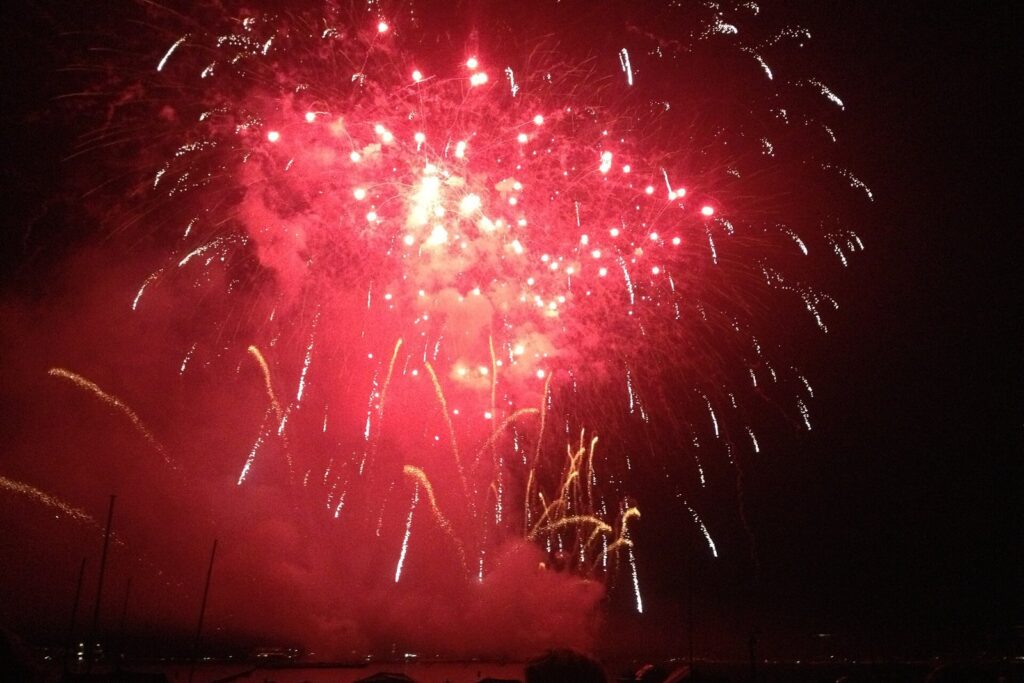
The popular initiative “For a restriction of fireworks” seeks to write a new Article 74a into the Federal Constitution. The sale and use of fireworks “that produce noise” would be banned. Quiet products such as fountains, sparklers and Bengal lights would remain permitted. The cantons could authorize larger fireworks displays for events of “supra-regional significance,” according to the initiators for example at lakeside festivals or at municipal Aug. 1 celebrations; for private individuals, loud fireworks would be off-limits even there. The Federal Council and Parliament would have two years to determine what counts as loud and which events meet the condition. In its dispatch, the Federal Council states: “There is currently no recognized definition of what noise-producing fireworks are.”
The initiative is backed by the Fireworks Initiative association, supported by Swiss Animal Protection (STS), Four Paws, the Foundation for the Animal in the Law and the Fondation Franz Weber. On Nov. 3, 2023, 137,429 signatures were submitted, of which the Federal Chancellery recognized 137,193 as valid. An indirect counterproposal, which would have banned pure firecrackers and tightened import rules, failed in the National Council’s final vote on June 19, 2026, by 79 votes to 114. The initiative therefore goes to the ballot without an alternative.
The market behind the bang
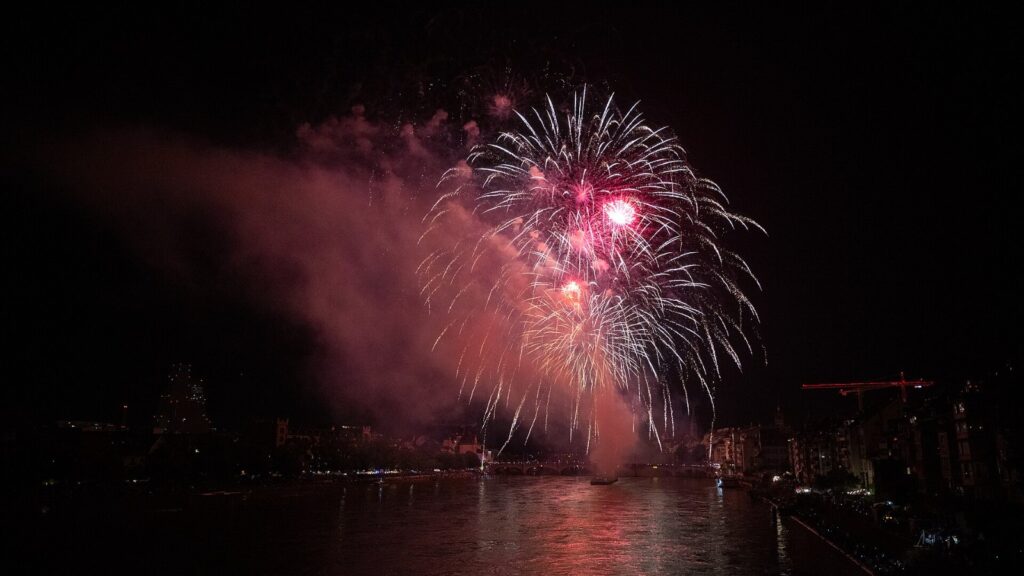
According to SRF, the industry puts its turnover at CHF 50 million to 60 million a year and 200 to 300 employees; around three quarters of the products are imported. According to the industry, about 70 percent of turnover comes from loud fireworks. According to the Federal Council, consumption fell from 1,876 metric tons (2022) to 1,443 metric tons (2025); the Federal Council does not see a clear trend in this. Summer 2026 hit the industry further: because of the drought, bans on fires and fireworks were in force on Aug. 1 in almost all cantons. A retailer speaking to SRF expected up to 50 percent less turnover this year and said: “We have to make our turnover on a few days a year.” Daniel Bussmann, owner of the company Bugano, who also chairs the Pro Feuerwerk association, observes a shift: “New Year’s Eve has certainly become bigger.”
Who is campaigning for what
According to gfs.bern’s overview of voting recommendations, the initiative is supported by the Greens, the SP, the GLP and the EVP, as well as animal welfare organizations, Hunting Switzerland (JagdSchweiz) and the Swiss Noise League. Opposed are the FDP, the SVP, the Centre Party, the EDU, the Lega and the MCG, as well as the Swiss Trade Association. Federal Councillor Albert Rösti opened the Federal Council’s no campaign on Oct. 22, 2026. The opponents are conducting their campaign mainly online and with little money: the Pro Feuerwerk association reported a budget of CHF 100,000 to the Swiss Federal Audit Office (SFAO), the yes side CHF 875,000.
The supporters point to animals, noise, particulate matter, waste and accidents. Andrea Schaller of Swiss Animal Protection said at the yes committee’s press conference: “People can prepare for fireworks, animals cannot.” The opponents see a further intrusion on custom and freedom. Swiss Trade Association director Urs Furrer warned: “If we have nothing but bans in this country, business will end up suffocating.” FDP National Councillor Bettina Balmer asked: “Is it the business of the state to patronize the population?”

What the polls say
The second SRG survey found 63 percent yes, 35 percent no and 2 percent undecided, 6 points less yes than in October. The decline is mainly due to the center-right camp: among FDP sympathizers, support fell by 16 points to 43 percent, among the SVP by 6 points to 47 percent. According to RSI, it stands at 90 percent among the Greens, 81 among the SP, 77 among the GLP and 61 percent among the Centre Party. Tamedia measured 62 percent yes and 30 percent no, YouGov 59 percent yes and 36 percent no.
Golder described the loss as considerably smaller than is usual for initiatives. According to SRF, he explained it by the fact that no one, neither business nor the parties, had campaigned hard for a no; without a visible no campaign, the weaknesses of an initiative are hard to convey. A further decline in the center-right camp is considered possible. Should the initiative be accepted, it would be, according to a count by Blick, the 27th popular initiative to succeed at the ballot box; the last was the initiative for the 13th OASI pension.
The question of the cantonal majority
The initiative also needs the majority of the cantons. This is the sore point if the gap narrows further. In October, YouGov saw the yes side ahead in all cantons, albeit narrowly in Geneva, Vaud, Valais and Obwalden; in November, the institute described the result in Central Switzerland and in Ticino as close. With a nationwide yes share of around 60 percent, failure at the cantonal majority is unlikely according to these data; with a narrow popular majority, it would not be ruled out.
What a yes and a no would mean
| Yes | No | |
|---|---|---|
| Constitution | Ban on the sale and use of noise-producing fireworks; implementing legislation within two years | No change |
| Aug. 1 and New Year’s Eve | Loud fireworks only at authorized events of supra-regional significance; privately, quiet products only | Rules as today; cantons and municipalities decide |
| Earliest effect | According to Expertistan’s analysis of Oct. 19, 2026, New Year’s Eve 2028/29, Aug. 1, 2029 | None |
| Pure firecrackers | Included in the ban | Remain permitted; the counterproposal failed |
| Municipalities | Federal law applies uniformly | Municipal bans remain possible |
Proposal 3: The Centre Party’s Fairness Initiative
What it is about
The Centre Party’s popular initiative “Yes to fair federal taxes for married couples too: finally abolish discrimination against marriage!” seeks to enshrine in Article 128 of the Federal Constitution that a married couple’s income is added together for the direct federal tax and that married couples may not be taxed more heavily than other taxpayers in the same economic situation. Parliament would have three years to pass implementing legislation. If none is in force by 2030, the Federal Council would have to introduce an alternative tax calculation: the couple would be assessed once jointly and once as two individuals and would pay the lower amount.
The crux lies in the timing. On March 8, 2026, voters approved individual taxation with 54.26 percent. From Jan. 1, 2032, every person, married or not, is to file their own tax return, at the federal level as well as in the cantons and municipalities. This eliminates the marriage penalty, but also the marriage bonus. The Fairness Initiative, submitted on March 27, 2024, with 101,382 valid signatures, was not withdrawn. According to SRF, Centre Party parliamentary group leader Yvonne Bürgin justified this as follows: “It is an initiative, so the people have the last word.”
The initiative concerns only the direct federal tax. In the event of a yes, joint assessment would apply at the federal level, and individual taxation in the cantons from 2032, unless Parliament changes something. Liridona Zena of the Federal Tax Administration (FTA) described exactly this coexistence to SRF. Ernst Stocker, president of the Conference of Cantonal Finance Directors and a member of the Zurich cantonal government, warned that the cantons would then have to carry out “two different tax assessments.” Centre Party Councillor of States Benedikt Würth counters: “Parliament must then implement the mandate accordingly,” namely with a uniform system at all levels.
The costs
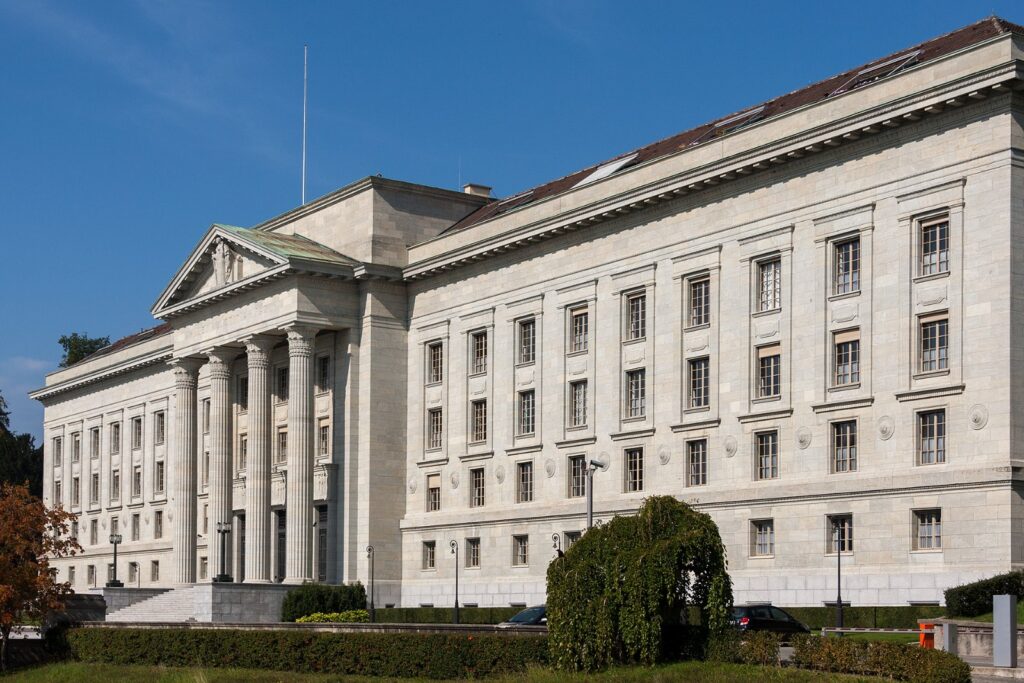
The federal government estimates the revenue shortfall in the direct federal tax at CHF 680 million to CHF 3 billion a year, depending on implementation. Around a fifth of this would affect the cantons, because they are entitled to 21.2 percent of the direct federal tax. By comparison, individual taxation costs the federal government around CHF 630 million a year, according to its own figures. Centre Party politician Markus Ritter called the cost estimates “pure fantasy” as long as Parliament had not worked out models together with the cantons.
Who is campaigning for what
Saying yes are the Centre Party, the EVP, the SVP, the EDU, the Lega and the MCG. The SVP delegates adopted their yes recommendation by 274 votes to 9 with 3 abstentions. Saying no are the FDP, the GLP, the SP and the Greens, together with Economiesuisse, the Swiss Employers’ Association, the Swiss Trade Association, Swissmem and Travail.Suisse. GLP National Councillor Kathrin Bertschy put the opponents’ criticism pointedly: “The Centre Party’s tax initiative is unnecessary, costs billions and creates tax chaos.” Finance Minister Karin Keller-Sutter had already declared at the opening of the no campaign on Oct. 13, 2026: “The goal of abolishing the marriage penalty has already been achieved with the approval of individual taxation.” Centre Party president Bregy replies that the people approved the abolition of the marriage penalty, but “not a model.” The initiative committee summarizes its position in the Federal Council’s explanatory brochure as follows: “The state should not favor any particular way of life through taxation.”
Financially, it is the most evenly balanced campaign of the Sunday. The Centre Party reported CHF 150,000 to the SFAO, the committee “YES to individual taxation” likewise CHF 150,000, including CHF 50,000 from the FDP and CHF 20,000 each from Alliance F and the Zurich Chamber of Commerce.
What the polls say
No proposal has moved as much in recent weeks. In October, the initiative led in the SRG survey by 55 to 34 percent. In early November, it stood at only 40 percent yes and 54 percent no, a drop of 15 points. Independents, who approved by 61 percent in October, now do so by only 37 percent. Among FDP sympathizers, a yes majority has turned into a clear no majority (61 percent no); among the Centre Party (58 percent yes) and the SVP (55 percent yes), support holds. According to SRF, even among married people there is no longer an absolute yes majority, at 49 percent. In rural areas, the initiative is narrowly ahead with 51 percent; in the cities, 58 percent reject it.
Corina Schena of gfs.bern told SRF that the proposal was following “the typical course of a popular initiative.” Fear of contradictory tax systems had “gained enormous momentum”; with 62 percent agreement, it is the strongest counterargument. The strongest argument in favor, that the state should not favor any way of life, reaches 60 percent. Tamedia measured 37 percent yes and 59 percent no, after 38 to 51 percent in October. YouGov still saw 45 percent yes and 42 percent no, but wrote: “The trend over time points to a rejection.” Adjusted for the trend to the end of the survey period, YouGov arrived at around 40 percent yes and 47 percent no.
The question of the cantonal majority
For no other proposal this Sunday is a divergence of the two majorities more conceivable than here, and there is a precedent. The CVP initiative “For marriage and family” achieved the majority of the cantons on Feb. 28, 2016, but failed to win the popular majority with 49.2 percent. The Federal Supreme Court annulled that vote in 2019 because of incorrect figures in the voting booklet, the first time this had happened with a federal proposal. YouGov now writes that the result is close “in many cantons of Central, Eastern and Western Switzerland.” It considers a constellation similar to 2016 “not ruled out this time either.” An initiative, however, needs both majorities; a cantonal majority alone is not enough.
What a yes and a no would mean
| Yes | No | |
|---|---|---|
| Constitution | Joint assessment of married couples for the direct federal tax, prohibition of disadvantage | No change |
| Individual taxation | Remains law, but would have to be adapted for the federal level; new referendum possible | Enters into force on Jan. 1, 2032, for the federal government, cantons and municipalities |
| Tax shortfalls | CHF 680 million to CHF 3 billion a year for the federal government, around a fifth for the cantons | Around CHF 630 million a year (individual taxation) |
| Marriage bonus | Is retained | Is eliminated |
| Deadline | Implementing legislation within three years, otherwise an alternative tax calculation by ordinance from 2030 | None |
Proposal 4: The War Material Act
What it is about
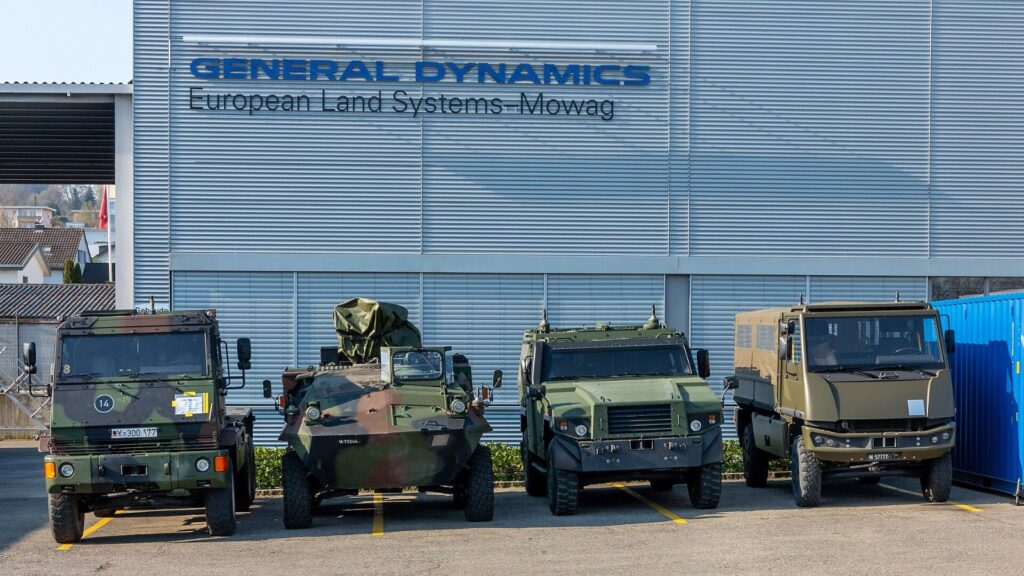
Parliament relaxed the War Material Act on Dec. 19, 2025, four years after it had tightened the same law as a counterproposal to the Correction Initiative. The amendment has three key points. First, 36 partner states with comparable export controls, including all EU states, Norway, Iceland, the United Kingdom, the United States, Canada, Japan, Australia, New Zealand and Argentina, may receive Swiss war material even if they are involved in an armed conflict, provided this is compatible with the law of neutrality and with foreign and security policy interests. Second, in extraordinary circumstances the Federal Council may deviate from the authorization criteria if safeguarding the country’s interests requires it. Third, buyers no longer have to submit a non-re-export declaration in every case; existing declarations remain valid.
According to the Federal Council, the following remain unchanged: the authorization requirement for every transaction, the commitment to the law of neutrality and international law, and the exclusion of states that systematically and seriously violate human rights. The SP objects that the new deviation clause would allow the Federal Council to deviate from all criteria. According to the Federal Council, direct and indirect deliveries to Ukraine remain excluded.
An alliance of around twenty organizations, including the SP, the Greens, the EVP and the Group for a Switzerland without an Army (GSoA), launched the referendum against the amendment; the Federal Chancellery counted 58,767 valid signatures. Because this is a federal act, the popular majority alone decides.
The Ukraine paradox
On Nov. 13, 2026, SRF pointed to a contradiction that is shaping the campaign. The debate was triggered by the Federal Council’s refusal to allow Germany, Denmark and Spain to pass on Swiss material to Ukraine, such as ammunition for the Gepard anti-aircraft tank and 22 Piranha wheeled armored personnel carriers produced by Mowag. The relaxation now being voted on, however, expressly excludes Ukraine. It came about after the Centre Party and the FDP joined forces in 2025 with the SVP, which made its approval conditional on this delivery ban. If the Federal Council waives the non-re-export declaration for a partner state, however, a later transfer to Ukraine would, according to the Federal Council, be possible in practice, without Switzerland being able to prevent it.
Two weeks before the vote, a second point of contention emerged. According to an investigation by the NZZ am Sonntag, reported by SRF on Nov. 15, 2026, precision ammunition from Thun probably reached Russia via Slovenia and Kyrgyzstan; a Moscow register lists two deliveries, in December 2022 and in April 2023. The exact route has not been confirmed; the State Secretariat for Economic Affairs (SECO) is examining the case. SP National Councillor Fabian Molina sees this as proof that, without non-re-export declarations, war material ends up with “authoritarian states, with warmongers.” SVP National Councillor Michael Götte counters: “You never have one hundred percent certainty, neither in the past nor in the future.” It is noteworthy that the case concerns a private dealer from whom no such declaration is required even under current law.

Who is campaigning for what
Saying yes are the FDP, the SVP, the Centre Party, the GLP, the EDU, the Lega and the MCG, together with Economiesuisse, the Swiss Employers’ Association, the Swiss Trade Association and Swissmem. The SVP delegates approved by 271 votes to 16 with 6 abstentions. GLP National Councillor Matthias Jauslin said: “For us Green Liberals it is clear: neutrality and security policy cooperation are not mutually exclusive.” Swissmem justifies its yes with the sentence: “The security situation in Europe has deteriorated massively.” The Federal Council points out that more than 80 percent of Swiss war material goes to European partner states and that a competitive industry is necessary for credible armed neutrality.
Saying no are the SP, the Greens and the EVP, the GSoA, as well as church and humanitarian organizations. In the explanatory brochure, the referendum committee warns that the weakened law would allow sales to states acting in breach of international law and would increase the risk of Swiss weapons ending up with terrorist groups or in wars. Travail.Suisse has opted for a free vote, because the conflict between preserving jobs and the ethical consequences does not permit a uniform recommendation.
When it comes to money, the gap is widest here. According to the SFAO and SRF, the yes side budgeted around CHF 3 million, including CHF 2.19 million from the Alliance for Security Switzerland (of which CHF 1.25 million from Economiesuisse) and CHF 750,000 from Swissmem. The no side reported CHF 580,000, of which CHF 362,000 from the SP and CHF 218,000 from the referendum committee. According to SRF, the yes camp thus has “almost half of all disclosed campaign funds for the votes at the end of November.”
What the polls say
The second SRG survey found 49 percent yes, 46 percent no and 5 percent undecided. The no share rose by 5 points, while the yes share remained stable. According to Schena, the picture is “a clear right-left picture”: FDP 79 percent yes, Centre Party and SVP 66 percent each, GLP 54 percent; SP 75 and Greens 77 percent no. Independents reject it by 53 percent, 11 points more than in October. Men approve by 58 percent, women reject by 53 percent. Those over 65 say yes by 56 percent, those aged 18 to 39 no by 57 percent.
Among the arguments, the argument in favor that a domestic arms industry is necessary for armed neutrality achieves 72 percent agreement, and that of competitiveness and jobs 63 percent. On the opposing side, the fear that weapons would more easily reach belligerent states or countries with systematic human rights violations convinces 66 percent; the neutrality argument polarizes at 48 percent. Schena warned: “If a government proposal cannot extend its yes, it becomes difficult.” And: “There are indications that this could continue.”
Tamedia measured 49 percent yes and 48 percent no. YouGov found 42 to 37 percent with a fifth undecided and calculated two scenarios: in a first, based on the behavior of the undecided in earlier referendums, the result would be a yes share of 47.5 percent (uncertainty range 45.3 to 49.8 percent); if they split in the same proportion as the decided voters, it would be 52.9 percent. The institute concludes: “Whether the law finds a majority therefore depends on the remaining undecided.”
The interplay with the OASI proposal
SRF points to a mobilization effect that could decide the outcome. Older voters, who turn out at above-average rates, support both government proposals. But if the OASI proposal mobilizes the left-green camp more strongly, which supports the OASI financing but rejects the War Material Act, this could strengthen the no on the War Material Act. The two government proposals thus have opposing coalitions: the SP fights alongside the Federal Council on one and against it on the other; for the FDP and the SVP, it is the other way around.
What a yes and a no would mean
| Yes | No | |
|---|---|---|
| Partner states in conflict | Deliveries can in principle be authorized, provided they are permissible under the law of neutrality | Deliveries to states in armed conflicts remain excluded |
| Power to deviate | Federal Council may deviate from criteria in extraordinary circumstances | No new power |
| Non-re-export declaration | Only where foreign, neutrality or security policy reasons require it | Remains the rule |
| Ukraine | Direct and indirect deliveries remain excluded | Remain excluded |
| Industry | Easier access to European supply chains | Current rules from 2021 remain in force |
The polls compared
Three institutes have surveyed voting intentions in two waves each. They use different methods: for the SRG, gfs.bern combines telephone interviews with a weighted online survey; Leewas surveys online for Tamedia and 20 Minuten with model weighting; YouGov Schweiz relies on an online panel and estimates current voting intention with an MRP model. The figures are therefore not directly comparable, but the direction is the same for three of the four proposals.
| Proposal | SRG/gfs.bern Oct. | SRG/gfs.bern Nov. | Tamedia/Leewas Oct. | Tamedia/Leewas Nov. | YouGov Oct. | YouGov Nov. |
|---|---|---|---|---|---|---|
| OASI additional financing | 46 | 46 | 36 | not published (57 no) | 38 | 39 |
| Fireworks initiative | 69 | 63 | 68 | 62 | 62 | 59 |
| Fairness Initiative | 55 | 40 | 38 | 37 | not published consistently | 45 |
| War Material Act | 49 | 49 | 44 | 49 | 38 | 42 |
How reliable are such figures? In October 2025, Martina Mousson of gfs.bern told SRF that polls are like a film on which one briefly presses pause. With government proposals, the institute is “particularly strong,” she said, while with initiatives there are “more deviations.” The last SRG survey always takes place around three weeks before the vote; what happens afterward, such as late mobilization, is not reflected. Since the narrow approval of the e-ID, which the polls had expected to be clearer, gfs.bern says it has paid closer attention to such effects. In gfs.bern’s experience, initiatives usually lose support over the course of a campaign; for government proposals, the researchers tend to expect the yes side to grow. The Fairness Initiative follows this pattern, the fireworks initiative so far only in a weakened form. On the War Material Act, the trend runs counter to the rule, which political scientist Schena interprets as a warning sign for the yes camp.
The money: CHF 6.56 million
Since March 4, 2023, campaigns spending more than CHF 50,000 have had to disclose their financing; donations of CHF 15,000 or more must be reported by name. The SFAO published the budgeted revenue for Nov. 29, 2026, on Oct. 30, 2026. It adds up to CHF 6.56 million, although the SFAO itself points to double counting when money flows from one campaign organization to another. The final accounts follow after the vote and may differ from the budgets; according to Watson, actual revenue in the vote of Nov. 24, 2024, was around 29 percent above the budgets.
| Proposal | Yes side | No side | Total according to SFAO |
|---|---|---|---|
| War Material Act | around 3,050,000 | 580,000 | 3,630,000 |
| OASI additional financing | 581,000 | 1,074,590 | 1,660,000 |
| Fireworks initiative | 875,000 | 100,000 | 975,000 |
| Fairness Initiative | 150,000 | 150,000 | 300,000 |
Two patterns stand out. On the War Material Act and on the OASI proposal, the business-oriented side has more money in each case, once on the yes side, once on the no side. On the OASI, CHF 889,590 of the no funds come from the FDP alone, including CHF 250,000 from the Action Committee for Freedom and Responsibility; Watson names Swiss Life, Swissmem, the Zurich Chamber of Commerce, the Bonny Foundation and Auto-Schweiz as further donors. The SVP budgeted CHF 125,000, of which CHF 75,000 came from Swiss Life and CHF 50,000 from Swissmem. On the yes side are the SP with CHF 356,000 and the SGB with CHF 225,000. On the fireworks initiative, it is the other way around: here the initiative side has almost nine times as much as the opponents.
Money alone does not decide votes. In April 2026, SRF showed that the motorway proposal of Nov. 24, 2024, was rejected even though the no side had around CHF 700,000 less. Political scientist Marc Bühlmann, director of Année Politique Suisse, pointed out there: “Direct democracy depends on financial donations in order to function.”
Voting recommendations at a glance
| Party/association | OASI additional financing | Fireworks initiative | Fairness Initiative | War Material Act |
|---|---|---|---|---|
| SVP | No | No | Yes | Yes |
| SP | Yes | Yes | No | No |
| FDP | No | No | No | Yes |
| Centre Party | Yes | No | Yes | Yes |
| Greens | Yes | Yes | No | No |
| GLP | Yes | Yes | No | Yes |
| EVP | Yes | Yes | Yes | No |
| EDU | No | No | Yes | Yes |
| Lega | No | No | Yes | Yes |
| MCG | Yes | No | Yes | Yes |
| Economiesuisse | Free vote | Not stated | No | Yes |
| Swiss Trade Association | No (unlimited increase) | No | No | Yes |
| Swiss Employers’ Association | Not stated | Not stated | No | Yes |
| SGB | Yes | Not stated | Not stated | Not stated |
| Travail.Suisse | Yes | No recommendation | No | Free vote |
| Swissmem | No | Not stated | No | Yes |
Sources: gfs.bern, overview of voting recommendations “SRG Trend Informationen” (as of Nov. 10, 2026); SRF; GLP (Oct. 24, 2026); Travail.Suisse (Oct. 15, 2026); Swissmem (Sept. 8, 2026); Swiss Trade Association (June 17, 2026). “Not stated” means: not mentioned in the sources evaluated.
The table shows why this Sunday has no clear left-right axis. The Centre Party sides with the FDP on fireworks and war material, with the SP on the OASI and with the SVP on the taxation of married couples. The GLP votes with the Federal Council on three proposals and against it on one, fireworks. No party follows the Federal Council’s recommendation on all four proposals.
Timeline
| Date | Event |
|---|---|
| Feb. 28, 2016 | CVP initiative “For marriage and family” fails to win the popular majority with 49.2 percent, but achieves the majority of the cantons |
| Nov. 3, 2023 | Fireworks initiative submitted with 137,429 signatures |
| March 3, 2024 | People and cantons approve the 13th OASI pension with 58.2 percent |
| March 27, 2024 | Centre Party’s Fairness Initiative submitted |
| Dec. 19, 2025 | Parliament adopts the amendment to the War Material Act |
| March 8, 2026 | Voters approve individual taxation with 54.26 percent |
| April 17, 2026 | Referendum against the War Material Act submitted |
| June 19, 2026 | Final votes on the OASI additional financing, the fireworks initiative and the Fairness Initiative; counterproposal to the fireworks initiative fails |
| June 24, 2026 | Federal Council schedules the four proposals for Nov. 29, 2026 (announcement of June 30, 2026) |
| Sept. 27, 2026 | Neutrality initiative rejected with 70.2 percent no; turnout 47 percent |
| Sept. 29, 2026 | Federal Council opens the campaign on the War Material Act |
| Oct. 13, 2026 | Alliance for the OASI financing appears; Keller-Sutter opens the no campaign on the Fairness Initiative |
| Oct. 14, 2026 | First Tamedia survey |
| Oct. 17, 2026 | SVP delegates adopt their recommendations in Bulle |
| Oct. 21, 2026 | First YouGov barometer |
| Oct. 22, 2026 | Federal Councillor Rösti opens the no campaign on the fireworks initiative |
| Oct. 23, 2026 | First SRG survey |
| Oct. 24, 2026 | GLP delegates adopt their recommendations |
| Oct. 30, 2026 | SFAO publishes the campaign budgets |
| Nov. 6, 2026 | Baume-Schneider interview in the Tages-Anzeiger |
| Nov. 11, 2026 | SRF “Abstimmungs-Arena” on the OASI financing |
| Nov. 15, 2026 | Report on Swiss ammunition in Russia |
| Nov. 17, 2026 | Second YouGov barometer |
| Nov. 18, 2026 | Second SRG survey and second Tamedia survey |
| Nov. 29, 2026 | Voting Sunday |
Turnout: Who will vote?
gfs.bern expects a turnout of 52 percent, unchanged from the first wave and above the long-term average of 47.3 percent (February 2011 to September 2026). According to gfs.bern, older voters and sympathizers of the Greens, the SP, the FDP and the GLP are particularly willing to vote, while independents and Centre Party sympathizers are less so. This is noteworthy because the Centre Party itself launched one of the two initiatives. By language region, according to RSI, 53 percent of respondents in German-speaking Switzerland, 49 percent in French-speaking Switzerland and 42 percent in Italian-speaking Switzerland said they would definitely vote.
| Voting day | Turnout | Remark |
|---|---|---|
| March 8, 2026 | 55.7 | Figure for individual taxation (proposals between 54.5 and 55.8) |
| June 14, 2026 | 58.9 | Figure for the initiative “No to a 10 million Switzerland” |
| Sept. 27, 2026 | 47 | According to SRF, rounded |
| Nov. 29, 2026 | 52 (expected) | Forecast by gfs.bern from the second SRG survey, not a result |
A turnout above 50 percent would mean that occasional voters, who are harder to capture in polls, also have a say. Whoever mobilizes them can turn close races. This applies above all to the War Material Act, where only the popular majority counts.
The voting Sunday: How Nov. 29 will unfold
Anyone voting by mail should note the deadlines. For B-mail, SRF recommends posting the envelope by the Monday before voting day, in this case by Monday, Nov. 23, 2026; for A-mail, Thursday, Nov. 26, 2026, is considered a sensible deadline in many places. Many municipalities accept voting envelopes in the municipal mailbox up to a certain time; the exact deadlines are stated in the voting material. On Sunday itself, polling stations are open in the morning; opening hours are set by the cantons and municipalities. In some cantons, electronic voting is possible on a trial basis, limited according to SRF to a maximum of 30 percent of a canton’s eligible voters and 10 percent nationwide.
Timetable of the results
| Time (approximate) | What happens | Basis |
|---|---|---|
| From 10:30 a.m. | SRF reports continuously online (on March 8, 2026, from 10:30 a.m.) | SRF program note from March 2026 |
| Midday | Polls close (as a rule at noon at the latest, earlier in some municipalities); the federal government publishes results continuously from noon on the Federal Chancellery’s platform and in the VoteInfo app | Federal Chancellery, Südostschweiz (Sept. 27, 2026) |
| Shortly after noon | First trend projection by gfs.bern for the SRG; on March 8, 2026, the Südostschweiz published the first trend at 12:01 p.m. | Südostschweiz (March 8, 2026) |
| From noon | Special broadcast on SRF 1, Radio SRF 1 and SRF 4 News with projections | SRF program note from March 2026 |
| Afternoon | Projections are refined, cantonal results come in; the majority of the cantons is established as soon as enough cantons have been counted | Federal Chancellery |
| 5 p.m. | On March 8, 2026, round of party presidents on SRF 1 | SRF program note from March 2026 |
| From 6 p.m. | Reaction of the Federal Council, analyses on “Echo der Zeit” | SRF program note from March 2026 |
| Afternoon to evening | Provisional final results of all cantons | Federal Chancellery |
Note: The timetable is based on the course of earlier voting Sundays. An SRF program note for Nov. 29, 2026, was not available at the time of going to press.
One rule is important for interpreting the afternoon. For the three constitutional proposals, each canton counts as one cantonal vote, the six half-cantons as half a vote each. There are 23 cantonal votes in total; a proposal needs at least 12, and with 11.5 to 11.5 the majority of the cantons is not achieved. Small, rural cantons thus carry the same weight as Zurich or Vaud. Because the cantons report their results at different times, the picture for close proposals may still shift over the course of the afternoon.
What else is being decided on the same day
In addition to the four federal proposals, according to SRF there are nine cantonal votes and one cantonal election. In the canton of Fribourg, the second round of the election to the cantonal government (Conseil d’État) takes place; in Valais, the future of Sion airport is at stake; in Basel-Landschaft, a cheaper public transport pass for young people. In the city of Zurich, there is a vote on a quota for senior housing; in the city of Lucerne, on political participation from age 14; and in Thun, general elections are being held.
Arena: four proposals, two sides each
The Arena presents the strongest arguments of both camps as put forward by committees, parties, the Federal Council and experts. It is not a voting recommendation by the editorial team.
OASI additional financing
Yes side
The pension has been decided, the bill is outstanding. The people and the cantons approved the 13th pension in 2024; it will be paid out from December 2026. Without additional financing, according to the FSIO, the deficits will grow to almost CHF 5 billion a year by 2035 and the fund will fall to around half of one year’s expenditure.
VAT spreads the burden widely. Pensioners pay it too, unlike payroll contributions. The reduced rate for food and medicines remains unchanged; the Federal Council puts the average additional burden at around CHF 180 per household per year.
A no will make it more expensive later. Federal Councillor Baume-Schneider warns that CHF 35 billion would already be missing from the OASI fund in 2035; VAT or payroll contributions would then have to rise even more sharply. For the case without a financing decision, the FSIO cites 0.9 VAT percentage points.
The compromise relieves the retirement age. The trade unions and Travail.Suisse see the proposal as protection against a rapid increase in the retirement age, because it buys time for the OASI 2030 reform.
No side
An unlimited tax for a single benefit. The Swiss Trade Association and Swissmem reject an increase unlimited in time that gives no structural answer to demographic developments. According to the SRG survey, two thirds of respondents share the view that gaps should be closed with reforms rather than new taxes.
Only half is covered. Even with the proposal, an annual gap of around CHF 2 billion to CHF 2.5 billion remains, as was noted in the interview with Baume-Schneider in the Tages-Anzeiger. The opponents therefore consider the solution incomplete and want to settle the financing in the OASI 2030 reform.
Purchasing power and consumption suffer. VAT hits low incomes proportionally harder; YouGov found concern about one’s own purchasing power to be the main obstacle to a yes. Swiss Trade Association director Furrer pointed in the “Arena” to more expensive haircuts and restaurant visits.
The federal government should save first. The FDP and the SVP call for funds to be reallocated from the existing budget, for example in international cooperation and in the asylum sector, before new taxes are levied.
Fireworks initiative
Yes side
Animals cannot prepare. Pets, farm animals and wild animals react to bangs with stress and flight, as the Federal Council’s dispatch also notes. Quiet fireworks would remain permitted, as would authorized major events.
A patchwork is replaced. According to Swiss Animal Protection, more than a hundred municipalities have adopted their own restrictions, and nine of the ten largest cities regulate fireworks. A federal rule would create clarity.
Noise, particulate matter, waste and accidents. According to the federal government, fireworks cause several hundred metric tons of particulate matter a year, around 1,300 metric tons of residues and injuries every year, including hearing damage. The cost of cleaning up is borne by the public sector.
The market is shifting anyway. According to the industry, public fireworks displays are becoming rarer and turnover is concentrated on a few days. The initiative would accelerate a development that many municipalities have already initiated.
No side
An intrusion on custom and freedom. For the opponents, fireworks are part of Aug. 1 and New Year’s Eve. The state should not patronize the population, as FDP National Councillor Balmer put it.
An unclear term. What “noise-producing” means is not defined, according to the Federal Council. Drawing the line on events of “supra-regional significance” would affect village fairs, weddings and club anniversaries, the opponents warn.
The problems are limited. The Federal Council considers the effects of fireworks to be limited in time and place. Cantons and municipalities can already intervene in a targeted manner today, as many do.
Business and enforcement. The Swiss Trade Association warns of a further wave of bans at the expense of importers and retailers.
Fairness Initiative
Yes side
Same economic situation, same tax. The initiative committee wants to establish in binding form in the Constitution that married couples do not pay more tax than others. The state should “not favor any particular way of life through taxation.”
Less bureaucracy than individual taxation. According to the federal government, individual taxation will bring around 1.7 million additional tax returns. Joint assessment would spare couples and administrations this effort.
The March yes was not a no to the initiative. Centre Party president Bregy argues that the people approved the abolition of the marriage penalty, not a particular model. The cantonal finance directors had also come out in favor of joint taxation in 2025.
Parliament can create a uniform system. The supporters see the legislature as obliged to bring the federal government and the cantons back into line. They point to the three-year implementation deadline.
No side
The goal has been achieved. With individual taxation, the marriage penalty has already been abolished, according to the Federal Council. Finance Minister Keller-Sutter sees no need for a second solution.
Two tax systems side by side. Without a correction by Parliament, joint assessment would apply at the federal level and individual assessment in the cantons. The Conference of Cantonal Finance Directors warns of double assessments, the tax administration of considerable effort.
High costs, unequal effect. The federal government expects shortfalls of up to CHF 3 billion. According to the Federal Council, the main beneficiaries would be married couples with two higher and comparable incomes; unmarried couples would be left out.
A popular decision would be undermined. For the FDP, the GLP, the SP and the Greens, the initiative calls into question a result that is only eight months old. The Federal Council notes that joint assessment places a heavier burden on second earners; Swissmem sees individual taxation as a means of countering the shortage of skilled workers.
War Material Act
Yes side
Armed neutrality needs an industry. The Federal Council and Parliament consider a competitive arms industry indispensable for Switzerland to be able to defend itself. In the SRG survey, 72 percent agree with this argument.
Europe as a partner. More than 80 percent of Swiss war material goes to European partner states. According to SRF, after the rejected re-export requests, European states spoke of a “No China, no Swiss” rule; the revision would allow deliveries where the law of neutrality permits.
Control remains. Every transaction still requires authorization; states with systematic human rights violations remain excluded, as do deliveries to Ukraine. The Federal Council can still require non-re-export declarations.
Jobs and security of supply. The Federal Council wants to keep the industry in international supply chains. Economiesuisse and center-right politicians warn that companies moving abroad would take with them know-how and apprenticeships that are also important for the army; in the SRG survey, the security-of-supply argument convinces 55 percent.
No side
Less control over the final destination. Without a non-re-export declaration, Switzerland could no longer prevent transfers. According to the SP, the case of the ammunition that is said to have reached Russia by a roundabout route shows the risk.
Weapons into war zones. Partner states could be supplied even if they are waging war. The referendum committee fears that Swiss weapons could thus end up with states that violate international law. 66 percent of SRG respondents share this concern.
A blank check for the Federal Council. The new deviation clause would allow the government, in extraordinary situations, to deviate from the criteria without Parliament’s approval. The SP sees this as hollowing out the law.
Neutrality and credibility. EVP National Councillor Marc Jost warns against mediating in the morning and supplying ammunition in the afternoon; church and humanitarian organizations reject the proposal. At the same time, it would not help Ukraine, because it expressly excludes it.
Join the discussion: Which arguments convince you, and which do not? The comment section is open; we ask for a factual tone.
Scenarios for Sunday evening
The polls do not permit a forecast, but they do allow an assessment of which outcomes are more likely as things stand today and which would be surprising.
| Proposal | More likely according to the polls | What would be a surprise | What to watch in the afternoon |
|---|---|---|---|
| OASI additional financing | Narrow no; all three institutes see the no side ahead | A yes, carried by strong mobilization of older voters and the left-green camp | Yes share in French-speaking Switzerland and in urban cantons; majority of the cantons |
| Fireworks initiative | Yes, with a shrinking lead | A no or failure at the majority of the cantons | Results in Central Switzerland and Ticino |
| Fairness Initiative | No among the people | A yes, or a majority of the cantons without a popular majority as in 2016 | Rural cantons of Central and Eastern Switzerland |
| War Material Act | Open; slight yes lead with a declining trend | A clear result for either side | Turnout among younger voters and women; French-speaking Switzerland |
A Sunday with two defeats for the Federal Council and Parliament, which SRF considers possible in its headline on the second survey (“The federal government faces at least two defeats”), would have immediate consequences above all for the OASI. The financing of the 13th pension would be shifted entirely to the OASI 2030 reform, which would make that reform more difficult. On the War Material Act, the 2021 rules would remain in place and the debate on the arms industry would shift to other instruments, such as army financing. A yes to the Fairness Initiative, in turn, would oblige Parliament to reorganize the relationship with individual taxation, which, as the Conference of Cantonal Finance Directors warns, could confront the cantons with two different assessments.
What comes next
| Date | Event |
|---|---|
| Thursday, Nov. 26, 2026 | Sensible deadline in many places for postal voting by A-mail (according to SRF) |
| Sunday, Nov. 29, 2026 | Voting Sunday; results from midday |
| December 2026 | First payment of the 13th OASI pension to around 2.6 million pensioners |
| December 2026 | Winter session; the National Council debates the mixed financing for an armaments fund adopted by the Council of States |
| End of December 2026 | Deadline of motion SGK-N 21.3462 for the dispatch on the OASI 2030 reform |
| Early 2027 | Final campaign accounts submitted to the SFAO |
| Sunday, Feb. 28, 2027 | Next federal voting date with five proposals, including the foie gras initiative, the democracy initiative and the Nuclear Energy Act |
| Jan. 1, 2028, at the earliest | Higher VAT, if the OASI proposal is accepted |
| By the end of 2028 | Implementing legislation for the fireworks initiative, if it is accepted |
| By 2030 | Implementing legislation for the Fairness Initiative or an alternative tax calculation by ordinance, if it is accepted |
| Jan. 1, 2032 | Entry into force of individual taxation (without reservation in the event of a no to the Fairness Initiative) |
Commentary: Back to square one, four times over
Opinion of the editorial team
This voting Sunday is an object lesson in how Switzerland deals with its own decisions. On each of the four proposals, something that once seemed settled is being renegotiated: a pension without financing, a tax reform that one party refuses to accept, a law that is to be relaxed again four years after it was tightened, and finally a custom on which municipalities have long been ruling individually. One can read this as the sign of a living democracy that corrects its mistakes. One can also see in it a fatigue, because every answer gives rise to the next question.
It is remarkable how little the campaigns have talked about the actual trade-offs. Those who campaign for the VAT rarely say out loud that it covers only half; those who oppose it rarely say concretely how the other half and the rest are to be paid for. Those who want to relax arms exports say little about the loss of control; those who want to prevent it say little about the industry that the supporters invoke in the name of national defense. The polls show that voters sense these gaps: the arguments of both sides achieve high levels of agreement at the same time.
The inequality of resources is also striking. On the War Material Act, a budget of around CHF 3 million faces one of just over half a million; on the fireworks initiative, the ratio is reversed. The transparency rules make this visible. That is a gain. Whether it also changes anything can only be judged on Sunday evening. And even then only cautiously.
Whatever the result, the losers of this Sunday will soon be able to make themselves heard at the ballot box again. That is the promise of direct democracy. It obliges all sides, after Nov. 29, to argue in such a way that people will still listen to them next time.
Editor’s note
This preview reflects the situation as of Monday, Nov. 23, 2026. The vote has not yet taken place; all statements about the outcome are based on polls, which are snapshots and not forecasts. The polls of the three institutes use different methods and are only comparable to a limited extent. For the second Tamedia survey on the OASI proposal, no published yes share was available to Expertistan; for the Fairness Initiative, YouGov and media reports give different values for October. The campaign budgets are budgeted revenue and include double counting; the actual figures will follow with the final accounts. The timetable for the voting Sunday is based on earlier voting days; a program note for Nov. 29, 2026, was not available. Several articles by 20 Minuten, the NZZ and RTS could not be viewed; information taken from them is marked accordingly or has been omitted. Expertistan does not issue voting recommendations. The results will be added in the “Addendum” section after Nov. 29, 2026. This English version is a translation of the German original; quotations originally made in German or other languages have been translated by the editorial team. Names of initiatives and some institutions are rendered in English for clarity; the legally binding titles are those in the official languages.
- 13th AHV pension payment: The people ordered it, now they are asked to pay (Oct. 19, 2026)
- Fireworks initiative: Why Switzerland is fighting over its bang (Oct. 19, 2026)
- Fairness initiative: The Centre challenges the yes to individual taxation (Oct. 19, 2026)
- War Materiel Act: How much neutrality can the arms industry take? (Oct. 19, 2026)
Sources
Federal government, authorities, Parliament
- 1. Bundesrat, «Volksabstimmung vom 29. November 2026» (Medienmitteilung zu den vier Vorlagen), 30.06.2026: https://www.admin.ch/de/newnsb/KpnrPOW9cpZAvB6IXOekf
- 2. Bundeskanzlei, Erläuterungen des Bundesrates zur Volksabstimmung vom 29.11.2026 (Redaktionsschluss 26.08.2026): https://www.admin.ch/dam/de/sd-web/HXhFMFWOaa6u/BAR_Nov26_DE_v9c.pdf
- 3. Bundesrat, Abstimmungsseite «AHV-Zusatzfinanzierung»: https://www.admin.ch/de/ahv-zusatzfinanzierung
- 4. Bundesrat, Abstimmungsseite «Kriegsmaterialgesetz»: https://www.admin.ch/de/kriegsmaterialgesetz
- 5. Bundesrat, Abstimmungsseite «Ehepaarbesteuerung»: https://www.admin.ch/de/ehepaarbesteuerung
- 6. Bundesrat, Abstimmungsseite «Feuerwerksinitiative»: https://www.admin.ch/de/feuerwerksinitiative
- 7. Bundesrat, «Bundesrat empfiehlt ein Ja zu den Änderungen des Kriegsmaterialgesetzes», 29.09.2026: https://www.admin.ch/de/newnsb/OZlg1hISnipC
- 8. Bundesamt für Sozialversicherungen, «Abstimmung 13. AHV-Rente»: https://www.bsv.admin.ch/de/abstimmung-13-ahv-rente
- 9. Bundesamt für Sozialversicherungen, «AHV 2030»: https://www.bsv.admin.ch/de/ahv-2030
- 10. Eidgenössisches Departement des Innern, «Die Bevölkerung ist nicht egoistisch» (Interview aus dem «Tages-Anzeiger»), 06.11.2026: https://www.edi.admin.ch/de/bundesraetin-baume-schneider-verteidigt-erhoehung-der-mehrwertsteuer-de
- 11. Eidgenössische Finanzkontrolle, «Transparenz bei der Politikfinanzierung: budgetierte Einnahmen für die Volksabstimmung vom 29. November 2026 liegen vor», 30.10.2026: https://www.efk.admin.ch/transparenz-bei-der-politikfinanzierung-budgetierte-einnahmen-fuer-die-volksabstimmung-vom-29-november-2026-liegen-vor/
- 12. Bundesrat, «Abstimmungstermine»: https://www.admin.ch/de/abstimmungstermine
- 13. ch.ch, «Volksabstimmung vom 29. November 2026» (mit Erklärvideos): https://www.ch.ch/de/abstimmungen-und-wahlen/abstimmungen/volksabstimmung-vom-29-november-2026/
Polls and research
- 14. gfs.bern, «2. SRG-Trendumfrage zur eidg. Abstimmung vom 29. November 2026», 18.11.2026: https://gfsbern.ch/de/news/2-srg-trendumfrage-zur-eidg-abstimmung-vom-29-november-2026
- 15. gfs.bern, «SRG Trend Informationen Vorlagen 29. November 2026» (Parolen, Kampagnenausgaben, Stand 10.11.2026): https://cockpit.gfsbern.ch/de/cockpit/srg-trend-hintergrund-nov-29-2-2/
- 16. gfs.bern, SRG-Trendumfrage, 1. Welle, 23.10.2026: https://cockpit.gfsbern.ch/de/cockpit/trend_w1_29112026/
- 17. YouGov Schweiz, «Feuerwerk und Fairness-Initiative Ja, AHV-Finanzierung Nein, Kriegsmaterial offen», 20.10.2026: https://yougov.com/de-de/artikel/55787-feuerwerk-und-fairness-initiative-ja-ahv-finanzierung-nein-kriegsmaterial-offen-wie-will-die-schweiz-am-29-november-abstimmen
- 18. YouGov Schweiz, «Abstimmung über die AHV-Zusatzfinanzierung: Warum die wichtigste Vorlage einen schweren Stand hat», 23.10.2026: https://yougov.com/de-de/artikel/55808-abstimmung-uber-die-ahv-zusatzfinanzierung-warum-die-wichtigste-vorlage-einen-schweren-stand-hat
- 19. YouGov Schweiz, «Fairness-Initiative bricht ein, Kriegsmaterialgesetz bleibt offen», 17.11.2026: https://yougov.com/de-de/artikel/56001-fairness-initiative-bricht-ein-kriegsmaterialgesetz-bleibt-offen-wie-will-die-schweiz-am-29-november-abstimmen
SRF
- 20. SRF, «2. SRG-Umfrage auf einen Blick: Dem Bund drohen mindestens zwei Niederlagen», 18.11.2026: https://www.srf.ch/news/schweiz/2-srg-umfrage-auf-einen-blick-dem-bund-drohen-mindestens-zwei-niederlagen
- 21. SRF, «Finanzierung 13. AHV: Jetzt doch ein kleiner Nein-Vorsprung», 18.11.2026: https://www.srf.ch/news/zweite-srg-umfrage-finanzierung-13-ahv-jetzt-doch-ein-kleiner-nein-vorsprung
- 22. SRF, «Feuerwerksinitiative: Ja-Anteil schrumpft, Erfolgschancen nicht», 18.11.2026: https://www.srf.ch/news/zweite-srg-umfrage-feuerwerksinitiative-ja-anteil-schrumpft-erfolgschancen-nicht
- 23. SRF, «Deutlicher Nein-Trend bei der Initiative gegen die Heiratsstrafe», 18.11.2026: https://www.srf.ch/news/zweite-srg-umfrage-deutlicher-nein-trend-bei-der-initiative-gegen-die-heiratsstrafe
- 24. SRF, «Kriegsmaterialgesetz: Pattsituation mit leichtem Ja-Vorteil», 18.11.2026: https://www.srf.ch/news/zweite-srg-umfrage-kriegsmaterialgesetz-pattsituation-mit-leichtem-ja-vorteil
- 25. SRF, «Ja-Kampagne zum Kriegsmaterialgesetz mit Drei-Millionen-Budget», 30.10.2026: https://www.srf.ch/news/schweiz/abstimmung-vom-29-november-ja-kampagne-zum-kriegsmaterialgesetz-mit-drei-millionen-budget
- 26. SRF, «Darüber wird am 29. November entschieden», 21.10.2026: https://www.srf.ch/news/schweiz/abstimmungen-und-wahlen-darueber-wird-am-29-november-entschieden
- 27. SRF, «Abstimmungs-Arena 13. AHV-Rente: Elisabeth Baume-Schneider unter Dauerbeschuss», 12.11.2026: https://www.srf.ch/news/abstimmungs-arena-13-ahv-rente-elisabeth-baume-schneider-unter-dauerbeschuss
- 28. SRF, «AHV-Graben in den Bergen», 17.11.2026: https://www.srf.ch/news/finanzierung-13-ahv-ahv-graben-in-den-bergen
- 29. SRF, «Das Ukraine-Paradox des neuen Kriegsmaterialgesetzes», 13.11.2026: https://www.srf.ch/news/kriegsmaterialgesetz-das-ukraine-paradox-des-neuen-kriegsmaterialgesetzes
- 30. SRF, «Schweizer Munition gelangte über Umwege nach Russland», 15.11.2026: https://www.srf.ch/news/waffenexporte-schweizer-munition-gelangte-ueber-umwege-nach-russland
- 31. SRF, «Feuerwerksinitiative: Wie läuft das Geschäft mit Raketen und Co.?», 12.11.2026: https://www.srf.ch/news/feuerwerksinitiative-wie-laeuft-das-geschaeft-mit-raketen-und-co
- 32. SRF, «Heiratsstrafe erneut abschaffen: Führt das zum Steuerchaos?», 13.11.2026: https://www.srf.ch/news/steuer-dilemma-heiratsstrafe-erneut-abschaffen-fuehrt-das-zum-steuerchaos
- 33. SRF, «Allianz wirbt für höhere Mehrwertsteuer zur AHV-Finanzierung», 13.10.2026: https://www.srf.ch/news/schweiz/altersvorsorge-allianz-wirbt-fuer-hoehere-mehrwertsteuer-zur-ahv-finanzierung
- 34. SRF, «SVP-Delegierte lehnen Erhöhung der Mehrwertsteuer für AHV ab», 17.10.2026: https://www.srf.ch/news/schweiz/svp-delegiertenversammlung-svp-delegierte-lehnen-erhoehung-der-mehrwertsteuer-fuer-ahv-ab
- 35. SRF, «So werden Sie am Abstimmungssonntag bei SRF informiert» (Abstimmung vom 08.03.2026): https://www.srf.ch/news/schweiz/bleiben-sie-auf-dem-laufenden-so-werden-sie-am-abstimmungssonntag-bei-srf-informiert
- 36. SRF, «Bis wann kann ich mein Stimmcouvert einwerfen?», 17.11.2025: https://www.srf.ch/news/schweiz/abstimmungen-und-wahlen-bis-wann-kann-ich-mein-stimmcouvert-einwerfen
- 37. SRF, «Wie sind Umfragen einzuordnen?», 24.10.2025: https://www.srf.ch/news/schweiz/abstimmungen-30-11-2025/eidgenoessische-abstimmungen-wie-sind-umfragen-einzuordnen
- 38. SRF, «Zwei Jahre Transparenz: Kampagnenkassen unter der Lupe», 17.04.2026: https://www.srf.ch/news/schweiz/zwei-jahre-transparenz-kampagnenkassen-unter-der-lupe
- 39. SRF, «Abstimmung 27. September: Das war der Abstimmungssonntag», 27.09.2026: https://www.srf.ch/news/schweiz/abstimmung-27-september-das-war-der-abstimmungssonntag-ein-ueberblick
- 40. SRF, Dossier «Abstimmungen vom 29. November 2026»: https://www.srf.ch/news/abstimmungen-vom-29-november-2026
Other media
- 41. cash.ch/AWP, «Umfrage: Ausgang bei Abstimmung zu Kriegsmaterialgesetz noch offen» (erste Tamedia-Umfrage), 14.10.2026: https://www.cash.ch/news/umfrage-ausgang-bei-abstimmung-zu-kriegsmaterialgesetz-noch-offen-976486
- 42. cash.ch/AWP, «AHV-Finanzierung bleibt umkämpft» (erste SRG-Umfrage), 23.10.2026: https://www.cash.ch/news/top-news/eidg-abstimmungen-ahv-finanzierung-bleibt-umkampft-979036
- 43. nau.ch/Keystone-SDA, «Zitterpartie bei AHV-Finanzierung laut neuen Umfragen», 18.11.2026: https://www.nau.ch/politik/bundeshaus/zitterpartie-bei-ahv-finanzierung-laut-neuen-umfragen-67203340
- 44. blue News/Keystone-SDA, «A nail-biter over AHV funding», 18.11.2026: https://www.bluewin.ch/en/news/switzerland/a-nail-biter-over-ahv-funding-and-things-are-getting-tight-with-the-war-material-act-li.3677594
- 45. blue News/Keystone-SDA, «No to the Fairness Initiative and AHV funding according to Tamedia», 18.11.2026: https://www.bluewin.ch/en/news/no-to-the-fairness-initiative-and-ahv-funding-according-to-tamedia-li.3677550
- 46. «Le Temps», «Votes of 29 November: Swiss voters would reject the VAT increase for OASI pensions», November 2026: https://www.letemps.ch/en/switzerland/votes-of-29-november-swiss-voters-would-reject-the-vat-increase-for-oasi-pensions-while-the-fate-of-the-war-materiel-act-is-highly-uncertain-according-to-the-latest-polls
- 47. «Blick», «Baume-Schneider muss zittern: AHV-Mehrwertsteuer vor dem Fall», 18.11.2026: https://www.blick.ch/politik/abstimmungen/baume-schneider-muss-zittern-ahv-mehrwertsteuer-vor-dem-fall/j99k7he
- 48. RSI, «AVS in bilico, fisco per i coniugi verso il ‹no›», 18.11.2026: https://www.rsi.ch/info/svizzera/AVS-in-bilico-fisco-per-i-coniugi-verso-il-%E2%80%9Cno%E2%80%9D–4248337.html
- 49. Watson, «6,56 Millionen Franken für die November-Abstimmungen», 24.10.2026: https://www.watson.ch/schweiz/gesellschaft-politik/534593545-schweiz-so-viel-geld-steckt-im-abstimmungskampf-vom-29-november
- 50. Plattform J, «AHV droht Schlappe, Kriegsmaterial bleibt Zitterpartie» (erstes YouGov-Barometer), 21.10.2026: https://www.plattformj.ch/artikel/247787/
- 51. «Südostschweiz», «Ab wann es Resultate für die Neutralitäts- und Ernährungsinitiative gibt», 27.09.2026: https://www.suedostschweiz.ch/panorama/abstimmung-heute-ab-wann-es-resultate-fuer-die-neutralitaets-und-ernaehrungsinitiative-gibt-2175113
- 52. «Südostschweiz», «SRG-Halbierungsinitiative wird gemäss SRG-Trendrechnung abgelehnt», 08.03.2026 (12.01 Uhr): https://www.suedostschweiz.ch/schweiz-und-welt/srg-halbierungsinitiative-wird-gemaess-srg-trendrechnung-abgelehnt-2-1542305
- 53. Wikipedia, «2026 Swiss referendums» (Zusammenstellung der amtlichen Resultate 2026, abgerufen 23.11.2026): https://en.wikipedia.org/wiki/2026_Swiss_referendums
Parties and associations
- 54. GLP Schweiz, «GLP fasst Parolen für die Abstimmungen vom 29. November», 24.10.2026: https://glp.swiss/glp-fasst-parolen-fuer-die-abstimmungen-vom-29-november/
- 55. Travail.Suisse, «Parolen von Travail.Suisse für die Volksabstimmungen vom 29. November», 15.10.2026: https://www.travailsuisse.ch/de/2026-10-15/parolen-von-travailsuisse-fuer-die-volksabstimmungen-vom-29-november
- 56. Swissmem, «Swissmem fasst Parolen zu kommenden eidgenössischen Abstimmungen», 08.09.2026: https://www.swissmem.ch/de/mediencorner/medienmitteilungen/swissmem-fasst-parolen-zu-kommenden-eidgenoessischen-abstimmungen.html
- 57. Schweizerischer Gewerbeverband, Medienmitteilung zur 13. AHV-Rente, 17.06.2026: https://www.sgv-usam.ch/media/ppjl2ex3/20260617_mm_ahv_13te-rente_de.pdf
Expertistan (background, with their own source lists)
- 58. Expertistan, «13. AHV-Rente: Das Volk hat bestellt, jetzt soll es bezahlen», 19.10.2026: https://www.expertistan.ch/2026/10/19/13-ahv-rente-mehrwertsteuer-abstimmung-29-november-2026/
- 59. Expertistan, «Kriegsmaterialgesetz: Wie viel Neutralität verträgt die Rüstungsindustrie?», 19.10.2026: https://www.expertistan.ch/2026/10/19/kriegsmaterialgesetz-abstimmung-29-november-2026-waffenexporte-neutralitaet/
- 60. Expertistan, «Feuerwerksinitiative: Warum die Schweiz über ihren Knall streitet», 19.10.2026: https://www.expertistan.ch/2026/10/19/feuerwerksinitiative-abstimmung-29-november-2026-verbot-laerm/
- 61. Expertistan, «Fairness-Initiative: Die Mitte fordert das Ja zur Individualbesteuerung heraus», 19.10.2026: https://www.expertistan.ch/2026/10/19/fairness-initiative-heiratsstrafe-abstimmung-29-november-2026-ehepaarbesteuerung/


Comments 0