Zeekr: How Geely built a luxury brand from scratch in five years
How Geely built Zeekr into a premium brand in five years: its history, the models from the 001 to the 9X, its finances, its brief stock market listing, Waymo's robotaxis and the expansion into Europe and Switzerland.
In October 2021, a manufacturer that hardly anyone outside China had heard of handed over the first units of an electric shooting brake to customers in Ningbo. Five years later, the Zeekr brand has delivered just under 1 million vehicles, has listed on the New York Stock Exchange and delisted again, supplies the bodies for the robotaxis of Google sister company Waymo and sells a luxury SUV in Germany whose price range overlaps with that of the Porsche Cayenne. The story of Zeekr is the story of an industrial shortcut: how a Chinese group, drawing on Swedish know-how, enormous economies of scale and a remarkable willingness to change course, builds a premium brand in record time. And it is an object lesson in what that means for Europe and Switzerland.
Zeekr at a glance
| Key figure | Value | As of |
|---|---|---|
| Founded | March 2021 (joint venture of Geely Auto and Geely Holding) | March 23, 2021 |
| Headquarters | Ningbo, Zhejiang province | |
| Owner | Geely Automobile Holdings (100%) | Since Dec. 22, 2025 |
| Founding CEO | An Conghui (Andy An), CEO of Geely Holding since 2026 and chairman of Geely Auto since Aug. 18, 2026 | August 2026 |
| 2025 deliveries | 224,133 vehicles (+0.9%) | Full year |
| 2026 deliveries | 288,404 vehicles (+100.8%) | January to September |
| Cumulative since 2021 | 931,293 vehicles | Sept. 30, 2026 |
| Record month | 37,216 vehicles | September 2026 |
| Global presence | More than 60 countries, just under 800 sales outlets (company figures) | September 2026 |
| Europe | 16 countries, including Switzerland | September 2026 |
| Swiss importer | Emil Frey Group | Since June 2025 |
| Price range in Switzerland | CHF 37,990 (Zeekr X) to CHF 117,500 (Zeekr 9X) | October 2026 |
| Most expensive model in China | 009 Grand Collector’s Edition, 899,000 yuan | Since April 19, 2025 |
The backstory: A group that bought first and learned later
Understanding Zeekr means starting with Li Shufu. The entrepreneur from Taizhou turned a refrigerator maker into one of the world’s largest automotive groups. His method was less invention than acquisition: In 2010, Geely bought Sweden’s Volvo Cars from U.S. automaker Ford. Stakes in Lotus, Smart, Proton and a host of smaller companies followed. The real point of this shopping spree, however, lay not in the brand names but in the engineering know-how that Geely brought to China in the process.
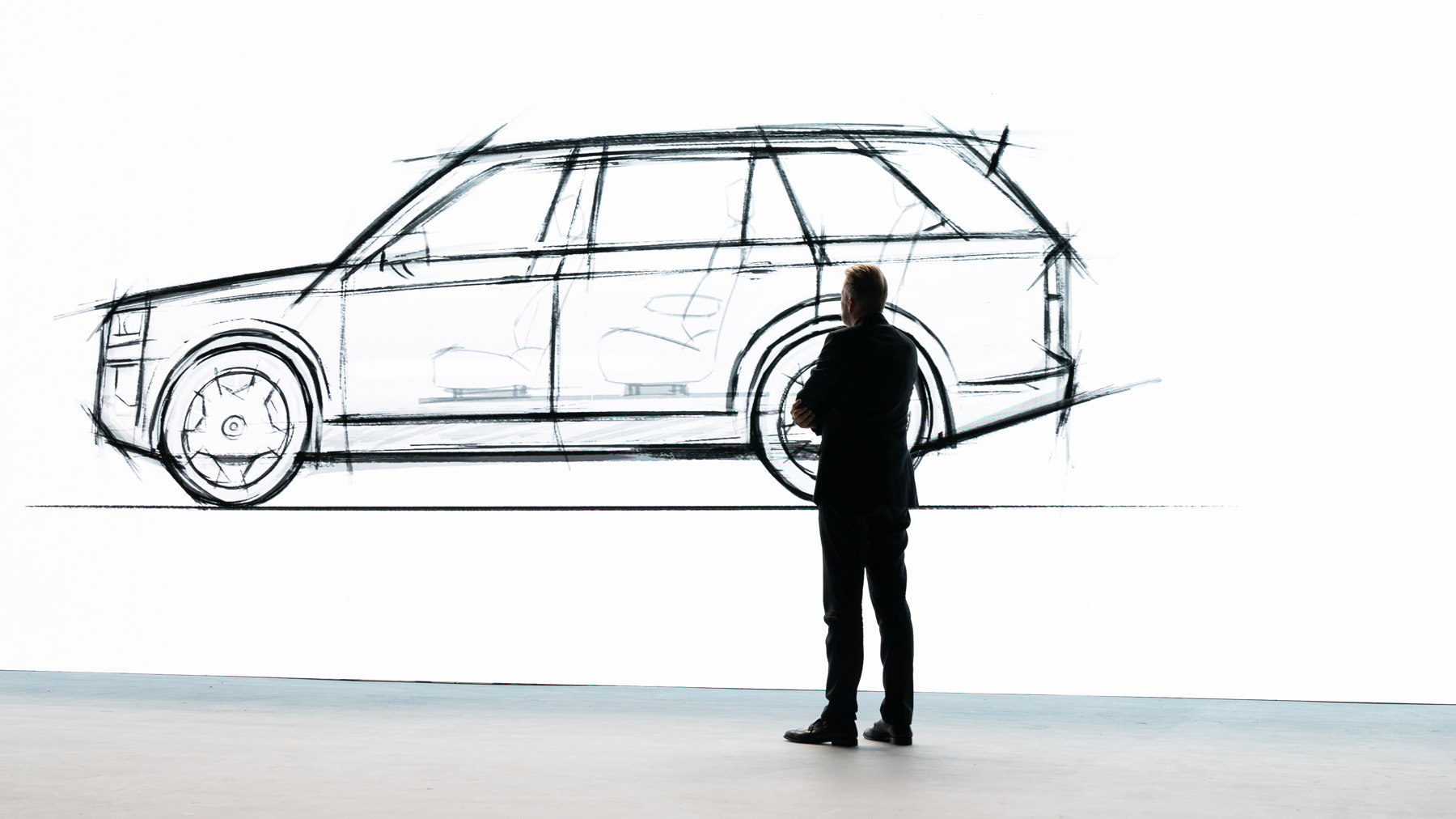
A key building block was the China Euro Vehicle Technology (CEVT) development center in Gothenburg. It was there that the vehicle architecture took shape on which the Lynk & Co brand, a joint project of Geely and Volvo, was initially built. CEVT later became Zeekr Technology Europe; the Gothenburg engineers and the brand’s global design studio are still based in Sweden today. This connection is more than a marketing argument. It explains why Zeekr vehicles took European crash standards, chassis tuning and operating logic into account from the outset.
The second building block is the platform. In September 2020, Geely unveiled the Sustainable Experience Architecture (SEA), a dedicated electric architecture into which the group invested more than 20 billion yuan over five years. SEA is less a single floor pan than a modular kit that ranges from small cars to large minivans. Today it underpins not only Zeekr but also models from Volvo, Smart, Polestar and Lynk & Co. The thinking behind it follows the logic with which Volkswagen once spread its MQB modular toolkit: distributing development costs across as many brands and units as possible.
The founding: A car in search of a brand
In March 2021, Li Shufu announced the founding of Zeekr. On March 23, 2021, Geely Auto and its parent company, Zhejiang Geely Holding, signed a framework agreement for a joint venture that was to develop and sell intelligent electric vehicles. According to the company, the name combines “Ze” for zero, an “E” for the electric era and “Kr” for krypton, the noble gas that begins to glow when an electric current is applied. In Chinese, the brand is called Jíkè, roughly “extreme krypton.”
Remarkably, the first product was older than the brand. The future Zeekr 001 had been shown in September 2019 as the Lynk & Co Zero Concept, in other words as a concept car from another of the group’s brands. Geely then decided to create a separate brand for the premium segment that would take on Tesla and Nio. The car moved over to Zeekr. A few days after the brand was founded, Zeekr released the first images. On April 15, 2021, the brand presented the 001 at its own Hangzhou Bay plant in Ningbo, followed a few days later by an appearance at Auto Shanghai. The first production-ready vehicle rolled off the line on Oct. 19, 2021.
This approach is typical of Geely and of the Chinese auto industry as a whole: Brands are vessels to be filled, decanted and merged again whenever strategy requires. European manufacturers cultivate their brands over decades. In China, a brand emerges and disappears within the span of a Western model cycle.
The debut: Zeekr 001, a wagon as a statement
That Zeekr launched with a shooting brake nearly 5 meters long, of all things, seemed idiosyncratic at the time. In a market increasingly demanding SUVs, the young brand bet on a body style that was regarded in Europe as a niche product for Porsche Taycan customers. The calculation paid off. The 001 paired two electric motors producing a combined 400 kilowatts with batteries of 86 or 100 kilowatt-hours. According to media reports, it was already sold out for 2021 by August.
Deliveries began on Oct. 23, 2021. In the first week, 199 vehicles went to customers; in November, the first full month, the figure was 2,012. For the full year 2021, Zeekr delivered 6,007 cars, and in 2022 already 71,941, all of them 001s. In May 2022, the 001 passed the 20,000-unit mark, and in October 2022 the 50,000 mark.
Technically, the 001 remained a laboratory. In August 2022, Zeekr entered into a partnership with battery giant CATL and announced that it would be the first brand to use the so-called Qilin cells in high-volume production. The 2023 model year offered an optional 140-kilowatt-hour battery. The 001 FR performance version, launched in Beijing on Oct. 27, 2023, pushed the figures into supercar territory: Four electric motors with silicon carbide power electronics deliver a combined 930 kW (1,265 metric horsepower), and Zeekr quotes 2.02 seconds for the sprint to 100 km/h with a rolling start. The price was 769,000 yuan, and production was limited to 99 units a month. With the FR, Zeekr also introduced an 800-volt electrical system for the first time.
But the 001 also taught Zeekr its first lesson in customer care. In August 2024, the company was already presenting the 2025 model year in China, just six months after the previous update. Buyers of the earlier version protested, especially since their cars were still equipped with Mobileye chips and could not be upgraded to the new driver-assistance system. Andy An acknowledged at the time that the company could have communicated its product plans better. Since then, Zeekr has published update plans in advance; in October 2026, for example, the brand announced a revised 001 for the first quarter of 2027.
The product offensive: From a wagon to a group-wide toolkit
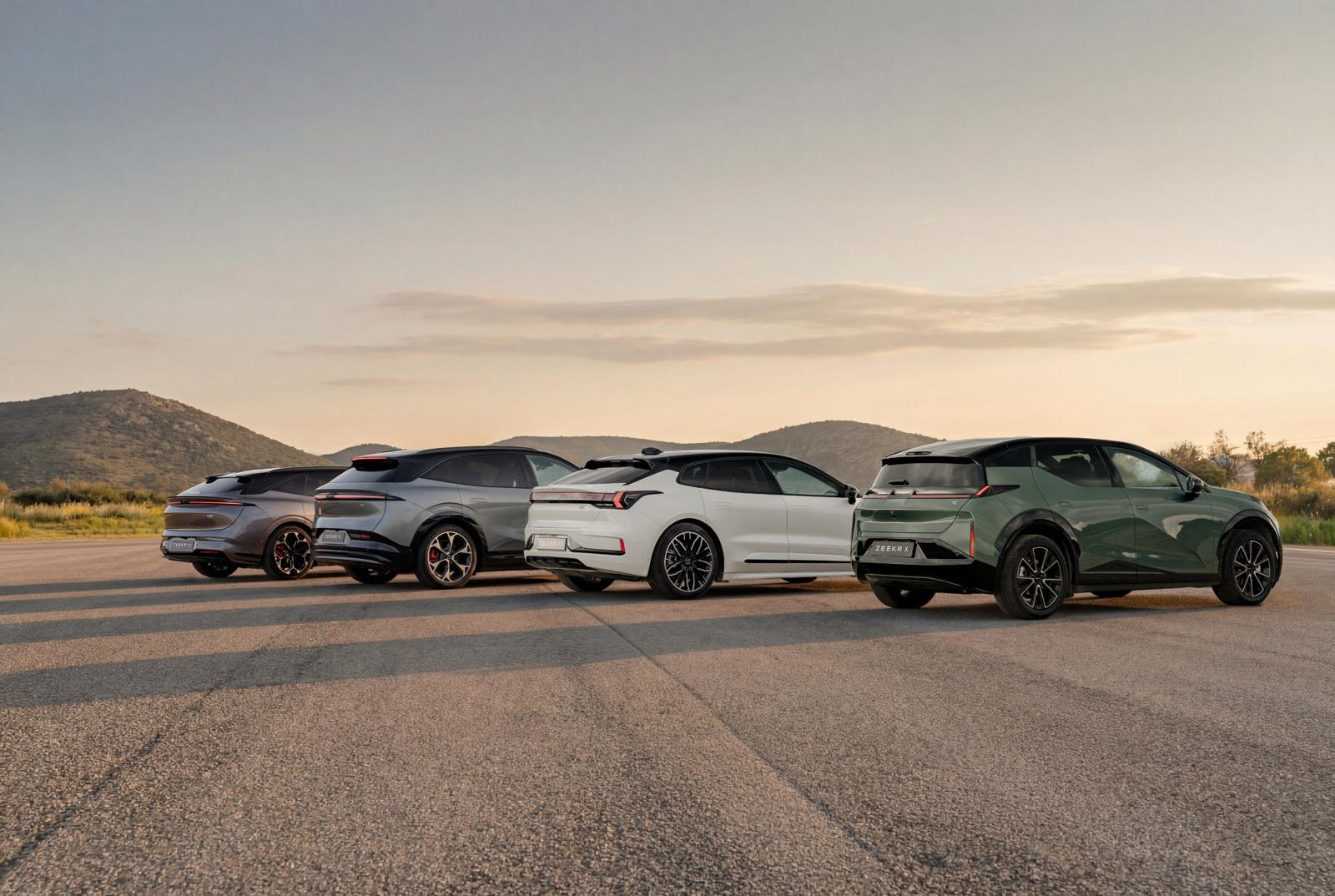
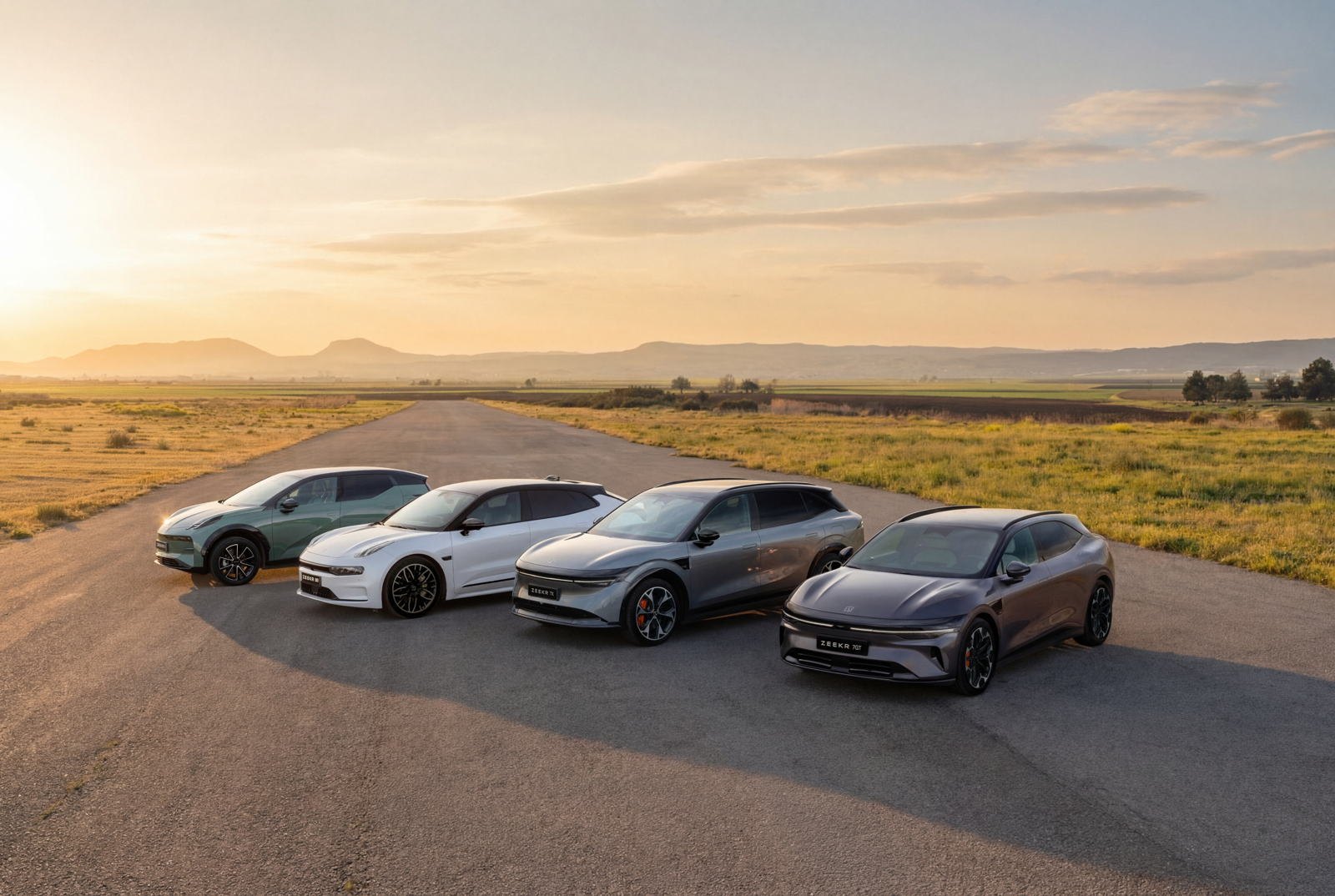
The founders had announced that they would launch at least one new model every year for the first five years. That promise was more than kept. The 009 minivan arrived on Nov. 1, 2022, the compact Zeekr X on April 12, 2023, and the 007 sedan on Dec. 27, 2023. In September 2024 came the 7X, the model that finally took the brand into high-volume production. Added to these were the compact Mix van, the 007 GT shooting brake (called the 7GT in Europe) and, from 2025 onward, a turn that surprised many observers: With the 9X and the 8X, the all-electric brand now also sells plug-in hybrids.
| Model | Type | Market launch in China | Powertrain | Notes |
|---|---|---|---|---|
| 001 | Shooting brake | October 2021 | Electric | Founding model, update announced for Q1 2027 |
| 001 FR | High-performance shooting brake | Oct. 27, 2023 | Electric, 4 motors, 930 kW | 769,000 yuan, 99 units per month |
| 009 | Large minivan | Nov. 1, 2022 (deliveries from January 2023) | Electric | According to Geely, the best-selling minivan above 400,000 yuan in China |
| 009 Grand | Luxury minivan, four seats | April 19, 2024 | Electric, 580 kW | From 789,000 yuan, Collector’s Edition 899,000 yuan |
| X | Compact SUV | April 12, 2023 | Electric | Entry-level model, from CHF 37,990 in Switzerland |
| 007 | Sedan | Dec. 27, 2023 | Electric, 800 volts | First model with Zeekr’s own LFP battery, the “Golden Battery” |
| 7X | Midsize SUV | September 2024 | Electric | Volume model, 200,000th unit built in early September 2026 |
| Mix | Compact van | October 2024 | Electric | Basis for Waymo’s Ojai robotaxi |
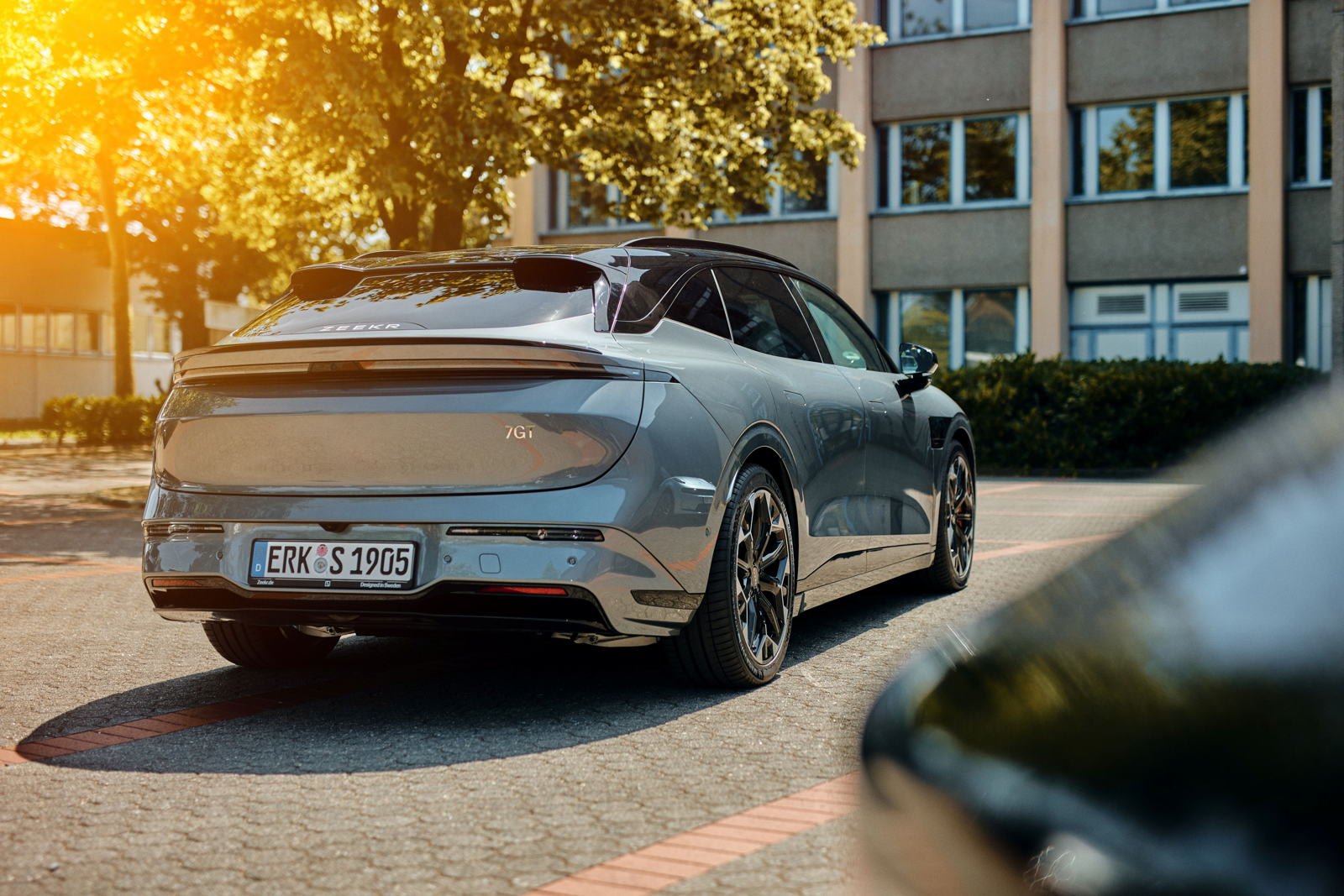
| 007 GT / 7GT | Shooting brake | April 15, 2025 | Electric | Available to order in Europe since March 2026 |
| 9X | Luxury SUV | Sept. 29, 2025 | Super hybrid with range extender, 900 volts | Flagship, from CHF 117,500 in Switzerland |
| 8X | Large premium SUV | April 17, 2026 | Plug-in hybrid, 900 volts | Up to 1,030 kW system output in the top model |
Sources: Zeekr, Geely, CnEVPost, CarNewsChina, Gasgoo, Wikipedia. Dates: launch in China. Start of 009 deliveries: January or February 2023, depending on the source.
Zeekr 7X: The car that carries the balance sheet
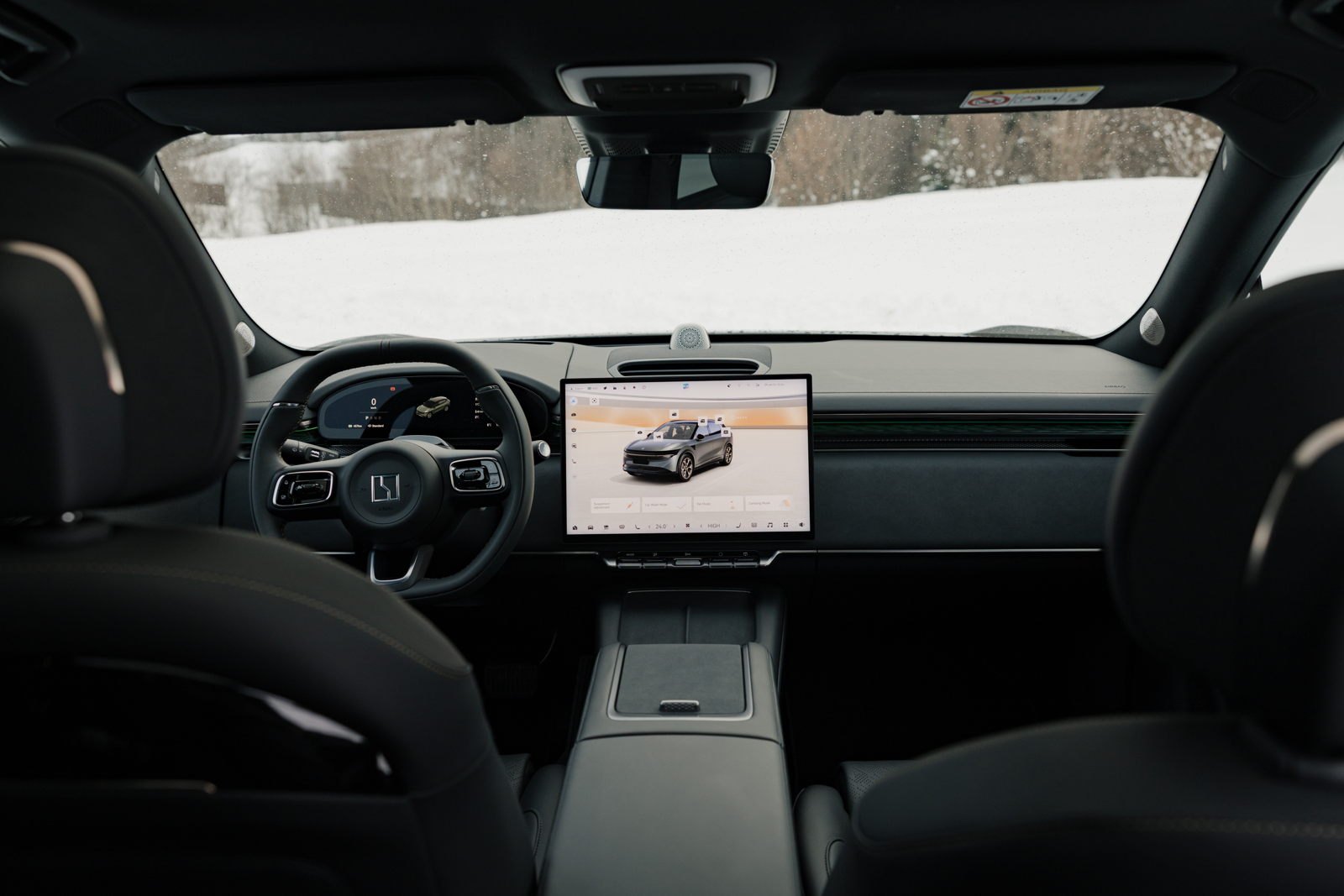
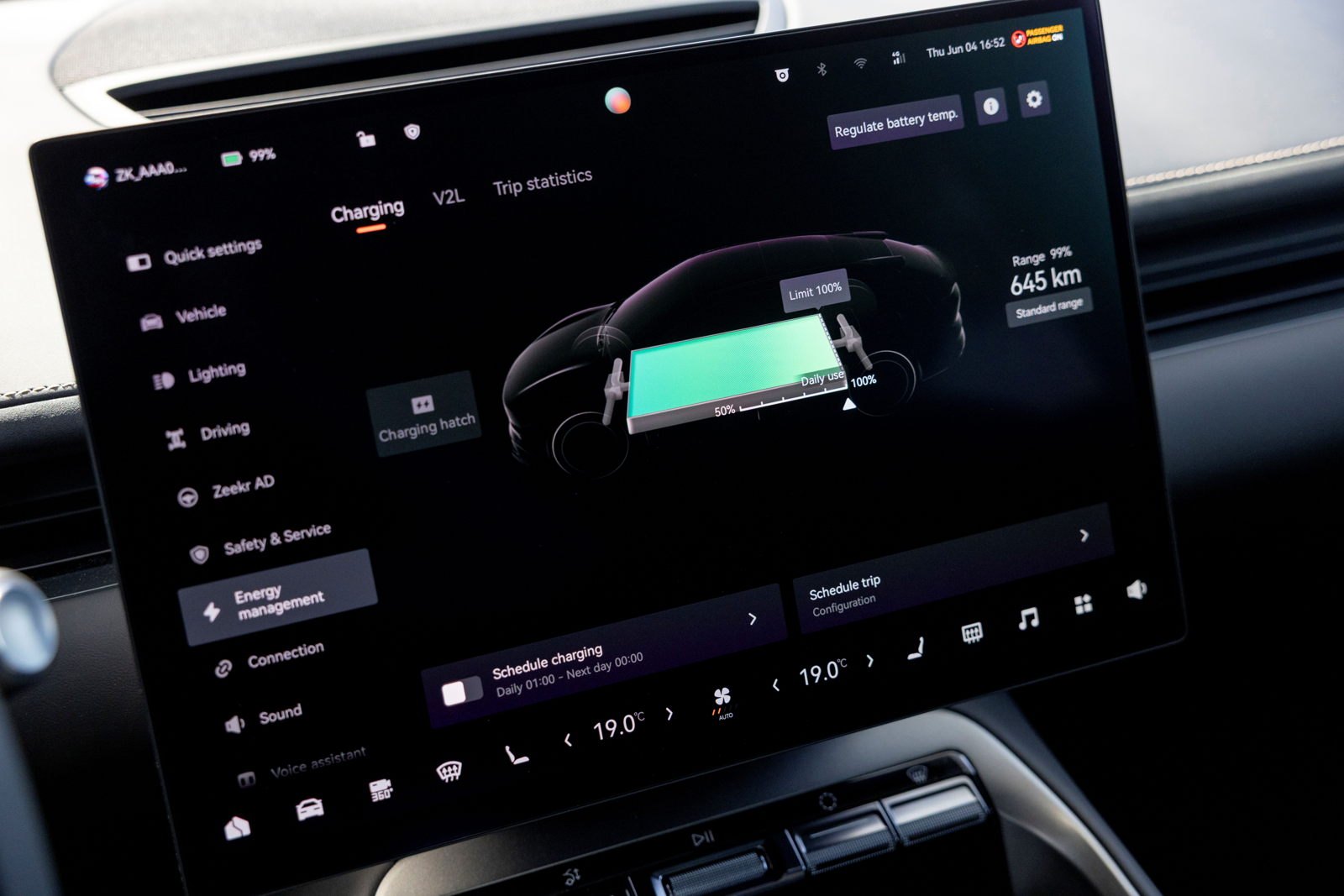
If any model embodies Zeekr’s breakthrough, it is the 7X. The midsize SUV is positioned in the class of the Tesla Model Y and the Xpeng G6 and has been built since Sept. 17, 2024. In the Swiss version, the rear-wheel-drive model delivers 310 kW (422 metric hp) and the all-wheel-drive version 475 kW (646 metric hp). With the 100-kWh battery, the manufacturer quotes a rated range of up to 615 kilometers; thanks to 800-volt technology, charging at up to 480 kW is possible at fast chargers. Zeekr states that charging from 10% to 80% takes 13 minutes under ideal conditions.
The company’s figures show the model’s importance: From January to July 2026, the 7X accounted for just over 29% of all Zeekr deliveries. Global orders passed the 200,000 mark in August 2026, and the car is now sold in more than 50 countries. In early September 2026, the 200,000th unit rolled off the line at the Ningbo Meishan plant. Euro NCAP awarded it five stars. An update with an additional 85-kWh battery has been announced for the fourth quarter of 2026.
Zeekr 7GT and Zeekr X: The European additions
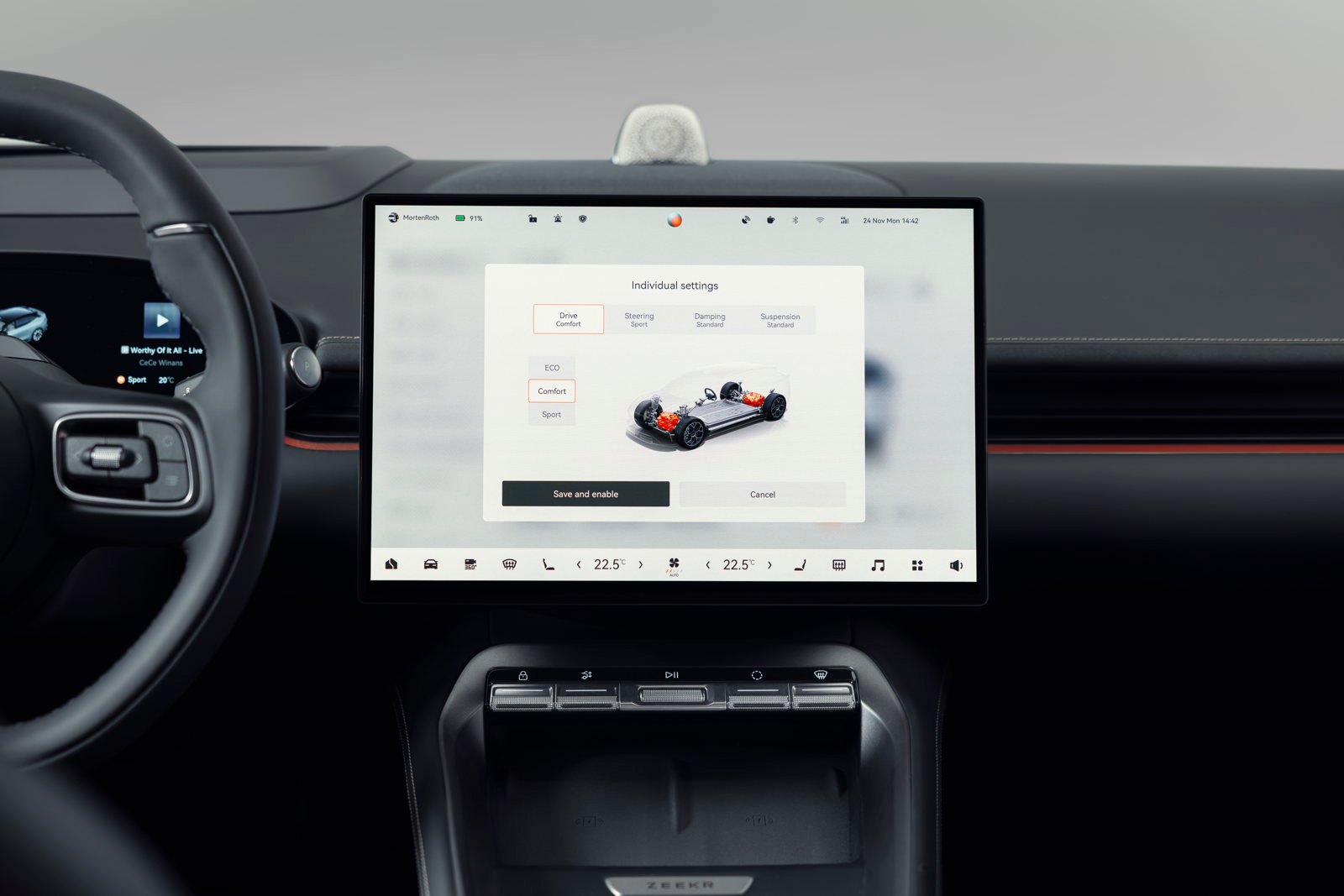
For Europe, Zeekr has deliberately kept its lineup narrow. The compact Zeekr X shares the SEA-2 platform with the Volvo EX30, the Smart #1 and the Lynk & Co 02, but differs markedly in design and interior. In Switzerland, it costs from 37,990 Swiss francs as the Core with a 49-kWh battery and 200-kW rear-wheel drive (up to 330 kilometers), from 42,990 francs as the Long Range with 69 kWh (up to 446 kilometers) and from 46,990 francs as the all-wheel-drive Privilege. The 7GT, a shooting brake with an 800-volt architecture, is rated at up to 655 kilometers of WLTP range and up to 475 kW. Since orders opened in March 2026, Zeekr says it has sold 3,800 units in Europe; Euro NCAP awarded it five stars under the new, stricter 2026 protocol.
The hybrid pivot: 9X and 8X
As recently as August 2023, Andy An had stressed that Zeekr was concentrating on pure electric vehicles and had no plans for hybrids. Two years later, that line was history. China’s market for large family SUVs is dominated by plug-in hybrids and vehicles with range extenders, led by Li Auto, Aito and others. Anyone who wants to compete there needs a combustion engine on board.
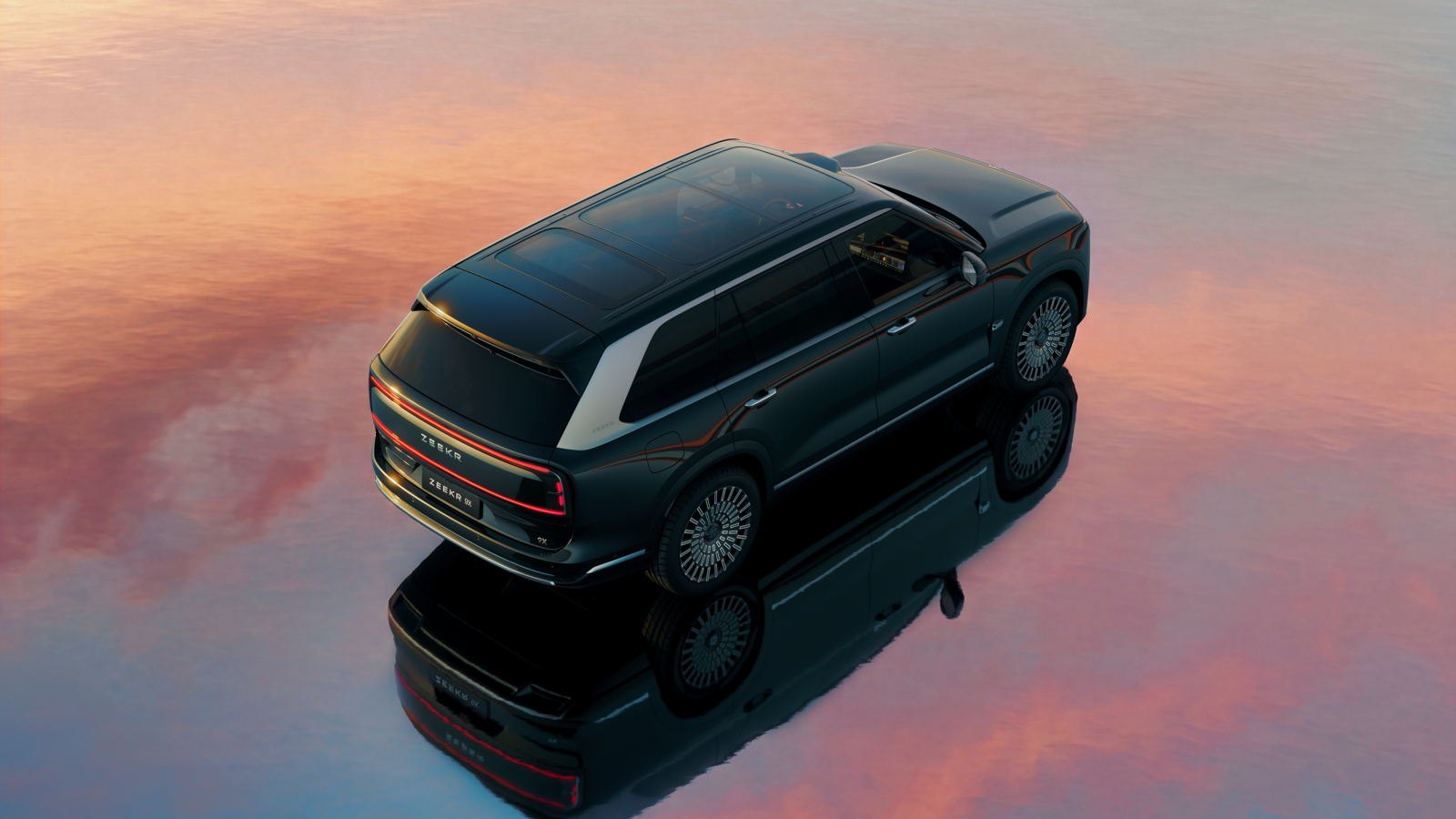
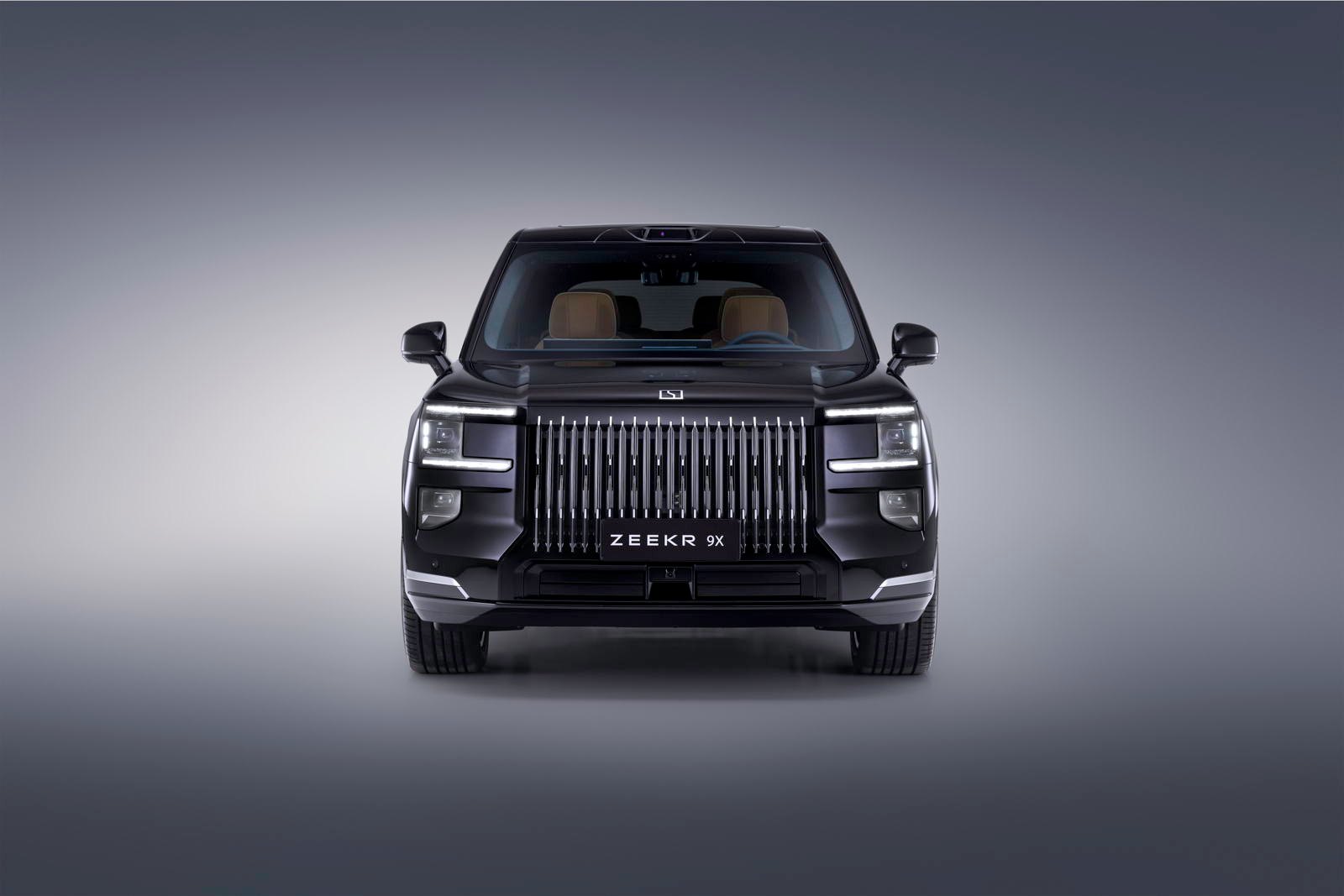
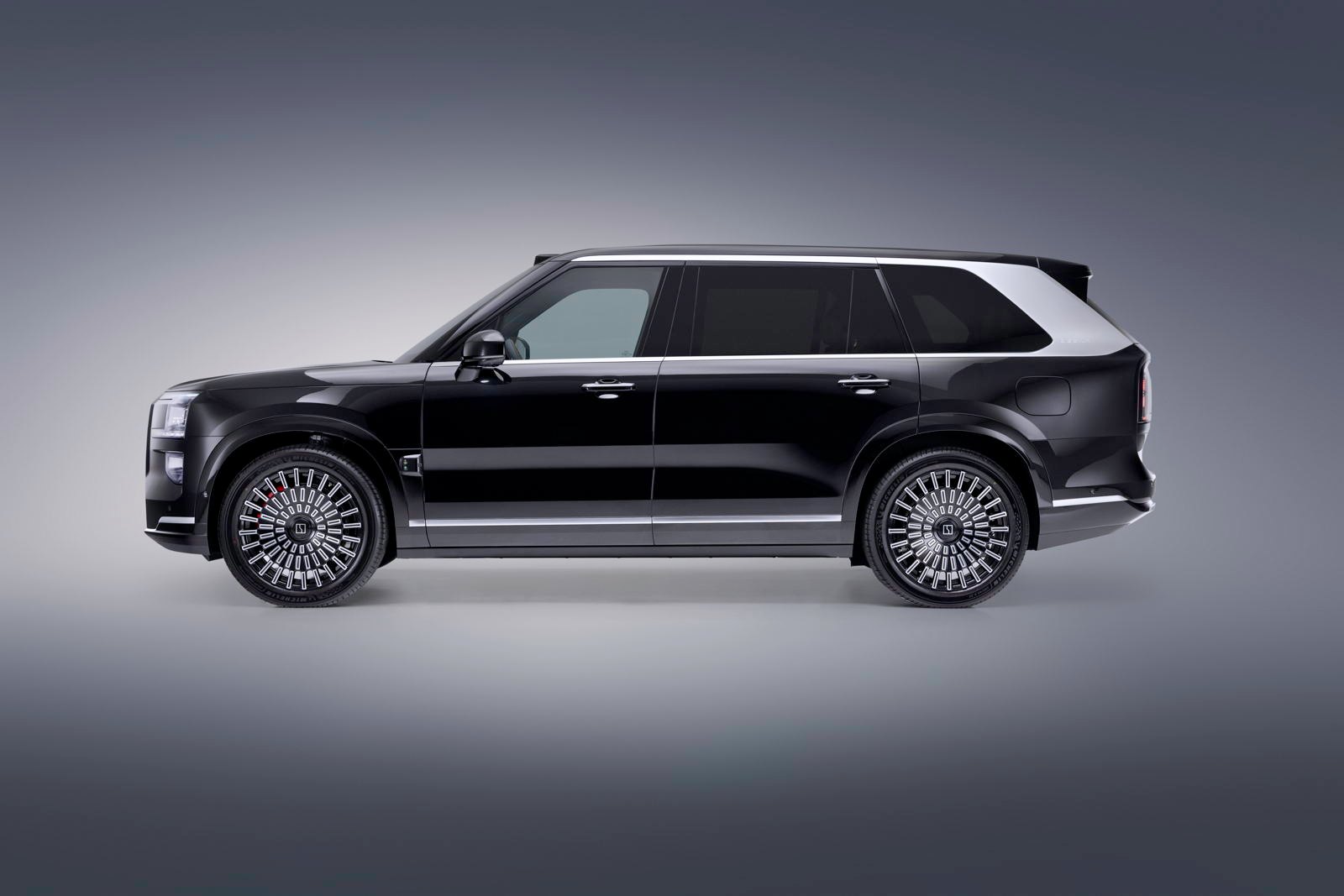
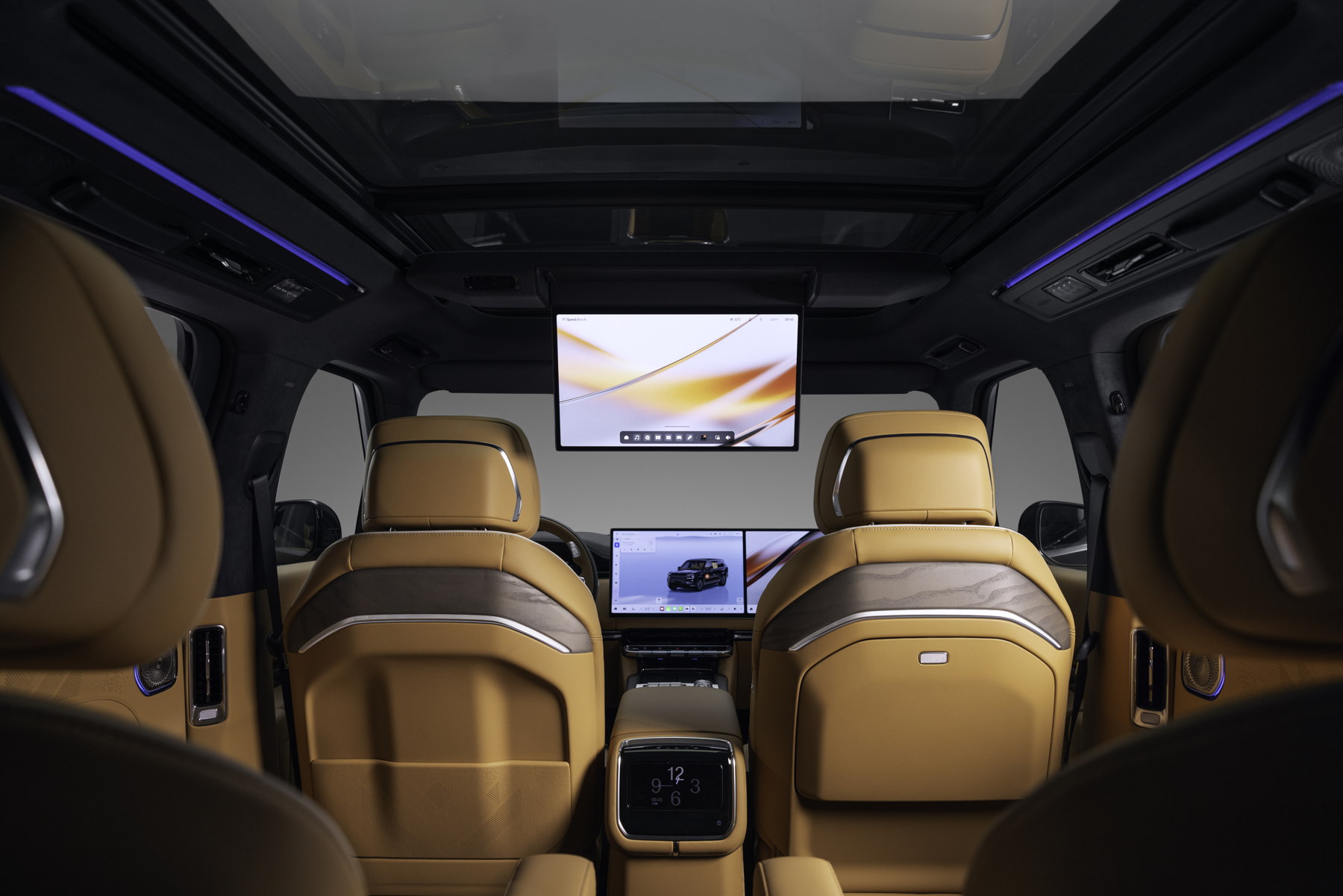
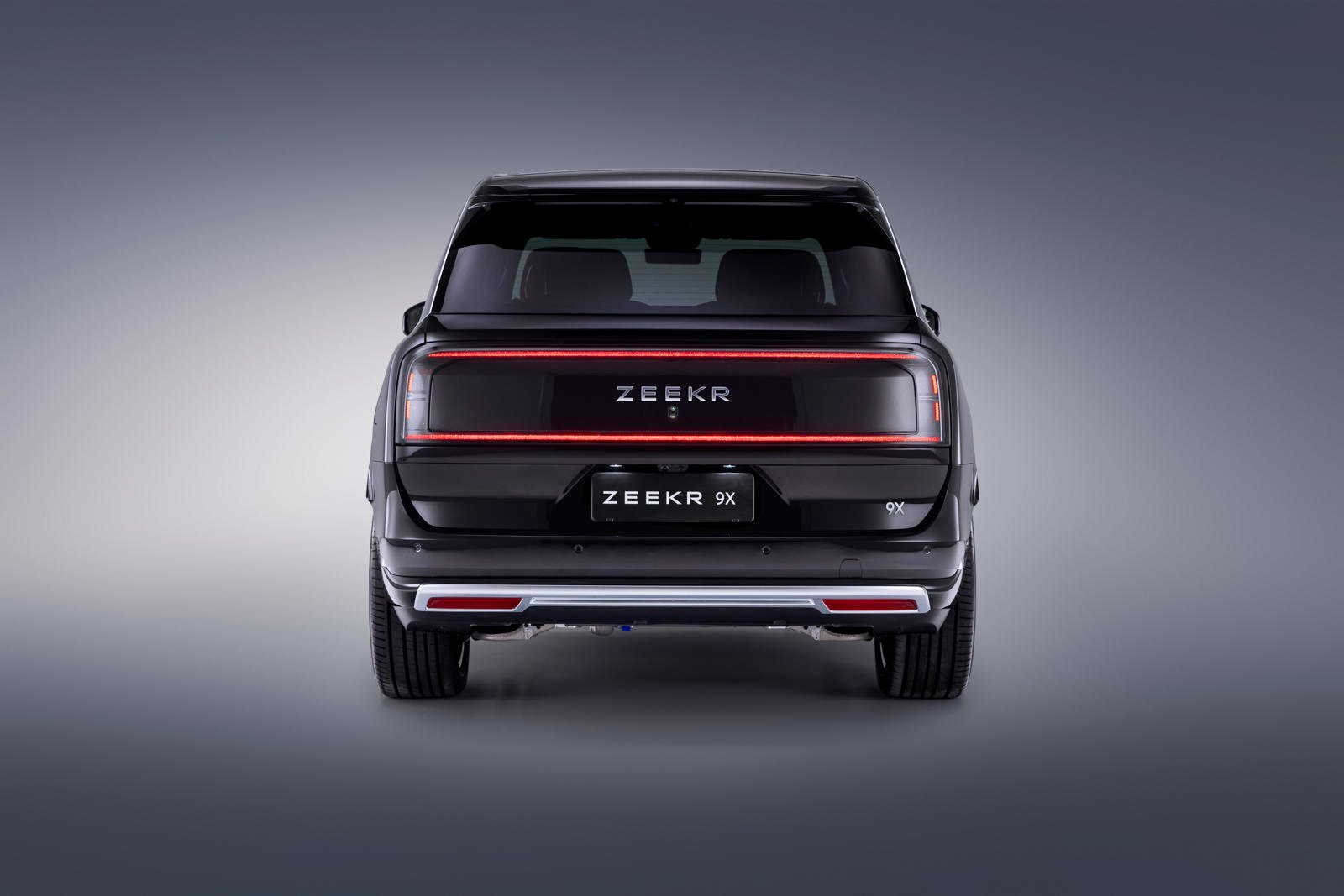
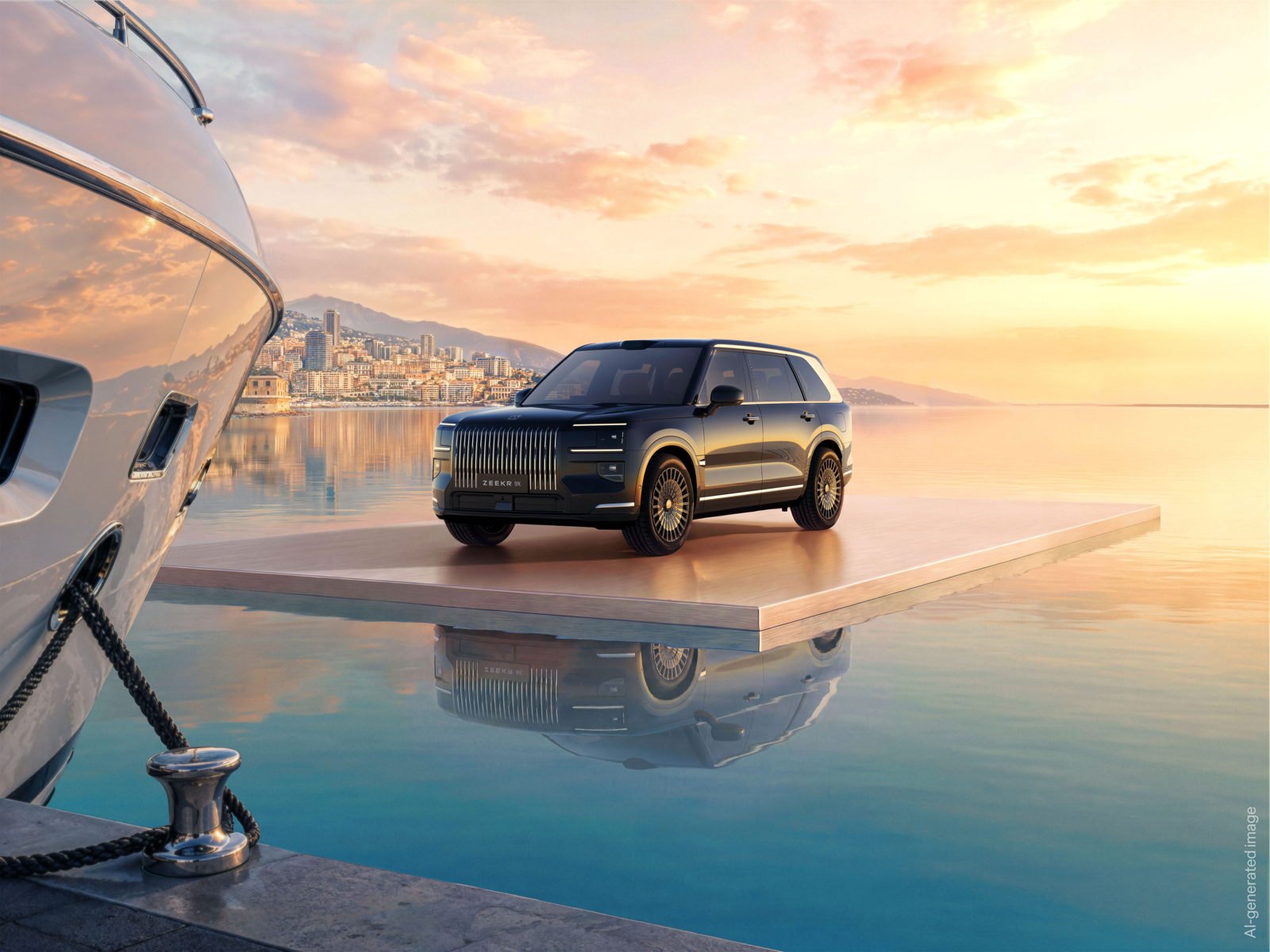
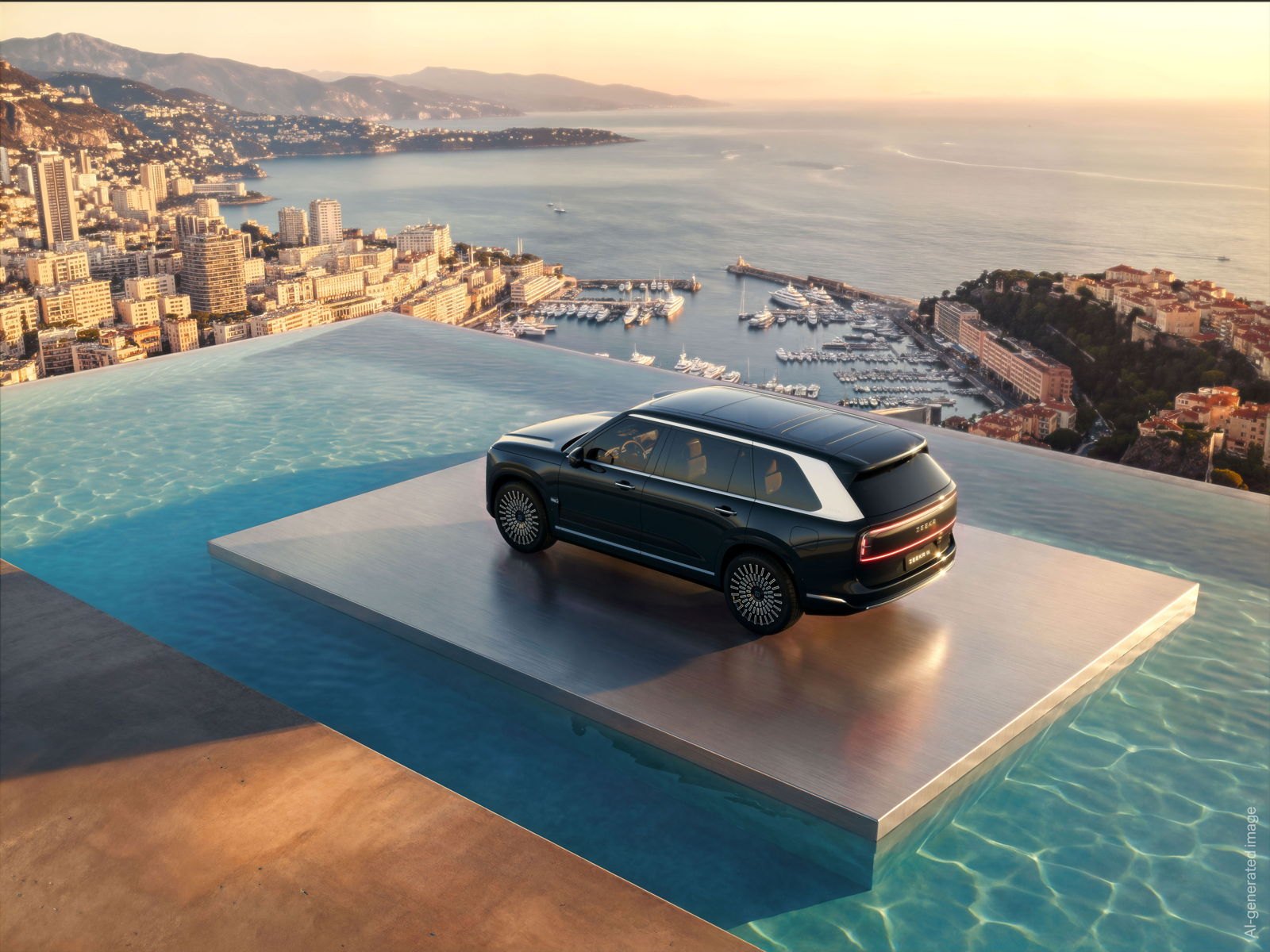
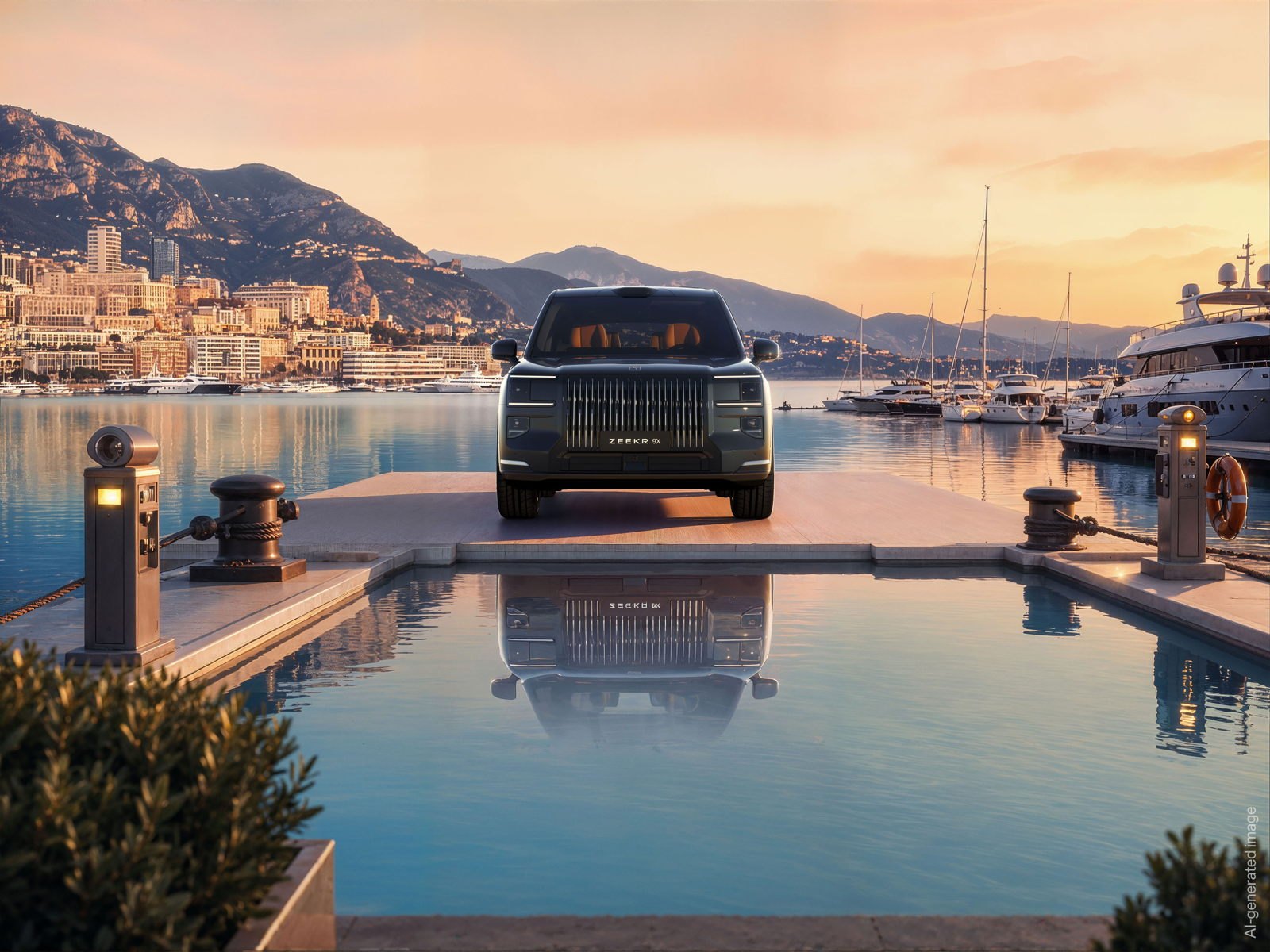
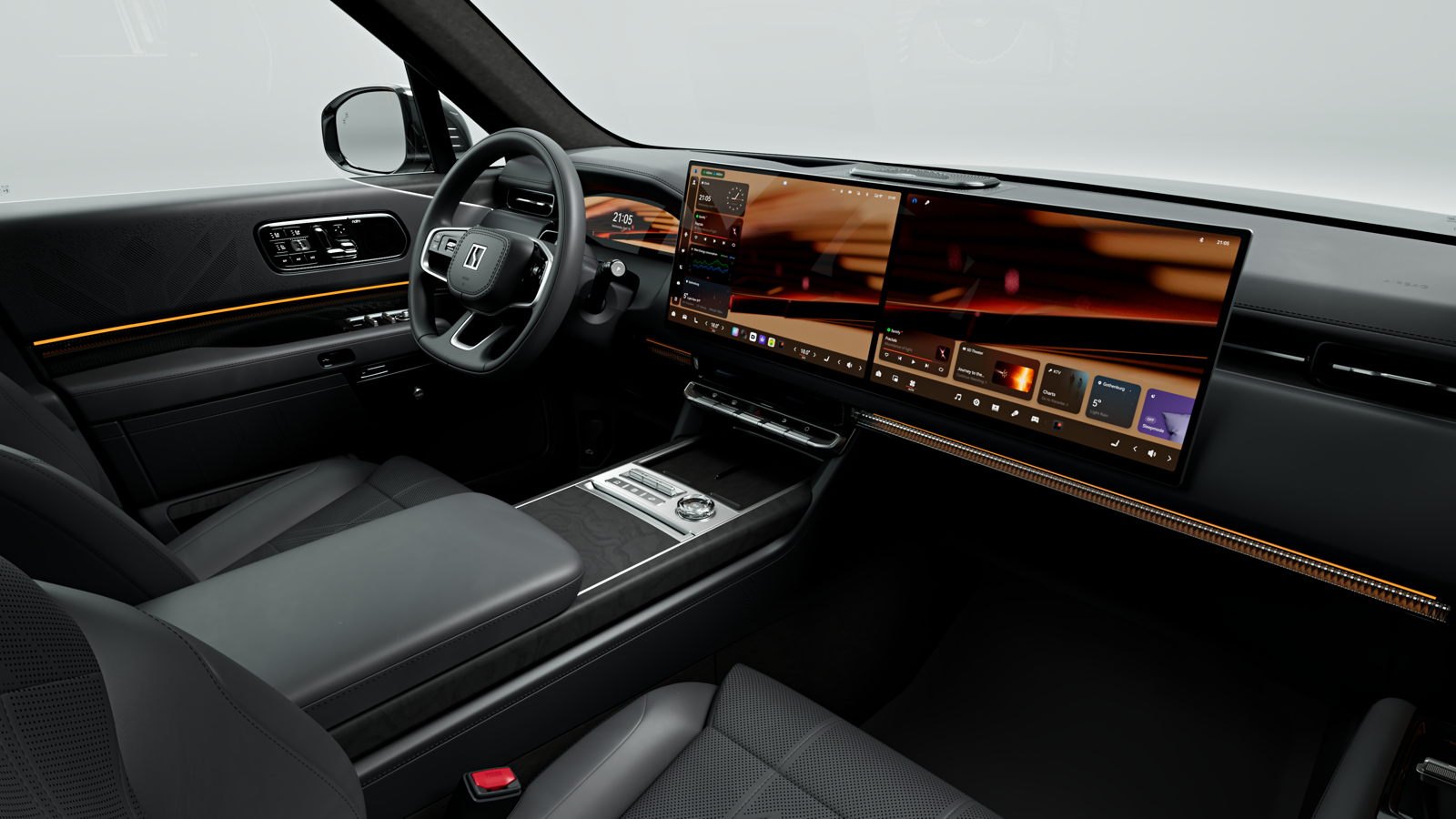
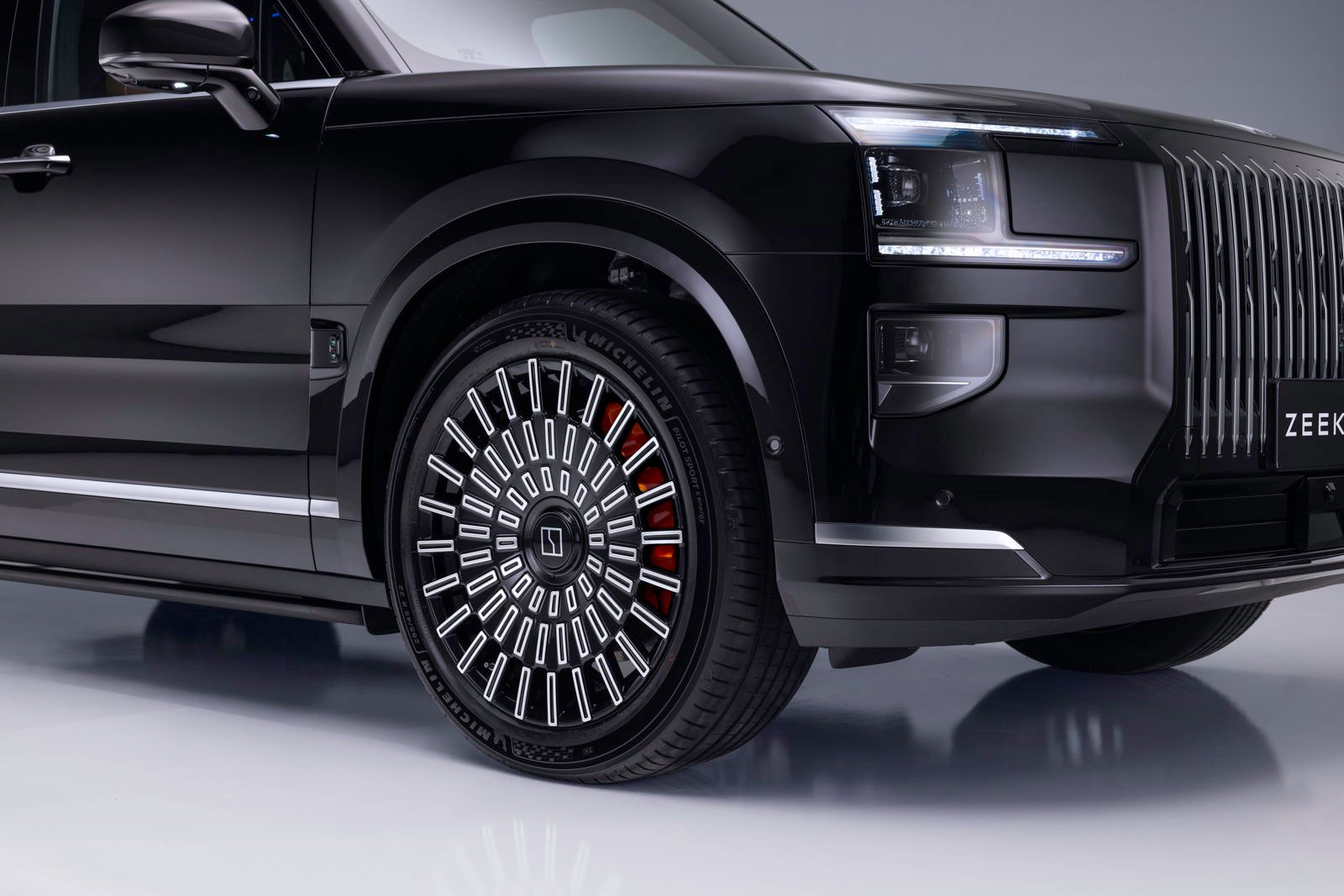
The Zeekr 9X is the answer: a 5.24-meter-long luxury SUV with a 3.17-meter wheelbase, built on SEA-S, the hybrid variant of the platform, and with a 900-volt electrical system. It is driven by electric motors; a 2.0-liter turbocharged gasoline engine serves as a generator, a setup Zeekr markets as a super hybrid. According to the manufacturer, the European Ultra AWD version produces 660 kW (897 metric hp), accelerates to 100 km/h in 4.1 seconds and reaches 240 km/h. According to preliminary figures, the 55.1-kWh battery is good for up to 179 kilometers of electric driving, with a combined range of up to 737 kilometers; at fast chargers, charging from 10% to 80% takes 9.5 minutes. In China, Zeekr quotes 220 to 380 kilometers of electric range under the local CLTC cycle, depending on the version. On Sept. 29, 2025, the 9X went on sale in China at prices between 465,900 and 599,900 yuan, or roughly 52,000 to 67,000 francs. Zeekr reported 10,000 firm orders in 13 minutes and more than 30,000 in the first 10 days.
The 9X became the group’s most important model in commercial terms. In December 2025, Zeekr delivered more than 10,000 units, and the average transaction price was above 530,000 yuan, according to the group. Analysts attribute Geely’s jump in margins in the fourth quarter of 2025 largely to this model. In May 2026, the expensive 8 and 9 series accounted for almost half of deliveries, according to Zeekr, and the average selling price rose 52% year over year.
The smaller 8X followed on April 17, 2026. It combines a 2.0-liter gasoline engine rated at 205 kW with a 70-kWh battery that, using 6C technology, is said to charge from 20% to 80% in nine minutes. Zeekr quotes up to 410 kilometers of all-electric range and a combined range of up to 1,416 kilometers under CLTC. The top-of-the-line Yaoying model, with three electric motors, reaches a peak output of 1,030 kW and, according to the manufacturer, accelerates to 100 km/h in 2.96 seconds. List prices range from 356,800 to 500,800 yuan; at launch, Zeekr offered a limited-time introductory price of 329,800 yuan.
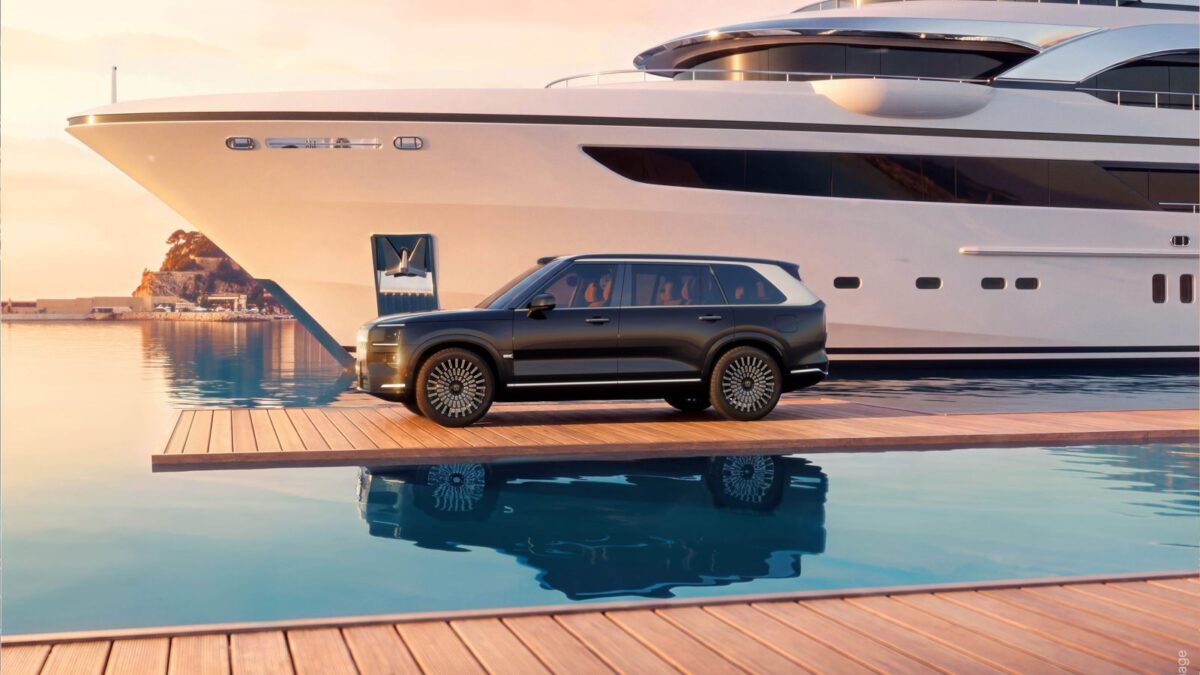
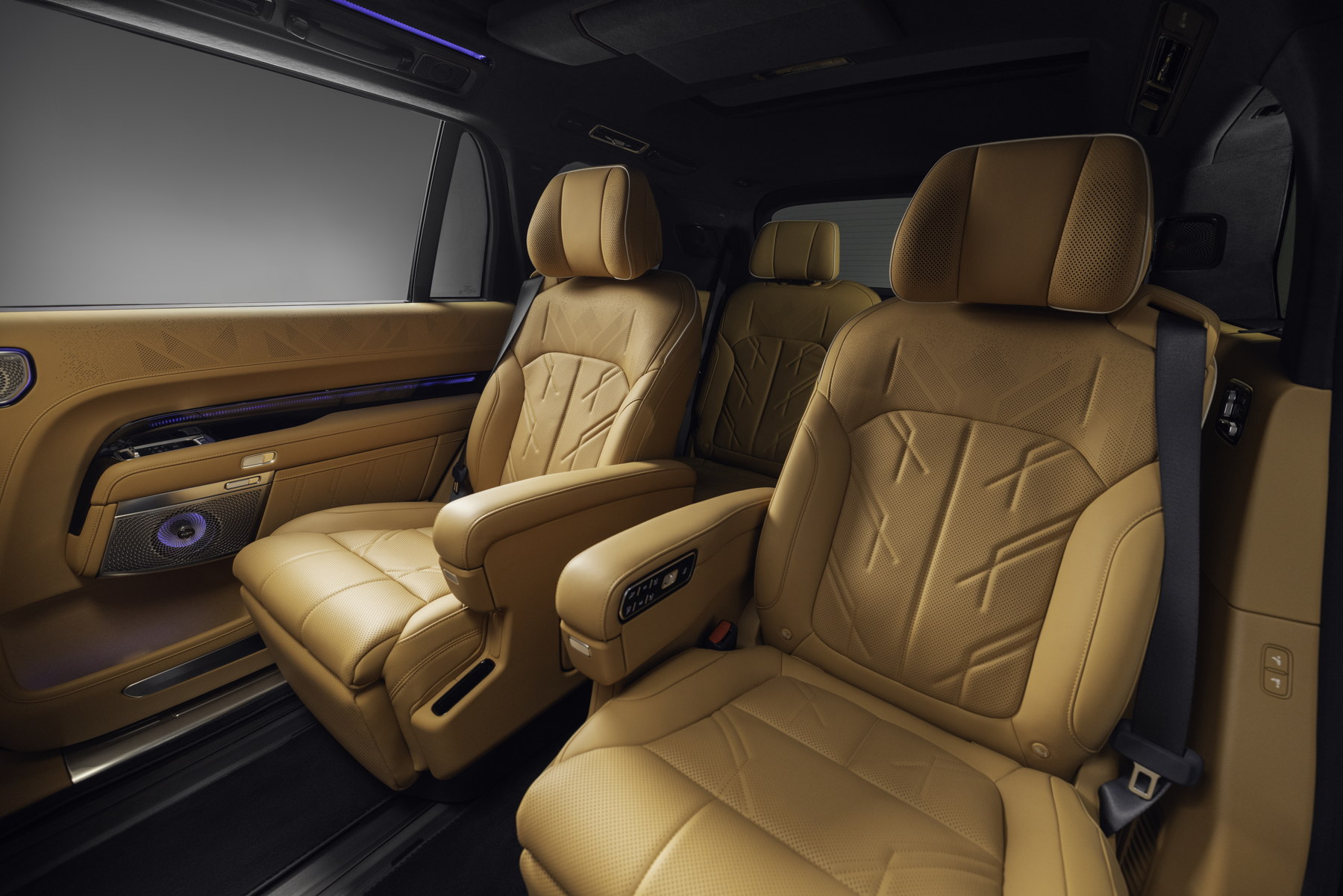
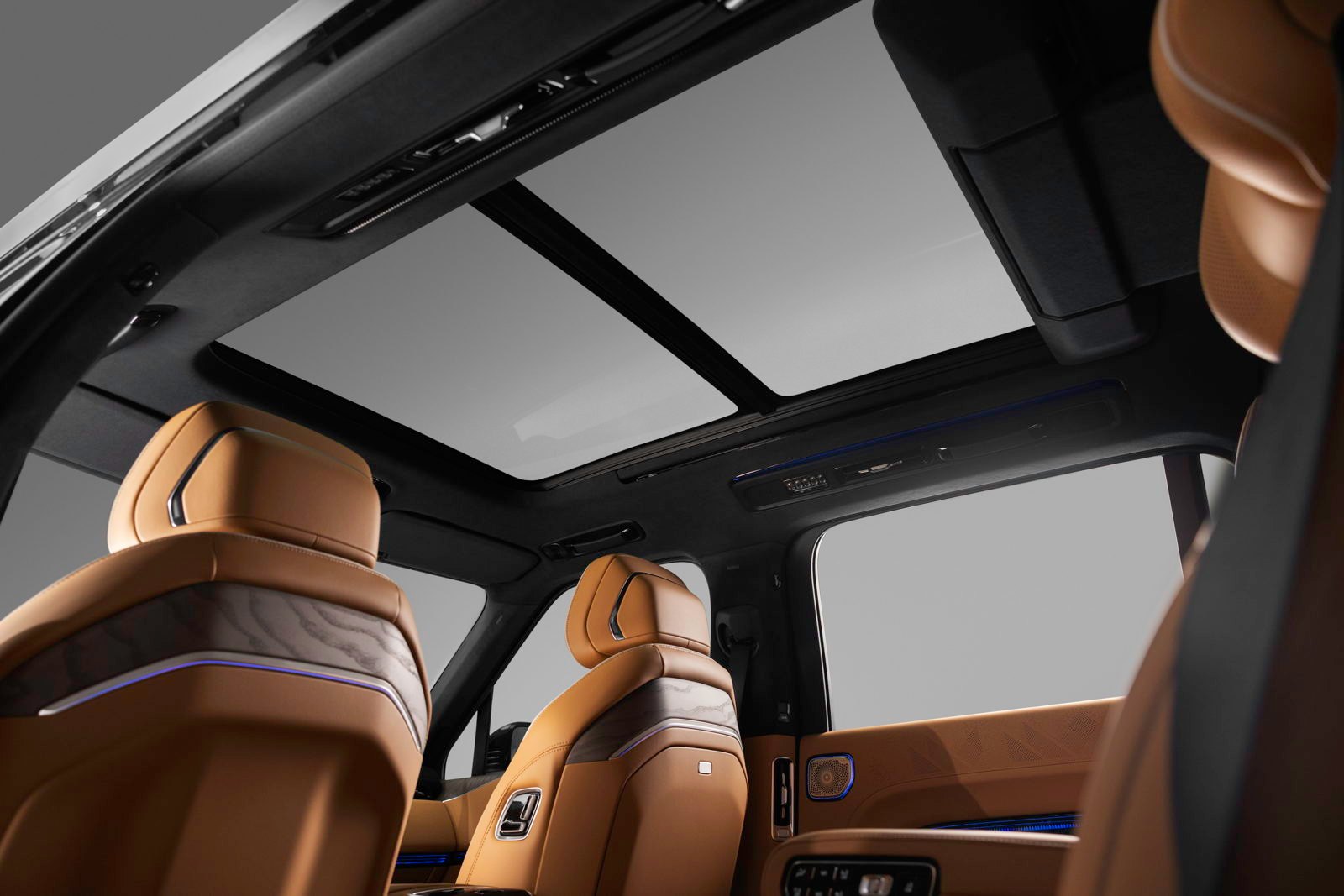
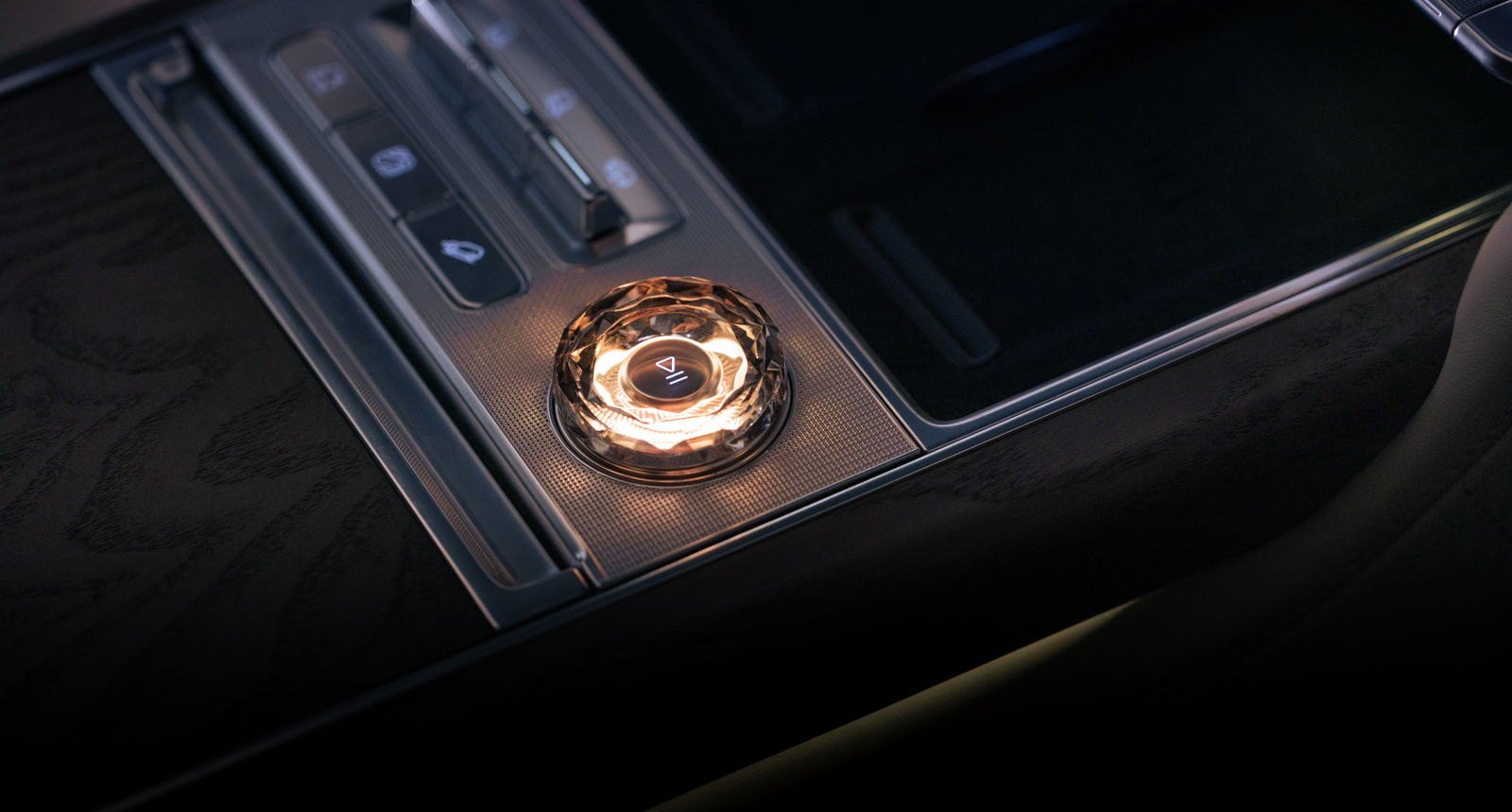
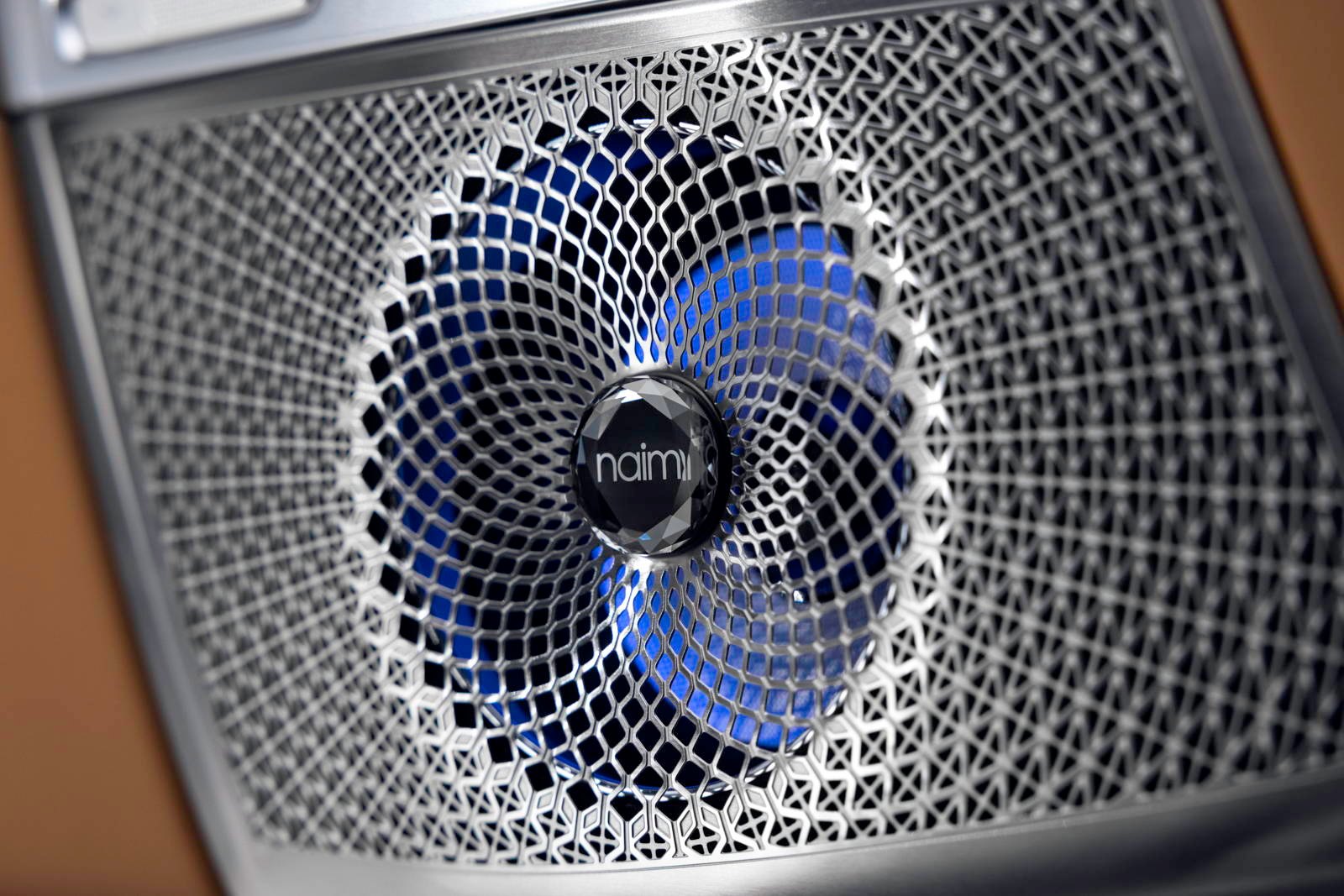
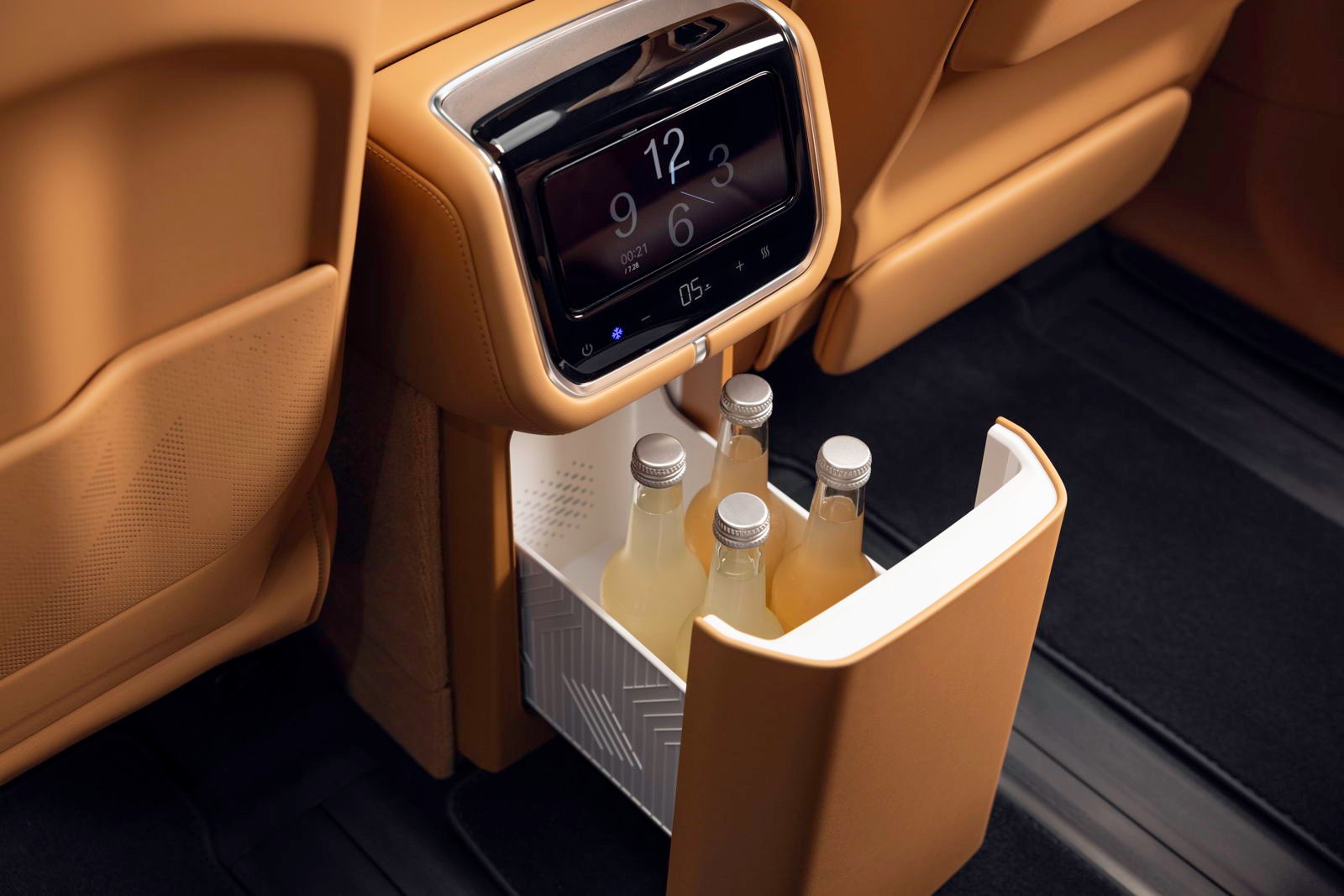
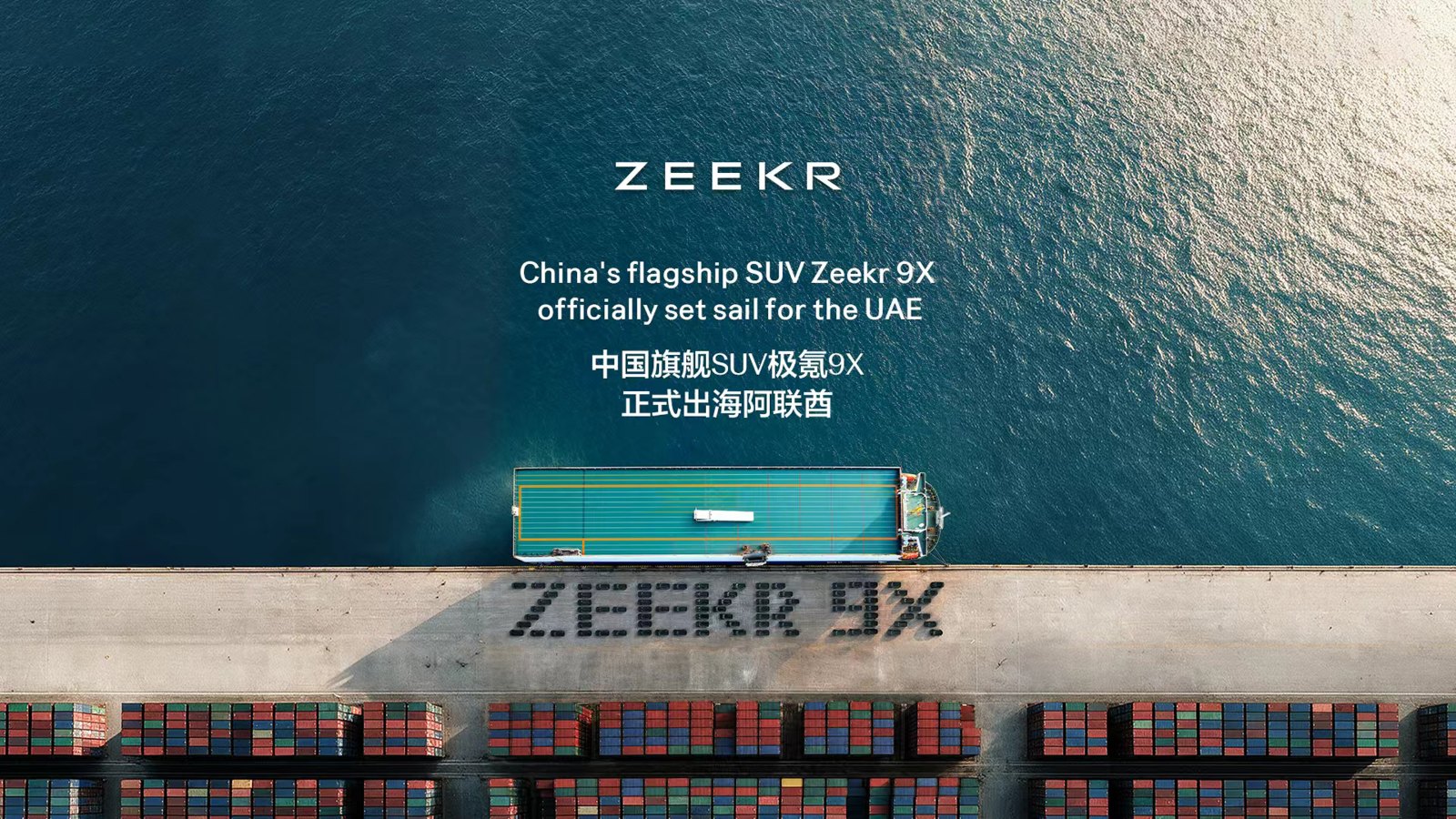
Since July 2026, the 9X has also been available as a five-seater, and since September it has been shipped in larger numbers to the United Arab Emirates, where it costs from 369,900 dirhams. In Germany, the six-seat 9X Ultra AWD costs from 119,500 euros and the Black Line from 126,500 euros; it celebrated its European premiere at the Monaco Yacht Show from Sept. 23 to Sept. 26, 2026. Standard equipment includes two individual second-row seats with massage, ventilation and heating, a Naim sound system with 32 speakers, a retractable 17-inch OLED screen for rear passengers and a cooling and warming compartment. Expertistan published an in-depth review of the vehicle in September: Zeekr 9X: The Chinese challenger out to strike fear into Germany’s luxury carmakers (in German).
The top of the pyramid: Where Zeekr is most expensive
The brand’s most expensive vehicle is not an SUV but a minivan. The 009 Grand, launched on April 19, 2024, is a four-seater with 580 kW of output and a 108-kWh CATL battery good for up to 702 kilometers under CLTC. Its equipment includes a 43-inch screen in the partition separating the rear compartment, a Yamaha sound system with 31 speakers and an 18-liter refrigerated compartment with a warming function. The base price is 789,000 yuan; the Collector’s Edition, launched in April 2025, costs 899,000 yuan, or roughly 100,000 francs. According to Chinese trade media, Zeekr is targeting wealthy businesspeople with the model.
Close behind is the 001 FR at 769,000 yuan, followed by the top version of the 9X at 599,900 yuan and the top-of-the-line 8X Yaoying at 500,800 yuan. In addition, Zeekr offers outside China a 9X converted by the German tuner Mansory, which according to the company costs more than 2.7 million yuan; Zeekr describes it as the most expensive Chinese car in foreign markets. These figures are Chinese list prices. In Europe, prices are considerably higher, as the comparison for the 9X shows: In China, it starts at the equivalent of roughly 52,000 francs, in Switzerland at 117,500 francs. Transport, homologation, dealer margins, taxes and different equipment explain part of the difference; the rest is determined by what the European market is willing to pay.
In Europe, the 9X is the brand’s showpiece. For its appearances, Zeekr deliberately chose stages from the world of luxury: In 2026, the brand sponsored the Monaco Yacht Show for the first time. According to Zeekr, the 9X’s design language was inspired by motor yachts and modern architecture, among other things; it was designed at the design center in Gothenburg. Alongside the 9X, Zeekr offers a limited Sport Edition of the 001 in Europe.
The technology: What’s under the sheet metal
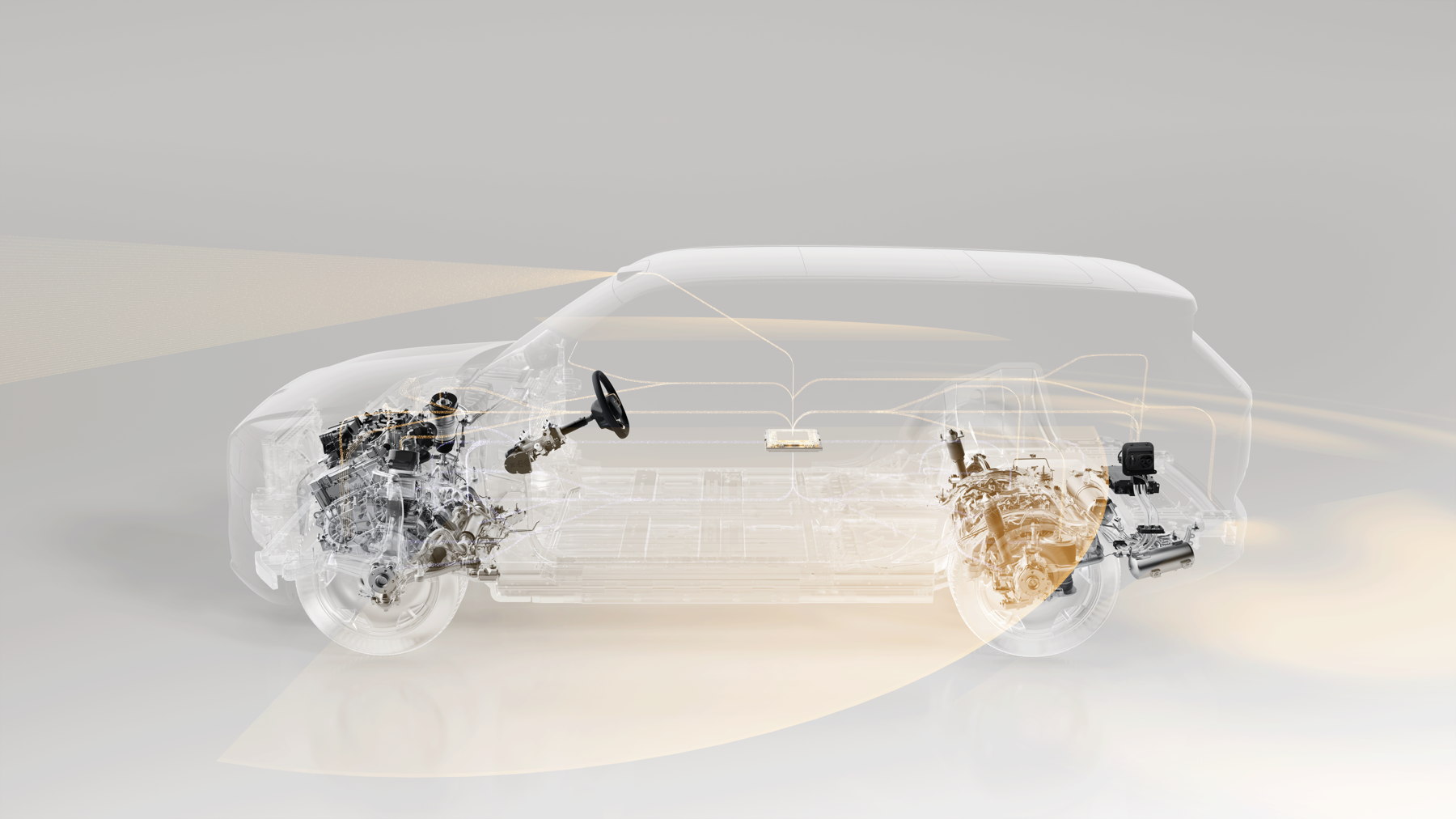
Zeekr emphasizes that a large share of the value creation is kept in-house: battery cells and battery management, electric motors and key parts of the power electronics. That is not unusual among Chinese manufacturers, but it sets Zeekr apart from many European premium brands, which buy these components from suppliers.
Platform. SEA has a modular structure. Among others, Geely distinguishes between SEA-E for smaller vehicles, SEA-S for premium and hybrid applications and SEA-M for mobility vehicles such as robotaxis. Newer models also use a centralized electronic architecture; the 9X is the first to use its ZEEA 3.0 generation.
Voltage and charging. Zeekr has gradually raised the voltage of its electrical systems: from 400 volts in the original 001 to 800 volts in the 001 FR, the 007, the 7X and the 7GT, and on to 900 volts in the 9X and 8X. For the Chinese versions of the 001, 7X and 009, Zeekr announced updates with 900-volt technology in 2025 and 2026. In April 2024, a 001 demonstrated a charging rate of 546 kW at one of the brand’s own V3 fast chargers. The subsidiary Zeekr Power operates its own fast-charging network in China; since 2024, it has been cooperating with Nio.
Batteries. In addition to its partnership with CATL, Zeekr has relied since December 2023 on an in-house battery based on lithium iron phosphate (LFP), marketed as the “Golden Battery.” The first model to use it was the 007. Batteries and electric motors for the smaller models are supplied by the Geely subsidiary Viridi E-Mobility Technology (VREMT), in which Zeekr holds a 51% stake.
Driver assistance and software. Zeekr originally worked closely with Mobileye. The brand now develops its own driver-assistance system, “Haohan”; in August 2025, Zeekr announced Nvidia computers of the Thor-U generation for the 001 and 7X. In Europe, existing vehicles regularly receive new features via over-the-air updates, in September 2026, for example, remote-controlled parking.
The plant: Where Zeekr builds its cars
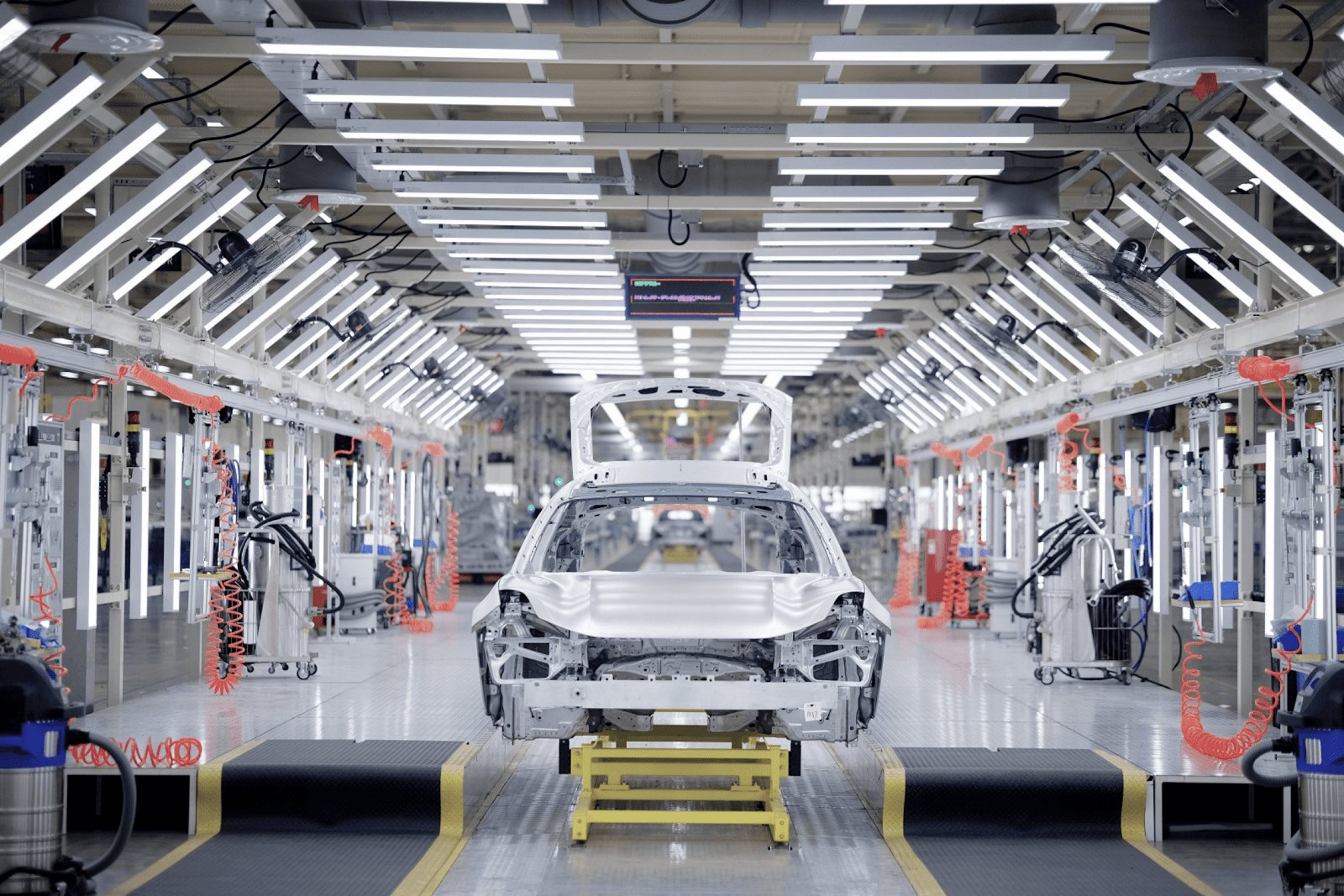
Formally, Geely established Zeekr’s global headquarters in Ningbo in June 2021; a large part of the administration is also housed in the Zeekr Tower in Hangzhou, outside which angry 001 owners protested in August 2024. The industrial heart lies in Ningbo’s Qianwan New Area, on the southern shore of Hangzhou Bay. The plant there, which Zeekr calls its “Intelligent Factory,” was built from late 2018 and went into operation in the third quarter of 2021. The first production-ready 001 rolled off the line there on Oct. 19, 2021.
According to a plant report in the trade magazine Automobil Produktion, the site covers around 1.3 million square meters and employs around 1,700 people. The original capacity was 300,000 vehicles a year in two-shift operation, and the maximum capacity is given as 360,000; at the time of the report, the plant was running a single shift. An industrial 5G network links the production steps; according to a report by the Malaysian website Carsifu, 703 robots work in the body shop and a 7,200-ton machine in die casting. In 2025, the plant received a five-star certification as a “Zero-Carbon Factory.” In addition to Zeekr models, the Polestar 4 for the British market also rolls off the line here.
Hangzhou Bay is the reference plant, but not the only one. Zeekr models are also built in Meishan and Chunxiao, both in the Ningbo area, and in Chengdu; the Mix van is built in Luqiao. At the Meishan plant, the 200,000th 7X rolled off the line in early September 2026, on Sept. 8 or Sept. 9, 2026, depending on the source. It went to a customer in Mexico. Zeekr organizes exports through the ports of Fujian province, among others: From Fuzhou, the 9X was shipped in large numbers to the UAE for the first time in September 2026.
The Waymo contract: Zeekr as a supplier to the robotaxi revolution
One of the most astonishing episodes in the company’s history takes place not in China but in California. In December 2021, Geely announced that Zeekr would build a specially developed electric vehicle for Waymo, the robotaxi unit of Google parent Alphabet. The prototype was unveiled in Los Angeles in November 2022. It is based on the SEA-M architecture, has no B-pillar and offers a flat, step-in floor.
In January 2026, Waymo named the vehicle Ojai, after a town in the mountains above Los Angeles. Since August 2026, all customers in San Francisco, Los Angeles and Phoenix have been able to book the vans for paid rides. According to Waymo, around 300 Ojai vans are in service, and thousands are expected to arrive in the U.S. by the end of 2026. Zeekr manufactures the basic structure in Ningbo and ships it without connected-vehicle technology; Waymo installs its sixth-generation sensors and software in Arizona. According to a Forbes report cited by Electrek, Waymo has imported more than 3,200 Zeekr vehicles into the U.S. since 2024, even though tariffs of around 127.5% apply to Chinese electric vehicles there.
The irony is obvious: American consumers are effectively barred from buying a Chinese manufacturer’s car, but they can be chauffeured around in one. For Zeekr, the contract is less a volume business than a reference. It proves that the brand can build vehicles to the specifications of one of the world’s most demanding technology customers.
The money: Growth on credit, a listing on borrowed time
Zeekr was capital-intensive from the start. In August 2021, the company raised $500 million in its first external funding round, from investors including Intel Capital, CATL and the video platform Bilibili. In February 2023, a further $750 million followed at a valuation of $13 billion.
The figures from the IPO prospectus and the annual reports show the classic pattern of a growth company. Revenue rose from 6.5 billion yuan in 2021 to 75.9 billion yuan in 2024. On the bottom line, Zeekr posted a loss every year, ranging from 4.5 billion to 8.3 billion yuan. The breakdown of revenue in the first year is revealing: In 2021, only 1.5 billion yuan came from car sales. The rest came from batteries, powertrain components and development services that Zeekr supplied to sister companies within the Geely group.
| Billion yuan | 2021 | 2022 | 2023 | 2024 |
|---|---|---|---|---|
| Revenue | 6.53 | 31.90 | 51.67 | 75.91 |
| Of which vehicle sales | 1.54 | 19.67 | 33.91 | 55.32 |
| Gross margin | 15.9% | 7.7% | 13.3% | 16.4% |
| Vehicle margin | 1.8% | 4.7% | 15.0% | 15.6% |
| Net loss | 4.51 | 7.66 | 8.26 | 5.79 |
Sources: F-1 prospectus (via CnEVPost), 2024 full-year results (Zeekr IR, March 20, 2025). Figures exclude Lynk & Co. For 2023, the 2024 results give a net loss of 8.26 billion yuan, while earlier prospectus figures put it at 8.23 billion yuan.
On May 10, 2024, Zeekr listed on the New York Stock Exchange. The American depositary shares were priced at $21, raising around $441 million, at the time the largest U.S. IPO by a Chinese company since 2021. Its career as a listed company was short-lived, however. In November 2024, Geely announced a reorganization: Zeekr acquired 20% of Lynk & Co from Geely Auto for 3.6 billion yuan and Volvo Cars’ 30% stake for 5.4 billion yuan. Since Feb. 14, 2025, Zeekr has held 51% of Lynk & Co, and the new entity operates as Zeekr Group.
The next step came in May 2025: Geely Auto offered to buy the remaining shares and take Zeekr private. The initial offer of $25.66 per ADS met with resistance from early investors, including CATL, Bilibili and Intel Capital. Geely raised it to $26.87 per ADS or, alternatively, 12.3 Geely shares. Around 70.8% of those eligible chose shares; for the rest, Geely paid around $701 million in cash. On Dec. 22, 2025, the merger was completed and trading on the NYSE ceased.
Geely justified the move with synergies: less duplication between the brands, pooled purchasing power, a simpler structure. The withdrawal can also be read more soberly. China’s car market is in the grip of a fierce price war. A subsidiary listed on Wall Street, with quarterly reporting, minority shareholders and U.S. regulation, is more of a burden than an asset in such a phase. Zeekr has not published its own financial figures since. Industry reports indicate a quarterly profit for the first time in the fourth quarter of 2025; the editors do not have a complete set of 2025 annual accounts for the brand.
A shadow hangs over the sales figures. The news agency Reuters reported in July 2025 that numerous Zeekr vehicles sold in Xiamen in December 2024 had initially been insured through a state-owned trading group and its subsidiaries before going to end customers. Of 2,737 reported sales in the city, 2,508 went to companies, but only 271 vehicles received license plates, according to the report. The practice of pulling sales forward through pre-registrations is widespread in China. It calls for caution when comparing monthly figures that are not independently verified.
The numbers: Five years of growth with one off year
The deliveries tell a story in three acts. Between 2021 and 2024, Zeekr nearly doubled its volume every year, from 6,007 to 222,123 vehicles. Then came the reality check in 2025: With 224,133 deliveries, the brand grew by only 0.9%, although Geely had originally expected considerably more. For comparison: In 2023, Andy An had still set a target of 650,000 vehicles for 2025.
The turnaround came in 2026. From January to September, Zeekr delivered 288,404 vehicles, twice as many as in the same period a year earlier. With 37,216 vehicles, September was the sixth consecutive record month. The annual target of 300,000 vehicles that Geely had set for the brand is likely to be exceeded as early as October. The difference is being made above all by the expensive hybrid SUVs and the 7X.
The expansion: From Stockholm to Sydney
Zeekr made the leap to Europe in 2023. In June, the brand opened its order books for two models in Sweden and the Netherlands, followed in November by its first European showroom in Stockholm. Zeekr soon moved its European sales and marketing headquarters from Gothenburg to Amsterdam, where, the company said, more experienced sales staff could be found. Development and design remained in Sweden.
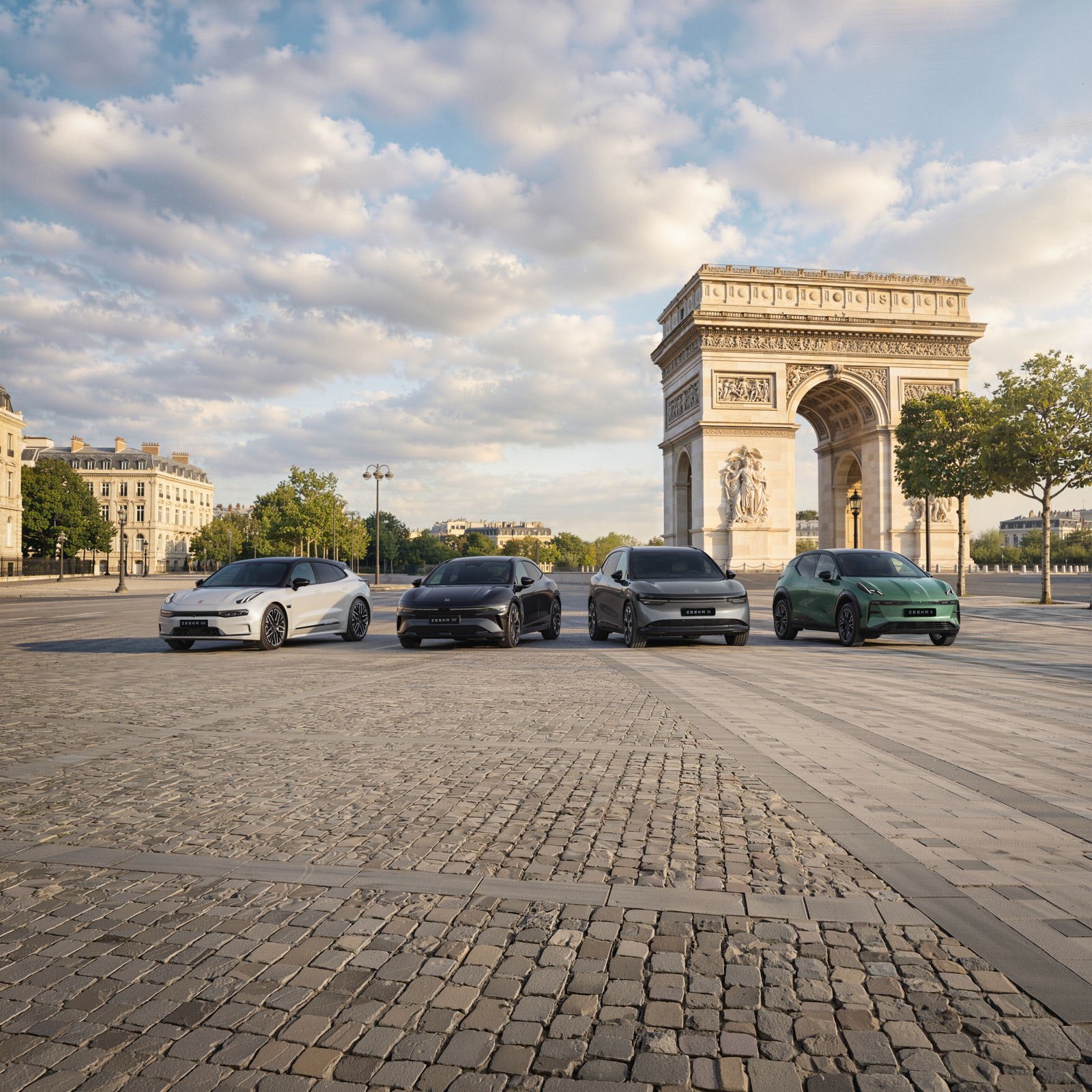
Zeekr says it is now active in 16 European countries: Sweden, Norway, Denmark, the Netherlands, Belgium, Switzerland, Greece, Croatia, Slovenia, Romania, Bulgaria, Germany, Italy, Spain, Portugal and France. Its sales model has changed along the way. Initially, the brand relied on direct sales and agency models. In Germany, where Zeekr dates its market launch to December 2025, more than 750 orders have been received since then, according to Zeekr Germany, and more than 100 certified service partners handle maintenance and repairs. Since Sept. 25, 2026, traditional car dealerships, the Jacobs group in Aachen and the Bleker group in Münster, have been selling the brand for the first time; more than 60 dealer partners are to be added by 2027. Zeekr Germany handed over the first 7GT to a customer in Dorsten in July 2026. Volumes are still modest: According to an analysis of data from Germany’s Federal Motor Transport Authority, Zeekr recorded 417 new registrations in Germany from January to August 2026. From Oct. 12 to Oct. 18, 2026, Zeekr will exhibit at the Paris Motor Show for the first time and has announced another European premiere there.
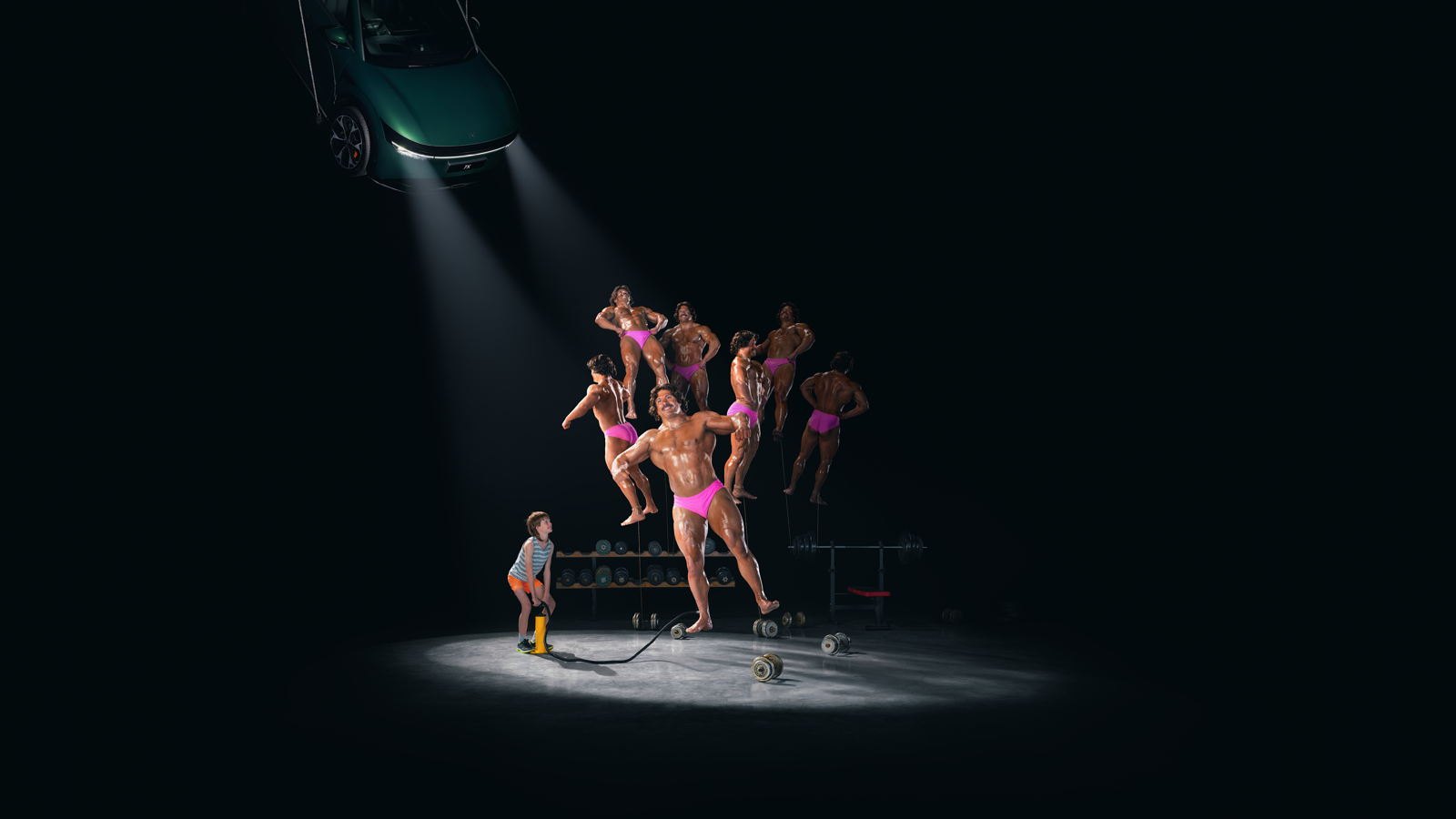
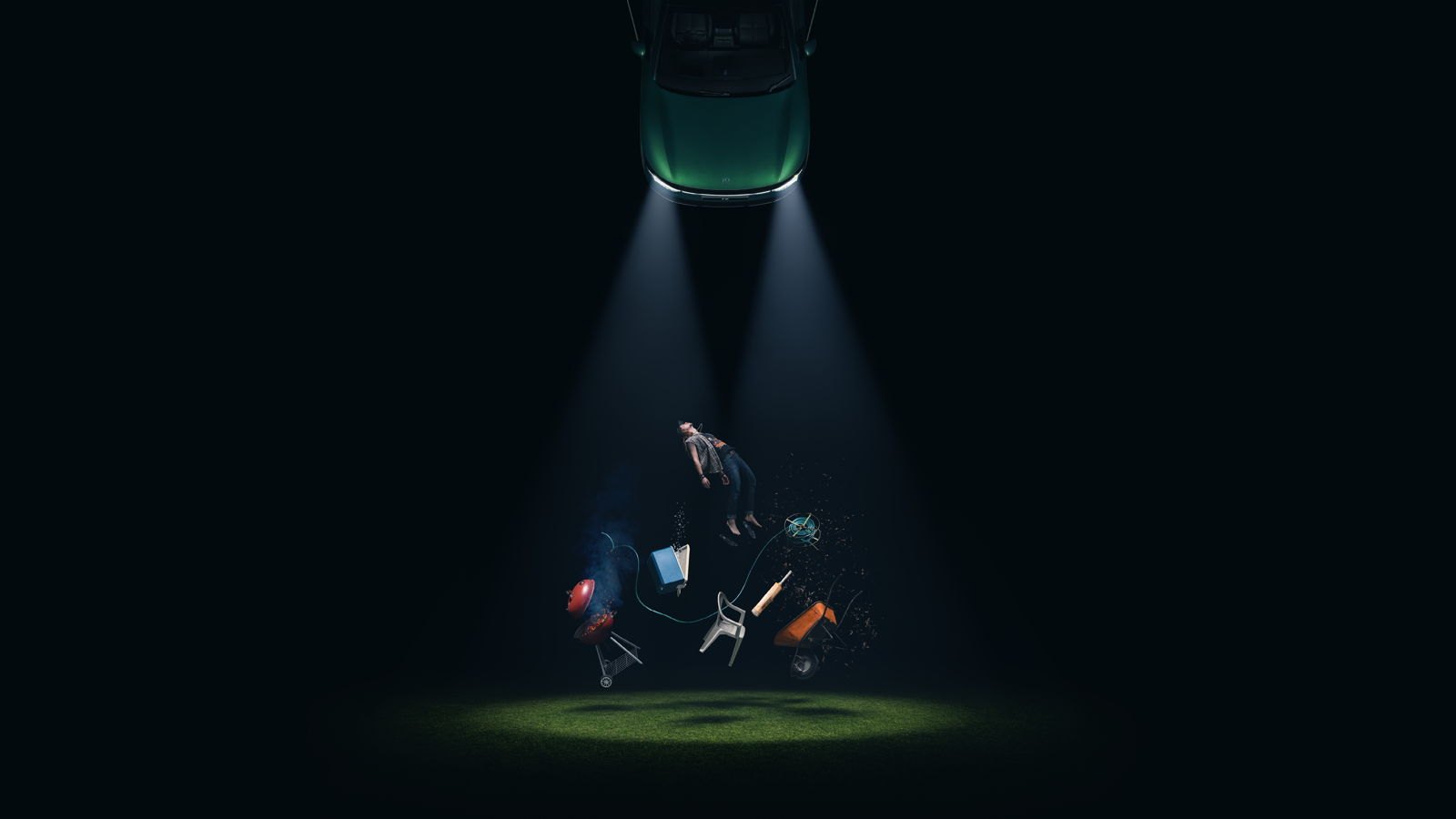
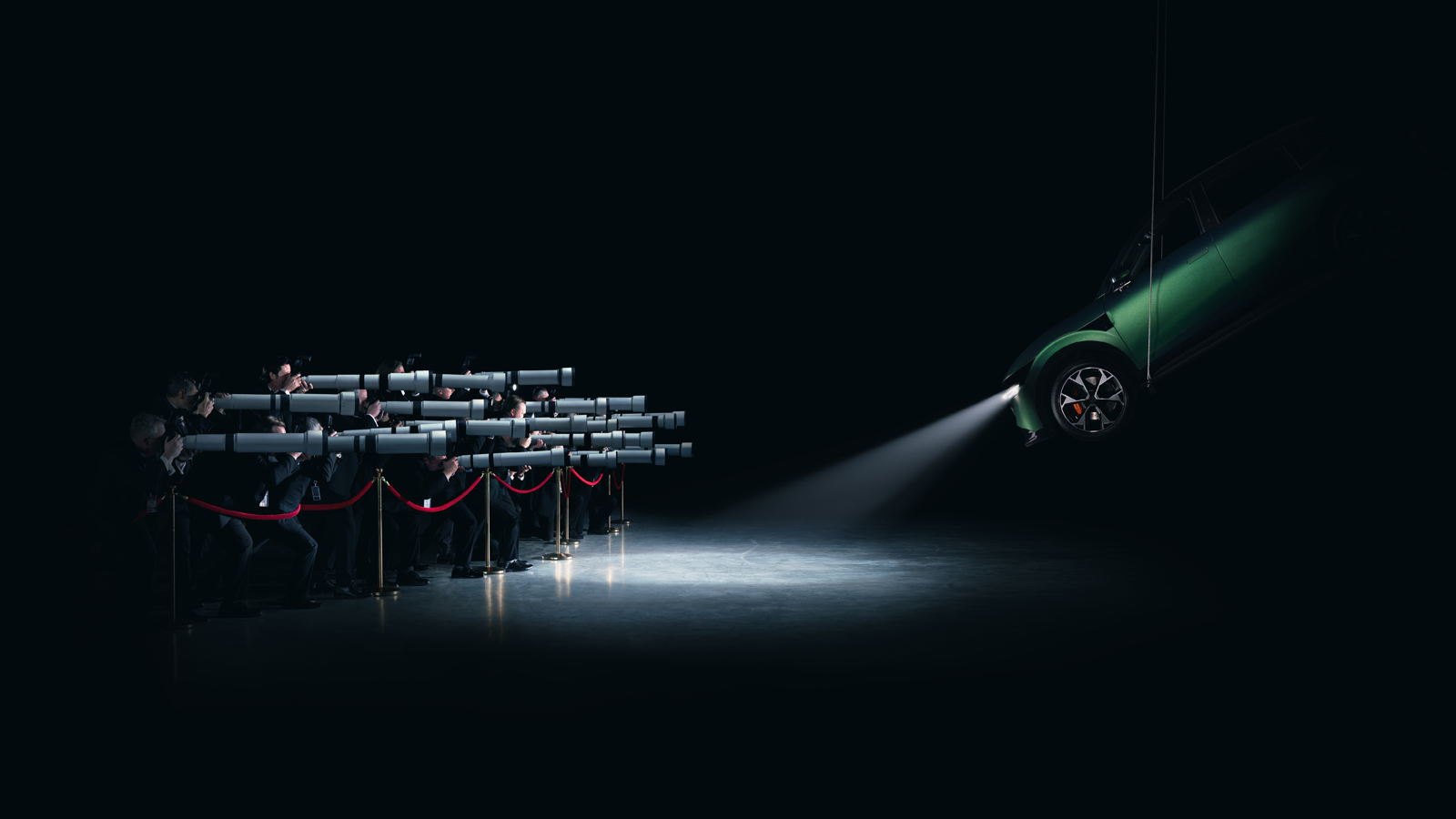
A photo collaboration with New Zealand director and Oscar winner Taika Waititi shows how heavily Zeekr is betting on brand building in Europe. For the “Spotlight” series, he had a 7X suspended from the ceiling of a studio in Auckland; the car’s headlights were the only source of light for seven staged scenes. Zeekr stresses that the images were created without artificial intelligence. The brand is also the mobility partner of the Diamond League track-and-field series.
Outside Europe, Zeekr has built a dense network. Israel, Thailand and Australia were among the markets that followed in 2024, later joined by Singapore, Malaysia, the Philippines, New Zealand, Brazil, Mexico, Egypt, Kazakhstan and, from May 2026, South Korea. At the end of 2025, Zeekr operated just under 640 sales outlets worldwide, more than 100 of them outside China. In September 2026, the company spoke of more than 60 countries and just under 800 sales outlets and claimed to have been the top-exporting Chinese premium brand from January to August 2026. These figures come from the company itself and cannot be independently verified.
The expansion follows a clear logic: Zeekr grows fastest where no punitive tariffs loom. In the European Union, the Commission has imposed countervailing duties on China-built electric vehicles since Oct. 30, 2024. For Geely, and therefore for Zeekr, the rate is 18.8%, on top of the standard 10% duty. Plug-in hybrids such as the 9X are not covered by this measure. That explains why Zeekr is attacking the European luxury market with, of all things, a hybrid.
Switzerland: A market without a tariff wall
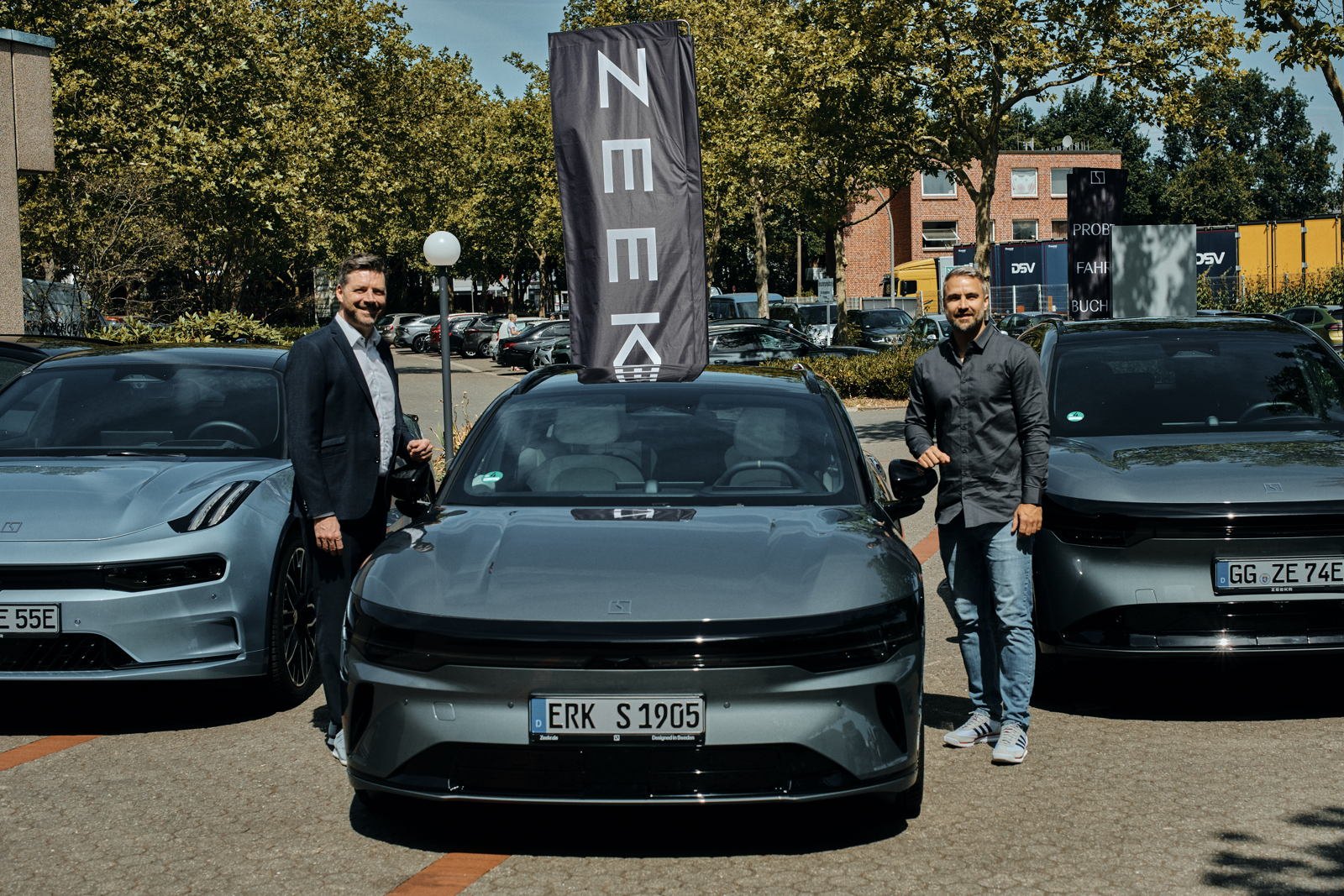
Zeekr arrived in Switzerland in the summer of 2025. The Zeekr X, the 7X and the 001 could be ordered from June, and the first deliveries followed in July. The importer is the Emil Frey Group, which initially brought 10 dealers into the network. In Switzerland, Zeekr offers a warranty of 10 years or 200,000 kilometers. Brand Director Linus Baumgartner told the Swiss newspaper Blick: “For us, Switzerland is an exciting market with ideal conditions.”
These conditions are indeed special. Switzerland abolished its industrial tariffs as of Jan. 1, 2024, and has a free trade agreement with China. Chinese electric vehicles therefore enter the country without the tariff surcharges that are due in the EU. This is reflected in prices: A 001 costs from 59,990 francs in Switzerland, a Porsche Taycan from 115,200 francs. Zeekr does without traditional option price lists. Luca Frey, head of sales and marketing at Zeekr Switzerland, explained the policy to the Swiss website Streetlife with the words: “At Zeekr, premium comes standard and is not an option.”
| Model (Switzerland) | Starting price | Output | Range (WLTP, max.) |
|---|---|---|---|
| Zeekr X | CHF 37,990 | From 200 kW; all-wheel drive up to 365 kW, depending on model year | Up to 446 km |
| Zeekr 7GT | CHF 46,490 | Up to 475 kW | Up to 655 km |
| Zeekr 7X | CHF 53,990 | 310 kW to 475 kW | Up to 615 km |
| Zeekr 001 | CHF 59,990 | Up to 400 kW | Up to 620 km |
| Zeekr 9X Ultra AWD | CHF 117,500 | 660 kW (897 metric hp) | 179 km electric, 737 km total |
Sources: zeekr.ch (accessed Oct. 3, 2026), Emil Frey, Automobil Revue, ACS, Tages-Anzeiger, Zeekr press kit. 9X: Swiss premiere on Sept. 8, 2026, in Thalwil; price according to Automobil Revue, Autosprint and Vybe; orders since October 2026, deliveries from the first quarter of 2027. All-wheel-drive output of the 2026 model year Zeekr X according to an Emil Frey dealer offer.
The market has responded. In the first half of 2026, Chinese brands reached a 6.5% market share, according to figures from auto consultant Guido Biffiger for SonntagsBlick, and 10.3% including China-built models of Western brands. Zeekr plays a growing role in these statistics. From January to May 2026, according to ElektroSportwagen.ch, 340 Zeekr 7X, 29 Zeekr X and 22 Zeekr 001 vehicles were newly registered. In July 2026, Zeekr overtook established brands such as Hyundai and Kia in new electric-vehicle registrations, according to Vybe; with 527 new registrations, the 7X ranks among the 15 best-selling electric vehicles of the year. The Swiss finance website Inside Paradeplatz put the brand’s market share in September at 0.9%.
For the Swiss auto industry, this is a double-edged development. For buyers, the competition means lower prices and more equipment. For the roughly 600 Swiss suppliers, which depend heavily on the German car market, the shift toward Chinese manufacturers is an additional burden, because those manufacturers source hardly any components from Switzerland.
The analysis: Strengths, weaknesses, open questions
The case for Zeekr
Scale. Zeekr is not a startup brand fighting for survival but part of a group that sold more than 3 million vehicles in 2025 and reported a profit of 16.85 billion yuan. Platform, purchasing and battery production are shared.
Speed. At Zeekr, the gap between founding and high-volume production was months, not years. Nine model lines in five years, plus annual updates, is a pace that no European premium manufacturer keeps up.
Technology per franc. Electrical systems of 800 and 900 volts, charging rates above 400 kW, supercar-level output and extensive standard equipment at prices well below those of established brands.
European DNA. Design and part of the development in Gothenburg, five Euro NCAP stars for the 001, X, 7X and 7GT, and service through established dealers such as Emil Frey lower the threshold for skeptical buyers.
The case against Zeekr
Brand strategy. Zeekr was founded, merged with Lynk & Co, taken public and then taken private again. A luxury brand thrives on continuity. How much independence Zeekr will retain within Geely in the long run is an open question.
Transparency. Since the delisting, there have been no audited stand-alone figures. The Reuters investigation into pre-registrations in Xiamen shows that sales figures in China should be read with caution.
Residual values and model policy. Rapid model changes delight new-car buyers and anger existing owners. The protest over the 001 in 2024 shows the flip side. There are still hardly any reliable data on residual values in Europe, because the brand is too young.
Political risk. The EU countervailing duties, the ongoing negotiations over minimum prices and a possible extension to hybrids make the calculations in Europe uncertain. In Switzerland, too, it cannot be ruled out that the debate over Chinese vehicles will gain political momentum.
Commentary: The question is not whether, but how fast
Zeekr is the most convincing example yet that Chinese manufacturers no longer compete on price alone. In five years, the brand has built a model lineup that would have taken European groups a decade. It has proved that it can supply Waymo, earn top Euro NCAP ratings and set the tone in China’s segment above half a million yuan.
At the same time, Zeekr is the product of an industrial policy that free-market yardsticks can capture only to a limited extent. Years of losses running into the billions, an IPO reversed after 19 months, sales figures that Reuters partly called into question: All of this is part of the picture. The EU has responded with tariffs, Switzerland with open doors. For Swiss consumers, that is a gain. Whether it is also a gain for Switzerland as an industrial location is open to doubt.
The decisive question for the established brands is therefore no longer whether Zeekr will gain a foothold in Europe, but how quickly. The answer will be given not in Stockholm or Amsterdam, but in an Emil Frey showroom, where a customer chooses between a German and a Chinese electric car and discovers that the gap in price is greater than the gap in quality.
Sources
- CnEVPost: Zeekr delivers 37,216 vehicles in September (Oct. 1, 2026); Zeekr plans 001 update in Q1 2027 (Oct. 1, 2026); Zeekr brand delivers record 30,267 cars in Dec (Jan. 1, 2026); Zeekr expands hybrid lineup with 8X launch (April 17, 2026); Zeekr debuts on NYSE (May 10, 2024); Zeekr aims for annual sales of 650,000 units by 2025 (Aug. 22, 2023)
- Zeekr Group IR: Fourth Quarter and Full Year 2024 Unaudited Financial Results (March 20, 2025); Completion of Merger (Dec. 22, 2025)
- Geely Auto: 2025 sales and 2026 targets (Jan. 5, 2026); Gasgoo: Geely’s 2025 sales and targets by brand (Jan. 1, 2026)
- GlobeNewswire: ZEEKR 9X Begins First Large-Scale Overseas Shipment (Sept. 23, 2026)
- Zeekr Deutschland, press portal press-de.zeekr.eu (press releases from June to September 2026, media galleries)
- Gasgoo: ZEEKR on mission to help Geely fulfill premium NEV dream; electrive.com: Zeekr prepares to launch deliveries of the 001 (Oct. 20, 2021)
- Reuters: China EV brands Zeekr, Neta inflated car sales using insurance scheme (July 21, 2025)
- Benzinga: Zeekr Drives Off Wall Street (December 2025); Chinaevhome: Geely Reveals Zeekr Privatization Breakdown (Dec. 9, 2025)
- Electrek: Waymo opens Zeekr Ojai to all (Aug. 20, 2026); electrive.com: Waymo puts Zeekr-built Ojai robotaxis into regular service (Aug. 25, 2026); TechCrunch: Waymo is rebranding its Zeekr robotaxi (Jan. 7, 2026)
- European Commission, countervailing duties on battery electric vehicles from China (definitive since Oct. 30, 2024)
- Automobil Revue, Blick, 20 Minuten, Streetlife.ch, Tages-Anzeiger, ACS: Reports on the market entry in Switzerland (2025/2026); zeekr.ch (accessed Oct. 3, 2026)
- Blick/SonntagsBlick (Guido Biffiger), Vybe, Watson, Inside Paradeplatz, ElektroSportwagen.ch: Swiss registration figures, 2026
- autocolumn.com: Market share of Chinese cars in Europe and Germany (September 2026)
- GlobeNewswire/Zeekr: 200,000th Zeekr 7X Rolls Off the Production Line (Sept. 18, 2026); zeekrlife.com: ZEEKR 001 Goes Into Production (Oct. 19, 2021); CnEVPost: Geely sets headquarters for Zeekr in Ningbo (June 25, 2021)
- Automobil Produktion: Plant report on Zeekr Smart Factory Hangzhou Bay (2026); Carsifu: Zeekr Intelligent Factory (2024); Electrifying.com: Plant visit to Hangzhou Bay (2026); Gasgoo (200,000th Zeekr 7X)
- Wikipedia: Zeekr, Zeekr 001, Zeekr 7X, Zeekr 9X, Zeekr 8X, Sustainable Experience Architecture (for the timeline, cross-checked)
Research as of Oct. 3, 2026. Yuan amounts converted into Swiss francs at the exchange rate of early September 2026 (0.1116 CHF/CNY), rounded. Quotes originally given in another language were translated by the editors. Sources are cited in their original language.



Comments 0